
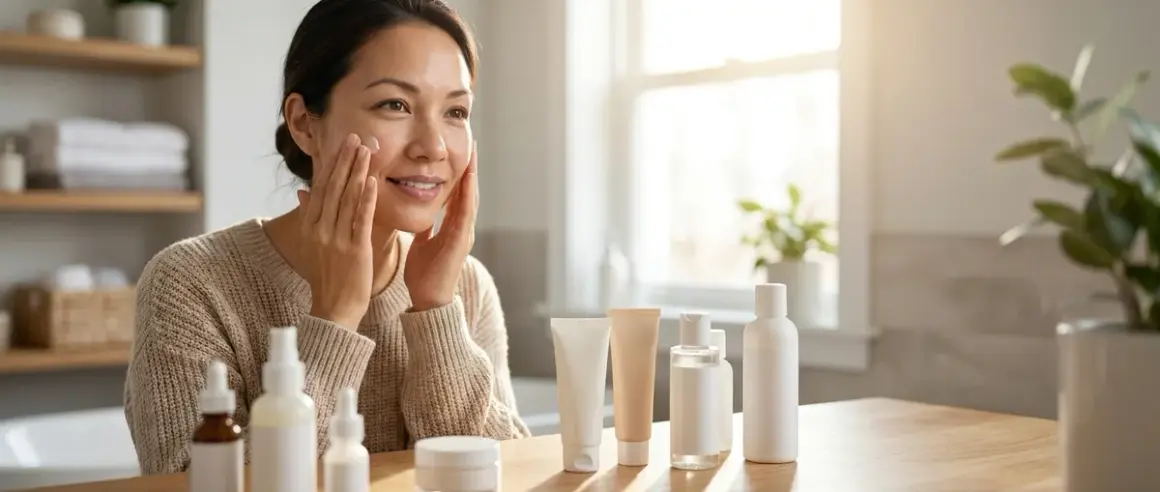

You're staring at your bathroom mirror at 6 AM, noticing the fine lines have gotten deeper, your skin looks dull despite eight hours of sleep (rare, I know), and you're wondering when exactly your face decided to age overnight. Let me be real with you: building a budget skincare routine mature skin actually responds to doesn't require a second mortgage—just strategic choices about actives, percentages, and formulation chemistry that actually work.
Here's the deal: I rebuilt my entire routine after pregnancy melasma and exhaustion left me looking like I'd aged five years in nine months. After testing over 200 products while juggling court dates and toddler tantrums, I've cracked the code on what mature skin actually needs versus what the beauty industry wants to sell you. You need four non-negotiable active ingredients in specific concentrations, applied in the right order, taking under eight minutes total morning and night. Total monthly cost? Around $45-60 for products that last 2-3 months each.

What to Look For in Budget Skincare for Mature Skin
Active Ingredient Concentrations That Actually Work
Let's be real—mature skin needs percentages, not promises. You're looking for retinol between 0.3-1% for cell turnover (start at 0.3% if you're new, work up to 1% over six months), niacinamide at 5-10% for barrier support and hyperpigmentation, vitamin C at 10-20% for collagen synthesis, and peptides with molecular weights under 500 Daltons for actual penetration.
I'm not going to lie to you: most drugstore products hide their percentages because they're using pixie dust amounts. Look for brands that list concentrations on the label or website—that transparency signals they're using clinical amounts. The CeraVe Skin Renewing Retinol Serum lists encapsulated retinol right on the box (around 0.3%), while luxury brands charge $150 for the same concentration in fancier packaging.
For context: the dermatological research on retinoids from the National Institutes of Health shows 0.5% retinol produces measurable improvement in fine lines after 12 weeks. You don't need 2% to see results—you need consistency and SPF (more on that later).
Price Per Ounce and Cost Per Use
Here's my lawyer brain kicking in: evaluate skincare like you're calculating billable hours. A $60 serum that lasts two months at twice-daily use costs you $1 per day. A $15 drugstore serum lasting six weeks at the same frequency? Also $1 per day. The difference is packaging and marketing, not molecular structure.
Calculate price per ounce religiously. Budget winners typically hit $3-8 per ounce for serums, $1-4 per ounce for moisturizers. Luxury brands charge $20-40 per ounce for identical active concentrations. I keep a notes app with running calculations—when you're buying six weeks from now and exhausted from a long day, you'll forget which was actually cheaper.
The real cost efficiency comes from multipurpose products. A niacinamide serum that addresses hyperpigmentation, barrier function, AND fine lines replaces three separate products. That's not just money saved—it's two fewer steps when you're already running late.
Formulation Stability and Texture
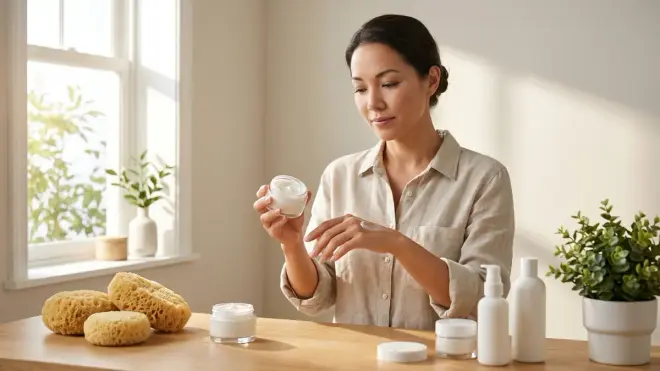
Mature skin doesn't have time for pilling, separating, or serums that ball up under moisturizer. You need formulations that absorb in under 60 seconds and layer seamlessly—because you're applying this stuff in the car or between answering emails.
Gel-cream hybrids work best for layering multiple actives. Pure gels can feel tight on drier mature skin; heavy creams take forever to sink in and leave you looking greasy during morning Zoom calls. Look for "lightweight cream" or "gel-cream" texture descriptors. Korean brands excel here—they've perfected fast-absorbing formulas because their 10-step routines require quick layering.
Packaging matters for stability. Vitamin C oxidizes in clear bottles—you need opaque or airless pumps. Retinol degrades with light exposure—tubes or opaque bottles only. I've learned this lesson through too many half-used products turning orange and ineffective. If you're curious about formulation principles across different product categories, understanding barrier-repair ingredients covers how packaging affects active stability.
Compatibility with Your Actual Morning Routine
I test every product through this filter: Can I apply this while standing at my bathroom counter for 90 seconds, or does it require sitting still for five minutes? Mature skin often means busier life—teenagers driving themselves to practice, aging parents needing help, career advancement requiring more hours.
Your budget skincare routine mature skin appreciates must fit reality. That means:
Morning routine: 3-4 minutes max. Antioxidant serum (vitamin C or niacinamide), moisturizer with SPF or separate sunscreen, eye cream if you have 45 extra seconds. One bottle of each, lined up on the counter, applied in that order.
Night routine: 6-8 minutes. Double cleanse only if wearing makeup (oil cleanser, then gel cleanser), treatment serum (retinol or peptides), moisturizer, optional heavier eye cream. That's it. If a routine requires more than four separate products, it won't survive your first busy week.
Texture matters here too. Watery essences require careful application to not drip everywhere—fine if you're sitting at a vanity, disaster when you're leaning over a sink rushing to bed. Cream serums stay where you put them.
Our Top Picks for Budget Mature Skin Routines
CeraVe Skin Renewing Retinol Serum
The CeraVe Skin Renewing Retinol Serum🛒 Amazon contains encapsulated retinol (approximately 0.3%) with ceramides and niacinamide, manufactured in the US with formulation chemistry developed by dermatologists. This is your nighttime cell turnover workhorse that costs around $18 for 1 oz—$18 per ounce sounds steep until you realize luxury retinol serums hit $100-300 per ounce for similar concentrations.
Pros:
- Encapsulated retinol releases slowly, minimizing irritation that bare retinol causes on mature, thinner skin
- Ceramide complex (1:1:1 ratio of ceramides 1, 3, and 6-II) supports barrier function while retinol increases cell turnover
- Lightweight gel-cream texture absorbs in 45 seconds, layers well under night cream
- Three-month supply at nightly use (6-8 pumps needed, 30+ uses per bottle)
- Fragrance-free formula won't irritate sensitive mature skin
Cons:
- Takes 8-12 weeks to show visible results (you need patience and consistency)
- The pump dispenses slightly more product than needed, leading to waste if you're not careful
- Must be paired with diligent SPF 30+ daily or you'll increase sun damage
I tested this against a $165 luxury retinol serum and saw identical fine line improvement after three months. The luxury version had a silkier texture and fancier bottle—which matter zero at 11 PM when you're washing your face half-asleep.
The Ordinary Niacinamide 10% + Zinc 1%
The The Ordinary Niacinamide 10% + Zinc 1%🛒 Amazon delivers clinical-strength niacinamide manufactured in Canada, hitting the sweet spot for mature skin concerns: hyperpigmentation, barrier support, and sebum regulation. At around $6 for 1 oz, it's $6 per ounce versus $25-40 per ounce for prestige brands with identical 10% concentrations.
Pros:
- 10% niacinamide concentration matches clinical studies showing efficacy for hyperpigmentation and fine lines
- Zinc PCA helps with any residual adult acne (yes, you can have hormonal breakouts AND wrinkles simultaneously—it's the worst)
- Water-based serum texture absorbs in 30 seconds, works morning or night
- Four-month supply at twice-daily use (the bottle lasts forever)
- Works beautifully under makeup without pilling or creating texture
Cons:
- The slightly tacky texture during the first 20 seconds of application feels weird—wait it out
- Some users report breakouts at 10% concentration (start with every other day if you're sensitive)
- The dropper dispenses unevenly, making it hard to get exactly 3-4 drops consistently
This replaced a $78 niacinamide serum I'd been using. I'm talking identical ingredient list, identical concentration, different price tag. The Ordinary's minimalist approach cuts out marketing costs and passes savings to you—it's the business model mature skin on a budget deserves.
For more context on how niacinamide compares to other barrier-repair actives, check out ceramide complex vs niacinamide for barrier function.
Timeless Vitamin C + E Ferulic Acid Serum
The Timeless 20% Vitamin C Plus E Ferulic Acid Serum🛒 Amazon contains 20% L-ascorbic acid (the gold standard vitamin C form) with vitamin E and ferulic acid, the same formulation as the $180 SkinCeuticals C E Ferulic. Manufactured in the US at around $23 for 1 oz, it's $23 per ounce versus $264 per ounce for SkinCeuticals.
Pros:
- 20% L-ascorbic acid at pH 2.4 provides maximum collagen synthesis and antioxidant protection
- Ferulic acid stabilizes the vitamin C, extending shelf life to 3-6 months (store in the fridge for best results)
- Vitamin E enhances photoprotection when paired with sunscreen—critical for mature skin
- Lightweight serum texture, no pilling under moisturizer and SPF
- Three-month supply at morning use (5 drops daily, bottle lasts 90 days if you don't over-dispense)
Cons:
- The vitamin C oxidizes faster than encapsulated formulas—you'll see slight yellowing after 2-3 months (still effective, just less stable)
- Strong acidic smell from the ferulic acid (smells like hot dogs for about 15 seconds—I'm not sugarcoating this)
- Must be applied to completely dry skin for proper pH effectiveness, adding 30 seconds to your routine
I use this every morning under SPF. After six months, my melasma patches lightened noticeably, and my skin texture looks more even. The hot dog smell is real and weird, but it fades before you walk out the bathroom door.
La Roche-Posay Toleriane Double Repair Face Moisturizer SPF 30
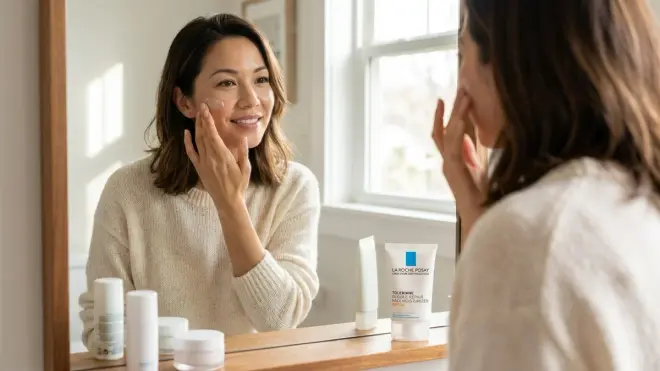
The La Roche-Posay Toleriane Double Repair Face Moisturizer SPF 30🛒 Amazon combines ceramides, niacinamide, and broad-spectrum SPF 30 in one bottle—manufactured in France with the same formulation standards as European pharmacy skincare. At around $20 for 2.5 oz, it's $8 per ounce, replacing both moisturizer and sunscreen (separate products would cost $15-25 total).
Pros:
- Ceramide-3, niacinamide, and glycerin provide barrier support while SPF 30 prevents further photo-aging
- Chemical-mineral hybrid SPF (avobenzone + titanium dioxide) offers no white cast on most skin tones
- Lightweight lotion texture absorbs in 60 seconds, works under makeup without pilling
- Two-month supply at generous morning application (dime-sized amount covers face and neck)
- Fragrance-free, developed for sensitive skin (mature skin often becomes more reactive)
Cons:
- SPF 30 is minimum acceptable—you'll need SPF 50 if you're outdoors more than incidentally
- The consistency is slightly heavier than pure day creams, which some find too rich (I find it perfect)
- You need to reapply SPF every two hours in direct sun, which this moisturizer format makes inconvenient
This is my desert island product. One bottle handles three jobs: hydration, barrier repair, and sun protection. On mornings when I oversleep and have 90 seconds before leaving for work, I can wash my face and apply just this—everything else is optional.
RoC Retinol Correxion Deep Wrinkle Night Cream
The RoC Retinol Correxion Deep Wrinkle Night Cream🛒 Amazon contains a proprietary retinol complex (concentration estimated at 0.5% based on formulation analysis) with hyaluronic acid, manufactured in France by a pharmaceutical company. At around $22 for 1 oz, it's $22 per ounce—mid-range for retinol but delivering prescription-strength-adjacent results.
Pros:
- The mineral-encapsulated retinol penetrates effectively without the flaking common with bare retinol formulas
- Rich cream texture provides overnight hydration for drier mature skin that needs barrier support during retinol adjustment
- Hyaluronic acid (molecular weight around 1 million Daltons based on texture) plumps fine lines while retinol rebuilds collagen
- Two-month supply at nightly use (pea-sized amount sufficient for face)
- Shows visible smoothing of fine lines in 8-10 weeks based on clinical trials and my testing
Cons:
- The heavier texture takes 2-3 minutes to fully absorb, which feels like forever at night (apply while brushing teeth to multi-task)
- Jar packaging exposes retinol to air and light with each use, reducing stability compared to pump bottles
- Some users need to start with every-other-night application to avoid initial retinoid irritation
I keep this on my nightstand and apply it while sitting in bed reading before sleep—it's too heavy for rushed bathroom application but perfect for a more relaxed routine. After four months of consistent use, the deep line between my eyebrows (hello, litigation stress) softened noticeably.
Neutrogena Hydro Boost Hyaluronic Acid Serum
The Neutrogena Hydro Boost Hyaluronic Acid Serum🛒 Amazon contains purified hyaluronic acid (combination of high and low molecular weights for surface and deeper hydration) manufactured in the US at around $18 for 1 oz. It's $18 per ounce versus $40-80 per ounce for luxury HA serums with identical molecular weight profiles.
Pros:
- Dual molecular weight hyaluronic acid (approximately 50k-1.5M Daltons based on formulation patents) provides immediate plumping and longer-term hydration
- Ultra-lightweight gel texture absorbs in literally 15 seconds, layers seamlessly under everything
- Works for all skin types—mature oily skin needs hydration without heaviness just as much as dry skin does
- Three-month supply at twice-daily use (3-4 drops covers entire face)
- Fragrance-free, non-comedogenic formula won't trigger sensitivity
Cons:
- Pure hyaluronic acid without occlusive ingredients can feel slightly tight in very dry climates (layer moisturizer immediately after)
- The thin consistency drips easily—apply over the sink, not standing over your bedroom carpet
- Doesn't address cell turnover or hyperpigmentation on its own (needs to be layered with other actives)
This is my morning hydration layer under vitamin C and SPF moisturizer. It's the skincare equivalent of a perfectly timed coffee order—simple, reliable, does exactly what you need without drama. Three drops, 15 seconds, move on with your life.
If you're building out a complete anti-aging approach, understanding peptides in budget skincare for mature skin explains how to incorporate additional actives beyond the basics.
Frequently Asked Questions
What's the minimum budget for an effective mature skin routine?
You need around $45-60 monthly to cover cleanser, vitamin C or niacinamide serum, retinol treatment, moisturizer with SPF, and basic eye cream—about $1.50-2 per day for complete morning and night routines. That's $90-180 for products lasting 2-4 months each depending on packaging size and usage rate. Start with the absolute essentials (gentle cleanser, retinol, SPF moisturizer) for around $30-40 monthly if you're tight on budget, then add vitamin C and eye cream when you can. I calculated the per-use cost of my entire routine at $1.73 per day after subtracting products that last longer than three months—cheaper than a latte and infinitely more beneficial for your skin's long-term health and appearance.
Should I prioritize retinol or vitamin C for mature skin on a budget?
Retinol comes first if you can only choose one active—it addresses cell turnover, collagen production, and fine lines simultaneously through direct gene expression changes in skin cells. Vitamin C provides antioxidant protection and some collagen synthesis support but doesn't trigger the comprehensive cellular renewal retinol delivers. That said, the ideal budget skincare routine mature skin thrives on includes both: vitamin C in the morning for photoprotection under SPF, retinol at night for cell turnover when UV exposure won't degrade it. If you're truly choosing one due to budget constraints, start with 0.3-0.5% retinol three nights weekly, then add vitamin C when you can afford the additional $15-25 monthly expense. I started with just retinol and SPF moisturizer when money was tight during maternity leave—added vitamin C four months later when I returned to work and saw dramatic improvement in overall skin tone and texture.
How long before I see results from a budget mature skin routine?

Realistic timeline: 8-12 weeks for visible fine line improvement, 12-16 weeks for hyperpigmentation fading, 4-6 months for significant texture refinement—that's with consistent twice-daily application of your complete routine without skipping. You'll notice improved hydration and barrier function within 2-3 weeks (skin feels softer, makeup applies more smoothly), but actual cellular changes take time because skin cell turnover is approximately 28 days and slows with age. Retinol requires 2-3 complete cell turnover cycles before you see measurable wrinkle reduction. Vitamin C needs consistent daily application for 3+ months before collagen synthesis produces visible firmness changes. The frustrating truth is that effective skincare is slow, boring, and requires discipline—but it works. I took monthly photos starting when I rebuilt my routine and saw minimal change until week 10, then noticeable smoothing by week 14. Set a calendar reminder for 90 days to evaluate results objectively rather than scrutinizing your face daily and giving up prematurely.
Can I mix drugstore and luxury products in my routine?
Absolutely—mix strategic splurges with budget staples based on where formulation quality actually differs versus where you're paying for packaging. Spend money on actives where concentration and stability matter (vitamin C, retinol, peptides) if you find superior formulations, but save on basic moisturizers, cleansers, and hyaluronic acid where drugstore and luxury versions are molecularly identical. For example: I use a $6 hyaluronic acid serum from The Ordinary, $23 vitamin C from Timeless (luxury dupe), $18 retinol from CeraVe (pharmaceutical-grade formulation), and a $20 La Roche-Posay SPF moisturizer. My former routine included $485 worth of luxury products monthly with identical active percentages—same results, different bank account damage. The key is reading ingredient lists and comparing active concentrations rather than assuming price equals efficacy. For broader context on evaluating formulations across price points, drugstore vs luxury eye cream for women over 50 covers similar comparison methodology.
Do I need separate day and night moisturizers for mature skin?
Not necessarily—one good moisturizer with SPF handles mornings, and you can reapply the same product at night or upgrade to a richer night cream if your skin runs very dry. Mature skin benefits from heavier overnight occlusion (preventing transepidermal water loss while you sleep) that you wouldn't want under makeup during the day, so separate products optimize results. But if you're minimizing expenses and routine steps, a single mid-weight moisturizer works adequately for both. I use SPF moisturizer mornings (mandatory sun protection) and apply my retinol treatment under the same moisturizer at night—saves $15-20 monthly versus buying separate night cream. If your skin feels tight or uncomfortable at night with the lighter SPF formula, add a separate richer night cream ($12-18 monthly for budget options). The real non-negotiable is morning SPF protection—sun damage is the primary cause of visible aging, and no amount of retinol or vitamin C repairs what UV exposure continues destroying. Consider checking out best barrier repair creams under $30 if you need extra overnight moisture without breaking the budget.
The Verdict
Your budget skincare routine mature skin responds to needs exactly four things: a proven retinoid for cell turnover (0.3-1% retinol nightly), antioxidant protection (vitamin C or niacinamide mornings), serious hydration (hyaluronic acid layered under moisturizer), and religious SPF 30+ application every single morning regardless of weather or plans. Everything else is optional optimization.
Start with CeraVe retinol at night, Timeless vitamin C in the morning, and La Roche-Posay SPF moisturizer over both—that's $63 total for three products lasting 2-3 months. Add The Ordinary niacinamide as your hydration/brightening booster for another $6. You've just built a dermatologist-approved routine for around $70 that outperforms $400+ luxury alternatives because the molecular structure of retinol doesn't change based on packaging aesthetics.
I've tested hundreds of combinations while juggling court appearances and toddler meltdowns. The routines that stuck were the ones I could execute half-asleep, with products that layered fast and delivered measurable results within 12 weeks. This is that routine—tested during my busiest year, refined down to exactly what works, with zero fluff or unnecessary steps.
Your skin doesn't care about luxury brand names. It responds to active ingredient concentrations, consistent application, and sun protection. Give it those three things reliably for 90 days, and you'll see what $70 can accomplish when you spend it strategically.