
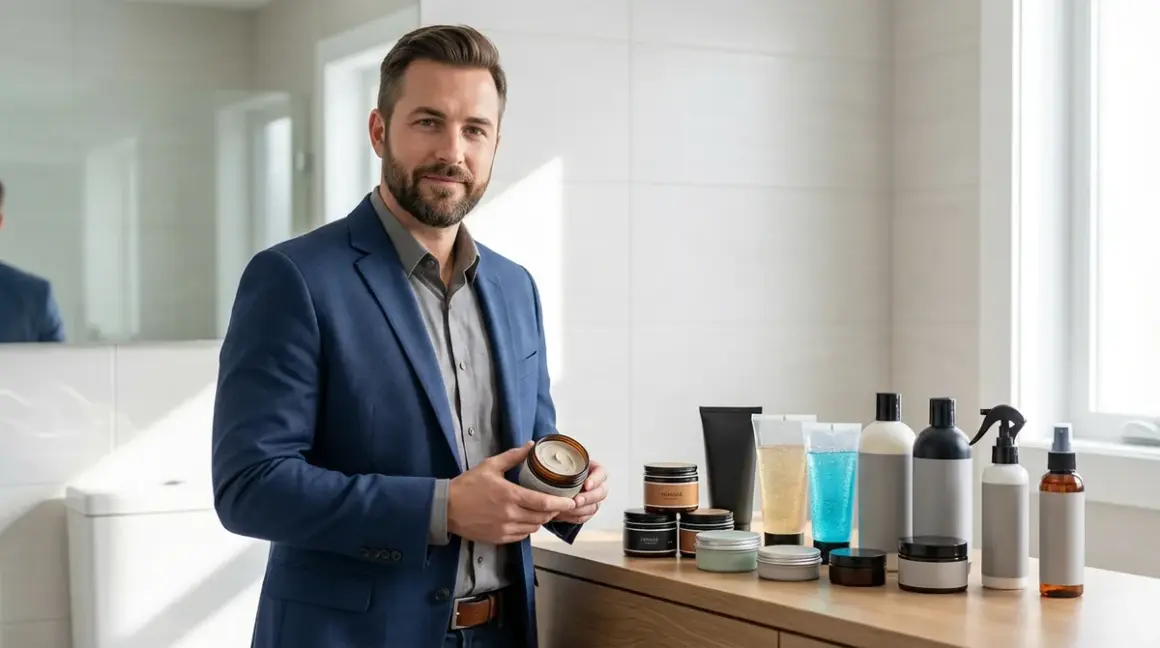

Learning how to choose men's hair products isn't about brand names or packaging—it's about matching formulation chemistry to your hair's structural characteristics. Most men buy products based on marketing claims or what their barber used once, then wonder why nothing works consistently. The reality: hair porosity, cortex density, and cuticle pattern determine which active ingredients and polymers will actually deliver hold, texture, and finish. This guide breaks down the diagnostic process and product selection framework I use with every client. You'll learn to assess your hair's mechanical properties, decode ingredient lists for performance markers, and build a rotation that works with your biology instead of fighting it. Time investment: 20 minutes to assess, 2-3 weeks to test and refine.
What You'll Need
- A strand of clean, dry hair (pulled from the root, not cut)
- A glass of room-temperature water (for porosity float test)
- Your current hair products (for ingredient analysis)
- A small comb or your fingers (to assess texture and density)
- Basic knowledge of your styling goals (matte vs. shine, structured vs. natural, hold duration)
- Access to peptides in haircare research or scalp actives if you're addressing thinning or scalp health simultaneously
- A notebook or phone (to track what works over 2-3 weeks)
Step 1: Determine Your Hair Porosity Level
Hair porosity measures how readily your cuticle layer absorbs and retains moisture and styling actives. It's the single most important diagnostic metric for product selection. High-porosity hair has lifted, damaged cuticles—it accepts product quickly but loses hold and moisture fast. Low-porosity hair has tightly sealed cuticles—it repels water-based products but holds style longer once you penetrate the cortex.

The float test is your baseline diagnostic. Drop a clean, product-free strand into room-temperature water. High-porosity hair sinks within seconds because water floods the cortex through open cuticles. Low-porosity hair floats or takes 2-4 minutes to sink because the cuticle resists penetration. Medium-porosity hair sinks slowly, settling mid-glass before descending.
High-porosity hair needs heavier molecular weight humectants and film-forming polymers—look for ingredients like hydrolyzed wheat protein (molecular weight 1,000-3,000 Da), dimethicone (creates a semi-occlusive barrier), and panthenol at 1-3% concentration. These seal the cuticle temporarily and prevent moisture loss during the day. Water-based pomades and leave-in conditioners with glycerin (3-5%) work well here.
Low-porosity hair requires heat activation or lighter, penetrating carriers—products with cyclomethicone, propylene glycol, or alcohol-based formulations that evaporate quickly after delivering actives into the cortex. Avoid heavy butters and oils; they sit on the cuticle and create buildup. Cream pomades and water-soluble waxes perform better than oil-based clays.
Medium-porosity hair is the easiest to work with. Most formulations perform adequately, but you'll still get better results by matching product weight to your density and texture goals.
Actionable takeaway: Run the float test on three different strands from different areas of your head. Porosity isn't always uniform—your crown may differ from your temples. Adjust product selection by zone if needed.
Step 2: Assess Hair Texture and Cortex Diameter
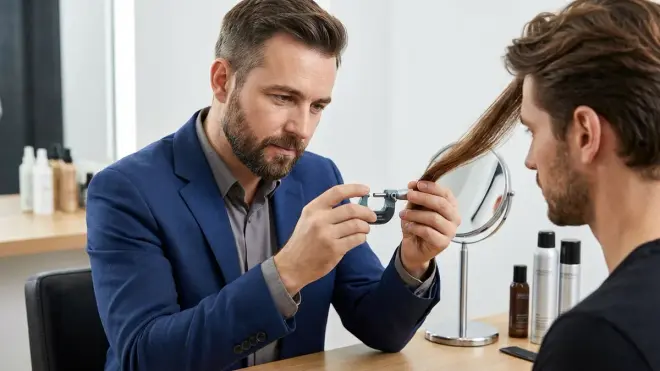
Texture refers to individual strand diameter, which determines how much "grip" products have on your hair and how much structural support you need. This is independent of density (how many follicles you have per square inch), though people often confuse the two.
Fine hair (diameter <70 micrometers) lacks internal structure. It's easy to over-apply product, which leads to greasiness and collapse. Fine hair needs lightweight, buildable polymers—VP/VA copolymer, PVP, or acrylates copolymer at concentrations around 2-4%. These create hold without weight. Avoid heavy waxes, petrolatum, and lanolin. Mousse, fiber creams, and volumizing sprays work better than traditional pomades.
Medium texture (70-90 micrometers) handles most formulations well. You have more flexibility, but you still need to match hold strength to your density and length. Medium texture responds well to hybrid formulas—cream pomades with both water-soluble and oil-based components, or balms with beeswax ratios around 15-25%. Hair balms are often ideal for this texture because they offer medium hold with malleable reworkability.
Coarse hair (>90 micrometers) has a thicker cortex and more rigid cuticle. It needs heavy emollients and plasticizers to make it pliable: lanolin, castor oil, petrolatum, or high concentrations of beeswax (30-40%). Oil-based pomades, butters, and thick clays work here. Water-based products often evaporate before they can provide lasting hold. Coarse hair also benefits from pre-styling with a leave-in conditioner containing niacinamide at 2-5% or hydrolyzed keratin to improve manageability.
Texture test: Pluck a strand and roll it between your thumb and forefinger. If you can barely feel it, you have fine hair. If it feels like a piece of thread, you have medium texture. If it feels like a wire or piece of yarn, you have coarse hair.
Actionable takeaway: Texture drives product viscosity and emollient load. Fine hair users should budget for around $12–$18 per 4 oz for fiber creams or mousse. Coarse hair users will get better ROI from heavy-duty pomades or butters around $15–$25 per 4 oz because a little goes further when the formulation matches your cortex diameter.
Step 3: Identify Your Required Hold Strength and Duration
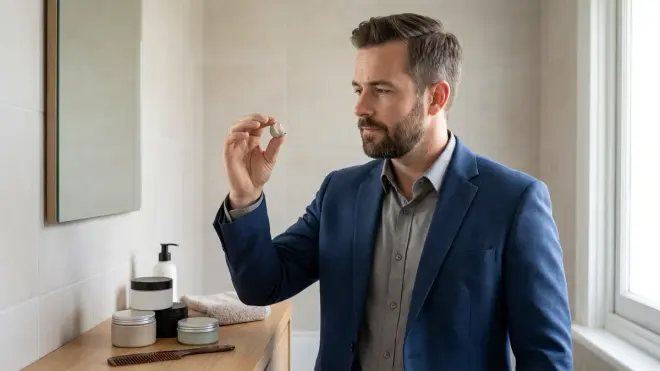
Hold strength is a function of polymer concentration, emollient type, and film-forming speed. The industry uses vague terms like "light hold" and "strong hold," but you need to translate these into real-world performance: how long will the style last, how much humidity resistance do you get, and can you rework it during the day.
Light hold (VP/VA copolymer <3%, minimal wax content) provides shape with natural movement. Hair remains soft and pliable. Expect 3-5 hours of structure before you need to restyle, less in humid conditions. Best for short to medium-length hair (1-4 inches) where you want texture but not rigidity. Products here include sea salt sprays, low-hold creams, and styling lotions.
Medium hold (polymer blends 3-6%, beeswax 15-25%, or dimethicone-based formulas) locks in structure for 6-8 hours with moderate humidity resistance. Hair can be reshaped once or twice during the day with damp hands. This is the sweet spot for most men—enough control for professional environments without helmet-head. Look for hybrid pomades, fiber creams, and styling balms.
Strong hold (PVP or acrylates copolymer >6%, high wax ratios, or shellac-based formulas) creates all-day rigidity. You sacrifice reworkability for durability—once it sets, you're locked in. Strong-hold products often leave a slight cast or crunch until you break it up manually. Ideal for high-hold styles like pompadours, slick-backs, or anything that needs to survive a 12-hour workday plus a gym session. Oil-based pomades, heavy clays, and traditional barbershop tonics dominate this category.
Duration and humidity resistance correlate with film-forming polymer type. Acrylates copolymers provide better humidity resistance than VP/VA copolymer. Oil-based products (petrolatum, lanolin) resist moisture better than water-based formulations but require more thorough cleansing.
Testing protocol: Apply a dime-sized amount to damp hair. Style as usual. Check hold at hours 2, 4, and 6. Note when the style collapses or loses shape. If you're reapplying before hour 6, you need a stronger formulation or a different polymer blend. If you can't run your hands through your hair by hour 2, dial back the hold strength.
Actionable takeaway: Buy three different hold strengths from the same product line to avoid confounding variables like base formulation or fragrance. Test them over 2-3 weeks in your actual daily environment—not just on weekends. Track performance against your schedule, not marketing claims.
Step 4: Match Finish Type to Your Aesthetic and Scalp Health
Finish refers to the visual sheen and tactile feel after the product sets. This is where personal preference intersects with hair health. Shiny finishes come from occlusive ingredients like mineral oil, petrolatum, and silicones. Matte finishes come from clays, starches, and wax esters.
High-shine finish (pomades with >10% mineral oil or dimethicone content) gives a polished, wet look. It's falling out of fashion in 2026 but still works for slick-back styles and formal contexts. The downside: occlusive ingredients can clog follicles if you don't cleanse thoroughly, leading to folliculitis or scalp acne. If you use high-shine products, you need a clarifying shampoo with sodium laureth sulfate or cocamidopropyl betaine at least twice a week.
Medium-shine finish (cream pomades, hybrid formulas with 3-8% emollient content) provides a subtle sheen without looking wet. This is the most versatile finish—it reads as "styled" without drawing attention to the product itself. Medium-shine products usually contain lighter silicones like cyclopentasiloxane or natural oils like argan or jojoba at 5-10% concentration.
Matte finish (clays, fiber creams, texturizing powders with kaolin or bentonite clay at 15-30%) creates a dry, natural look. Matte products are ideal if you have oily skin or scalp, as they absorb sebum rather than adding to it. The tradeoff: clays can be drying over time, especially on high-porosity hair. Pair matte products with a scalp moisturizer or leave-in conditioner that contains hyaluronic acid at 0.5-1% or panthenol at 2-3% to prevent brittleness.
Scalp health considerations: If you have seborrheic dermatitis, psoriasis, or chronic dandruff, avoid products with heavy oils and silicones. They trap dead skin cells and create a breeding ground for Malassezia yeast. Switch to water-based formulations with salicylic acid (0.5-2%) or zinc pyrithione (1%) as supplemental actives. Some manufacturers now include niacinamide in styling products specifically to support scalp barrier function.
Finish vs. scalp microbiome: Matte finishes support a healthier scalp microbiome in the long term because they don't occlude follicles. If you're addressing hair thinning or scalp inflammation, prioritize matte or low-shine products and integrate scalp-focused actives into your weekly routine.
Actionable takeaway: Rotate between finish types based on context—matte for daily wear, medium-shine for professional settings, high-shine for special occasions. Your scalp will perform better with variety than with constant exposure to the same occlusive load.
Step 5: Decode Ingredient Lists for Performance Markers
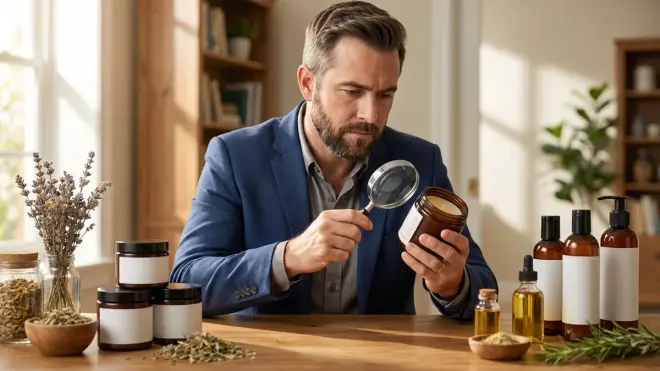
Ingredient lists are ordered by concentration (descending), so the first five ingredients usually make up 60-80% of the formula. Everything else is present at <5% concentration. Learning to identify key functional ingredients lets you predict performance before you waste money.
Primary polymers (hold agents): VP/VA copolymer, PVP (polyvinylpyrrolidone), acrylates copolymer, PEG-40 hydrogenated castor oil. If one of these appears in the top five ingredients, the product is designed around film-forming hold. If they appear after the seventh ingredient, they're supplemental—the product likely relies on waxes or oils for structure.
Emollients and oils (pliability and sheen): Petrolatum, mineral oil, lanolin, castor oil, jojoba oil, argan oil, shea butter, cocoa butter. Position in the list tells you how heavy the product will feel. If mineral oil or petrolatum is in the top three ingredients, expect a greasy, occlusive finish. If jojoba or argan oil appears in the top five, the product is lighter and absorbs faster.
Waxes (structure and reworkability): Beeswax, carnauba wax, candelilla wax, microcrystalline wax. These create solid structure and workability. Beeswax is the most common—look for it between ingredients 3-6 for medium-hold products. If beeswax is the second ingredient, you're dealing with a heavy-duty balm or pomade.
Clays and absorbents (matte finish, oil control): Kaolin clay, bentonite clay, silica, cornstarch, tapioca starch. These are the backbone of matte products. If a clay appears in the top three ingredients, the product will absorb sebum and create texture. Expect lower hold duration because clays don't form films like polymers do.
Supplemental actives (scalp and hair health): Niacinamide, panthenol (provitamin B5), biotin, caffeine, hydrolyzed proteins (keratin, wheat, silk), peptides. These usually appear after ingredient 7 but can still deliver benefits at concentrations as low as 0.5-3%. Products with peptides or growth factors are bridging the gap between styling and treatment.
Preservatives and stabilizers: Phenoxyethanol, potassium sorbate, sodium benzoate, BHT. Essential for water-based formulations. Oil-based products use fewer preservatives because water activity is too low to support microbial growth.
Price-per-ounce reality check: Most "premium" styling products cost usually around $20 for 2-4 oz. Compare ingredient decks between a $12 drugstore fiber cream and a $28 barbershop cream. Often, the polymer blend, wax ratio, and emollient profile are nearly identical—you're paying for branding and packaging, not formulation quality. Exceptions exist (some niche brands use higher-grade beeswax or more expensive peptides), but they're rare.
Actionable takeaway: Photograph ingredient lists of products you're testing. After 2-3 weeks, cross-reference performance against polymer type and position. You'll start to recognize which functional ingredients work with your hair biology, and you can replicate those results across brands and price points.
Step 6: Test and Adjust Application Technique for Your Hair Type
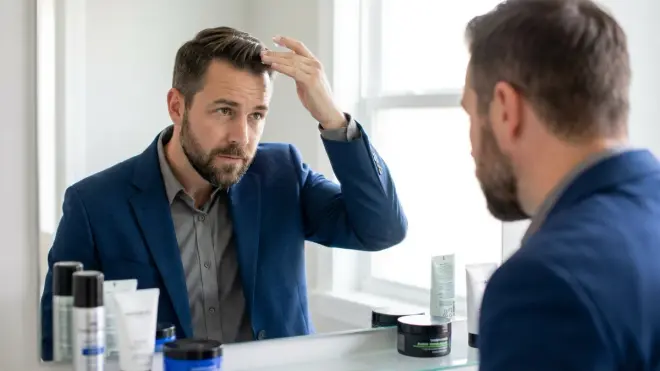
Product performance depends as much on application technique as formulation. Most men apply too much product, to the wrong area, in the wrong order. Here's the engineering approach.
Start with damp hair, not wet or dry. Water content affects product penetration and distribution. Wet hair dilutes the product and reduces hold. Bone-dry hair repels water-based formulations. Aim for 60-70% dry (towel-dried, air-dried for 2-3 minutes). If you have low-porosity hair, apply to damper hair (50-60% dry) to improve absorption. If you have high-porosity hair, dry to 80% to prevent over-saturation.
Emulsify first. Rub the product between your palms for 5-10 seconds until it's warm and spreadable. This breaks down wax crystals and evenly distributes polymers. Skipping this step leads to clumping and uneven hold.
Apply to the roots and mid-shaft first, then the tips. Most men start at the front hairline and work back, which deposits too much product in the most visible area. Start at the crown and back of the head where you need the most structure. Work forward, adding more product only if needed. The ends of your hair need the least product—they're the oldest, most porous part of the strand.
Use less than you think. Start with a dime-sized amount for short hair (1-3 inches), a nickel-sized amount for medium hair (3-5 inches). You can always add more. Excess product doesn't improve hold—it just creates buildup and weighs hair down. If you're using more than a nickel-sized amount for short hair, switch to a stronger formulation instead of over-applying a weak one.
Adjust for density, not just length. If you have thick, dense hair (high follicle count per square inch), you may need 1.5x the standard amount. If you have fine, sparse hair, use 50-75% of the recommended amount. Density affects total surface area, which changes how much product you need to achieve saturation.
Rework sparingly. Most hybrid and water-based formulations allow for 1-2 reworks during the day if you dampen your hands slightly. But each rework degrades polymer film integrity. If you're restyling more than twice, you're either using the wrong product or applying it incorrectly the first time.
Cleansing protocol matters. Water-based products wash out with regular shampoo. Oil-based pomades and heavy clays require a clarifying shampoo or double-cleanse to fully remove. Buildup from incomplete cleansing is the #1 reason men think a product "stopped working"—it's just sitting on top of yesterday's product layer.
Actionable takeaway: Film yourself applying product from multiple angles. Watch for uneven distribution, excess product in the front, or incomplete coverage in the back. Adjust based on what you see, not what you feel. Your hands lie; the mirror doesn't.
Step 7: Build a Product Rotation Based on Context and Performance Data
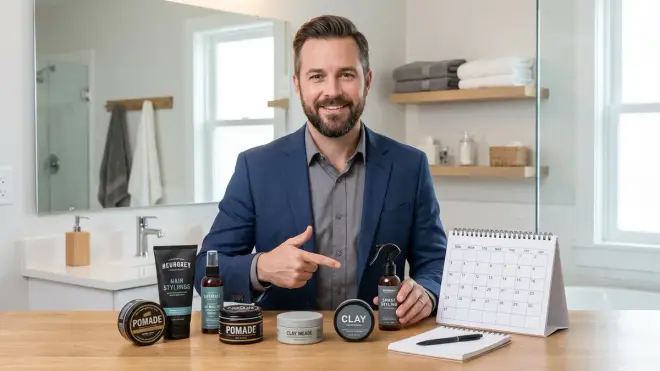
No single product performs optimally in all conditions. Temperature, humidity, activity level, and style requirements change daily. A rotation system is more effective and more cost-efficient than searching for a single "perfect" product.
Core rotation framework: One matte product, one medium-shine product, one high-hold product. Total cost: around $35–$55 for 3-6 months of supply. Rotate based on context:
- Matte, medium-hold for daily wear, casual environments, warm weather, or when you need to rework your hair during the day.
- Medium-shine, medium-to-strong hold for professional settings, cooler weather, or when you need 8+ hour durability without reapplication.
- High-hold for special occasions, high-humidity days, or styles that require all-day rigidity.
Seasonal adjustments: Humidity increases in summer. Switch to stronger polymers (acrylates copolymer, PVP) and reduce emollient load. Cold, dry winters make hair more brittle—increase emollients (lanolin, shea butter) and supplement with a leave-in conditioner containing glycerin or hyaluronic acid to prevent breakage.
Activity-based adjustments: If you train or work outdoors, you need sweat-resistant formulations—oil-based pomades or strong-hold clays that don't break down with moisture. If you're in air-conditioned environments all day, lighter water-based products perform fine because humidity isn't a variable.
Budget-conscious rotation strategy: Buy full-size containers of your workhorse product (the one you use 60-70% of the time) and travel-size or sample-size containers of secondary products. This reduces upfront cost and lets you test different formulations without committing to 4 oz of a product you might use once a month. Many barbershop brands and independent manufacturers offer 1 oz trial sizes for around $6–$10.
Performance tracking: After 3-4 weeks, you should have clear data on which products perform in which conditions. Note polymer type, hold duration, finish, and cost per application. Calculate cost-per-use: a $28 pomade that lasts 4 months (120 applications) costs $0.23 per use. A $14 fiber cream that lasts 6 weeks (45 applications) costs $0.31 per use. The "cheap" product is more expensive on a per-use basis.
Avoid the sunk-cost trap: If a product doesn't work after 5-7 applications with adjusted technique, stop using it. Trying to "make it work" wastes time and money. Sell it, give it away, or use it as a beard balm. Move on to the next formulation.
Actionable takeaway: Track your rotation in a simple spreadsheet or notes app—date, product used, weather conditions, hold duration, and reapplication needed. After 30 days, patterns emerge. Double down on what works. Cut what doesn't.
Step 8: Integrate Scalp Health and Hair Growth Actives Into Your Styling Routine
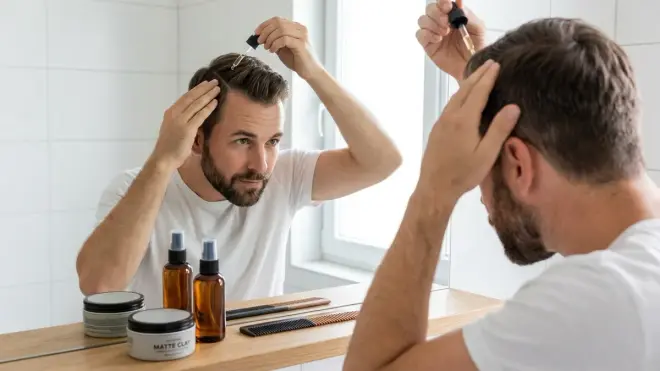
Most men treat styling products and hair health products as separate categories, but the scalp doesn't care about your product taxonomy. If you're using a styling product 5-7 days a week, it's interacting with your scalp microbiome and follicular health whether you intend it or not.
Styling products with therapeutic actives are now commercially available. Look for formulations that include niacinamide (2-5%) for barrier support and sebum regulation, caffeine (0.5-2%) for microcirculation and DHT antagonism, or hydrolyzed peptides (copper peptides, keratin peptides) for cortex reinforcement and follicle signaling. These products cost around $18–$35 per 4 oz but deliver dual functionality—you're not adding another step to your routine.
If you're addressing hair thinning or scalp inflammation, layer a treatment product under your styling product. Apply a scalp serum with peptides or niacinamide to the scalp first, let it absorb for 2-3 minutes, then apply your styling product to the hair shaft only. This prevents product interference while still delivering actives to the follicle.
Clarify weekly if you use occlusive products. Buildup from silicones, petrolatum, and heavy oils suffocates follicles and disrupts the scalp's natural exfoliation cycle. Use a clarifying shampoo with sodium laureth sulfate or cocamidopropyl betaine once per week, followed by a barrier-supporting conditioner with ceramides or cholesterol to prevent over-stripping.
Exfoliate the scalp every 7-14 days. Physical exfoliation (scalp brush, silicone scrubber) or chemical exfoliation (salicylic acid 0.5-2%, glycolic acid 5-8%) removes dead skin cells and product residue that inhibit healthy hair growth. For men with thinning hair, this step is non-negotiable. Scalp skincare is as important as facial skincare if you want long-term follicle health.
Budget allocation for integrated care: If you're spending $20-$30 on styling products, allocate another around $15–$25 for scalp treatment products. Total monthly cost: around $35–$55. This is less than most men spend on haircuts, and it's a higher-leverage investment in long-term aesthetics.
Manufacturer transparency: Some brands now disclose active ingredient concentrations and molecular weights on their websites, even if they don't list them on the label. Cross-reference product claims against ingredient decks. If a brand advertises "growth peptides" but lists hydrolyzed wheat protein as the 12th ingredient, it's present at <1% concentration—not enough to deliver measurable results. Look for actives in the top 7 ingredients.
Actionable takeaway: Treat your scalp like skin, not like a product dumping ground. If you're using a heavy clay or pomade daily, integrate a weekly clarifying and exfoliation protocol. If you're addressing hair loss, choose styling products that double as delivery systems for therapeutic actives.
Pro Tips & Common Mistakes
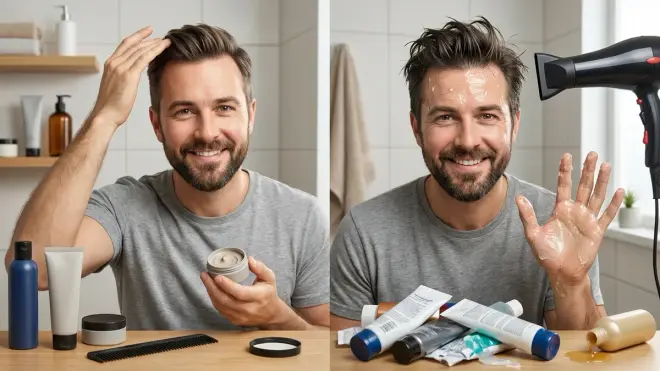
Pro tip #1: Pre-style with a blow dryer for heat-activated hold. Most men apply product and then style with their hands. Reverse the order. Apply product to damp hair, then blow-dry into your desired shape using medium heat and a vented brush or your hands. Heat activates polymers and sets the style faster. Once dry, the product has already formed its film—you're just refining, not creating, the shape. This technique triples hold duration for water-based formulations.
Pro tip #2: Layer products strategically, not randomly. Apply a lightweight product (sea salt spray, volumizing foam) to damp hair for texture and lift. Let it dry 80%. Then apply your primary styling product (pomade, clay, balm) to the dry hair for hold and finish. Layering a heavy product first suffocates the hair and eliminates texture. Start light, build heavy.
Common mistake #1: Using too much product to compensate for weak formulation. If you're applying more than a nickel-sized amount for short-to-medium hair, the product is under-formulated for your needs. More product doesn't create more hold—it creates grease and buildup. Switch to a stronger polymer blend or higher wax ratio. Your cost-per-use will drop because you'll need less product per application.
Common mistake #2: Ignoring water hardness. Hard water (high mineral content) interferes with water-based styling products, reducing lather and preventing even distribution. If you live in an area with hard water, you may need to use slightly more product or switch to oil-based formulations that don't rely on water as a carrier. Alternatively, install a shower filter (cost: around $25–$40) to reduce mineral buildup on hair and scalp.
Common mistake #3: Not adjusting for hair length changes. If you go from 4 inches to 1.5 inches, you need less product and a different formulation. Shorter hair requires lighter, more buildable products because there's less surface area. Continuing to use the same heavy pomade or clay after a cut leads to over-application and a greasy appearance.
Common mistake #4: Buying based on fragrance instead of formulation. Fragrance is the least important variable in product performance. If a product smells great but delivers weak hold or poor finish, you're wasting money. Prioritize polymer type, wax ratio, and emollient load. Fragrance dissipates within 30-60 minutes anyway.
Frequently Asked Questions
How do I know if my hair porosity is changing over time?
Hair porosity increases over time due to chemical processing (bleaching, coloring), heat styling, UV exposure, and mechanical damage from brushing or tight hairstyles. If a product that used to work well suddenly feels too heavy or doesn't hold as long, your porosity has likely increased. Re-run the float test every 6-12 months or after major chemical treatments. High-porosity hair needs heavier molecular weight humectants and film-forming polymers to seal the lifted cuticle and retain moisture throughout the day.
Can I use the same product for beard and hair styling?
Yes, but only if the product's hold strength and finish match both applications. Beard hair is typically coarser and more wiry than scalp hair, so it needs heavier emollients—lanolin, shea butter, or oil-based balms work well. If you're using a lightweight fiber cream or mousse on your hair, it won't provide enough control for your beard. Hair balms with 20-30% beeswax ratios are the best crossover products because they offer medium hold for hair and sufficient pliability for beard shaping without feeling greasy.
How often should I wash my hair if I use styling products daily?
It depends on product type and your scalp's sebum production. Water-based products wash out easily and don't cause buildup, so you can shampoo every 2-3 days with a gentle sulfate-free formula. Oil-based pomades, heavy clays, and silicone-rich products require clarifying shampoo every 3-4 days to prevent follicle clogging. If you have an oily scalp or scalp acne, cleanse daily with a lightweight shampoo containing salicylic acid (0.5-2%) or tea tree oil (1-3%) to regulate sebum and prevent inflammation.
Do expensive styling products actually work better than drugstore brands?
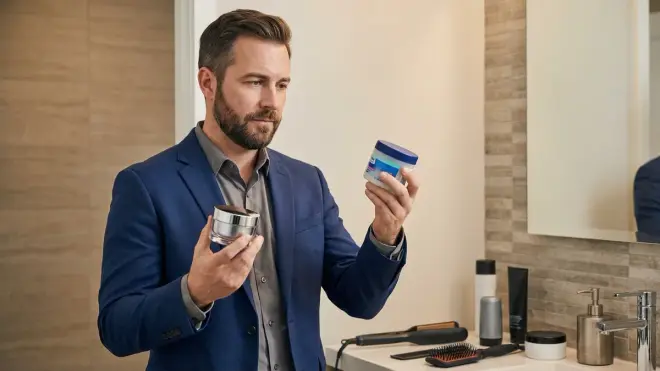
Not always. Product performance depends on polymer type, wax ratio, and emollient quality—not price. Many drugstore brands use identical functional ingredients to high-end barbershop products but charge 40-60% less because they skip premium packaging and niche distribution. Compare ingredient decks directly: if a $12 fiber cream lists VP/VA copolymer, kaolin clay, and beeswax in the same positions as a $28 salon brand, they'll perform similarly. The exception: some niche brands use higher-grade beeswax (pharmaceutical-grade vs. cosmetic-grade) or include therapeutic actives like peptides or niacinamide at effective concentrations, which justifies a higher price point for specific use cases like thinning hair or scalp health.
Summary
Learning how to choose men's hair products comes down to diagnostics first, formulation second, and application third. Run the float test to determine porosity. Assess texture by feel. Match hold strength to your daily schedule and environment. Choose finish type based on aesthetic and scalp health. Decode ingredient lists to identify polymers, waxes, and emollients that align with your hair biology. Build a rotation of 2-3 products that cover different contexts and conditions. Integrate scalp health actives if you're addressing thinning or inflammation. Track performance over 2-3 weeks and adjust based on real-world results, not marketing claims. The men who master this process spend less money, get better results, and stop buying products based on guesswork. Your hair is a mechanical system. Treat it like one.