
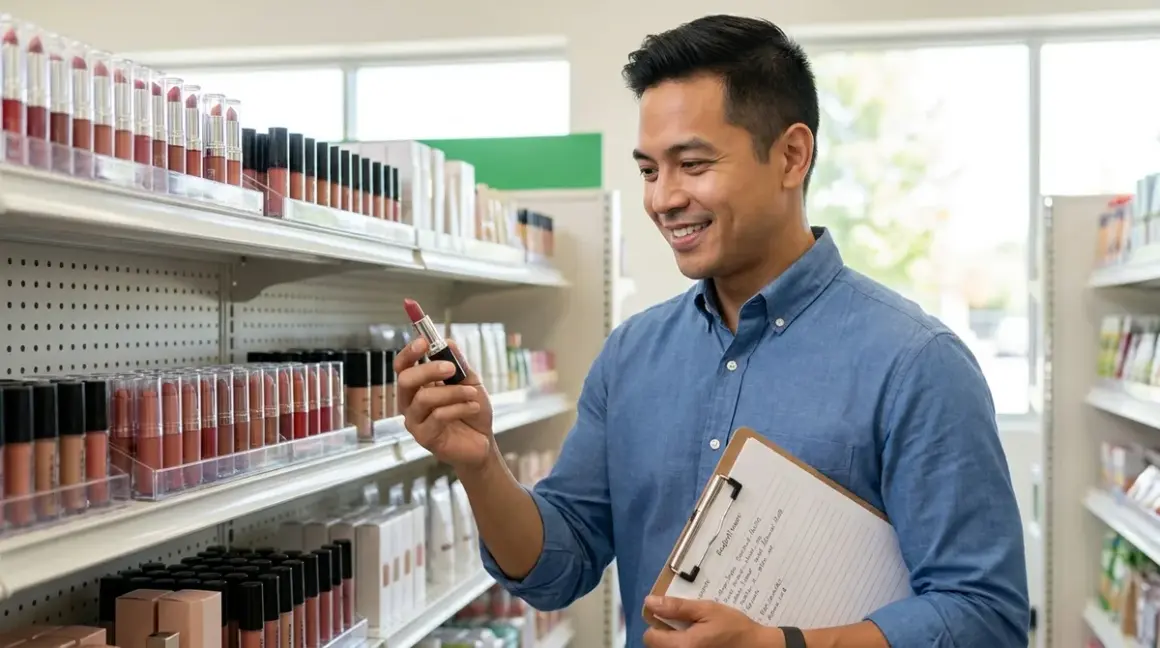

The fluorescent aisles feel endless. Row after row of dollar store cosmetics promising luxury finishes at prices that seem impossibly low. You'll reach for a lipstick, turn it over, squint at the ingredient list printed in microscopic type. Some formulations rival what you'd find at prestige counters—identical actives, comparable textures, indistinguishable performance. Others contain ingredients that were phased out of European markets a decade ago.
The difference isn't always obvious from the packaging.
This checklist equips you with the analytical framework to identify problematic formulations before they touch your skin. We're examining specific chemical structures that trigger sensitization, heavy metal contamination thresholds established by the FDA, and quality control failures that appear as physical defects you can assess in-store. You'll learn to distinguish between genuinely safe budget formulations and products that cut corners in ways that compromise both performance and safety.
No fear-mongering. No brand snobbery. Just cosmetic chemistry translated into visual, tactile, and textual cues you can evaluate in under three minutes per product.
Ingredient Red Flags That Signal Formulation Shortcuts
Fragrance listed in the first five ingredients. When "fragrance" or "parfum" appears this early in the INCI sequence, it indicates a concentration exceeding 1-2%—high enough to mask inferior base ingredients and trigger contact dermatitis in sensitized individuals. Quality formulations use fragrance sparingly, typically below 0.5%.
Parabens in combination with BHT/BHA. While parabens remain among the most thoroughly researched preservatives, their presence alongside butylated hydroxytoluene or butylated hydroxyanisole suggests an older formulation template. Modern cosmetic chemistry has shifted toward phenoxyethanol, ethylhexylglycerin, or caprylyl glycol systems that offer broader spectrum efficacy without the same estrogenic activity concerns—even if those concerns remain largely theoretical at cosmetic concentrations.
Talc below mica in powder formulations. This inverted ratio appears in formulations prioritizing shimmer over texture. Cosmetic-grade talc itself isn't inherently problematic when properly sourced and tested for asbestos contamination—but when it's relegated to filler status while mica dominates, you're looking at a product designed for initial visual impact rather than blendability or longevity.
Coal tar dyes without CI numbers. Legitimate colorants carry Color Index designations—CI 77491 for iron oxides, CI 77891 for titanium dioxide, CI 15850 for Red 7 Lake. Vague listings like "color additives" or "may contain" without specific CI numbers suggest inconsistent batch formulations or non-FDA-approved pigments.
Mineral oil as the primary emollient. Liquid paraffin delivers occlusion without the molecular diversity of plant oils or synthetic esters. You'll find it dominating ingredient decks in formulations optimized for shelf stability over skin compatibility. It's not sensitizing—it's just inert, offering none of the fatty acid profiles that support barrier function.
Denatured alcohol in cream formulations. Alcohol denat. serves as a solvent and penetration enhancer in toners and some gel-serums, where it evaporates quickly. In cream or liquid foundations, its presence indicates a formulation struggling to achieve sensory elegance—the texture feels initially lightweight, then turns tacky as the alcohol flashes off and leaves behind an unbalanced emulsion.
Triethanolamine (TEA) as the primary pH adjuster. While not banned, TEA represents dated formulation thinking. Modern cosmetic chemistry favors amino acids like arginine or sodium hydroxide for pH adjustment—they're more precise and less likely to form nitrosamines when combined with certain preservatives during long-term storage.
Dimethicone without accompanying slip agents. Dimethicone alone creates a barrier but can feel heavy without cyclomethicone or phenyl trimethicone to modify its sensory profile. Dollar store formulations sometimes skip these texture modifiers—you'll notice the product sits on skin rather than melting in, leaving a detectable film.
Physical Quality Control Failures You Can Spot In-Store
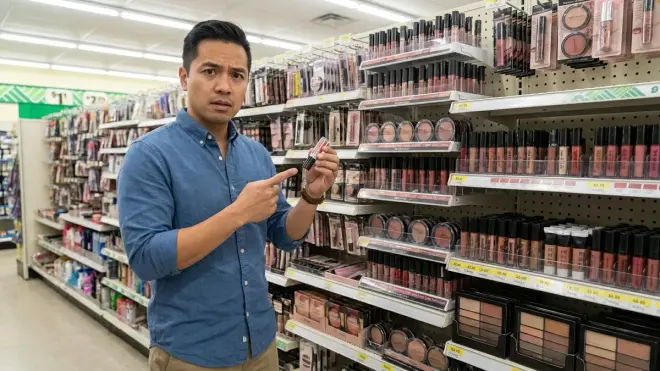
Color separation in bullet lipsticks. Hold the lipstick at eye level and examine the surface closely. You're looking for a waxy translucent layer that's separated from the pigmented base—it appears as a sheen or slight color variation on the bullet surface. This indicates temperature cycling during storage or an unstable emulsion where waxes have migrated. The lipstick will apply unevenly and feel grainy.
Air bubbles visible through transparent packaging. Tilt liquid products slowly. Air bubbles should rise smoothly. If you see multiple small bubbles trapped throughout the formula, or if bubbles don't coalesce, the product has been subjected to temperature extremes that compromised the emulsion. These formulations often separate further once opened.
Inconsistent fill levels within the same product line. Compare three units of the same item. Fill levels should be identical within 1-2mm. Significant variation suggests poor manufacturing controls—if they can't maintain consistent volumetric filling, their active ingredient distribution is equally unreliable.
Crusty residue around closures. Examine where the cap meets the tube or bottle. Dried product buildup indicates a leaking seal or incompatible packaging materials. The formulation has been exposed to air oxidation, degrading any antioxidant actives and potentially compromising the preservative system.
Bent or damaged applicators in sealed packages. If the doe-foot applicator in a lip gloss arrives bent, or if the brush fibers in a mascara are already deformed before opening, the manufacturing environment lacks basic quality control. These same facilities are responsible for maintaining sterile conditions and preventing microbial contamination.
Texture changes in pressed powders. Run your finger lightly across the powder surface. You shouldn't feel hard pan—a glossy, compacted layer that prevents product pickup. Hard pan develops when oils from handling migrate to the surface during manufacturing or when formulations contain excessive binding agents that haven't been properly quality-tested.
Label Analysis: Reading Between Regulatory Loopholes
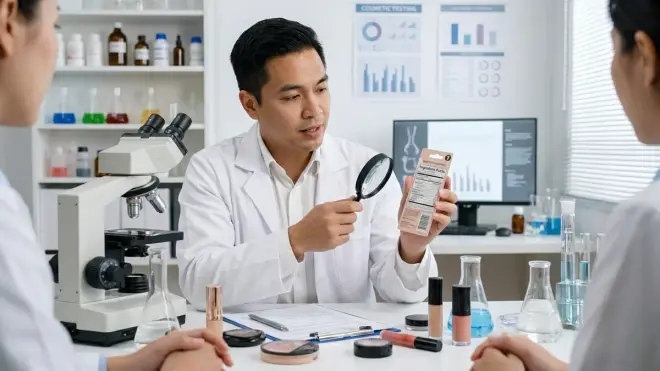
"Distributed by" instead of "Manufactured by." This phrasing indicates the brand doesn't own the manufacturing facility. Not inherently problematic—many reputable brands use contract manufacturers—but it introduces an additional layer between formulation oversight and production execution. Cross-reference the distributor address. If it's a residential location or virtual office, you're looking at a pure white-label operation with zero formulation control.
Absence of batch codes or lot numbers. Every legitimate cosmetic should carry a batch code—typically stamped on the bottom or printed on the crimp of tubes. This code enables traceability in case of contamination or adverse reaction reports. Its absence suggests a manufacturer operating outside standard quality protocols. You want this traceability, especially with dollar store cosmetics that may come from less established production facilities.
Vague origin statements. "Made with imported and domestic ingredients" reveals nothing about where final manufacturing occurred. Compare this to specific declarations like "Made in USA" or "Manufactured in Korea"—the latter indicates the product meets that country's specific cosmetic regulations, which in Korea's case include restrictions on 1,300+ ingredients versus the FDA's 11 prohibited substances.
Missing or abbreviated PAO symbols. The Period After Opening symbol—that little jar icon with a number—tells you how many months the product remains stable once opened. If it's missing entirely or uses an unusually long timeframe (24M for a natural-oil-based product, for instance), the manufacturer hasn't conducted proper stability testing. For reference on proper formulation standards, our Dollar Tree vs Sephora comparison breaks down what adequate preservation looks like across price points.
Claims without qualifying language. "Dermatologist tested" means a single dermatologist glanced at the formula. "Dermatologist recommended" means at least one derm would suggest it. "Ophthalmologist tested" matters only for eye-area products. These phrases sound authoritative but carry no regulatory meaning unless accompanied by specific study parameters or certifications.
Heavy Metal Contamination Risk Factors
Vibrant pigments in ultra-budget lip products. Deep reds, bright oranges, and vivid pinks require significant pigment loads. Lead chromate produces brilliant yellows and oranges at low cost—it's why testing by organizations like the Campaign for Safe Cosmetics repeatedly finds lead in budget lipsticks, even though manufacturers don't intentionally add it. It arrives as a contaminant in the pigment supply chain. The more intensely pigmented the formula at the lowest price point, the higher your risk exposure.
Metallic or shimmer eyeshadows with gritty texture. Legitimate mica has a silky, almost slippery feel. Grittiness suggests contaminated talc or mica sources, or the presence of heavy metal oxides used to achieve metallic finishes. Chromium, nickel, and aluminum compounds create these effects but can carry arsenic, lead, or cadmium as manufacturing byproducts. You'll feel the difference immediately—quality shimmer feels refined, not sandy.
Kohl or kajal formulations marketed as eyeliner. Traditional kohl contains antimony, lead, or manganese in intentional concentrations—it's part of the historical formulation. Modern cosmetic-grade eyeliners use iron oxides and synthetic colorants. If the product explicitly markets itself as "kohl" or lists galena, it's using an outdated formulation that FDA regulations technically prohibit for eye-area use, though enforcement remains inconsistent.
Foundations several shades darker than your natural complexion. This seems unrelated to contamination until you understand that iron oxide contamination with chromium increases as you move toward deeper shades. Testing data shows higher heavy metal levels in darker foundation shades across all price points—but premium brands conduct more rigorous testing to remove these contaminants. Budget formulations may skip these purification steps entirely.
Final Check Before You Go
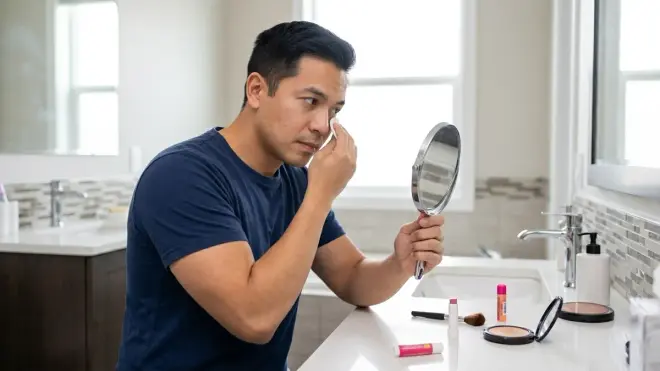
Use this rapid-assessment protocol at point of sale:
- Ingredient list is legible without magnification and includes INCI names
- No fragrance or parfum in the first five ingredients
- Specific CI numbers listed for all colorants
- Batch code or lot number stamped on packaging
- Manufacturing location specified (not just distribution)
- PAO symbol present with reasonable timeframe for product category
- No visible separation in liquid or cream formulations
- Consistent fill levels across multiple units
- Clean closures without dried product residue
- Undamaged applicators in sealed condition
- Smooth texture in powders without hard pan
- Sensory test passes: product feels refined, not grainy, sticky, or separated
Three or more failures warrant passing on that specific product. One or two might be acceptable depending on severity and your individual risk tolerance.
Frequently Asked Questions
Are all dollar store cosmetics unsafe or poorly formulated?
Not remotely—many dollar store cosmetics use identical contract manufacturers as premium brands and contain comparable active concentrations in well-preserved formulations. The safety concern arises with specific products that exhibit the physical and formulation red flags outlined in this checklist, particularly those from manufacturers with minimal quality control infrastructure or those using outdated ingredient templates.
How do I know if a budget cosmetic has been tested for heavy metal contamination?
You can't know for certain without independent testing—but you can assess risk factors. Products manufactured in facilities that also produce FDA-regulated drugs typically maintain stricter quality controls. Brands that voluntarily list "tested for heavy metals" or carry EU compliance markings have undergone more rigorous screening. The absence of these indicators doesn't guarantee contamination, but their presence significantly reduces risk probability.
Can I use ingredient analysis apps to screen dollar store makeup?
Apps like Think Dirty or EWG's Skin Deep provide useful baselines but often overweight theoretical hazards versus actual exposure risk and concentration levels. They're particularly unreliable with fragrance components, flagging safe molecules as "toxic" based on high-dose animal studies. Use them as one data point alongside the physical quality checks and formulation analysis detailed here—trust your sensory evaluation and label literacy more than algorithmic fear scores.
Final Thoughts
The most dangerous assumption is that price correlates perfectly with safety. It doesn't.
Some dollar store formulations outperform luxury alternatives in both ingredient quality and manufacturing standards—they're simply packaged without the marketing overhead. Others contain problematic ingredients or exhibit quality control failures that would trigger immediate recalls at higher price points.
Your protection lies in analytical literacy, not budget size. Learn to read the physical language of separated emulsions and hard-panned powders. Decode ingredient sequences. Demand traceability through batch codes and origin statements.
The checklist you've just absorbed transforms you from passive consumer to informed evaluator. You're no longer relying on price as a proxy for quality—you're assessing actual formulation integrity and manufacturing standards.
Every product earns its place in your routine through evidence, not branding.