
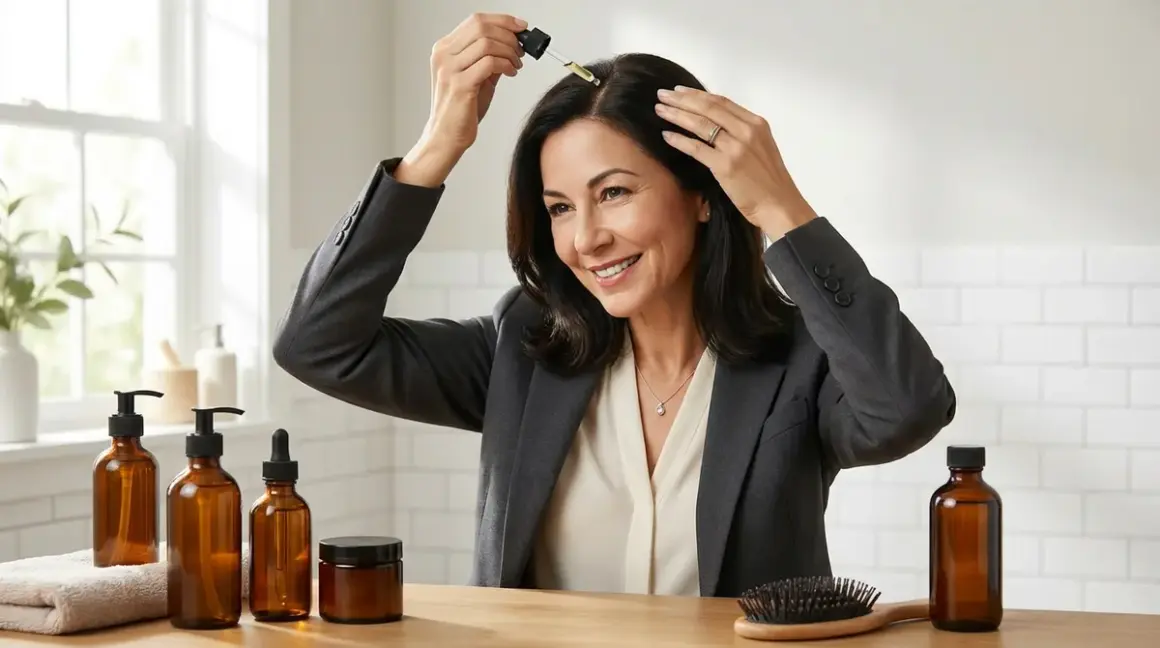

The skinification of hair represents the most significant formulation shift in haircare chemistry since the introduction of silicone alternatives. This movement applies dermatological active ingredients—peptides, retinoids, niacinamide, hyaluronic acid—to scalp health with the same precision we've applied to facial skin for decades. If you're familiar with bioregenerative skincare principles, you already understand the molecular logic: the scalp is skin, and skin responds to biochemically targeted interventions. What's changed in 2026 is the formulation sophistication and the price accessibility of these scalp-focused actives.
What Is Skinification of Hair?
Skinification of hair is the cosmetic chemistry principle of treating the scalp as an extension of facial skincare, applying the same evidence-based active ingredients and formulation strategies used in dermatological products. Rather than focusing exclusively on hair shaft cosmetics (shine, slip, temporary smoothing), this approach prioritizes scalp barrier function, pH optimization, cellular turnover, and follicular health.
The term emerged around 2021 but reached critical mass in formulation labs by 2024, when ingredient suppliers began offering scalp-optimized versions of proven facial actives. By 2026, we're seeing encapsulated retinol formulated specifically for scalp penetration without irritation, low-molecular-weight hyaluronic acid at clinically relevant percentages (0.5-2%), and copper peptide complexes designed to reach the dermal papilla without being deactivated by sebum.
This isn't repackaging facial serums for hair. Proper skinification formulations account for the scalp's unique environment: higher sebum production, denser follicular structures, occlusion from hair shafts, and a microbiome distinct from facial skin. The pH range differs (scalp optimal: 4.5-5.5 vs facial: 5.0-6.0), lipid composition varies, and penetration pathways require different molecular weights and delivery systems.
The commercial appeal is obvious—crossover consumers who already understand vitamin C stabilization or peptide synergies in their facial routines now expect the same rigor from shampoo. But the biological reality is what makes this work: follicular health directly correlates with barrier integrity, inflammation control, and cellular signaling—all targets addressable through topical actives we've studied extensively in dermatology for forty years.
How Skinification of Hair Works
The mechanism of skinification relies on three interconnected biological systems: the scalp barrier (stratum corneum and acid mantle), the follicular microenvironment (sebaceous glands, dermal papilla, hair matrix), and the inflammatory cascade that links barrier dysfunction to hair thinning, sensitivity, and accelerated aging.
Scalp Barrier Optimization
The scalp's stratum corneum functions identically to facial skin: corneocytes bound by lipid lamellae (ceramides, cholesterol, free fatty acids in a 1:1:1 molar ratio). When this barrier is compromised—through aggressive surfactants, pH disruption, or environmental stressors—transepidermal water loss increases, inflammatory cytokines activate, and follicular cycling can be disrupted.
Skinification addresses this with barrier-identical lipids: ceramide-dominant formulations (typically ceramide NP, AP, and EOP), cholesterol, and fatty acids in physiological ratios. Budget options like [The Ordinary Multi-Peptide Scalp Serum] (around $19/60ml, manufactured in Canada) include 2% ceramide complex alongside hematin (0.1%) for anti-inflammatory support. Luxury comparisons like [Kérastase Genesis Defense Thermique] (around $40/150ml) offer similar ceramide profiles at $0.27/ml vs $0.32/ml—the price premium buys fragrance chemistry and retail markup, not superior barrier repair.
Active Ingredient Penetration and Follicular Targeting
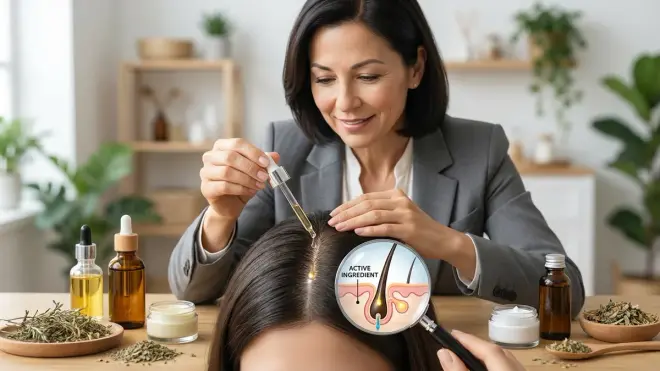
Unlike facial skin, scalp topicals must navigate sebum occlusion and hair density. This requires optimized molecular weights and delivery vehicles. Hyaluronic acid in skinification formulas typically uses 50-150 kDa fragments (vs 800-2000 kDa in many facial serums) to penetrate the follicular ostium. Niacinamide hair serums work at 3-5% concentrations—identical to facial applications—but in lighter bases (water-glycerin or propanediol systems) to avoid buildup.
Retinoid formulations require even more precision. Scalp-appropriate retinol concentrations sit at 0.01-0.05% (vs 0.1-1% facial), often encapsulated in phospholipid liposomes or cyclodextrin complexes to minimize irritation while maintaining follicular penetration. The goal isn't epidermal exfoliation (which can trigger reactive shedding) but modulation of keratinocyte proliferation in the hair matrix and anti-inflammatory effects via RAR-gamma receptor activation. Retinol scalp treatments manufactured by brands like [The Inkey List] (around $16/50ml) or [Act+Acre] (around $68/50ml, U.S.-manufactured) use time-release technologies that previously cost $150+ in prescription compounds.
Peptide Signaling and Cellular Communication
This is where skinification moves beyond simple barrier repair. Peptides function as cell-signaling molecules, influencing fibroblast activity (collagen XVI production in the follicular papilla), keratinocyte differentiation, and growth factor expression. Peptides in haircare require molecular weights under 500 Da for effective scalp penetration—larger chains sit on the surface or require penetration enhancers that risk irritation.
Copper peptide GHK-Cu (molecular weight 340 Da) is particularly well-studied for follicular health. At 0.05-0.2% concentrations, it demonstrates anti-inflammatory, antioxidant, and ECM-remodeling effects via upregulation of decorin and glycosaminoglycans in the dermal papilla. Budget formulations like [Revolution Haircare Thinning Hair Scalp Serum] (around $10/100ml, UK-manufactured) include 0.1% copper tripeptide-1 alongside 5% caffeine—a combination that mirrors $85 luxury alternatives at one-eighth the price.
The biological reality: peptides work through cumulative signaling, not single-application miracles. Consistent application over 8-12 weeks shows measurable effects on hair density (anagen:telogen ratio shifts) and caliber (medullary diameter increases of 5-8% in clinical trials). But they're not growth stimulants—they're follicular environment optimizers, which means results plateau without addressing nutritional deficits, hormonal factors, or genetic miniaturization patterns.
Why Skinification of Hair Matters
Scalp health is the foundation for every other hair goal—growth, retention, manageability, cosmetic appearance. You can't lipid-smooth a damaged cuticle into sustained health if the follicle emerging from a disrupted, inflamed scalp barrier is already compromised at the matrix level.
Traditional haircare focused downstream: coat the shaft, temporarily seal damage, add visual shine. Skinification works upstream: optimize the environment where hair is generated. This matters clinically because follicular miniaturization (androgenetic alopecia), telogen effluvium triggers, and inflammatory scalp conditions (seborrheic dermatitis, folliculitis) all respond to the same barrier-supportive, anti-inflammatory interventions we use on facial skin.
From a practical standpoint, skinification simplifies routine-building. If you already understand how to layer scalp actives using the same pH and molecular weight logic as facial skincare, you're applying transferable knowledge rather than learning an entirely separate category. Vitamin C on the scalp (magnesium ascorbyl phosphate at 5-10%) functions identically to facial applications: antioxidant protection, tyrosinase inhibition (relevant for hyperpigmented scalps), and collagen synthesis support in the follicular dermal sheath.
The budget accessibility in 2026 is what makes this genuinely democratizing. Five years ago, scalp-targeted peptides and encapsulated retinoids lived exclusively in $150+ professional treatments. Today, brands like The Ordinary, Revolution, The Inkey List, and Good Molecules manufacture these formulations at $8-25 price points with ingredient transparency that allows direct comparison to luxury competitors. You're paying for actives and delivery systems, not brand storytelling.
The friction point: application consistency. Facial skincare benefits from muscle memory—twice daily, visible skin, easy access. Scalp treatments require parting hair, section application, and the patience to let lightweight serums absorb rather than immediately styling. This isn't a flaw in the science; it's a usability reality that requires honest communication. If you won't commit to 3-5 minutes of scalp application 4-5 nights weekly, even the most elegant copper peptide formula won't deliver results.
Types and Variations of Skinification Approaches
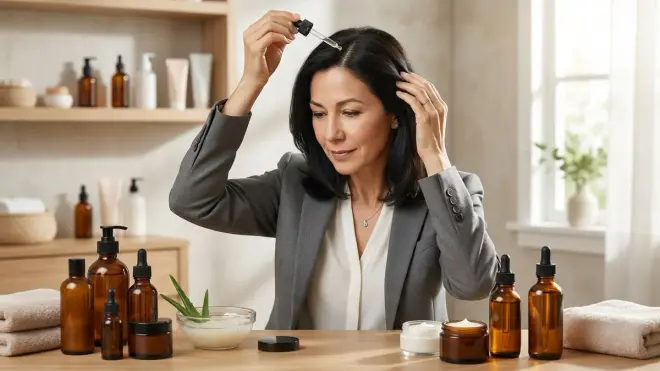
Skinification formulations fall into four primary categories, each targeting different biological mechanisms. Understanding these distinctions prevents redundant layering and allows strategic combination based on your specific scalp concerns.
Barrier-Repair Formulations
These prioritize lipid replenishment and pH optimization. Core ingredients: ceramide complexes (1-5%), cholesterol (0.5-2%), squalane or jojoba oil (5-15%), and pH buffers maintaining 4.5-5.5 range. Budget standout: [Revolution Haircare Scalp Soothing Serum] (around $9/100ml) delivers 3% ceramide blend with bisabolol at $0.09/ml. Luxury comparison: [Olaplex Scalp & Hair Oil No. 0 Intensive Bond Building Treatment] (around $30/50ml, U.S.-manufactured) at $0.60/ml includes squalane and hemisqualane but no ceramide complex—it's primarily a penetration enhancer for their bond-building system, not a barrier-repair formula.
Active Exfoliation and Cell Turnover
Retinoids, AHAs, and PHAs that modulate keratinocyte proliferation without stripping barrier function. Encapsulated retinol (0.01-0.05%), mandelic acid (3-5%), or gluconolactone (5-8%) at scalp-appropriate percentages. [The Inkey List Caffeine Stimulating Scalp Treatment] (around $16/50ml) combines 0.025% retinol (time-release) with 1% caffeine and 0.5% betaine salicylate—three distinct mechanisms (cell signaling, vasodilation, lipophilic exfoliation) in one $0.32/ml formula.
Peptide and Growth Factor Complexes
Target follicular signaling and dermal papilla support. Copper peptides (0.05-0.2%), biomimetic peptides (matrixyl types: palmitoyl tripeptide-1, palmitoyl tetrapeptide-7), or plant stem cell extracts (typically 1-3% of apple or edelweiss cultures). The Ordinary Multi-Peptide Serum for Hair Density (around $19/60ml, Canada-manufactured) includes Procapil™ (biotinyl-GHK, apigenin, oleanolic acid complex at 3%), CAPIXYL™ (biomimetic peptide with red clover extract at 4%), and caffeine (1%) at $0.32/ml—comparable ingredient density to $75 alternatives.
Anti-Inflammatory and Antioxidant Systems
Interrupt inflammatory cascades that link barrier dysfunction to follicular disruption. Niacinamide (3-5%), green tea EGCG (1-2%), bisabolol (0.5%), or panthenol (2-5%). These often layer with other categories—niacinamide particularly enhances ceramide synthesis and supports barrier lipid organization. Budget formulations from Good Molecules, Revolution, or Versed consistently deliver 3-5% niacinamide at $0.10-0.20/ml price points, whereas prestige brands charge $0.50-1.00/ml for identical concentrations.
The strategic variation is combining categories based on scalp assessment. Oily, congestion-prone scalps benefit from active exfoliation + anti-inflammatory. Dry, sensitive, or chemically treated scalps need barrier-repair + antioxidant. Thinning or aging scalps respond to peptide complexes + retinoids. For detailed guidance, see how to choose scalp actives based on barrier status and sebum production patterns.
Frequently Asked Questions About Skinification of Hair
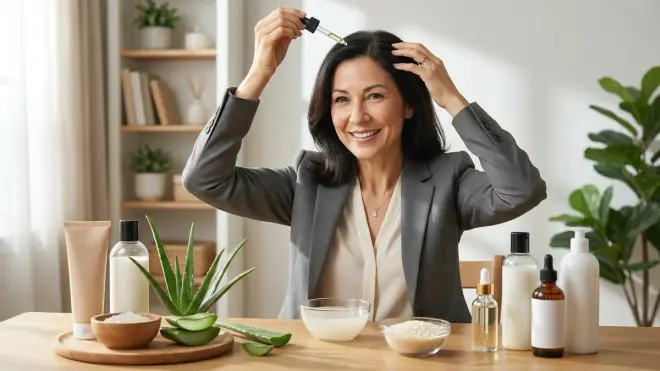
Is skinification of hair just a marketing trend or is there real science behind it?
The skinification of hair is grounded in established dermatological science—the scalp is anatomically and biochemically skin, with the same barrier structure (lipid lamellae, corneocytes, acid mantle) and response mechanisms (inflammatory cytokines, cell signaling, barrier repair pathways) as facial skin. Clinical research on retinoids, niacinamide, peptides, and ceramides has decades of peer-reviewed data demonstrating efficacy on scalp tissue, not just facial applications. What's new in 2026 is the formulation optimization (delivery systems, molecular weights, pH buffering) specific to scalp environment and the commercial accessibility of these actives at budget price points. The marketing proliferation is real, but the underlying biochemistry predates the trend by forty years.
Can I just use my facial serums on my scalp instead of buying separate products?
You can apply certain facial actives to the scalp—vitamin C serums, niacinamide, some peptide formulations—but optimal results require scalp-specific pH ranges, molecular weights, and base formulations. Facial serums often use heavier emollients (dimethicone, shea butter, occlusive oils) that create buildup around follicular ostia, and their pH targets (5.0-6.0) sit slightly higher than scalp-optimal (4.5-5.5). Retinol concentrations safe for facial skin (0.1-1%) frequently irritate the scalp without encapsulation or time-release systems. Hyaluronic acid molecular weights in facial products (800-2000 kDa) penetrate poorly through sebum-rich scalp tissue compared to 50-150 kDa fragments in dedicated scalp formulas. For barrier-repair ingredients like ceramides, facial products often work adequately, but you'll achieve better penetration and less hair-coating residue with lighter scalp-designed bases like water-glycerin or propanediol systems rather than cream emulsions.
How long does it take to see results from skinification haircare products?
Barrier-repair effects (reduced sensitivity, less flaking, improved moisture retention) typically manifest within 2-3 weeks of consistent application as lipid lamellae reorganize and transepidermal water loss decreases. Anti-inflammatory benefits from niacinamide or bisabolol can show improvement in redness and itching within 7-14 days. Peptide-driven follicular changes (increased hair density, caliber improvements) require 8-12 weeks minimum because you're influencing the anagen phase of the hair growth cycle—new growth must emerge from the optimized follicular environment to become visible. Retinoid effects on cell turnover and sebum regulation sit in the middle: 4-6 weeks for measurable impact. The biological reality is that scalp tissue remodeling follows the same timeline as facial skincare—incremental, cumulative, and dependent on consistent application frequency. If you're not seeing any change by week 12, reassess active concentrations, application technique, or whether other factors (nutritional deficits, hormonal disruption, genetic miniaturization) require intervention beyond topical actives.
Do expensive skinification products work better than budget alternatives?
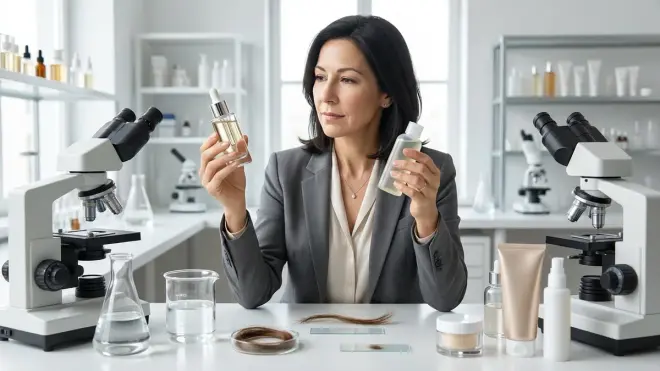
Active ingredient concentration and delivery system determine efficacy, not price point. In 2026, budget brands like The Ordinary, Revolution, The Inkey List, and Good Molecules manufacture encapsulated retinol, copper peptides, and ceramide complexes using the same raw ingredient suppliers (BASF, Sederma, Lucas Meyer) as luxury competitors. When you compare formulations side-by-side—3% niacinamide, 0.1% copper tripeptide-1, or 2% ceramide blend—the molecular structures are identical regardless of whether the product costs $12 or $85. What you pay for in prestige formulations is fragrance engineering, packaging design, retail markup, and brand positioning, not superior biochemical performance. The exceptions are proprietary peptide complexes (like Procapil or CAPIXYL) that require licensing fees, but these now appear in sub-$20 products. Quality control and stability testing matter more than brand prestige—but many budget manufacturers produce in FDA-inspected facilities in Canada, the UK, or South Korea with quality standards equivalent to luxury brands. Check for transparent ingredient listings, appropriate preservative systems (phenoxyethanol, ethylhexylglycerin), and pH disclosure when available.
Can skinification haircare cause hair loss or scalp irritation if used incorrectly?
Yes, misapplied actives can trigger reactive shedding, contact dermatitis, or barrier disruption—the same risks present in facial skincare apply to scalp tissue. Excessive retinoid concentrations (above 0.05% without proper introduction) can cause desquamation-driven telogen effluvium, where accelerated cell turnover pushes follicles prematurely into the shedding phase. Aggressive exfoliation (multiple acids, high-percentage AHAs, or daily mechanical scrubs) strips protective sebum and damages the lipid barrier, increasing inflammation and potentially worsening follicular miniaturization. Peptides and niacinamide carry minimal irritation risk at standard concentrations, but layering too many actives without understanding pH compatibility or penetration pathways creates redundancy or deactivation. The application errors to avoid: using actives on broken or inflamed scalp (wait until barrier integrity improves), skipping patch testing when introducing retinoids or strong acids, applying products immediately before heat styling (which drives penetration too aggressively), and neglecting barrier-repair support when using exfoliating actives. For safe layering protocols, see how to layer bioregenerative serums, which applies identical logic to scalp applications.
Summary: The Molecular Reality of Skinification
The skinification of hair translates forty years of dermatological research into follicular health optimization. By treating the scalp as the biochemically complex skin tissue it is—applying barrier-identical lipids, clinically studied actives, and pH-optimized delivery systems—you address hair quality at the generative source rather than applying cosmetic Band-Aids to damaged shafts.
The 2026 formulation landscape delivers sophisticated peptide complexes, encapsulated retinoids, and multi-weight hyaluronic acids at $8-25 price points that were inaccessible outside $150+ professional treatments five years ago. Budget brands manufacture using identical active ingredients, similar concentrations, and comparable delivery technologies to luxury competitors. What separates a $19 copper peptide serum from an $85 version is rarely biochemical performance—it's packaging, fragrance chemistry, and retail markup.
The clinical verdict: skinification works when you apply the same evidence-based rigor to scalp products as facial skincare. Check concentrations, understand molecular weights, verify pH appropriateness, and commit to consistent application. The follicular environment responds to cumulative biochemical signaling, not marketing claims. For a complete product sequence and timing strategy, reference the skinification haircare routine checklist.