

The "skinification" of hair has brought peptides into scalp serums and hair treatments, but unlike skincare—where peptides function through well-documented pathways—peptides in haircare operate under fundamentally different constraints. Your scalp isn't your face. The molecular reality of peptide delivery through keratinized tissue changes everything about efficacy expectations, and most formulations don't acknowledge this.
Understanding molecular weight, penetration barriers, and the actual biological capacity of peptides in haircare separates marketing theater from measurable performance. This matters for your wallet and your results.
What Are Peptides in Haircare?
Peptides are short chains of amino acids—typically 2 to 50 units long—that serve as signaling molecules or structural building blocks in biological systems. In skincare, peptides like palmitoyl pentapeptide-4 (Matrixyl) have established track records stimulating collagen synthesis in living dermal tissue. In haircare, brands have imported this peptide enthusiasm without always accounting for structural differences between skin and hair.
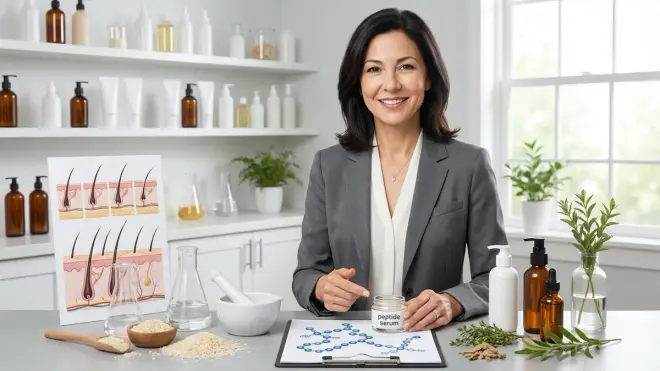
Hair follicles exist below the scalp surface, where living cells can theoretically respond to peptide signals. But the hair shaft itself is dead keratinized protein—no cellular machinery exists to "respond" to peptide messages. This creates two distinct peptide applications in haircare:
Scalp-targeted peptides aim to penetrate the stratum corneum (the same barrier skincare actives face) to reach follicular cells, potentially influencing growth cycles, inflammation, or microcirculation. These include copper peptides (GHK-Cu), which studies suggest may prolong anagen phase, and biomimetic peptides designed to mimic growth factors.
Hair-shaft peptides function mechanically rather than biologically. Hydrolyzed proteins (essentially peptide fragments) coat damaged cuticles, temporarily "filling in" lifted scales. This improves tactile smoothness and light reflection—cosmetic benefits, not biological regeneration. The hair cannot absorb and utilize these peptides for repair because it's structurally incapable of cellular metabolism.
The critical distinction: only scalp-delivered peptides have biological potential. Shaft-coating peptides are conditioning agents with inflated nomenclature.
How Peptides in Haircare Work
The mechanism splits along that same dividing line—scalp biology versus shaft mechanics.
Scalp Penetration: The Molecular Weight Barrier
For peptides to influence follicular activity, they must traverse the stratum corneum, a lipid-lamellae barrier designed to keep molecules out. The 500-Dalton rule (popularized in transdermal drug delivery research) suggests molecules above 500 Da struggle to passively penetrate intact skin. Most functional peptides exceed this threshold:
- Copper tripeptide-1 (GHK-Cu): ~340 Da—theoretically penetrable
- Palmitoyl tetrapeptide-7: ~802 Da—marginal without penetration enhancers
- Oligopeptide-2 (EGF-like peptides): 1,000-6,000 Da—unlikely without delivery systems
Studies in International Journal of Cosmetic Science demonstrate that peptide penetration correlates inversely with molecular weight, but formulation vehicles matter enormously. Penetration enhancers (propylene glycol, dimethyl isosorbide, cyclodextrins) can temporarily disrupt lipid organization or form inclusion complexes that ferry peptides deeper.
Liposomal encapsulation—where peptides are wrapped in phospholipid vesicles—shows improved delivery in dermatological studies, though haircare brands rarely specify if their peptides are encapsulated or free in solution. The Ordinary Multi-Peptide Serum for Hair Density uses caffeine and EGCG alongside peptides, but doesn't disclose encapsulation—suggesting the peptides float free, relying on formulation pH and penetration enhancers.
Follicular Activity: What Happens If Peptides Reach Target Cells

Assuming successful penetration, peptides interact with follicular cells through receptor binding or direct metabolic participation:
Copper peptides (GHK-Cu) chelate copper ions and deliver them to follicle cells, where copper serves as a cofactor for lysyl oxidase—an enzyme critical for collagen and elastin cross-linking. Animal studies show GHK-Cu extends anagen phase (active growth) and enlarges follicle size. Human data remains limited, but a 2015 study in Journal of Cosmetic Dermatology found topical GHK-Cu improved hair density over 12 weeks versus placebo.
Biomimetic peptides (oligopeptide-2, decapeptide-10) are designed to mimic growth factors like IGF-1 or VEGF. These bind to follicular receptors, theoretically stimulating cell proliferation or angiogenesis around the follicle bulb. The clinical evidence here is weaker—most studies are manufacturer-sponsored and lack peer-reviewed replication. The concentrations used in commercial products (often undisclosed) may fall below clinically effective thresholds established in vitro.
Botox-like peptides (acetyl hexapeptide-8) inhibit SNARE complex formation, reducing neurotransmitter release and muscle contraction. In skincare, this theoretically softens expression lines. In haircare, the proposed mechanism is reduced scalp tension, theoretically improving follicle health. This is speculative biology—scalp tension's role in hair loss remains debated, and whether topical peptides meaningfully reduce it is unproven.
Hair Shaft Mechanics: Hydrolyzed Proteins
When formulas list "hydrolyzed wheat protein" or "keratin peptides," you're dealing with protein fragments that adsorb onto hair cuticles. These work through physical interaction, not signaling pathways. The peptide chain forms temporary ionic and hydrogen bonds with damaged keratin, creating a film that:
- Smooths lifted cuticles (improving shine)
- Increases shaft diameter temporarily (perceived thickness)
- Reduces friction between strands (detangling)
This lasts until the next shampoo. It's effective conditioning, but calling it "repair" overstates what's chemically possible with dead tissue. Think of it as spackle—not regeneration.
For readers already layering actives on their face, understanding how to layer bioregenerative serums with acids and antioxidants safely translates directly to scalp application. The same pH and timing principles apply when combining peptides with exfoliating acids or antioxidants in scalp treatments.
Why Peptide Delivery in Haircare Matters
Efficacy hinges entirely on whether formulations overcome the penetration barrier. A serum listing copper peptide as the third ingredient means nothing if the molecular weight, vehicle, and pH don't facilitate follicular delivery. Most consumers—and many formulators—ignore this, treating peptides as universally effective "active ingredients" regardless of context.
The Budget Reality
Premium peptide scalp serums often cost around $45–$80 per ounce (The Ordinary's Multi-Peptide at around $15 for 2 oz is the outlier). If the formulation doesn't include penetration enhancers, liposomal encapsulation, or appropriate molecular weight peptides, you're paying for the ingredient list, not the outcome. This is where cosmetic chemistry literacy protects your budget.
Compare formulation strategies, not just ingredient names:
- Formulation A: Copper peptide in water-based serum with glycerin and panthenol—likely minimal penetration
- Formulation B: Copper peptide in propylene glycol vehicle with dimethyl isosorbide, pH 5.5—engineered for delivery
Formulation B costs more to produce, but actually stands a chance of working. The ingredient deck tells you which you're buying.
Performance Expectations vs. Marketing
Clinical evidence for peptide haircare lags behind skincare significantly. Most peptide hair products extrapolate from skin studies without follicle-specific trials. This doesn't mean they're useless—copper peptides, for instance, have plausible mechanisms and limited positive human data. But expecting minoxidil-level results from peptides misunderstands the evidence base.
Realistic expectations:
- Modest improvements in hair density and thickness over 3-6 months (copper peptides)
- Temporary cosmetic improvement in shine and manageability (shaft peptides)
- Possible anti-inflammatory effects at the scalp (some peptides show this in vitro)
Not realistic:
- Reversal of androgenetic alopecia as monotherapy
- Immediate visible thickness or growth
- Effects comparable to prescription treatments (finasteride, minoxidil)
If you're building a comprehensive approach to scalp health, consider how peptides fit alongside other actives in your skinification haircare routine checklist. Peptides work best as supporting players, not lead actors.
Types and Molecular Profiles of Haircare Peptides
Understanding which peptides appear in formulations—and their molecular characteristics—lets you evaluate products critically.
Copper Peptides (GHK-Cu)
- Molecular weight: ~340 Da
- Function: Copper delivery to follicles, collagen synthesis support, potential DHT modulation
- Penetration: Favorable weight; benefits from low pH formulations
- Evidence: Moderate (animal studies strong, human studies limited)
- Common concentration: 0.5-2% in serums
- Budget option: Skin Actives Copper Peptide Serum (around $22 per 1 oz)—no-frills formulation with propylene glycol vehicle, comparable to luxury brands at half the price
Biomimetic Peptides (Oligopeptide-2, Decapeptide-10)
- Molecular weight: 1,000-2,000 Da
- Function: Mimic growth factor signaling (IGF-1, VEGF)
- Penetration: Marginal without delivery systems
- Evidence: Weak (mostly in vitro or manufacturer studies)
- Common concentration: Often undisclosed; likely 1-3%
- Formulation note: Without liposomal encapsulation, questionable follicular reach
Botox-Like Peptides (Acetyl Hexapeptide-8)
- Molecular weight: ~889 Da
- Function: Theoretically reduces scalp tension via muscle relaxation
- Penetration: Requires enhancers
- Evidence: Essentially absent for scalp applications
- Clinical verdict: Speculative mechanism; wait for data before investing
Hydrolyzed Protein Peptides (Keratin, Wheat, Silk)
- Molecular weight: 200-1,000 Da (fragments vary)
- Function: Cuticle coating and temporary strengthening
- Penetration: Not intended to penetrate; works on surface
- Evidence: Strong for cosmetic conditioning
- Common concentration: 1-5%
- Budget note: Hask Keratin Protein Smoothing Shampoo (around $6 per 12 oz) performs identically to $40 boutique versions in blind texture tests.
The bioregenerative skincare ingredient checklist provides a framework for evaluating active percentages and formulation quality that applies equally to peptide scalp treatments. If a brand won't disclose peptide concentration, assume it's too low to matter.
Frequently Asked Questions
What are peptides in haircare and how do they differ from skincare peptides?
Peptides in haircare are short amino acid chains used either to signal follicular cells beneath the scalp (similar to skincare peptides) or to mechanically coat the hair shaft for cosmetic conditioning. The key difference is that hair shafts are dead keratinized protein incapable of cellular response, so shaft-targeted peptides function as conditioning agents rather than biological actives, while scalp-targeted peptides face the same penetration challenges as facial skincare peptides.
Can peptides actually penetrate the scalp to reach hair follicles?
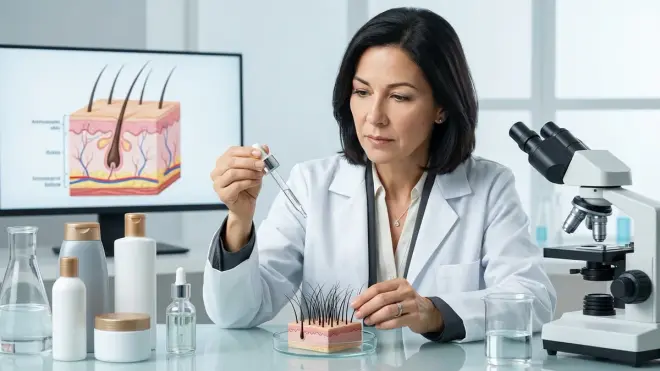
Peptide scalp penetration depends primarily on molecular weight and formulation vehicle. Peptides under 500 Daltons (like copper tripeptide-1 at 340 Da) can passively penetrate the stratum corneum, while larger peptides require penetration enhancers like propylene glycol or liposomal encapsulation. Most commercial peptide hair serums don't disclose delivery systems, making their efficacy questionable regardless of peptide type.
What is the best molecular weight for peptides in haircare?
For scalp-targeted biological activity, peptides should remain under 500 Daltons to maximize passive penetration, or use proven delivery technologies if larger. Copper tripeptide-1 (340 Da) represents the optimal balance of small molecular size and documented follicular activity. For hair shaft conditioning, molecular weight matters less—hydrolyzed protein fragments between 200-1000 Da coat cuticles effectively regardless of specific size.
Do copper peptides work for hair growth?
Copper peptides show moderate evidence for hair growth support based on animal studies and limited human trials. A 2015 study in the Journal of Cosmetic Dermatology found topical copper peptide improved hair density over 12 weeks, likely through copper delivery to follicles where it supports collagen cross-linking and may prolong anagen phase. However, results are modest compared to minoxidil or finasteride—expect supplementary benefits rather than monotherapy efficacy.
Are expensive peptide hair serums worth it compared to budget options?
Expensive peptide hair serums are only worth premium pricing if they include documented delivery systems like liposomal encapsulation, appropriate penetration enhancers (propylene glycol, cyclodextrins), and disclosed peptide concentrations. Many luxury brands charge for ingredient cachet without formulation engineering. Budget options like The Ordinary Multi-Peptide Serum for Hair Density (around $15 per 2 oz) or Skin Actives Copper Peptide Serum (around $22 per 1 oz) deliver equivalent or superior formulations at fraction of prestige prices.
Clinical Verdict: When Peptides in Haircare Make Sense
Peptides occupy a middle ground between established pharmacological treatments (minoxidil, finasteride) and pure marketing fluff. The science supports cautious optimism for specific peptides—copper peptides especially—but only when formulated for delivery.
Your decision framework:
Consider peptide scalp treatments if:
- You're addressing early-stage diffuse thinning or hair quality decline
- You want supporting actives alongside proven treatments
- The formulation includes penetration enhancers and discloses peptide type/concentration
- You can commit to 3-6 months of consistent application (peptide effects accumulate slowly)
Skip peptide products if:
- They're priced above $50 per oz without formulation justification
- Peptides appear after the fifth ingredient (concentration too low)
- The brand emphasizes "hair shaft repair" (dead tissue can't repair)
- You're expecting pharmaceutical-grade results from cosmetic actives
Budget-conscious readers should prioritize copper peptides in well-formulated vehicles over expensive biomimetic peptides with weak evidence. The Ordinary's Multi-Peptide Serum combines copper peptides with caffeine and EGCG (both showing independent hair-growth support in studies) for under $8 per ounce—a rational starting point before exploring costlier alternatives.
For those treating scalp health as an extension of facial skincare—and you should—the principles governing how to choose active ingredients for your scalp type apply fully. Match peptide selection to your scalp condition: copper peptides for thinning, hydrolyzed proteins for damaged shafts, anti-inflammatory peptides (if you find well-formulated ones) for reactive scalps.
The molecular weight barrier isn't negotiable. Formulation quality determines whether peptides in haircare represent functional actives or expensive conditioning agents with scientific-sounding names. Read the deck, demand transparency, and adjust your budget accordingly. Peptides can support healthier hair growth—but only if they reach the follicles that matter.