

Here's the deal: I spent three years buying $150 serums because the bottles looked scientific and the sales associate seemed really confident. Then I actually learned to read ingredient labels during my daughter's naptime, and let me tell you—I'm still mad about all that money I wasted. Understanding active ingredient concentrations skincare is the single most important skill that separates smart shoppers from people throwing money at pretty packaging. Once you know what percentages actually work, you'll stop caring whether something costs $12 or $120.
What Are Active Ingredient Concentrations?
Active ingredient concentration is the percentage of a specific functional ingredient in your skincare product that actually does something to your skin cells. Think of it like coffee: a shot of espresso has about 63mg of caffeine in 1 oz, while weak drip coffee might have 12mg in 8 oz. Same ingredient, wildly different concentrations, completely different results.
When we talk about understanding active ingredient concentrations skincare, we're looking at the percentage by weight or volume of ingredients like retinol, vitamin C, niacinamide, glycolic acid, or hyaluronic acid. A serum with 2% salicylic acid contains 2 grams of salicylic acid per 100 grams of total product. The other 98%? That's the vehicle—the stuff that helps the active penetrate your skin, makes it feel nice, and keeps it stable.
Here's what they don't tell you at the department store counter: the FDA doesn't require cosmetic brands to disclose active percentages unless they're making drug claims. That $180 "advanced retinol serum" might contain 0.01% retinol, while the CeraVe Resurfacing Retinol Serum sitting at the drugstore for around $18 contains 0.3% encapsulated retinol plus 0.1% liposomal retinol. I learned this the hard way after spending a mortgage payment on luxury skincare that did absolutely nothing for my post-pregnancy melasma.
The concentration sweet spot varies by ingredient. Vitamin C (L-ascorbic acid) works at 10-20%. Niacinamide shows efficacy at 2-5% (though some studies show benefits up to 10%). Retinol delivers results starting at 0.25%, with prescription-strength tretinoin at 0.025-0.1%. Most AHAs need 5-10% to exfoliate effectively. Understanding these ranges means you can compare a $15 product to a $150 one and know which actually has enough active ingredient to change your skin.
How Active Ingredient Concentrations Work
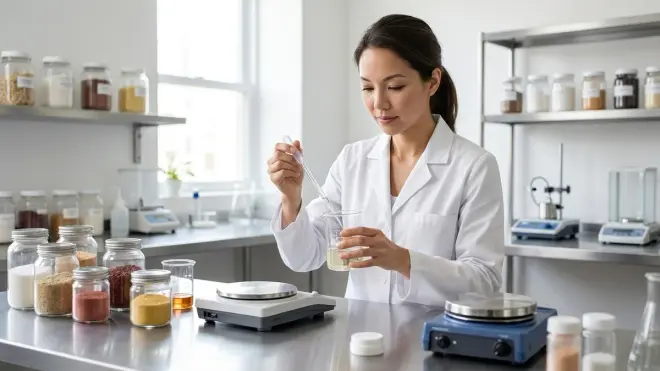
Let's be real: cosmetic chemistry is basically controlled chemistry. You're creating a specific concentration of an active ingredient that can penetrate your skin barrier (which is designed to keep things out) and interact with skin cells at a depth where it matters.
The relationship between concentration and efficacy isn't linear. More isn't always better, and this is where people waste money. Take niacinamide: studies show that concentrations above 5% don't necessarily increase benefits, but do increase the risk of irritation for sensitive skin types. I tested this myself with a 10% niacinamide serum that made my face feel like I'd fallen asleep on a heating pad—switched to a 4% formula from How to Choose Barrier-Repair Ingredients for Your Skin Type, same brightening results, zero irritation.
Molecular size matters as much as concentration. Hyaluronic acid is a perfect example. You'll see products shouting about "pure hyaluronic acid!" but never mentioning that HA molecules are massive—up to 2 million Daltons. They sit on your skin surface and hydrate there, which is fine for plumping. But low molecular weight HA (under 50,000 Daltons) or hydrolyzed HA can actually penetrate into deeper skin layers. A product with 2% high molecular weight HA and one with 1% multi-weight HA complex aren't comparable, even though the percentages look similar.
pH determines whether certain actives even work. L-ascorbic acid (vitamin C) needs a pH below 3.5 to penetrate skin effectively. Lots of brands throw 15% vitamin C into a product with a pH of 5-6 because it feels nicer on skin—but chemically, it's not doing much. Meanwhile, The Ordinary's Ascorbic Acid 8% + Alpha Arbutin 2% sits at a pH around 2.0. Yes, it tingles. Yes, it works. The concentration matters, but so does the formulation chemistry supporting it.
Delivery systems can enhance or completely waste a good concentration. Retinol degrades rapidly when exposed to light and air. A jar of 1% retinol that you open nightly? Probably 0.3% retinol after six weeks. An airless pump with 0.5% encapsulated retinol in a light-protective formula? Stable for months. I keep my retinol products in opaque packaging in my bathroom drawer—learned that lesson after spending $90 on a beautiful glass bottle that turned yellow by week three.
Time-release and encapsulation technologies let you use higher concentrations with less irritation. Encapsulated retinol releases slowly over hours instead of hitting your skin all at once. It's why I can use 0.5% encapsulated retinol nightly without peeling, but 0.3% straight retinol made me look like I'd been attacked by a belt sander after two uses.
Why Understanding Active Concentrations Matters
Because you're billing $300/hour (or wish you were), and every dollar you waste on underdosed skincare is money you could've spent on something that actually works—or saved for your kid's college fund.
You make better purchasing decisions. When you know that effective vitamin C concentrations start at 10%, you stop buying "vitamin C-infused" moisturizers where it's the 14th ingredient listed. I used to buy $85 eye creams with "peptides" listed after three types of fragrance. Now I buy targeted peptide serums where the actives are in the first five ingredients, and I layer them under a $9 eye cream. Same results, $76 saved, two minutes of my morning back.
You can spot marketing nonsense immediately. "Proprietary complex" usually means "we're not telling you the concentration because it's embarrassingly low." "Powered by retinol" might mean there's 0.001% in there. "Clinical strength" means nothing if they won't tell you the percentage. Once you understand active ingredient concentrations skincare, you become immune to expensive packaging and vague claims.
You avoid irritation and wasted time. Starting with too-high concentrations is how people burn their faces off and declare that "retinol doesn't work for me" or "I can't use acids." The concentration matters as much as the ingredient itself. When I rebuilt my routine after pregnancy, I started with 0.25% retinol and 5% lactic acid. Three months later, my skin could handle 0.5% retinol and 10% glycolic. I didn't waste two weeks recovering from over-exfoliation like I did in my 20s when I thought stronger meant better.
For those of us doing How to Build a Bioregenerative Skincare Routine for Maximum Cell Turnover, knowing exactly what concentration you're starting with lets you increase methodically without guessing.
Types of Active Ingredient Concentration Ranges
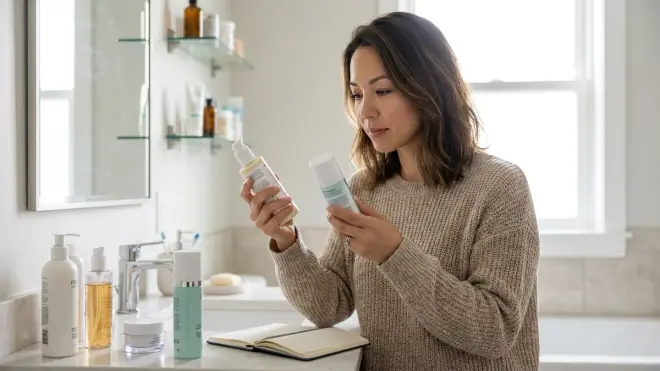
Different actives have different therapeutic windows—the concentration range where they work without unnecessary irritation. Here's what actually matters when you're standing in Target at 7 PM trying to decide between products.
Cell communication ingredients like retinol, peptides, and growth factors work in lower concentrations than you'd think. Retinol shows efficacy starting at 0.25%, with diminishing returns above 1% for over-the-counter products. Peptides like Matrixyl 3000 work at concentrations around 3-8%, and yes, The Ordinary's Matrixyl 10% + HA is actually a solid deal at around $28 for 1 oz. According to research published in the International Journal of Cosmetic Science, palmitoyl tetrapeptide-7 showed significant reduction in wrinkle depth at 3% concentration over 12 weeks.
Exfoliating acids need higher concentrations to actually resurface skin. Glycolic acid works at 5-10% in leave-on products (professional peels go 20-70%). Lactic acid is effective at 5-12%. Salicylic acid needs 0.5-2% for acne treatment. I use a 10% lactic acid serum three nights a week—any lower and I'm just making my skin damp, any higher and I'm flirting with a chemical burn.
Antioxidants vary wildly. Vitamin C (L-ascorbic acid) needs 10-20% to provide photoprotection and brighten. Niacinamide works at 2-5%, though some formulations go up to 10%. Alpha-lipoic acid shows benefits at 1-5%. Resveratrol is effective around 1-2%. The Paula's Choice 10% Niacinamide Booster sits at the higher end but layers well under moisturizer if you have hyperpigmentation that won't quit (like my melasma—still working on it).
Hydrators like hyaluronic acid and glycerin work in broad ranges. Hyaluronic acid is typically formulated at 0.1-2%, but molecular weight matters more than percentage. Glycerin is effective at 2-5% as a humectant. These are workhorses, not divas—they don't need precision dosing the way acids do.
For more on how different molecular weights affect penetration and results, check out What Are Bioregenerative Actives? Understanding Growth Factors and Exosomes.
Frequently Asked Questions
Does higher concentration always mean better results?
No, and this is where people burn through money and skin barrier function. Each active has an efficacy ceiling—a concentration above which you get more irritation but no additional benefit. Niacinamide at 10% isn't twice as effective as 5%, but it is more likely to cause flushing. Retinol above 1% in OTC products mostly just increases peeling without accelerating results. Start at proven effective concentrations (like 0.3% retinol or 5% niacinamide), use them consistently for 8-12 weeks, then consider increasing if you're tolerating it well and want to push results further.
How can I find out the concentration if it's not on the label?
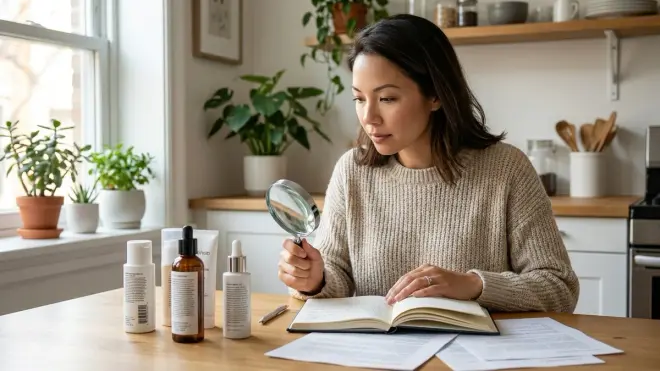
You usually can't, unless the brand voluntarily discloses it or it's a mandated drug ingredient (like sunscreen actives). Look at ingredient order—INCI lists ingredients by descending concentration, so actives listed in the first 5-7 ingredients are usually at meaningful levels. Contact customer service and ask directly (I've done this on lunch breaks between meetings—some brands answer honestly). For brands that refuse to disclose, I assume the concentration is too low to brag about and move on. The Ordinary, CeraVe, and Paula's Choice all list active percentages because they're confident in their formulations. That transparency saves me time and guesswork.
Can I mix products to create my own concentration?
Technically yes, practically don't unless you understand pH and stability. Mixing a 10% vitamin C serum with moisturizer doesn't give you 5% vitamin C in the final mix—it dilutes the concentration unpredictably and likely breaks the pH required for efficacy. Layering products is fine (that's your routine), but actually mixing them in your palm changes formulation chemistry. If you want a lower concentration, buy one formulated at that level. I learned this after trying to DIY my way to gentler retinol and ending up with an oily mess that did nothing for three weeks.
What's the difference between active and inactive ingredients?
Active ingredients directly change skin cell behavior—they exfoliate, communicate with cells, neutralize free radicals, or bind water. Inactive ingredients (or "excipients") are the delivery system: emulsifiers, preservatives, thickeners, solvents, and penetration enhancers that help actives stay stable and reach target skin layers. A well-formulated product needs both. The actives are what you're paying for; the inactives determine whether those actives actually work. This is why comparing products by active concentration alone misses half the picture—but it's still the first thing to compare.
How long until I see results from the right concentration?
Cell turnover takes 28 days minimum, longer as you age (40+ days over age 50). For exfoliating acids, you'll see texture improvement in 2-4 weeks. Retinol and vitamin C take 8-12 weeks for visible brightening and wrinkle reduction. Peptides need 12-16 weeks. I track progress with phone photos in the same lighting on the first of every month—way more accurate than my memory at 11 PM wondering if my hyperpigmentation is fading. If you see zero change after the appropriate timeline for your active at a proven concentration, the formulation might be unstable or your skin barrier might need repair first (check out How to Repair a Damaged Skin Barrier in 7 Days before layering strong actives).
Summary
Understanding active ingredient concentrations skincare transforms you from someone who buys whatever looks expensive into someone who evaluates formulations based on data, not packaging. You need to know the proven effective range for each active (10-20% for vitamin C, 0.25-1% for retinol, 2-5% for niacinamide, 5-10% for AHAs), recognize that delivery systems and pH matter as much as percentage, and understand that higher concentrations don't always mean better results—they often just mean more irritation.
The beauty industry profits from keeping concentration information vague. You profit from demanding specifics and walking away from brands that won't disclose them.
I'm typing this at 10:47 PM with my 0.5% encapsulated retinol already absorbed (cost: around $22 for 1 oz, lasts three months, per-use cost under $0.25). My skin looks better now than it did when I was spending $400/month on luxury products with unknown active concentrations. That's not a coincidence—it's chemistry meeting a budget that actually makes sense.