
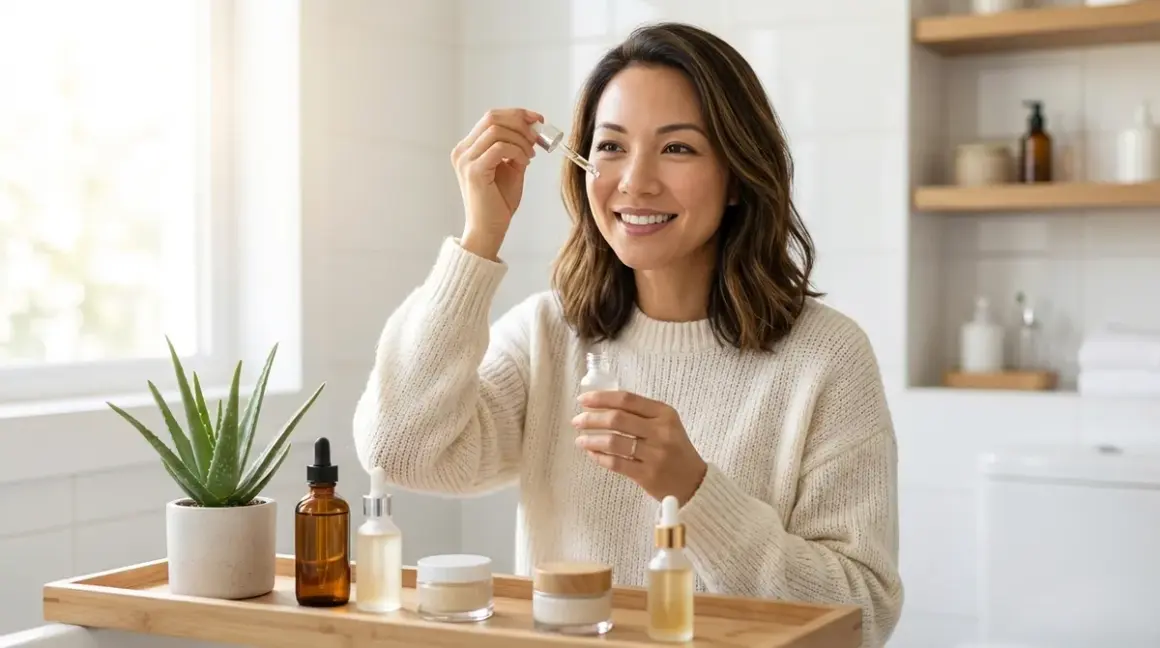

Let's be real: you're here because you want your skin to look better without spending three hours researching peptide chain lengths or remortgaging your house for a serum. I get it. When I was juggling postpartum melasma and depositions, I needed to know how to build a bioregenerative skincare routine that actually worked—and didn't require a PhD in cosmetic chemistry.
Here's the deal: building a bioregenerative skincare routine takes about 15 minutes to set up and 6-8 minutes daily to execute. You'll spend around $80-$150 upfront for a complete regimen that lasts 3-4 months (that's roughly $0.70-$1.25 per day). The payoff? Visible improvements in skin texture and tone within 4-6 weeks, thanks to actives that genuinely boost your skin's natural cell turnover rather than just sitting on the surface looking pretty.

This is a beginner-to-intermediate guide. If you've never used actives before, you'll start slow. If you're already using retinol or acids, you'll learn how to build a bioregenerative skincare routine that layers these smartly with growth factors and peptides.
What You'll Need
Core Products:
- Gentle cleanser with pH 5.0-5.5 (you need a clean canvas without stripping your barrier)
- Bioregenerative serum containing EGF (epidermal growth factor) at 50-500 ng/mL or bakuchiol 0.5-2% (Best Bioregenerative Serums Under $50 for Aging Skin)
- Peptide serum with matrixyl 3000 or copper peptides at 5-10% concentration
- Barrier repair moisturizer with ceramides 1, 3, and 6-II plus cholesterol and fatty acids
- Broad-spectrum SPF 30+ (non-negotiable—cell turnover means newer, more vulnerable skin)
Optional Boosters:
- Retinol or retinaldehyde 0.25-1% for advanced users (see Bioregenerative Peptides vs Retinol: Which Cell-Renewal Active Works Better? for comparison data)
- Exfoliating acid (lactic 5-10% or mandelic 5-8%) for texture refinement
- Antioxidant serum with vitamin C 10-20% or resveratrol 1-3%
Tools:
- Clean fingertips (seriously, put down the cotton pads—they absorb half the product)
- Small notebook or phone app to track what you're using and when
- Timer (you'll need it for wait times between layers)
Step 1: Start with Strategic Cleansing
You cannot build cell turnover on dirty skin. Period.
Use a low-pH cleanser (4.5-5.5 range) morning and night. I'm talking about formulas like CeraVe Hydrating Cleanser (around $14.99 for 16 oz, made in the USA) with ceramides and hyaluronic acid, or The Inkey List Oat Cleansing Balm (around $9.99 for 5 oz, manufactured in UK) if you wear makeup. The pH matters because your skin's natural acid mantle sits at 4.7, and anything too alkaline disrupts the enzymatic processes that govern cell turnover.
Here's what nobody tells you: over-cleansing kills bioregenerative results. When I was washing my face twice with foaming cleansers plus micellar water, my expensive growth factor serum did exactly nothing. Your skin barrier needs to be intact for bioregenerative actives to work properly.
Cleanse for 60 seconds max. Massage gently with lukewarm water (not hot—heat degrades barrier lipids). Pat dry, leaving skin slightly damp. This takes 90 seconds total, which means you have zero excuse to skip it while your coffee brews.
Cost per use: $0.06-$0.10 depending on product choice. Time investment: 90 seconds twice daily.
The Inkey List cleanser sometimes leaves a slight film if you have very oily skin—not a dealbreaker, but worth a second rinse if you're acne-prone.
Step 2: Apply Your Bioregenerative Serum First
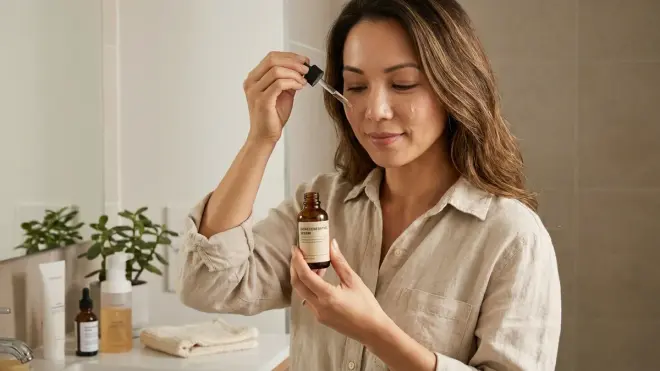
This is where learning how to build a bioregenerative skincare routine gets interesting. Your bioregenerative serum goes on damp skin immediately after cleansing—not after toner, not after essence, first.
Why? Growth factors like EGF and plant stem cell extracts work by binding to specific receptors on your skin cells. They need direct access. Every layer you put on first creates a barrier that reduces penetration by up to 40% according to cosmetic chemistry studies.
Use 3-4 drops for your entire face and neck. I use The Ordinary EUK 134 0.1% (around $10 for 1 oz, made in Canada) layered with The Ordinary Matrixyl 10% + HA (around $14 for 1 oz), which gives me bioregenerative benefits for $0.16 per application. If you want ready-made, try Bioeffect EGF Serum (around $165 for 0.5 oz)—or skip the luxury markup and go with Timeless CoQ10 Serum with Matrixyl 3000 (around $25.95 for 1 oz, made in USA, contains 5% matrixyl plus antioxidants).
Application technique matters: press the serum into skin with flat palms, don't rub. Rubbing creates friction heat that can denature peptide chains. Press, hold for 2-3 seconds, release. Takes 20 seconds total.
Wait 3 minutes after application before the next step. Set a timer. I do this while I'm brushing my teeth or making my kids' lunches. Growth factors need time to bind to receptors—studies from the Journal of Cosmetic Dermatology show maximum binding occurs within 3-5 minutes.
The Ordinary's dropper bottle for Matrixyl is annoying—the serum is too thick and dispenses slowly. You'll learn to tip the bottle horizontally and wait. Minor complaint, huge savings.
Step 3: Layer Peptides Strategically
Peptides are the workhorses of bioregenerative skincare. They're signal molecules that tell your skin to produce more collagen, elastin, and hyaluronic acid—essentially tricking your cells into acting younger.
After your 3-minute wait, apply peptide serum. Look for formulas containing:
- Matrixyl 3000 (palmitoyl tripeptide-1 + palmitoyl tetrapeptide-7) at 5-10%
- Copper peptides (GHK-Cu) at 1-3%
- Argireline (acetyl hexapeptide-8) at 5-10% if you're targeting expression lines
The Ordinary Buffet (around $16.90 for 1 oz) contains multiple peptide complexes plus amino acids and hyaluronic acid—it's my go-to when I'm too tired to think. The Inkey List Collagen Peptide Serum (around $14.99 for 1 oz) uses matrixyl and tripeptide-29, manufactured in UK with comparable penetration to $80+ prestige brands.
Application: 3-4 drops, press into skin. Another 2-minute wait. I know you're thinking "Sarah, that's 5 minutes already," and yes, it is. But this is where cell turnover happens. You can scroll your phone or drink your coffee. You don't need to stand statue-still.
For understanding the science behind different peptide types and molecular weights, check out What Are Bioregenerative Actives? Understanding Growth Factors and Exosomes—it breaks down how molecular size affects penetration depth.
One frustration: peptide serums are almost universally sticky until they fully absorb. The stickiness lasts 60-90 seconds. I've learned to apply my serum, then start getting dressed while it sinks in.
Step 4: Add Retinoids or Acids (If Your Skin Can Handle It)
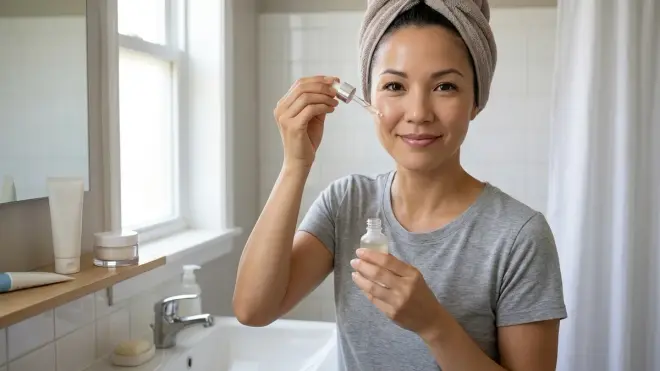
Here's where how to build a bioregenerative skincare routine gets personalized. Not everyone needs this step, especially if you're new to actives.
If you're using retinol: Apply it after peptides in the evening only. Start with 0.25-0.3% concentration 2x weekly. The Ordinary Retinol 0.5% in Squalane (around $6.80 for 1 oz, made in Canada) is absurdly affordable. Versed Press Restart Gentle Retinol Serum (around $21.99 for 1 oz, made in USA) uses encapsulated retinol that's less irritating if you're sensitive.
If you're using acids: Lactic acid 5-10% or mandelic acid 5-8% work well with bioregenerative routines because they're gentler than glycolic. Apply after peptides, wait 2 minutes. I use The Ordinary Lactic Acid 10% + HA (around $7.90 for 1 oz) 3x weekly at night.
Critical rule: Don't use retinol and acids the same night when you're starting out. Alternate nights. I do peptides + retinol Monday/Wednesday/Friday, peptides + lactic acid Tuesday/Thursday/Saturday, peptides only on Sunday.
For safe layering protocols that won't destroy your barrier, read How to Layer Bioregenerative Serums with Acids and Antioxidants Safely—I learned this the hard way after giving myself chemical burns before a client meeting.
The Ordinary's retinol in squalane feels greasy for about 5 minutes. If you're applying makeup in the morning, skip the retinol or use a silicone primer after it fully absorbs.
Step 5: Seal Everything with Barrier Support
Cell turnover means nothing if you're simultaneously destroying your moisture barrier. After all your active layers have absorbed (total wait time: about 5 minutes from start), apply a barrier repair moisturizer.
You need three lipid types: ceramides, cholesterol, and fatty acids in a 3:1:1 ratio. This mimics your skin's natural barrier composition. CeraVe PM Facial Moisturizing Lotion (around $13.49 for 3 oz, made in USA) contains ceramides 1, 3, and 6-II plus niacinamide 4%. Stratia Liquid Gold (around $32 for 2 oz, made in USA) uses the research-backed 3:1:1 ratio with 4% niacinamide and sea buckthorn oil.
Cost breakdown: CeraVe = $0.15 per use, Stratia = $0.53 per use. Both last about 3 months with daily application. I've used both. Stratia absorbs faster and layers better under makeup, but CeraVe works fine if you're on a tight budget.
Use a pea-sized amount for your face, slightly more for neck and chest. Press it in rather than rubbing—you've just spent 6 minutes layering actives, don't mess it up now with aggressive massage.
Morning only: If it's AM, wait 2 minutes then apply SPF. If it's PM, you're done. Total routine time at this point: 8 minutes in the evening, 10 minutes in the morning including SPF.
For additional barrier repair options with detailed ingredient breakdowns, see 7 Best Budget Bioregenerative Moisturizers with Stem Cell Extracts.
CeraVe's pump dispenser occasionally gets clogged—you'll need to remove the pump, wipe it clean, and reset it every few weeks. Annoying but manageable.
Step 6: Protect with Broad-Spectrum SPF Every Morning

Cell turnover brings newer, thinner skin to the surface. That skin is more vulnerable to UV damage than your old, dead surface cells were. Skipping SPF while using bioregenerative actives is like power-washing your car then parking it in a hailstorm.
Use SPF 30 minimum, broad-spectrum (protects against UVA and UVB). Apply 1/4 teaspoon for face and neck—this is more than you think. I use two fingers' length squeezed from the tube.
Budget picks: Neutrogena Clear Face SPF 55 (around $8.97 for 3 oz, made in USA) is oil-free and doesn't pill under makeup. Black Girl Sunscreen SPF 30 (around $15.99 for 3 oz, made in USA) works beautifully on deeper skin tones without white cast. Pipette Mineral SPF 50 (around $14.99 for 4 oz, made in USA) is mineral-based if you're sensitive to chemical filters.
Application timing: Wait 2 minutes after moisturizer, then apply SPF. Wait another 2 minutes before makeup. I know that sounds like a lot of waiting, but you're literally building new skin cells. This is the time investment required for actual results.
Reapply every 2 hours if you're outdoors or sitting near windows. In court or at the office with fluorescent lighting, one morning application is sufficient. Keep a travel-size tube in your bag for midday reapplication—takes 45 seconds at your desk or in your car.
I'm not going to lie: every mineral SPF I've tried leaves some white cast initially. It fades within 10-15 minutes, but if you're running late and need to look polished immediately, use a chemical SPF instead.
Step 7: Monitor and Adjust Based on Skin Response
Building a bioregenerative skincare routine isn't set-it-and-forget-it. Your skin will tell you what's working—you just need to pay attention.
Week 1-2: Expect mild tingling with actives (normal) but not burning or persistent redness (not normal). If you're getting irritation, reduce frequency. Drop from nightly to every other night. Skip the retinol or acid layer until your barrier recovers.
Week 3-4: You should see smoother texture and more even skin tone. Take photos in the same lighting every week—your bathroom mirror at 7 AM with the overhead light on. When you're seeing your face every day, you won't notice gradual changes without comparison shots.
Week 5-8: This is when cell turnover really kicks in. Fine lines soften, pores appear smaller (they're not actually smaller—the surrounding skin is just plumper), and your skin holds moisture better. If you're not seeing changes by week 8, your concentration might be too low or your barrier might be compromised.
Adjustment signals:
- Excessive dryness = reduce active frequency or increase moisturizer
- Breakouts = check for comedogenic ingredients in your moisturizer (some plant oils clog pores)
- No results = increase active concentration gradually or add a second bioregenerative ingredient
- Irritation = strip back to basics (cleanser, moisturizer, SPF) for 5-7 days, then reintroduce one active at a time
I track this in my phone's notes app—what I used, morning or night, any skin reactions. Takes 15 seconds to update. When I went through postpartum hormonal chaos, this tracking saved me from abandoning products that actually worked but just needed more time.
For a comprehensive ingredient checklist that helps you assess whether your products meet bioregenerative standards, see Bioregenerative Skincare Ingredient Checklist: Active Percentages and Formulation Standards.
Step 8: Optimize Timing for Maximum Efficacy
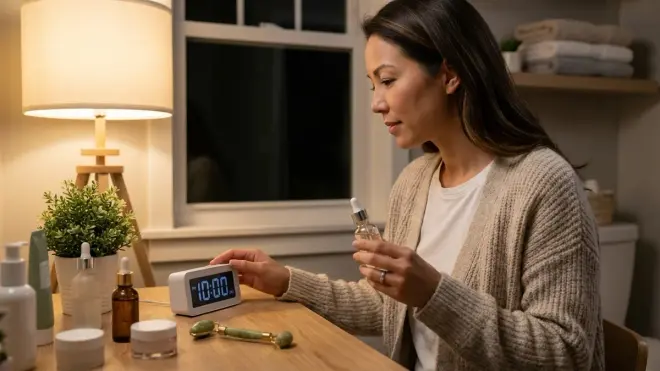
When you apply your routine matters almost as much as what you apply. Cell renewal peaks during sleep—your skin's natural repair mechanisms are 2-3x more active between 11 PM and 4 AM according to chronobiology research.
Evening routine (6-8 minutes):
- Cleanse (90 seconds)
- Bioregenerative serum (3-minute wait)
- Peptide serum (2-minute wait)
- Retinol or acid if scheduled (2-minute wait)
- Barrier repair moisturizer
Morning routine (10 minutes):
- Cleanse (90 seconds)
- Bioregenerative serum (3-minute wait)
- Antioxidant serum optional (2-minute wait)
- Barrier repair moisturizer (2-minute wait)
- SPF
I do my evening routine at 9 PM after my kids are in bed, not right before sleep. This gives actives 1-2 hours to fully absorb before my face hits the pillow. In the morning, I start my routine before waking the kids—6:15 AM gives me enough time to layer properly before the chaos begins.
Efficiency hack: Keep your routine products in a small basket or tray on your bathroom counter in application order. I wasted so much time hunting for bottles in drawers when I was exhausted. Now it's grab-and-go.
If you're building any type of active-based routine and want to understand broader bioregenerative principles, Bioregenerative Skincare: The Complete Guide to Cell-Renewal Technology on a Budget provides the foundational science behind why this timing matters.
Pro Tips & Common Mistakes
Pro tips from someone who's messed this up repeatedly:
Store your serums in a cool, dark place—not on the sunny bathroom windowsill. Growth factors and peptides degrade in heat and light. I keep mine in a drawer. Retinol goes in the fridge (seriously—it extends shelf life from 3 months to 6-8 months).
Mix your peptide serum with your moisturizer in your palm if you're ridiculously short on time. You'll lose about 10% efficacy compared to separate layering, but 90% results in 4 minutes beats 0% results because you skipped the routine entirely. I do this at hotels or when I've overslept.
Don't buy into "more is more." I wasted $200 on seven different serums before I realized that layering 12 actives doesn't give you 12x results—it gives you irritation and product pilling. Stick to 2-3 active products max. Quality over quantity.
Start actives on a Friday evening so you have the weekend to deal with potential irritation before important meetings or events. When I first used retinol, my skin peeled for two days. Doing it before a deposition would've been catastrophic.
Common mistakes that will sabotage your results:
Using hot water to cleanse—it strips lipids and makes everything else you apply less effective. Lukewarm only.
Applying SPF directly to damp skin or immediately after a water-based serum. It dilutes the protection. Always wait 2 minutes.
Mixing retinol with vitamin C or acids in the same application. The pH conflict neutralizes both actives. Alternate nights or use vitamin C in the morning, retinol at night.
Expecting results in two weeks. Cell turnover cycles take 28-40 days depending on age. Give it 6-8 weeks minimum.
Buying products based on brand prestige instead of active concentrations. A $200 serum with 0.1% peptides loses to a $15 serum with 5% peptides every single time.
Frequently Asked Questions

How long does it take to see results from a bioregenerative skincare routine?
Most people see initial texture improvements within 3-4 weeks, with significant changes to tone, fine lines, and firmness appearing around the 6-8 week mark because that's when your skin has completed 1-2 full cell turnover cycles, assuming you're applying the routine consistently twice daily and using actives at effective concentrations.
Can I use bioregenerative serums if I'm pregnant or breastfeeding?
Yes, most bioregenerative actives like peptides, growth factors, and bakuchiol are considered safe during pregnancy and breastfeeding, but you should avoid retinol, retinaldehyde, and any retinoid derivatives during this time—stick to peptide-based formulas and consult your dermatologist if you're using prescription-strength actives or have any concerns.
Do I need to use all these steps or can I simplify the routine?
You can absolutely simplify—the absolute minimum bioregenerative routine is cleanser, one multi-peptide serum, barrier repair moisturizer, and SPF, which takes about 5 minutes total and will still deliver meaningful results, though you'll see faster and more dramatic improvements with the full layered approach described in steps 1-8.
How much should I expect to spend monthly on a bioregenerative skincare routine?
A budget-effective bioregenerative routine costs approximately $25-40 per month when you buy products like The Ordinary, The Inkey List, or CeraVe, while a mid-range routine with brands like Timeless or Versed runs $50-75 monthly, and luxury options can easily exceed $150-200 per month—though the ingredient concentrations and results don't always justify the price difference.
Summary

Learning how to build a bioregenerative skincare routine doesn't require a cosmetic chemistry degree or a trust fund. You need around $80-$150 upfront for products that last 3-4 months, 6-10 minutes daily, and the discipline to stay consistent for 6-8 weeks.
Start with the core steps: gentle cleansing, bioregenerative serum, peptides, barrier support, and SPF. Add retinol or acids once your skin adapts. Monitor your response weekly and adjust concentrations or frequency based on what your skin tells you.
The routine I've outlined here is exactly what I built after my second pregnancy when I had melasma, zero time, and intense skepticism about whether "budget" products could actually work. Eighteen months later, my skin looks better than it did before kids—and I'm spending around $32 per month instead of the $200+ I used to drop at Sephora.
Your cell turnover is happening whether you optimize it or not. You might as well give it the support it needs.