
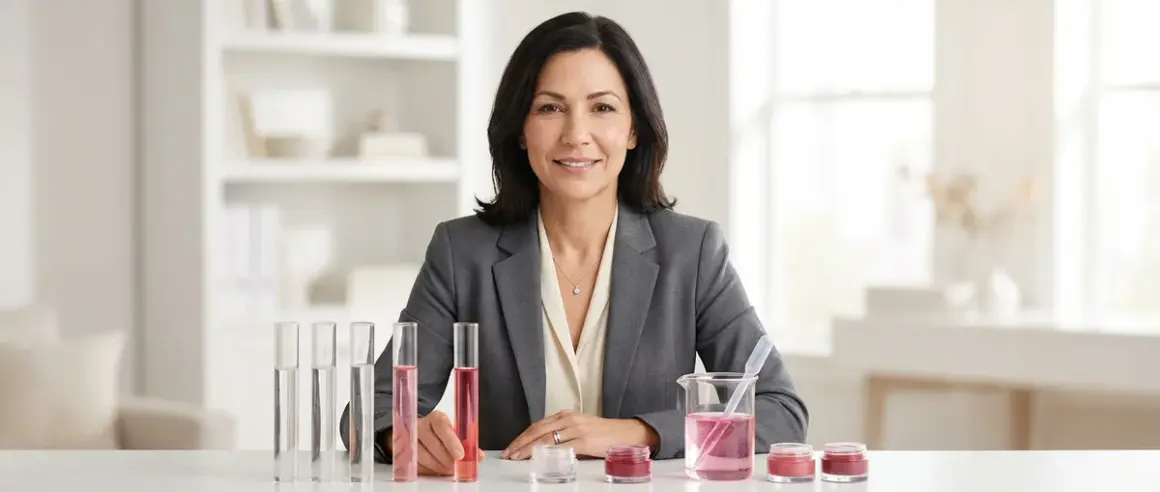

What are skin-responsive tints? They're cosmetic formulations containing chromophores that react with your skin's pH and temperature to create personalized color. Unlike traditional pigments that sit on the surface, these pH-reactive compounds undergo chemical changes when they meet your epidermis, adapting to your unique biochemistry. This isn't marketing mythology—it's electrochemistry applied to color cosmetics, and understanding the mechanism helps you distinguish legitimate adaptive technology from overpriced gimmicks.
The technology matters because it addresses a fundamental problem: fixed-pigment foundations assume uniform skin chemistry across all users. They don't. Your skin's pH fluctuates between 4.5 and 6.5 depending on genetics, barrier integrity, and environmental factors. Reactive tints work with that variability rather than against it.
What Are Skin-Responsive Tints?
Skin-responsive tints use leuco dye chemistry—colorless precursor compounds that develop pigment through oxidation or pH-triggered structural changes. The primary chromophores include Red 27 (D&C Red 27), Red 21 (eosin), and newer synthetic dyes like Reactive Red 158.
When these compounds contact skin, they undergo acid-base reactions that alter their molecular structure. The conjugated double bond system shifts, changing which wavelengths of light the molecule absorbs and reflects. The result: color that appears only after application, customized to your specific skin environment.
Traditional foundations use iron oxides (CI 77491, CI 77492, CI 77499) and titanium dioxide in fixed ratios. These inert pigments provide consistent color regardless of substrate. Responsive tints flip this model—the substrate becomes the variable that determines final appearance.
The technology originated in acid-base indicator chemistry, the same principle behind litmus paper. Phenolphthalein, a classic lab indicator, remains colorless below pH 8.2 and turns pink above it. Cosmetic chemists adapted similar compounds to trigger within skin's narrower pH range (4.5-6.5), creating chromophores that react to subtler variations.
Most formulations combine reactive dyes with carrier systems—typically cyclopentasiloxane or dimethicone blends that ensure even distribution and allow the dye to penetrate slightly into the stratum corneum for better reactivity. Without proper carrier chemistry, the tint oxidizes unevenly, creating splotchy results.
How It Works
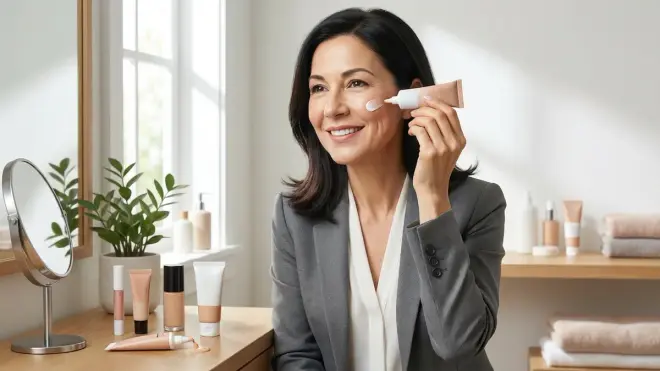
The molecular mechanism depends on electron delocalization. Leuco dyes contain aromatic ring systems with electron-withdrawing groups (carboxyl, hydroxyl, or amino groups). In their base state, these molecules are colorless because their electron configuration doesn't absorb visible light wavelengths.
When exposed to acidic pH (hydrogen ions), these groups accept protons. This protonation changes the electronic structure, extending conjugation across the molecule. Longer conjugation systems absorb lower-energy (longer wavelength) photons, shifting absorption into the visible spectrum. Your eye perceives this as color.
Red 27 (tetrabromofluorescein) is the most common reactive pigment. At pH below 5.5, it exists in a lactone form—colorless and stable. Above pH 5.5, the lactone ring opens, creating a quinoid structure that absorbs blue-green light and reflects red-pink wavelengths. The reaction is reversible, meaning color intensity can shift if skin pH changes throughout the day.
Temperature also plays a role. Thermal energy increases molecular kinetic activity, accelerating the oxidation process. This is why skin-responsive tints often appear more vibrant after application—body heat (approximately 32-35°C on facial skin) provides activation energy for the reaction.
The complete process involves three stages:
- Initial contact: Reactive dyes disperse across the skin surface in their leuco form, appearing white or slightly translucent
- pH activation: Hydrogen ion concentration triggers structural changes within 30-90 seconds, initiating color development
- Oxidation stabilization: Atmospheric oxygen completes the reaction, deepening color intensity over 2-3 minutes until equilibrium is reached
Melanin density affects perceived color but doesn't alter the chemical reaction itself. On deeper skin tones, the same reactive red may appear more berry-toned because reflected light passes through melanin-rich epidermis twice—once entering and once reflecting back. This creates optical filtering, warming the hue.
Some formulations include buffer systems (citric acid, sodium citrate) to narrow the pH activation range, creating more consistent results across different skin types. Without buffers, the same formula might produce coral on alkaline skin (pH 6+) and deep rose on acidic skin (pH 4.5).
The technology works best on intact barrier function. Compromised barriers with elevated TEWL (transepidermal water loss) often skew alkaline, which can produce unexpectedly intense color. This is why some users experience different results after exfoliation or acid treatments—you've temporarily altered the pH environment. For more on maintaining barrier integrity, see what is skin barrier function.
Why It Matters
Adaptive color technology solves oxidation mismatch—the phenomenon where foundation turns orange or gray after a few hours. Traditional pigments don't change, but your skin's surface chemistry does. Sebum oxidation, pH drift from environmental exposure, and natural warmth shifts all alter how static pigments appear over time.
Responsive tints continually adjust because the reaction remains dynamic. As your skin's pH fluctuates through the day (typically shifting 0.2-0.5 pH units), the chromophore equilibrium shifts correspondingly. The result is more stable color fidelity across 8-10 hours.
Coverage requirements also differ. Because reactive pigments develop in situ, you need less product to achieve visible correction. Most formulations provide sheer-to-medium coverage (20-40% opacity) while traditional foundations require 40-60% pigment load for similar coverage. This means lighter textures and fewer pore-clogging ingredients.
From a formulation cost perspective, reactive dyes are cheaper than premium pigment blends. High-quality iron oxides cost around $8–15 per kilogram depending on particle size uniformity. Red 27 costs around $12–18 per kilogram but requires 60-70% less concentration for equivalent coverage. Budget brands can achieve comparable performance without the pigment procurement costs that inflate luxury foundation prices.
The dermatological advantage is reduced comedogenicity. Traditional full-coverage foundations require 12-18% total pigment load plus dispersing agents (often dimethicone/PEG copolymers at 3-5%). Responsive tints typically contain 3-5% reactive dye plus lighter carrier systems. Lower total solid content means less occlusion and better breathability—particularly relevant for acne-prone or sensitized skin.
Types & Variations
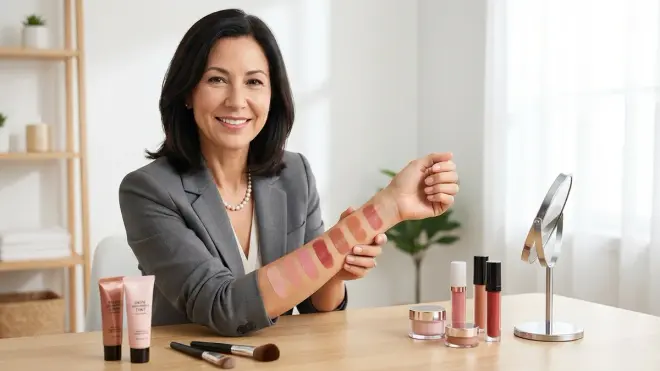
Single-dye formulations use only Red 27 or Red 21, producing variations of pink-to-rose. These are the most predictable and least likely to cause unexpected results. Examples include Saie Slip Tint (uses Red 27 at approximately 4%) and Tower 28 SunnyDays (usually around $20, manufactured in South Korea using D&C Red 27).
Dual-dye systems combine red-reactive chromophores with Yellow 5 Lake or Yellow 6 to create warmer, peachy-neutral tones. The yellow component provides base warmth while the red adapts to depth. Glossier Perfecting Skin Tint uses this approach but charges around $28 for 1 oz—a 40% markup over comparable Korean formulations at $0.60 per milliliter versus $0.40-0.45/mL for K-beauty alternatives.
pH-buffered formulations include citric acid/sodium citrate systems (typically 0.5-1.2% total concentration) to standardize activation pH around 5.5. These produce more consistent cross-user results but sacrifice some individual customization. They're better for oily or combination skin types where pH variability is higher.
Hybrid pigment blends combine reactive dyes (2-3%) with small amounts of traditional iron oxides (2-4%) for sheer base coverage that adapts at the surface. These provide better initial opacity during the 30-90 second activation window, eliminating the "white cast" phase some users dislike. Rom&nd's Juicy Lasting Tint uses this technology at usually around $12 for 0.23 oz (Korean manufacturing).
Serum-tint hybrids incorporate active ingredients alongside reactive pigments. Common additions include niacinamide (2-5%), hyaluronic acid (sodium hyaluronate, typically 500-1000 kDa molecular weight at 0.5-2%), and peptides. These multitask products work well for minimalist routines but require careful layering with other bioregenerative serums to avoid interference with pH-dependent actives like L-ascorbic acid.
Frequently Asked Questions
Do skin-responsive tints work on all skin tones?
Yes, but the visible range of adaptation narrows on deeper skin. The chemical reaction occurs identically across all melanin densities, but darker skin provides more optical filtering, which reduces apparent color shift between light and dark versions of the same reactive dye. On Fitzpatrick I-III, you might see pink-to-rose variation; on Fitzpatrick V-VI, the same formula appears more consistently berry-toned with less visible adaptation.
How long does the color last before it needs reapplication?
The chemical reaction stabilizes within 3-5 minutes and remains consistent for 6-10 hours depending on sebum production and environmental pH exposure. Unlike traditional pigments that physically transfer or break down, reactive dyes fade when skin pH shifts significantly (from exercise-induced alkalinity or excessive cleansing) or when the stratum corneum naturally sheds. You're working against cell turnover, not mechanical wear.
Can you layer skin-responsive tints with other makeup?
Yes, but application order matters. Apply reactive tints after pH-neutral primers and before powder products. Silicone-heavy primers (>30% cyclopentasiloxane) can delay activation by creating a barrier between dye and skin. Powder layering is safe post-activation because talc and silica don't alter pH. For detailed application protocols, see how to apply skin-responsive tints.
Are reactive dyes safe for sensitive skin?
Red 27 and Red 21 are FDA-approved for cosmetic use and generally well-tolerated, but they're still synthetic dyes with sensitization potential around 0.1-0.3% of users. The primary irritation risk comes from carrier systems (fragrance, essential oils, or alcohol denat at concentrations above 5%) rather than the chromophore itself. Patch test for 48 hours if you have a history of dye reactions or rosacea, as the pH interaction might trigger transient erythema.
How do skin-responsive tints compare to traditional foundation in price per use?
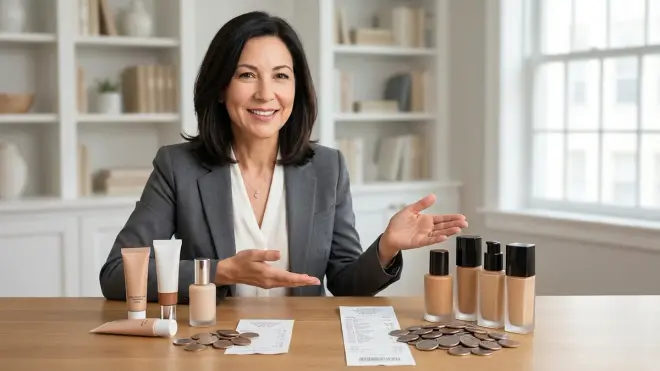
Budget responsive tints cost $0.40-0.60 per milliliter versus $0.80-1.50/mL for comparable-coverage traditional foundations. You need approximately 0.3-0.5 mL per application for responsive tints versus 0.5-0.8 mL for traditional formulas due to lower pigment requirements. Over 30 uses, a $20 responsive tint (30 mL) costs $0.67 per application versus around $1.20+ per application for a $45 luxury foundation (30 mL). The cost efficiency improves with sheer-coverage preferences.
Summary
What are skin-responsive tints? They're pH-reactive formulations that create personalized color through acid-base chemistry, not fixed pigmentation. The technology leverages leuco dye structures that respond to your skin's unique hydrogen ion concentration and temperature, producing adaptive color that adjusts throughout the day rather than oxidizing into unrecognizable shades.
The molecular mechanism—protonation-triggered conjugation changes—is straightforward electrochemistry, not cosmetic innovation theater. Brands charging around $40–50 for reactive tint formulations are exploiting information asymmetry; comparable Korean and European alternatives deliver identical chromophore technology at around $12–20 with equivalent or superior carrier systems.
For barrier-conscious users seeking lighter textures with dynamic color matching, responsive tints outperform traditional foundations on comedogenicity, adaptation range, and cost per use. They're not universal solutions—high-coverage needs still require layered pigment systems—but they represent genuine technological advancement in a category often dominated by repackaged legacy formulations. Choose formulations with disclosed dye types (Red 27 or Red 21), minimal fragrance, and pH-buffering if your skin runs oily or alkaline.