
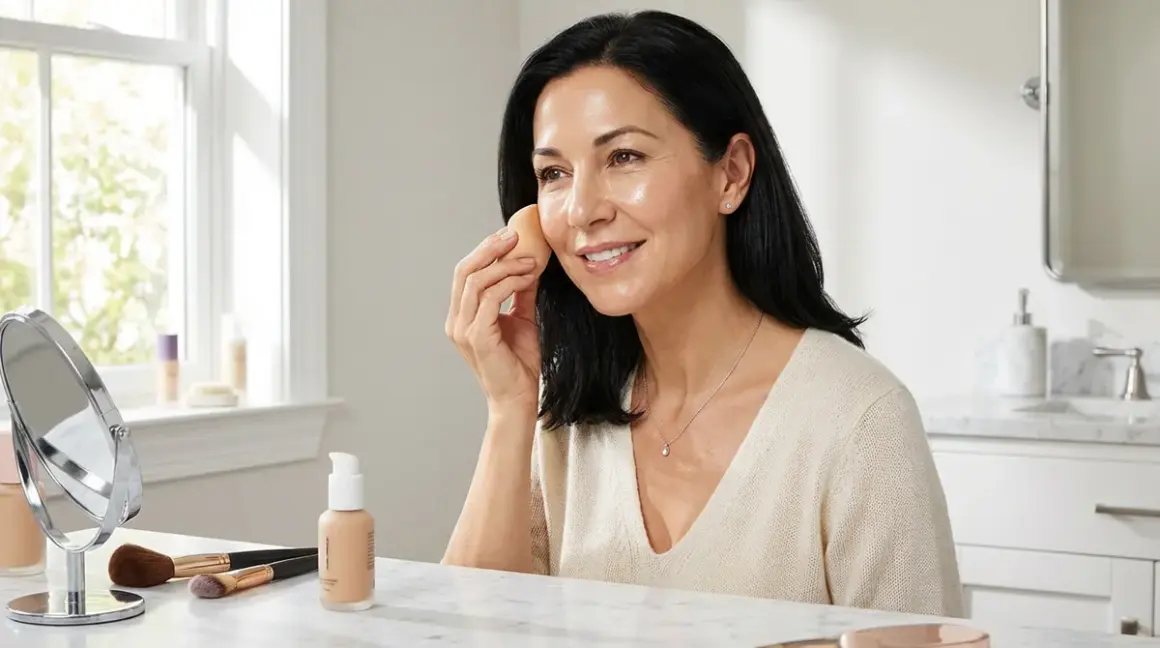

Knowing how to apply skin-responsive tint properly determines whether you get a seamless, second-skin finish or a patchy, uneven mess. These pH-reactive formulas contain pigment precursors that adapt to your skin's unique chemistry, but they require specific prep and technique to perform optimally. This checklist covers every step—from barrier preparation to setting strategies—so you can maximize color accuracy, longevity, and that coveted "your skin but better" effect.
The molecular reality: skin-responsive tints use red 27 lake dye complexes that shift pH-dependent hue based on your skin's surface acidity. Most formulas work within a 4.5-6.5 pH range, meaning surface preparation directly impacts final color development. If you're working with compromised barrier function or active exfoliation, you'll see different results than someone with a balanced, hydrated stratum corneum.

Pre-Application Skin Preparation
Your skin's condition in the 12 hours before application matters more than the application technique itself. Skin-responsive tints bind to surface lipids and respond to transepidermal water loss rates, so prep determines performance.
Cleanse with a pH-balanced formula (4.5-5.5): Alkaline cleansers temporarily raise skin pH to 6-7, which shifts how tint molecules ionize. Use a gentle surfactant blend (sodium cocoyl isethionate or decyl glucoside) rather than harsh sulfates. Wait 15 minutes post-cleanse for pH to normalize before applying tint.
Skip actives the morning of application: Glycolic acid, salicylic acid, and retinoids create microexfoliation that exposes fresh keratinocytes with unpredictable pH. If you're using 0.3% retinol or 10% AHAs in your routine, apply them at night only. Morning exfoliation leads to patchy tint adhesion where cell turnover is uneven.
Apply a barrier-supporting serum: Use a formula with 5% niacinamide and 1-2% ceramide complex to stabilize lipid barrier function. This creates uniform surface tension for tint spread. Budget option: The Ordinary Niacinamide 10% + Zinc 1% diluted 1:1 with a ceramide serum delivers the right ratio at around $0.18/ml. For context on barrier repair ingredients and their mechanisms, proper lipid ratios matter more than concentration alone.
Hydrate with low-molecular-weight hyaluronic acid (under 50 kDa): Skin-responsive tints perform best on plump, hydrated skin with minimal flaking. Use 0.5-1% HA that penetrates rather than sits on surface. High-MW HA (1000+ kDa) creates a film that interferes with tint adhesion. Apply to damp skin, wait 2 minutes for absorption.
Prime with a silicone-free formula if using water-based tints: Dimethicone and cyclopentasiloxane create an occlusive barrier that prevents pH-reactive pigments from reading skin accurately. Use squalane or hemisqualane (C15 hydrocarbon) instead—it's molecularly similar but doesn't form an impermeable film. Application rate: 2-3 drops for full face.
Check for active breakouts or open lesions: pH around inflamed acne can drop to 4.0-4.5 due to bacterial metabolites, causing tints to pull more red/pink in those areas. Spot-treat with 2% salicylic acid the night before, not day-of. Inflammation also increases local blood flow, which reads through sheer formulas.
Measure skin temperature: Cold skin (below 32°C/90°F) slows pigment development. If you've just come in from cold weather, wait 10 minutes for facial temperature to normalize. Conversely, flushed skin from hot showers or exercise will amplify redness in the tint's initial color read.
Verify moisturizer absorption: Wait a full 5 minutes after moisturizer before applying tint. Unabsorbed emollients dilute pigment concentration and prevent even spread. Test with clean fingertips—if you see product transfer, it's not ready.
The complete guide to skin-responsive tints explains the underlying chemistry in detail, but the practical takeaway: these formulas require a stable, hydrated, barrier-intact canvas. Shortcuts here compound into visible problems.
Application Tools and Technique Selection
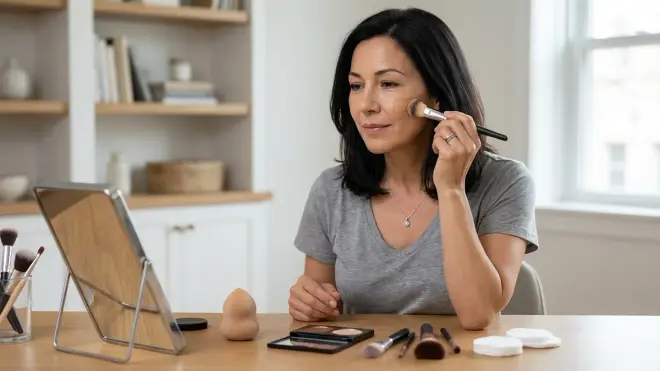
Tool choice affects pigment distribution, blendability, and final coverage level. Skin-responsive tints have lower viscosity than traditional foundations (typically 3,000-8,000 cP vs. 15,000+ cP), so they behave differently with various applicators.
Dense synthetic bristle brush for buildable coverage: Use taklon or nylon bristles with 0.1mm diameter packed at 200+ bristles per square centimeter. This density controls product deposit without absorbing formula into the brush itself. Stippling motion allows pH reaction to occur before spreading. Budget pick: ELF Flawless Face Brush at around $6 (manufactured in China using the same taklon supplier as Sigma) delivers 215 bristles/cm² at $0.006 per bristle.
Silicone sponge for sheer, even application: Medical-grade silicone applicators don't absorb product (zero waste) and create the thinnest possible layer. They work best for tints with 8-12% pigment load. Press and glide rather than stipple. Clean with isopropyl alcohol between uses. The texture feels strange initially—there's no friction feedback like with traditional sponges, which takes adjustment.
Latex-free beauty sponge dampened for medium coverage: Wet sponge expands and becomes less dense, bouncing product into skin rather than dragging it. Use hydrophilic polyurethane foam (not latex), dampened until water runs clear when squeezed. This dilutes the tint slightly (about 15-20%), which slows pH reaction and extends working time. Replace every 3-4 weeks as foam degrades.
Clean fingertips for targeted application: Your natural body heat (37°C) accelerates pigment development, which helps in dry patches or areas with sluggish color response. Warm product between fingers for 5 seconds before application. This works particularly well for cream-formula tints with higher oil content (25-35%) that need friction to activate.
Stippling vs. stroking technique based on skin texture: Stippling (vertical tapping) works for textured skin—it deposits pigment without emphasizing pores or dry patches. Stroking (horizontal sweeping) suits smooth, well-hydrated skin and creates airbrushed finish. Never use circular buffing motions—this creates uneven pigment layers that develop different pH readings as you build coverage.
Spritz face with thermal water between layers: If building coverage, lightly mist with mineral-rich thermal water (200-400 mg/L dissolved solids) between applications. This rehydrates the surface and maintains pH stability. Let it absorb for 30 seconds before adding more tint. Skipping this step causes the second layer to grab unevenly where the first layer has begun to set.
Work in sections, not all-over application: Apply to one zone (forehead, then cheeks, then chin, then nose) allowing 15-20 seconds for initial pH response before blending boundaries. Skin-responsive tints continue developing for 2-3 minutes, so what looks sheer immediately will deepen. Working in sections lets you monitor this transition and adjust product amount accordingly.
When choosing the right skin-responsive tint for your skin type, remember that formulation viscosity determines which tools work best. Watery tints (under 5,000 cP) require brushes or sponges; cream formulas (8,000+ cP) work with fingers or dense sponges.
Coverage Building and Color Development
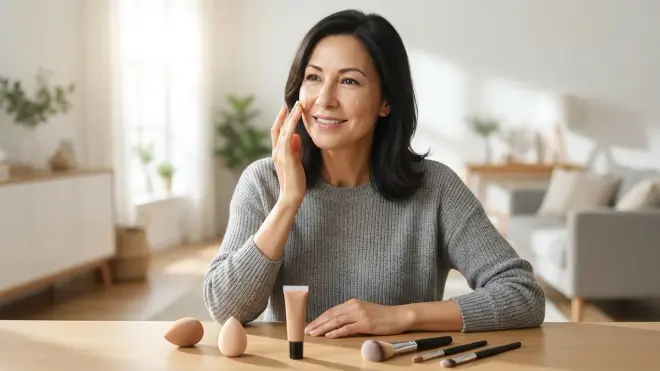
Skin-responsive tints develop color gradually through oxidation and pH interaction. Understanding this timeline prevents over-application and the "mask effect" that defeats the purpose of adaptive formulas.
Start with half the amount you think you need: These formulas amplify coverage as they oxidize. Initial application looks sheer, then deepens 1-2 shades over 90 seconds. A pea-sized amount covers the full face for most tints with 8-10% pigment concentration. Excess product creates buildup in expression lines and around hairline before you realize it's too much.
Allow 60-90 seconds between layers: The pH-reactive dye molecules (typically Red 27, CI 45410) need time to ionize and bind to skin proteins. Immediate layering stacks wet product that slides around rather than building true coverage. You'll see the color "bloom"—it starts neutral-beige, shifts slightly pink, then settles into adapted shade.
Check color match in natural daylight after 3 minutes: Indoor LED lighting (5000-6500K) shifts perceived undertone cool; incandescent (2700-3000K) shifts warm. Skin-responsive tints contain multi-spectral pigments that look different across lighting temperatures. After the full development period, step to a window or outdoors to verify the match reads neutral.
Target high-need areas first, then diffuse outward: Apply concentrated product to redness around nose, under eyes, or on blemishes. Let it develop there for 30 seconds, then blend edges outward with remaining product on your tool. This concentrates coverage where needed while keeping peripheral areas sheer. The pH differential between problem areas (often more acidic) and healthy skin drives the adaptive response.
Don't disturb the formula during peak oxidation (60-120 seconds): Touching, blending, or adding powder during this window disrupts molecular binding. The tint needs uninterrupted contact with skin while the dye complex stabilizes. Premature interference causes splotchiness—you'll see darker patches where molecules clustered before setting.
Mix formulas for custom intensity: Combine full-strength tint with your moisturizer at ratios like 3:1 or 2:1 for ultra-sheer coverage that still responds to pH. This extends working time by diluting the reactive pigment concentration, giving you more control over final depth. Mix on the back of your hand, not directly on face.
Use a secondary application for spot coverage: For areas requiring more opacity (post-inflammatory hyperpigmentation, melasma), apply a second layer only to those zones using a small synthetic brush. The compounded pH response in problem areas typically creates a slightly warmer tone, which neutralizes the purple undertone of hyperpigmentation better than traditional concealer.
Recognize that coverage peaks at 2-3 layers maximum: Beyond that, you're creating a film layer that looks like traditional foundation. Skin-responsive tints aren't designed for full coverage—their pigment load maxes out around 12-15% total iron oxides compared to 20-25% in conventional formulas. If you need more opacity, you're using the wrong product category for your needs.
For detailed comparison, the article on skin-responsive tint vs. traditional foundation breaks down pigment technology and coverage limitations more thoroughly. The molecular structure of pH-reactive dyes limits how opaque they can become while maintaining the adaptive mechanism.
Setting and Longevity Enhancement
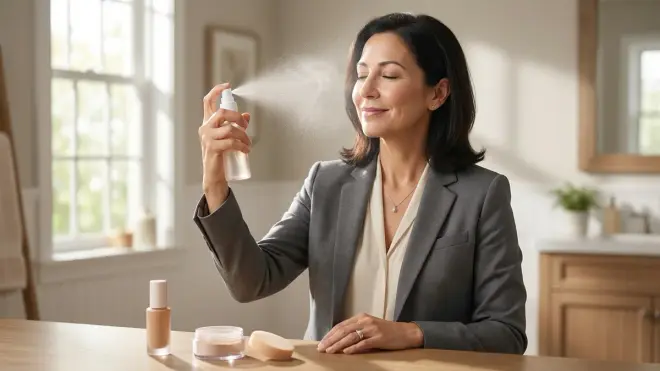
Skin-responsive tints don't contain the same film-forming polymers as long-wear foundations (no acrylate crosspolymers or dimethicone crosspolymers at high percentages). This improves skin-like finish but requires different setting strategies.
Blot with rice paper or blotting sheets before powder: Excess oils on the surface prevent powder adhesion and cause the tint to migrate. Rice papers absorb sebum without disturbing the set tint layer. Press gently—don't drag. You'll remove surface oil while leaving the bound pigment layer intact.
Use finely-milled translucent powder (5-10 micron particle size): Large powder particles (20+ microns) sit visibly on top of the tint and disrupt light reflection, creating a flat, powdery appearance. Silica microspheres or boron nitride at 5-8 micron diameter scatter light diffusely without layering texture. Budget option: NYX Studio Finishing Powder uses 7-micron silica at around $10/0.65oz ($15.38/oz)—compare to Laura Mercier's 6-micron silica at around $39/1oz.
Apply powder only to the T-zone initially: Over-powdering dehydrates skin and emphasizes texture. Focus on forehead, nose, and chin—the areas with highest sebum production (typically 150-220 μg/cm² sebum output in these zones vs. 50-80 μg/cm² on cheeks). Reassess after 2 hours; add more only if necessary.
Choose amino acid-based setting sprays over alcohol formulas: Alcohol (especially denatured alcohol at concentrations above 15%) disrupts the lipid matrix and can cause the tint to separate or mottle. Amino acid blends (glycine, alanine, serine at 1-3% total) create a flexible hygroscopic film that holds makeup while allowing continued transepidermal water movement. This maintains skin pH stability throughout wear.
Layer with barrier-supportive products if reapplying: If you need to add more coverage after initial set, apply a thin layer of squalane or jojoba oil (2-3 drops) first. This prevents the fresh tint from grabbing aggressively to the dried-down first layer, which can cause caking. Blend the oil to sheer transparency, wait 20 seconds, then add tint.
Avoid glycerin-heavy finishing sprays: Glycerin above 5% concentration attracts so much atmospheric moisture that it can rehydrate the tint layer, causing it to slip or break down prematurely. In humid environments (above 60% relative humidity), glycerin-based sprays compound the problem. Opt for polyglutamic acid or low-MW hyaluronic acid instead—they provide surface hydration without excessive water binding.
Blot (don't powder) for touch-ups: Mid-day shine comes from sebum, not tint breakdown. Blotting papers remove oil without adding more product layers. If you reflexively powder throughout the day, you're building up a textured film that looks progressively less skin-like. One morning powder application should last 6-8 hours for normal-to-dry skin.
Use oil-absorbing primers in high-sebum areas: If your T-zone produces visible oil within 3-4 hours, apply a dimethicone/vinyl dimethicone crosspolymer primer only to those areas before tint. This creates a semi-matte base that slows sebum breakthrough. Full-face silicone primer interferes with pH reading, but targeted use in problem zones prevents the tint from floating off on an oil slick.
Understanding bioregenerative skincare's effect on barrier function helps here—better barrier integrity means more stable sebum production and longer tint wear. If your skin's lipid barrier is compromised, you'll see accelerated breakdown regardless of setting technique.
Environmental and Activity Adjustments
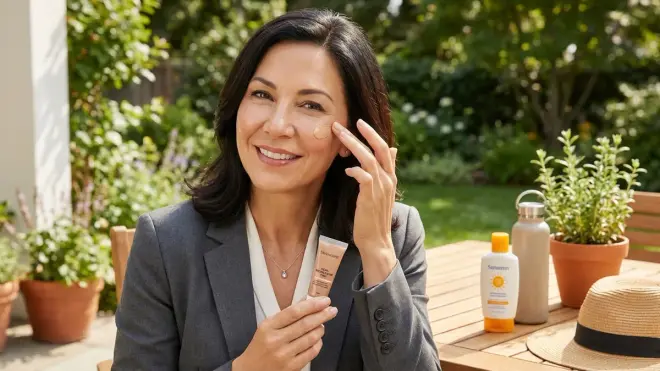
Skin-responsive tints perform differently across temperature ranges, humidity levels, and physical activity. Their thinner film weight (typically 50-100 μg/cm² vs. 150-200 μg/cm² for traditional foundation) makes them more vulnerable to environmental disruption.
In high humidity (70%+ relative humidity), apply powder immediately after tint sets: Atmospheric moisture reactivates the water-based components, causing the tint to slide before it fully binds. A light powder layer (5-10 microns) creates a moisture barrier without sacrificing finish. You're essentially creating a powder-cream sandwich that resists environmental water.
In dry conditions (below 30% RH), skip powder entirely: Low humidity accelerates trans-epidermal water loss, which dries out the tint film and emphasizes texture. Use a facial oil mist (squalane or rosehip oil atomized with thermal water) at 1:3 ratio instead. This maintains skin hydration and keeps the tint film flexible. Spray from 12 inches away to create a fine mist, not droplets.
Apply heavier moisturizer beneath in cold weather: Cold ambient temperatures (below 15°C/59°F) slow sebum flow and reduce skin surface lipids. The tint needs that lipid layer for proper adhesion and color development. Use a 5-10% shea butter or ceramide-dominant cream underneath rather than your usual light lotion. This compensates for cold-suppressed sebum output.
For athletic activity, use a silicone-enhanced primer: If you're exercising, sweating will compromise water-based tints within 20-30 minutes. A dimethicone crosspolymer primer at 15-20% concentration creates a semi-occlusive barrier that resists sweat breakthrough. Yes, this reduces the pH-responsive accuracy, but it's the trade-off for wear during physical activity. You're prioritizing longevity over perfect color matching.
Avoid facial misting during peak sun exposure: Water droplets on skin act as tiny magnifying glasses that intensify UV exposure, potentially causing photosensitivity reactions. If you need hydration outdoors, use a dry-finish spray with minimal water content or wait until you're in shade. Many skin-responsive tints contain minimal or no SPF (under SPF 15), so UV exposure is already a concern.
Reapply differently in hot weather: Heat accelerates sebum production (approximately 10% increase per 1°C rise above 25°C skin temperature). In hot environments, you'll need to blot more frequently. When reapplying tint, use 50% of your normal amount—the increased surface oil helps it spread, so you need less product for equivalent coverage.
Plan for shorter wear in chlorinated water: Chlorine (typically 1-3 ppm in pools) rapidly destabilizes pH-reactive dyes and breaks down the film. Skin-responsive tints aren't waterproof in chlorinated environments. If swimming is planned, either skip the tint or apply a waterproof sunscreen layer underneath and accept that you're compromising the adaptive color mechanism.
Adjust application thickness for air travel: Cabin pressure (equivalent to 6,000-8,000 feet elevation) and low humidity (10-20% RH) dehydrate skin rapidly. Apply tint slightly thicker than normal and use a hyaluronic acid mist every 90 minutes to maintain hydration. The tint film will dry faster than at sea level, so work in smaller sections during application.
The eco-effective approach to beauty products emphasizes adapting your routine to environmental conditions rather than fighting them with heavy product layers. Skin-responsive tints perform best when you acknowledge their limitations and adjust accordingly.
Final Check Before You Go

Run through this consolidated checklist before considering your application complete:
- ☐ Skin pH has normalized 15+ minutes post-cleanse
- ☐ All serums and moisturizer fully absorbed (no tackiness)
- ☐ Application tool is clean and appropriate for formula viscosity
- ☐ Initial thin layer applied with 60-90 second development time
- ☐ Color checked in natural daylight at 3-minute mark
- ☐ Additional layers added only where needed, not full-face
- ☐ T-zone blotted before powder application
- ☐ Finely-milled powder applied sparingly (5-10 microns)
- ☐ Setting spray used (if needed) is alcohol-free or low-alcohol
- ☐ Environmental conditions assessed and adjustments made
- ☐ Touch-up supplies packed (blotting papers, powder, product sample)
Frequently Asked Questions
Can I apply skin-responsive tint over sunscreen without affecting color accuracy?
Yes, but choose mineral sunscreen formulas with minimal white cast rather than chemical filters that create surface film. Zinc oxide and titanium dioxide at 15-20% concentration provide opacity that the tint reads as part of your base skin tone. Wait 5 minutes after sunscreen application for it to set fully before applying tint—this prevents the two formulas from emulsifying together, which dilutes pigment concentration and disrupts pH reading. Avobenzone and octinoxate chemical filters (common at 3-7.5% concentration) create a slightly greasy surface that can cause uneven tint application, so blot lightly before proceeding.
How do I fix skin-responsive tint that's oxidized too dark or pulled the wrong undertone?
Apply a thin layer of unfragranced facial oil (squalane, jojoba, or rosehip) to dissolve the surface pigment layer, then immediately blot with a clean microfiber cloth—don't rub aggressively. This removes approximately 30-40% of the pigment load while leaving enough for sheer coverage. Reapply fresh tint more sparingly, or mix it 1:1 with moisturizer for a sheer-tinted formula that develops less intensely. If undertone pulled too pink, your skin pH likely runs more acidic (below 4.5)—using a pH-adjusting toner at 5.5 before tint can shift the color response more neutral. The bioregenerative peptides vs retinol guide discusses how active ingredients affect skin pH, which directly impacts tint color development.
Should I apply skin-responsive tint before or after concealer for best coverage results?
Apply tint first, allow full color development (2-3 minutes), then spot-apply concealer only where additional opacity is needed. This sequence lets the tint establish base color correction and coverage before you layer on thicker formulas. Using concealer first creates a barrier that prevents the tint from reading your actual skin pH, defeating the adaptive purpose. Choose a concealer with similar undertone flexibility—yellow-neutral formulas (not stark pink or peach) blend most seamlessly with pH-responsive pigments that may shift slightly warm or cool depending on skin conditions.
Final Thoughts
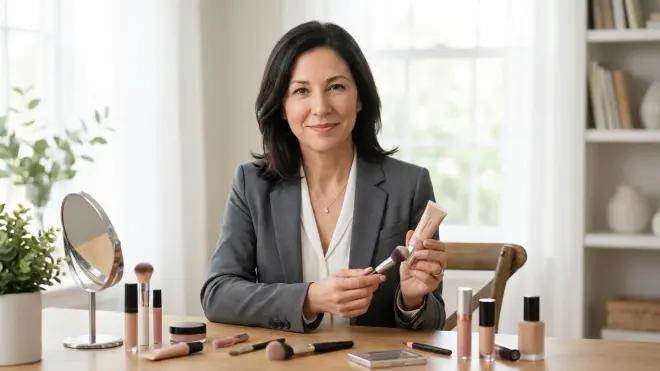
How to apply skin-responsive tint successfully depends on understanding that these formulas operate through active chemistry, not just passive coverage. The pH-reactive mechanism requires skin preparation that traditional foundations don't need—stable barrier function, normalized surface acidity, and appropriate hydration levels all determine whether you get adaptive color matching or unpredictable splotching.
The technology works, but it's unforgiving of shortcuts. You can't apply these formulas like conventional makeup and expect the same results. The checklist above eliminates guesswork: follow the sequence, respect the development timing, and adjust for your specific skin conditions and environment.
For under $20, you can access formulas with the same Red 27 lake dye technology and iron oxide blends that luxury brands use at around $60+. The difference isn't the chemistry—it's the packaging and marketing overhead. Focus on the fundamentals covered here, and skin-responsive tints deliver that elusive "your skin but better" finish regardless of price point.
The complete directory of budget bioregenerative serums under $50 demonstrates the same principle: effective formulations exist at accessible prices when you know which molecular mechanisms actually matter. Skin-responsive tints follow this pattern—ingredient lists and pH ranges matter; brand prestige doesn't.