


The first touch of metal-cold on warm skin is a shock—then a relief. That moment when you draw a frozen roller across your cheekbone and feel everything tighten, brighten, wake up. Ice rolling benefits aren't marketing mythology; they're rooted in the physiological cascade triggered when you apply controlled cold to tissue. Vasoconstriction followed by rebound vasodilation. Temporary reduction in inflammatory mediators. The mechanical disruption of edema. For zero dollars and the contents of your freezer, you access a form of cryotherapy that luxury clinics repackage at premium rates.
What Is Ice Rolling?
Ice rolling is the application of a frozen or chilled metal, stone, or gel-filled tool to facial skin in rhythmic, sweeping motions. The practice borrows from clinical cryotherapy—the therapeutic use of cold to reduce inflammation and promote healing—but translates it into a zero-cost, at-home modality. You'll find stainless steel rollers designed to be stored in the freezer, jade or rose quartz tools pre-chilled in the refrigerator, and the simplest iteration of all: ice cubes wrapped in thin muslin or silicone molds shaped for facial contours.

The mechanism is straightforward. Cold causes vasoconstriction, the temporary narrowing of blood vessels near the skin's surface. When you remove the cold stimulus, vessels dilate in a rebound effect called reactive hyperemia, flooding the area with oxygenated blood. This cycle—constrict, dilate—is what creates the visible "glow" and temporary tightening effect ice rolling is known for.
Unlike active ingredients that penetrate the stratum corneum and alter cellular behavior over weeks, ice rolling delivers immediate, transient results. The depuffing you see after three minutes of rolling doesn't persist for 24 hours. But the cumulative effects on lymphatic drainage, particularly when combined with how to do facial massage at home techniques, can support healthier microcirculation patterns over time.
How It Works
The science of ice rolling sits at the intersection of thermodynamics, vascular physiology, and mechanical lymphatic stimulation. When you press a frozen tool against skin, heat transfer occurs: thermal energy moves from your warm tissue into the cold surface. Skin temperature drops rapidly in the contact zone—by as much as 10-15°C within the first 30 seconds of sustained contact, according to dermatological studies on cryotherapy applications.
This temperature drop triggers an autonomic response. Thermoreceptors in the dermis signal the nervous system, which responds by constricting capillaries to prevent heat loss. Blood flow to the surface decreases. Metabolic activity slows. Inflammatory mediators like prostaglandins and histamines—compounds responsible for redness, swelling, and irritation—reduce in concentration temporarily.
When you lift the ice roller away, the body interprets the sudden return to normal temperature as a signal to restore circulation. Vessels dilate beyond their baseline width in a compensatory rush. Fresh blood carries oxygen, nutrients, and immune cells to the area. This is reactive hyperemia, and it's the physiological basis for the post-rolling flush and radiance.
But ice rolling isn't purely vascular. The mechanical pressure and gliding motion provide manual lymphatic drainage. The lymphatic system—a network of vessels that clears metabolic waste, excess fluid, and cellular debris—doesn't have a central pump like the cardiovascular system. It relies on muscle contractions, breathing, and external manipulation to move lymph through its channels. When you roll from the center of your face outward toward lymph nodes near the ears and jaw, you're mechanically encouraging fluid movement along those pathways.
This is particularly effective for periorbital edema—the puffiness around the eyes caused by overnight fluid accumulation. Gravity and the horizontal sleeping position allow interstitial fluid to pool in loose tissue. Ice rolling drains that fluid toward lymph nodes, where it's reabsorbed into circulation and eventually excreted.
The textural sensation also matters. Cold stimulates A-delta nerve fibers, which transmit fast-acting sensory signals. This sensory input can temporarily override pain or irritation signals from slower C-fibers, a phenomenon known as the gate control theory of pain. If you've ever rolled a frozen tool over a breakout or inflamed patch and felt immediate relief, this neurological gating is why.
Why It Matters
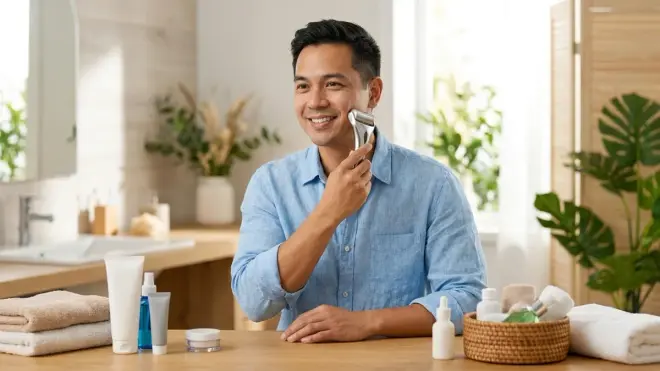
Ice rolling sits comfortably within the philosophy of how to glow up for free: accessible, equipment-optional, effective when done consistently. You don't need a $200 rose quartz roller imported from Brazil when a steel spoon left in the freezer for ten minutes delivers the same thermodynamic effect. The ice rolling benefits aren't locked behind prestige branding or proprietary technology. They're available to anyone willing to tolerate a few minutes of cold.
The practical applications extend beyond vanity. For anyone dealing with rosacea flares, the temporary vasoconstriction can calm visible redness during an episode. It won't cure the condition—rosacea is a chronic inflammatory disorder requiring barrier support and often prescription azelaic acid or metronidazole—but it offers symptomatic relief without irritation. The same principle applies to post-laser inflammation or sunburn recovery, where controlled cold reduces heat and swelling without compromising healing.
From a product-layering perspective, ice rolling before serum application can enhance absorption—not through improved penetration (cold constricts pores, it doesn't open them), but by creating a taut, smooth canvas that allows actives to spread evenly. If you're following what is skin cycling protocols and alternating between retinoid nights and recovery nights, rolling on your off-days supports the repair phase without introducing additional actives.
The emotional component isn't trivial either. The ritual of placing a cold tool against your skin, the sharp intake of breath, the gradual acclimation—it's grounding. Sensory. A forced pause in the morning blur or evening scroll. You can't multitask while ice rolling. The cold demands your attention.
Types & Variations
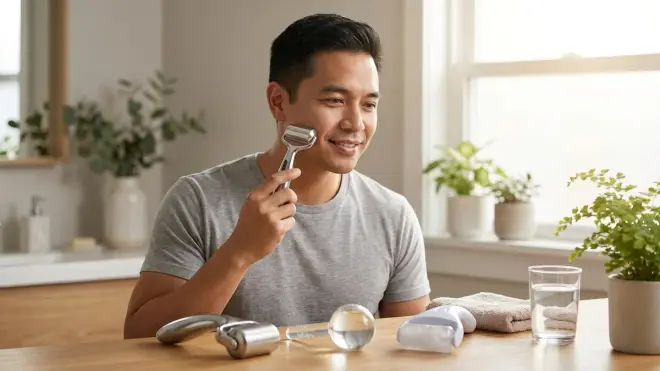
Stainless steel ice rollers are the workhorses. They hold cold for five to eight minutes once removed from the freezer, long enough to complete a full-face protocol. Steel conducts thermal energy efficiently, creating an intense but controlled cold. Look for seamless construction with no hollow chambers that could leak condensation. Manufacturing origin rarely matters here—steel's thermal properties don't vary significantly between Chinese and European production.
Jade and rose quartz rollers operate differently. Stone holds cold less aggressively and warms faster—typically within two to three minutes. The experience is gentler, suitable for sensitive or reactive skin that can't tolerate the shock of frozen metal. Claims about jade's "detoxifying properties" or quartz's "energetic vibrations" are marketing folklore with no basis in cosmetic chemistry. What matters is thermal mass and the smoothness of the stone surface.
Silicone ice molds shaped like facial contours offer the most direct cold transfer. Products like the Esarora Ice Roller for Face & Eye provide a gel-filled chamber that remains pliable when frozen, conforming to the planes of the face. The downside: once the gel warms, you're done. No gradual thawing like metal allows. You need multiples if you want extended sessions.
DIY ice cubes remain the most budget-aligned option. Freeze water in silicone muffin molds or small containers, wrap in a single layer of cotton muslin, and glide over skin. Add chamomile tea or aloe vera juice to the water before freezing for additional anti-inflammatory compounds, though the thermal effect alone does the heavy lifting. The wrapped-cube method costs nothing and performs identically to tools marketed for ten times the investment.
Cryotherapy globes—handheld glass spheres filled with a freezable gel—offer bilateral application. You hold one in each hand, rolling both sides of the face simultaneously. The symmetry appeals to some. The glass conducts cold moderately, sitting between metal's intensity and stone's gentleness.
Frequently Asked Questions
What are the primary ice rolling benefits for skin health?
Ice rolling benefits include temporary vasoconstriction that reduces visible redness and puffiness, followed by reactive hyperemia that increases blood flow and oxygenation to the skin surface, plus mechanical lymphatic drainage that clears interstitial fluid accumulation, particularly around the orbital area, and neurological gating that provides immediate relief from inflammatory irritation or discomfort without introducing active ingredients.
How long should you ice roll your face for maximum benefit?
Three to five minutes is the effective window for ice rolling—long enough to trigger vasoconstriction and lymphatic movement without causing cold-induced tissue damage or prolonged numbness, with motion patterns moving from the center of the face outward toward lymph nodes near the ears and jawline, using gentle to moderate pressure that glides smoothly without dragging or pulling delicate facial skin.
Can ice rolling replace topical anti-inflammatory treatments?
Ice rolling provides symptomatic relief through vascular and neurological mechanisms but does not replace the biochemical action of topical anti-inflammatories like niacinamide, azelaic acid, or centella asiatica extract—think of it as an adjunct tool that complements active ingredients rather than a substitute, particularly effective when used before applying serums or on recovery days within routines like what is skin cycling that alternate between active and rest phases.
Does the material of the ice roller affect results?
The material determines thermal conductivity and cold retention time—stainless steel delivers the most intense cold and holds temperature longest, jade and rose quartz provide gentler, shorter cooling suitable for sensitive skin, and gel-filled silicone molds offer extreme cold but warm quickly—but all materials produce the same core physiological response of vasoconstriction and rebound hyperemia, making material choice a matter of tolerance and preference rather than efficacy.
Should you ice roll before or after applying skincare products?

Ice roll before applying serums and treatments to create a smooth, taut surface that allows even distribution of actives, and avoid rolling over freshly applied products containing retinoids or acids as the mechanical pressure can drive irritation or uneven absorption—the exception is hyaluronic acid-based serums, which benefit from the plumping effect of increased microcirculation immediately following ice application.
Summary
The cold metal against your cheekbone isn't a luxury—it's physics. Ice rolling benefits emerge from controlled vasoconstriction, reactive hyperemia, and mechanical lymphatic drainage, all accessible without specialized equipment or investment. A frozen spoon delivers the same thermodynamic response as a $150 jade roller. The practice fits seamlessly into zero-cost protocols, offering immediate depuffing, temporary redness reduction, and a grounding sensory ritual that forces presence. For anyone building a routine around performance over prestige, ice rolling is non-negotiable: evidence-based, infinitely repeatable, and elegantly simple.