
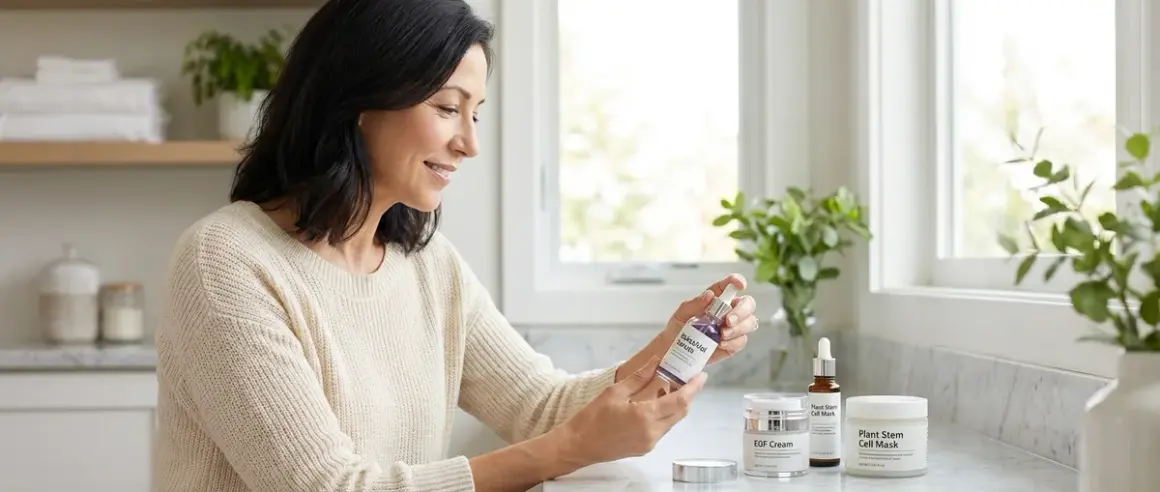

Bioregenerative skin technology explained comes down to this: ingredients that don't just resurface or protect skin, but actively signal your cells to behave younger. We're talking about compounds that trigger collagen synthesis, accelerate cell turnover, and modulate inflammatory pathways at the genetic level. Bakuchiol, epidermal growth factor (EGF), and plant stem cell extracts represent three distinct molecular approaches to cellular regeneration—and they're showing up in formulations at every price point. Understanding how bioregenerative skin technology explained actually functions helps you separate genuine innovation from rebranded peptide serums with around a $200 markup.
What Is Bioregenerative Skin Technology?
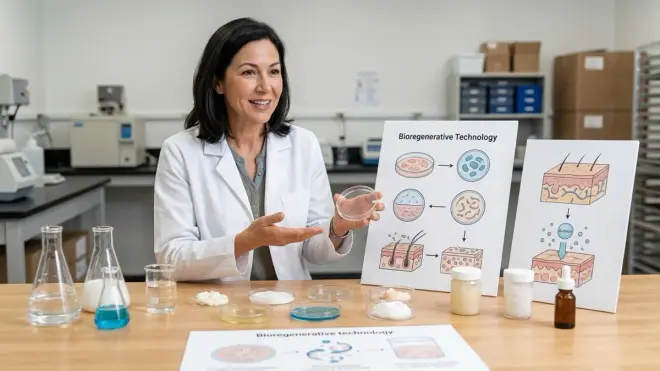
Bioregenerative skin technology refers to topical actives that influence cellular behavior through signaling pathways rather than mechanical action. Unlike physical exfoliants or occlusive moisturizers, these compounds interact with cell receptors to initiate specific biological responses.

The three primary mechanisms:
- Gene expression modulation: Bakuchiol upregulates collagen genes without triggering retinoid receptors
- Growth factor signaling: EGF binds to epidermal growth factor receptors (EGFR) to accelerate keratinocyte proliferation
- Phytochemical signaling: Plant stem cell extracts deliver secondary metabolites that influence human cell behavior through conserved biological pathways
This differs fundamentally from traditional anti-aging actives. Retinol converts to retinoic acid and binds nuclear receptors. Vitamin C donates electrons to stabilize free radicals. Both valuable, but they work through direct chemical action rather than cellular communication.
The distinction matters because bioregenerative actives theoretically offer targeted results with reduced irritation. A 0.5% bakuchiol serum won't cause the photosensitivity of 0.5% retinol, yet published studies show comparable collagen density improvements over 12 weeks. That's the promise of bioregenerative skincare—smarter molecules, not just stronger concentrations.
How Bioregenerative Skin Technology Works
Bakuchiol: Retinol-Alternative Gene Expression
Bakuchiol is a meroterpene phenol extracted from Psoralea corylifolia seeds. Its molecular structure bears zero resemblance to retinoids, yet it produces similar outcomes through parallel pathways.
Molecular reality: Bakuchiol doesn't activate retinoic acid receptors (RAR/RXR). Instead, it increases mRNA expression of collagen types I, III, and IV through AP-1 transcription factor pathways. A 2018 British Journal of Dermatology study demonstrated that 0.5% bakuchiol applied twice daily matched 0.5% retinol for wrinkle reduction and hyperpigmentation, with significantly less scaling and stinging.
The catch? Bakuchiol oxidizes rapidly when exposed to light and air. Formulations require antioxidant systems (typically vitamin E at 0.5-1%) and opaque packaging. Budget brands often skip this—you'll find bakuchiol listed third or fourth in ingredient decks, stored in clear dropper bottles that guarantee degradation within 60 days of opening.
Concentration benchmarks:
- 0.5-1%: Clinically effective range for collagen stimulation
- 2%: Upper limit in most commercial formulations (higher percentages don't improve efficacy)
- <0.1%: Marketing dose—insufficient for measurable results
Epidermal Growth Factor: Direct Cellular Signaling
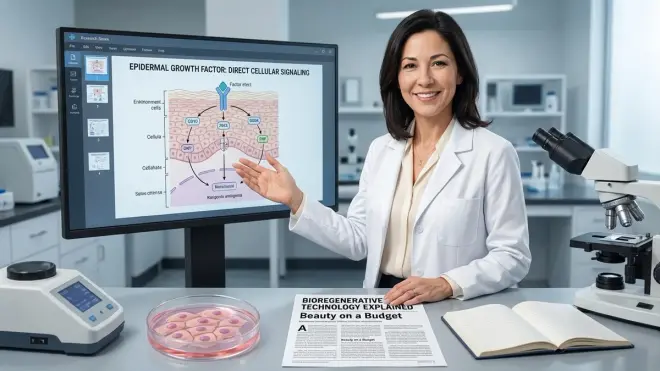
EGF is a 53-amino-acid polypeptide that binds to EGFR on keratinocyte surfaces, triggering tyrosine kinase cascades that accelerate cell division and migration. This is wound-healing biology repurposed for anti-aging.
Clinical verdict: EGF works when formulated correctly, but molecular weight and stability create formulation challenges. The peptide must remain intact (molecular weight ~6 kDa) and reach viable epidermis. Most budget formulations use EGF analogs or plant-derived "EGF-like" peptides that may or may not share the same receptor affinity.
Legitimate EGF serums contain 0.1-1 ppm (parts per million) of recombinant human EGF (rhEGF), often derived from barley or yeast fermentation. Korean manufacturers dominate this category—brands like Benton and Cos De BAHA deliver rhEGF at concentrations comparable to $300 prestige alternatives, typically usually around $25-40 per ounce versus usually around $15-20 per ounce for luxury options.
The controversy: Some dermatologists express concern about chronic growth factor application potentially promoting abnormal cell proliferation. Current evidence doesn't support carcinogenic risk from topical EGF, but if you have a personal or family history of skin cancer, peptides and bakuchiol offer safer alternatives.
Plant Stem Cell Extracts: Phytochemical Intermediaries
Plant stem cells don't become human stem cells—that's biologically impossible. What these extracts do provide is a concentrated cocktail of secondary metabolites: phenolic compounds, growth hormones, and antioxidants that influence human cell behavior through conserved signaling pathways.
Common sources and active compounds:
- Lilac stem cells (Syringa vulgaris): Rich in verbascoside, an antioxidant that modulates NF-κB inflammatory pathways
- Edelweiss stem cells (Leontopodium alpinum): Contains leontopodic acid, shown to protect fibroblasts from UV-induced senescence
- Apple stem cells (Malus domestica): High in phytohormones (cytokinins) that may延长 epidermal stem cell longevity
The extraction process matters enormously. PhytoCellTec™ technology uses callus culture—undifferentiated plant cells grown in sterile conditions—to maximize active compound concentration. Budget brands often use whole-plant extracts or leaf powders and call them "stem cells," delivering negligible phytochemicals.
Effective concentrations: 0.5-2% of a proper callus extract. Check for PhytoCellTec™, Derma Cell™, or similar proprietary extraction technologies in the ingredient list. Generic "apple fruit extract" won't cut it.
For a detailed comparison of how these actives stack up against traditional options, see bioregenerative peptides vs retinol.
Why Bioregenerative Technology Matters
The practical advantage comes down to tolerance and precision. Traditional anti-aging actives force cellular turnover through controlled damage (retinoids, acids) or mass antioxidant defense (vitamin C, E). Bioregenerative actives theoretically achieve similar outcomes by working with cellular communication systems rather than overwhelming them.
Real-world implications:
You can layer bioregenerative serums with chemical exfoliants without the cumulative irritation that makes tretinoin + AHAs unbearable for most skin types. A routine combining 10% lactic acid, 1% bakuchiol, and plant stem cell extracts delivers multi-pathway anti-aging without barrier disruption.
This becomes critical for reactive skin types—rosacea, eczema, chronic dehydration—that can't tolerate standard retinoid protocols. A bioregenerative skincare routine lets you pursue cellular renewal without triggering inflammatory cascades.
Cost-benefit analysis: Prestige bioregenerative serums ($150–400 per ounce) rely heavily on packaging and clinical studies funded by the brand itself. Budget alternatives manufactured in Korea, France, or Canada often use identical raw materials—the same rhEGF supplier, the same PhytoCellTec™ extracts—at around $1.50-3 per ounce. The performance gap narrows dramatically when you focus on active percentages rather than brand prestige.
The limitation? Results take longer. Retinoids produce visible improvements in 4-6 weeks. Bioregenerative actives typically require 8-12 weeks for comparable collagen density changes. You're asking cells to respond to gentle signals rather than emergency repair mode.
Types and Variations in Bioregenerative Formulations
Bakuchiol-Based Serums
Formulation variables that matter:
- Oil vs. water base: Bakuchiol's lipophilic structure means it penetrates better in oil or emulsion systems. Pure water-based serums require solubilizers that may reduce efficacy.
- Antioxidant co-factors: Look for vitamin E (tocopherol) at 0.5%+ and ferulic acid at 0.1-0.5% to prevent oxidative degradation.
- Combination actives: Bakuchiol + niacinamide (3-5%) offers complementary benefits—gene expression modulation plus barrier support.
Budget benchmark: The Inkey List Bakuchiol Moisturizer ($12 for 1 oz) delivers 1% bakuchiol with squalane and ceramides. Texture is light-medium cream, absorbs in 60-90 seconds, works across skin types. Compare to Biossance Squalane + Phyto-Retinol Serum ($72 for 1 oz)—same bakuchiol concentration, near-identical squalane base. You're paying $60 extra for packaging and marketing.
Growth Factor Serums
Molecular weight considerations: True EGF sits around 6 kDa. Some "growth factor complexes" use larger peptides (20-30 kDa) that can't penetrate past stratum corneum. Check for recombinant human EGF (rhEGF) or oligopeptide-1 (EGF analog) specifically.
Stabilization systems: Growth factors degrade rapidly in water. Quality formulations use lyophilized (freeze-dried) powder that you mix with an activator serum, or anhydrous bases with minimal water content.
Budget options: Cos De BAHA Epidermal Growth Factor Serum ($18 for 1 oz) uses barley-derived rhEGF at 1 ppm in a hyaluronic acid base. Manufactured in Korea, where biotech fermentation infrastructure is mature. Texture is thin gel, layers well under moisturizer. The bottle is basic plastic with a questionable dropper mechanism—expect some product waste—but the formulation itself matches clinical benchmarks.
For more affordable options that meet quality standards, explore best bioregenerative serums under $50.
Plant Stem Cell Concentrates
Extract quality hierarchy:
- Callus culture extracts (PhytoCellTec™, etc.): Highest active concentration
- Supercritical CO2 extracts: Good preservation of volatile compounds
- Whole plant extracts: Minimal active delivery
- Powdered plant material: Essentially ineffective for stem cell claims
Texture and delivery: Most plant stem cell products come in emulsion form—creams or lotions—because the extracts are water-soluble. Serums work too, but you'll see them combined with hydrators like glycerin or hyaluronic acid.
Budget benchmark: Acure Radically Rejuvenating Day Cream ($18 for 1.75 oz) uses Argania spinosa (argan) stem cells at ~1%, combined with chlorella and edelweiss extracts. Manufactured in the USA with certified organic ingredients. Medium-weight cream, slight herbal scent, absorbs in 2-3 minutes. Works best for normal-to-dry skin types. Compare to La Prairie Swiss Ice Crystal Cream (around $485 for 1 oz)—also uses edelweiss stem cells, but you're paying for the porcelain jar and Madison Avenue marketing, not superior phytochemistry.
Frequently Asked Questions
Is bakuchiol really as effective as retinol for anti-aging?
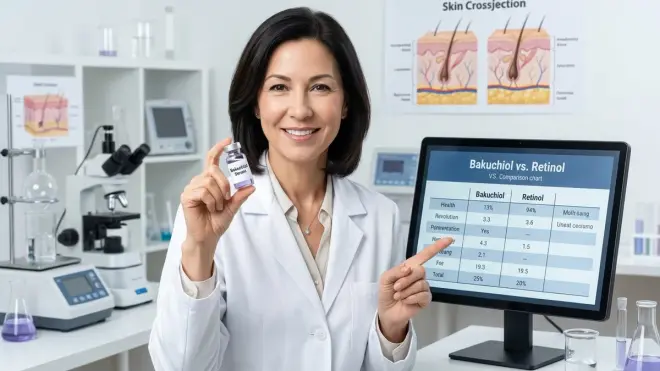
Bakuchiol produces comparable improvements in fine lines and collagen density over 12 weeks at 0.5-1% concentration, based on published clinical trials, but works through different molecular pathways that avoid retinoid receptor activation. You won't see the dramatic cell turnover and potential irritation of tretinoin, which means gentler results that take slightly longer to manifest—expect 8-12 weeks versus 4-6 weeks for prescription retinoids.
Can I use EGF serums if I have sensitive skin?
Yes, epidermal growth factor serums are generally well-tolerated by sensitive skin because they work through natural cellular signaling rather than forced exfoliation, but avoid formulations with high alcohol content or synthetic fragrance that can trigger irritation independent of the EGF itself. Start with application every other night and monitor for any unexpected breakouts, which occasionally occur when accelerated cell turnover clogs pores in acne-prone individuals.
Do plant stem cell extracts actually do anything or are they just marketing?
Plant stem cell extracts deliver bioactive secondary metabolites like phenolic compounds and phytohormones that influence human cell behavior through conserved biological pathways, but only when formulated using proper callus culture extraction methods like PhytoCellTec™ technology at 0.5-2% concentration. Generic "plant extract" listed at the bottom of an ingredient deck won't deliver meaningful phytochemical content—look for proprietary extraction technology and concentrations high enough to matter.
Can I combine bioregenerative serums with retinol or acids?
You can layer bioregenerative actives like bakuchiol, EGF, and plant stem cells with chemical exfoliants and retinoids because they work through complementary pathways rather than competing mechanisms, but introduce products gradually—add one new active every 2 weeks—and monitor for cumulative irritation. Apply acids first on clean skin, wait 15-20 minutes, then follow with bioregenerative serums and moisturizer to maximize penetration while minimizing barrier disruption.
How long does it take to see results from bioregenerative skincare?
Bioregenerative actives typically require 8-12 weeks of consistent twice-daily application to produce visible improvements in collagen density, fine lines, and skin texture because they work through gentle cellular signaling rather than forced turnover that creates immediate flaking and fresh cell exposure. This timeline aligns with the natural epidermal renewal cycle (28-40 days) multiplied by several complete cycles to accumulate measurable structural changes in the dermal matrix.
Summary
Bioregenerative skin technology explained centers on three molecular strategies: bakuchiol's gene expression modulation without retinoid receptors, EGF's direct growth factor signaling through EGFR pathways, and plant stem cell extracts delivering phytochemicals that influence human cellular behavior. These actives offer genuine anti-aging benefits—comparable collagen stimulation to retinoids in clinical trials—with significantly reduced irritation potential, making them ideal for sensitive skin or layering with chemical exfoliants.
The budget advantage is substantial: Korean and European manufacturers use identical raw materials to prestige brands at 1/10th the price per ounce. Focus on active percentages (0.5-1% bakuchiol, 0.1-1 ppm rhEGF, 0.5-2% stem cell extracts), proper stabilization systems, and extraction technologies rather than marketing claims. Results require patience—8-12 weeks for visible improvement—but the cellular communication approach delivers targeted renewal without barrier damage.
For comprehensive guidance on incorporating these actives into a complete regimen, review how to layer bioregenerative serums with acids and antioxidants safely.