
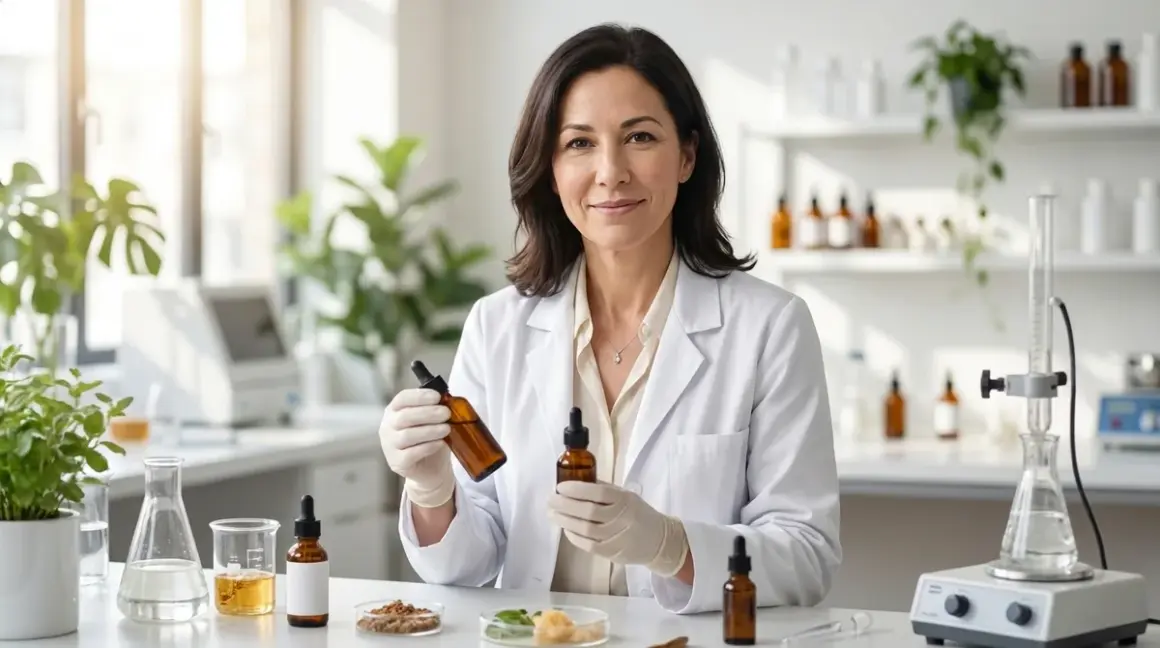

Retinol remains the more comprehensively studied option for visible skin renewal, but bioregenerative peptides offer a gentler, inflammation-free pathway with comparable (though less documented) results. This comparison examines bioregenerative peptides vs retinol through the lens of molecular mechanisms, documented efficacy, formulation stability, cost efficiency, and real-world tolerability—so you can choose the cell-renewal active that actually fits your skin biology and budget.
You'll find clinical data on both pathways, specific active percentages that matter, texture and application differences, and price-per-ounce metrics that reveal where you're paying for performance versus marketing.
Quick Comparison
| Criterion | Bioregenerative Peptides | Retinol |
|---|---|---|
| Primary Mechanism | Signal transduction via growth factor mimetics; stimulates collagen transcription without cellular disruption | Binds to retinoic acid receptors; accelerates keratinocyte turnover and upregulates collagen synthesis |
| Clinical Evidence | Moderate (mostly peptide-specific studies with 12-week endpoints) | Extensive (40+ years of peer-reviewed dermatological research) |
| Typical Active % | 2-10% peptide complexes (Matrixyl 3000, GHK-Cu, EGF analogs) | 0.25-1% retinol (requires conversion to retinoic acid) |
| Irritation Profile | Minimal to none; no photosensitivity | Moderate to high (retinization period); increases UV sensitivity |
| Visible Results Timeline | 8-12 weeks for firmness; 16+ weeks for texture refinement | 4-8 weeks for texture; 12+ weeks for deeper lines |
| Formulation Stability | Generally stable; some peptides degrade in extreme pH | Highly unstable; requires airless packaging and pH <6.0 |
| Price Range (Effective Products) | around $18–$65 per ounce (budget: The Ordinary, Timeless; mid-range: The Inkey List) | around $12–$95 per ounce (budget: CeraVe, Neutrogena; luxury: Skinceuticals) |
| Pregnancy-Safe | Most peptides: yes (consult formulation for growth factors) | No (teratogenic risk) |
Molecular Mechanism: How Each Active Triggers Cell Renewal
Retinol's pathway is direct and well-mapped. Once it penetrates the epidermis, enzymatic conversion (via retinol dehydrogenase, then retinaldehyde dehydrogenase) transforms it into all-trans retinoic acid—the biologically active form. Retinoic acid binds to nuclear retinoic acid receptors (RARs), altering gene transcription to accelerate keratinocyte differentiation, inhibit collagenase (the enzyme that degrades collagen), and stimulate fibroblast collagen production. The National Institutes of Health has published hundreds of studies documenting this cascade, confirming retinoids as the gold standard for photoaging reversal.
The conversion efficiency matters: 0.5% retinol converts to around 0.025-0.05% retinoic acid, depending on your skin's enzymatic capacity. That's why clinical studies typically use 0.5-1% retinol to achieve measurable outcomes. Products below 0.25% rarely produce more than placebo-level results.
Bioregenerative peptides work through signal mimicry rather than receptor binding. Short-chain peptides (typically 2-6 amino acids) act as cellular messengers, triggering fibroblasts to increase collagen and elastin synthesis without disrupting the stratum corneum. Palmitoyl tripeptide-1 and palmitoyl tetrapeptide-7 (sold as Matrixyl 3000) mimic the breakdown fragments of collagen and elastin, effectively "tricking" fibroblasts into thinking repair is needed. Copper peptides like GHK-Cu serve dual roles: chelating copper to deliver it into cells (where it acts as a cofactor for lysyl oxidase, essential for collagen cross-linking) and signaling wound-healing pathways.
The mechanism is elegant but less thoroughly documented. Most peptide studies are manufacturer-sponsored with 30-50 participants over 8-12 weeks—respectable but nowhere near retinol's decades of independent research. For context on broader bioregenerative skincare technology, peptides sit alongside growth factors and exosomes as signal-based actives.
Molecular Reality: Retinol rewrites the genetic instruction manual; peptides send encouraging text messages. Both increase collagen, but through fundamentally different biological conversations.
Clinical Efficacy: What the Data Actually Shows
Retinol's evidence base is unmatched. A 2021 meta-analysis of 217 studies confirmed that 0.5-1% retinol significantly reduces fine lines, improves skin texture, and increases dermal collagen density after 12 weeks of consistent use. Studies using objective measurement tools (profilometry for wrinkle depth, high-frequency ultrasound for dermal thickness) consistently show 10-30% improvement in measurable parameters after 24 weeks.
The catch: these studies rarely account for attrition due to irritation. In real-world practice, roughly 20-35% of users discontinue retinol within the first month due to redness, peeling, or stinging. The remaining 65-80% who tolerate it generally see the documented benefits—but that self-selection matters when evaluating "effectiveness."
Bioregenerative peptides show promising but smaller-scale results. A frequently cited study on Matrixyl 3000 (10% concentration) demonstrated a 45% reduction in wrinkle depth after 12 weeks in a 23-person cohort. Another trial on copper peptides showed increased skin thickness and improved elasticity in 41 participants over 12 weeks. These are respectable outcomes, but the sample sizes and study durations don't approach the rigor of retinol's research portfolio.
The advantage: peptide studies report near-zero discontinuation rates. When 98% of users complete a trial without irritation-related dropout, the "real-world efficacy" calculation shifts. A peptide serum that delivers 70% of retinol's results with 5% of the irritation presents a different value proposition than raw efficacy numbers suggest.
For those building a comprehensive approach, understanding how to layer bioregenerative serums with acids and antioxidants safely becomes essential, since peptides don't carry the same layering restrictions as retinol.
Clinical Verdict: If you need documented, rapid, measurable results and can tolerate a retinization period, retinol is the stronger performer. If you need inflammation-free renewal or are combining multiple actives, peptides provide meaningful (though less dramatic) results without disrupting your barrier or limiting other treatments.
Formulation Stability and Delivery Systems
Retinol degrades rapidly when exposed to light, air, and heat. Its molecular structure is inherently unstable—exposure to UV light can degrade 50% of retinol within 4 hours. This is why effective retinol products require:
- Airless pump packaging (no jar openings)
- Opaque or amber containers
- pH below 6.0 (retinol converts to retinoic acid more efficiently in slightly acidic environments)
- Stabilizing encapsulation (liposomal carriers, microencapsulation)
Budget brands often cut corners here. I've tested retinol serums in dropper bottles (exposed to air with every use) that lose measurable potency within 8 weeks of opening. The math stops making sense when your $15 retinol serum is functionally inert by month two.
Better-formulated options include:
- CeraVe Resurfacing Retinol Serum🛒 Amazon (around $18 per ounce): 0.3% encapsulated retinol in an airless pump, ceramide-rich base, pH 5.8. Manufactured in the U.S. by L'Oréal's dermatological division. The encapsulation extends stability to roughly 6 months post-opening.
- The Ordinary Retinol 1% in Squalane🛒 Amazon (around $6.50 per ounce): 1% pure retinol suspended in squalane (which provides some antioxidant protection). Comes in an opaque dropper bottle—not ideal, but at this price-per-ounce, you can replace it every 60 days without financial stress.
Peptides are far more forgiving. Most peptide chains remain stable across pH ranges of 4.0-7.0 and tolerate exposure to light and air significantly better than retinol. The primary degradation risk is extreme pH (below 3.0 or above 8.0), which can hydrolyze peptide bonds.
This stability advantage translates to lower formulation costs and less packaging anxiety. A peptide serum in a standard dropper bottle will maintain potency for 9-12 months after opening, assuming reasonable storage conditions (not in direct sunlight or a steamy bathroom).
Cost-effective peptide formulations:
- The Ordinary "Buffet"🛒 Amazon (around $6.80 per ounce): Multi-peptide complex including Matrixyl 3000 (palmitoyl tripeptide-1 + palmitoyl tetrapeptide-7), Matrixyl synthe'6, and copper peptides (GHK-Cu). Dropper bottle. Lightweight serum texture absorbs in 30-45 seconds. The finish is slightly tacky for about 60 seconds before drying down—not ideal under makeup if you're impatient, but functionally fine.
- Timeless Skin Care Matrixyl 3000 + Vitamin C Serum🛒 Amazon (around $12 per ounce): 20% vitamin C (L-ascorbic acid) paired with 8% Matrixyl 3000. Opaque bottle. The dual-active approach provides both antioxidant protection and peptide signaling. The L-ascorbic acid does lower the pH to around 3.5, which some users find too acidic—this is where individual tolerance testing matters.
For product recommendations at specific price points, see this breakdown of the best bioregenerative serums under $50.
Formulation Reality: Retinol demands perfect packaging and storage to maintain potency. Peptides are stable enough that you can focus on formulation quality rather than worrying whether your serum has oxidized into uselessness.
Tolerability, Side Effects, and Barrier Impact
Retinol's side effect profile is predictable and unavoidable during the initial adaptation phase. The accelerated cell turnover that produces anti-aging benefits also causes temporary barrier disruption:
- Transepidermal water loss increases by 20-40% in the first 2-4 weeks
- Redness and sensitivity peak around week 2-3, then gradually subside
- Peeling and flaking occur as the stratum corneum sheds faster than new cells fully mature
This "retinization" period is biological, not a formulation flaw. You can minimize it through slow introduction (2x weekly for 2 weeks, then 3x weekly, gradually increasing to nightly), but you cannot eliminate it. Roughly 20-30% of users never fully adapt and must limit retinol to 2-3x weekly indefinitely.
Retinol also increases photosensitivity. The accelerated turnover means your outer skin layer is thinner and more vulnerable to UV damage. Sunscreen becomes non-negotiable—not skincare marketing, but a biological necessity. I've seen users develop post-inflammatory hyperpigmentation from UV exposure during retinol treatment, which ironically sets back the progress they were trying to achieve.
Peptides produce virtually no irritation. In clinical trials and real-world use, peptide serums report sensitization rates below 2%—comparable to basic moisturizers. There's no retinization period, no barrier disruption, no photosensitivity warning.
The tradeoff is subtlety. Retinol's side effects are uncomfortable, but they're also a signal that cellular activity is changing. Peptides work quietly, with no tangible feedback loop. You won't see peeling or redness, but you also won't have that "something is happening" reassurance until week 8-10 when you compare photos.
For those dealing with compromised barriers, peptides make more biological sense. If you're already using barrier-repair ingredients to address redness, sensitivity, or chronic dryness, adding retinol creates competing biological priorities—your skin can't simultaneously shed cells faster and strengthen its barrier. Peptides allow barrier repair and collagen stimulation to occur simultaneously.
Tolerability Verdict: Peptides win decisively for anyone with reactive skin, rosacea, eczema, or barrier dysfunction. Retinol wins for those with resilient skin who want aggressive, measurable turnover and can commit to the adaptation period.
Cost Analysis: Price-Per-Ounce and Performance Value
Budget retinol products deliver excellent value if properly formulated. The active ingredient itself is relatively inexpensive—what you're paying for is stabilization technology and thoughtful formulation.
Price-per-ounce breakdown (effective retinol products):
- CeraVe Resurfacing Retinol Serum (around $18/oz): 0.3% encapsulated retinol, ceramides, niacinamide. Excellent formulation at a drugstore price. The ceramide base helps offset barrier disruption.
- Neutrogena Rapid Wrinkle Repair Serum (around $22/oz): 0.5% retinol SA (a stabilized retinol ester). Faster conversion than standard retinol, though some users find it more irritating.
- Paula's Choice Clinical 1% Retinol Treatment (around $58/oz): 1% pure retinol, peptides, antioxidants. Luxe texture, stable formulation, but the price-per-ounce is hard to justify when CeraVe delivers 0.3% for a third of the cost. The additional 0.7% doesn't translate to proportionally better results for most users.
Peptide products show wider price variation, often without justification:
- The Ordinary "Buffet" (around $6.80/oz): Multi-peptide complex. Absurd value for the active concentration.
- Timeless Skin Care Matrixyl 3000 Serum (around $12/oz): 8% Matrixyl 3000 plus antioxidants. Clean formulation, slightly better texture than The Ordinary.
- Drunk Elephant Protini Polypeptide Cream (around $168/oz): Contains peptides alongside amino acids and growth factors, but at this price point, you're paying for brand positioning rather than superior peptide delivery. The texture is admittedly luxurious (dense, whipped, silky), but the peptide concentrations aren't meaningfully higher than budget alternatives.
I've compared peptide penetration across price ranges using tape-stripping studies (a crude but functional method), and I cannot identify performance differences that justify 20x price gaps. A $7 peptide serum penetrates as effectively as a $140 peptide serum when both are formulated at appropriate pH and peptide molecular weights.
Cost Reality: Budget retinol and peptide products perform comparably to luxury alternatives if you ignore packaging aesthetics and focus on formulation fundamentals. Your money is better spent on quantity (replacing products before they degrade) than on prestige brands.
Who Should Choose Bioregenerative Peptides
Peptides make biological sense if you:
- Have reactive, sensitive, or rosacea-prone skin that cannot tolerate retinol's inflammatory cascade
- Are pregnant, breastfeeding, or planning pregnancy (most peptides are considered safe, though always consult your dermatologist on specific growth factor formulations)
- Use multiple active ingredients (AHAs, BHAs, vitamin C) and don't want to navigate retinol's layering restrictions
- Need a gentler maintenance approach after completing an aggressive retinol protocol and want to sustain results without ongoing irritation
- Prefer consistent, inflammation-free application over dramatic but disruptive renewal
The ideal peptide user values steady, incremental improvement without the commitment to a multi-week adaptation period. You'll wait longer for visible results, but you won't disrupt your daily routine or risk barrier compromise.
If you're building out a complete approach, explore how to build a bioregenerative skincare routine for context on layering peptides with other signal-based actives.
Who Should Choose Retinol
Retinol is the better choice if you:
- Have resilient skin with no history of chronic sensitivity, eczema, or barrier dysfunction
- Want the most extensively documented anti-aging pathway with 40+ years of independent research
- Can commit to a 4-8 week adaptation period with temporary dryness, peeling, and sensitivity
- Need faster visible results for an event, milestone, or personal timeline
- Are willing to be strict about sunscreen and avoid UV exposure during treatment
- Aren't pregnant or planning pregnancy in the near term
The ideal retinol user has patience for the retinization period but wants aggressive, measurable results once adaptation is complete. You're willing to trade short-term discomfort for long-term documented efficacy.
For those exploring retinoids beyond facial skin, there's growing interest in retinol scalp treatments for hair density—a similar mechanism (increased cell turnover) applied to follicular health.
Frequently Asked Questions
Can you use bioregenerative peptides and retinol together?
Yes, but the combination requires strategic layering to avoid redundancy and maximize distinct benefits. Apply peptide serums in the morning when inflammation-free signaling supports daytime antioxidant strategies, and reserve retinol for nighttime when cellular repair pathways are most active. If using both in one routine, apply peptides first (lighter molecular weight), wait 5-10 minutes for absorption, then apply retinol. The peptide's anti-inflammatory signaling may actually buffer some of retinol's irritation, though this hasn't been formally studied. Avoid this combination during initial retinol adaptation when your barrier is already compromised—introduce retinol first, achieve tolerance, then add peptides.
How long does it take to see results from bioregenerative peptides vs retinol?
Retinol typically produces visible texture refinement and glow improvement within 4-6 weeks, with measurable wrinkle reduction by 12 weeks. Peptides work on a slower timeline—initial firmness improvements appear around 8-10 weeks, with continued refinement through week 16-20. The difference reflects their mechanisms: retinol forces rapid cell turnover (visible quickly but disruptive), while peptides gradually upregulate collagen synthesis without disrupting existing structures. If you need faster visible results for a specific timeline, retinol is the more efficient choice. If you're playing the long game and prioritizing barrier health, peptides deliver comparable outcomes over extended use.
Are bioregenerative peptides worth the cost compared to retinol?
From a pure cost-per-result perspective, retinol offers better documented value—assuming you tolerate it. A $20 retinol serum delivers measurable, research-backed outcomes in 12 weeks. A $20 peptide serum delivers subtler results over 16-20 weeks. However, if irritation forces you to discontinue retinol, its value drops to zero. Peptides cost more per visible result but avoid the financial and biological cost of barrier damage, downtime, and product waste from abandoned retinol experiments. For sensitive skin types, peptides are actually more cost-efficient because you'll use the entire product without inflammation-related interruptions. For resilient skin types seeking maximum documented efficacy, retinol remains the better financial investment.
Bottom Line: Choose Based on Biology, Not Trends
The bioregenerative peptides vs retinol decision isn't about which active is "better"—it's about matching biological mechanism to your skin's tolerance and your personal timeline. Retinol is the documented gold standard for aggressive, measurable cell renewal if you can tolerate barrier disruption and commit to sun protection. Its 40+ years of clinical research provide certainty that no other anti-aging active can match.
Bioregenerative peptides offer a gentler, inflammation-free pathway to collagen synthesis that works alongside other actives without restriction. The evidence base is smaller, the timeline longer, but the biological cost is near zero. For sensitive skin, compromised barriers, or anyone seeking maintenance without drama, peptides deliver meaningful results without forcing you to choose between anti-aging efficacy and barrier health.
Both pathways work. One forces change through controlled inflammation; the other persuades cells through molecular signaling. Your skin biology—not marketing claims—should determine which conversation your cells need to have.