

If you've been scrolling through body sculpting products wondering why some cost $15 and others cost $150, the answer often comes down to one thing: caffeine percentage. And not just whether caffeine is listed somewhere on the ingredient deck—we're talking actual concentration percentages that determine whether you're getting a real active treatment or basically caffeinated lotion.
Caffeine percentage in body sculpting products typically ranges from 0.5% to 5%, and that range makes all the difference between visible results and expensive disappointment. I've spent the last year testing formulations across every price point, and here's what actually matters when you're comparing products.

What Is Caffeine Percentage in Body Sculpting Products?
When we talk about caffeine percentage in body sculpting products, we're referring to the concentration of caffeine anhydrous or caffeine extract relative to the total formula weight. A product listing "caffeine" somewhere in the middle of its ingredient list might contain 0.1%—barely enough to wake up your skin, let alone do anything structural.
Real body sculpting formulas use caffeine as a vasoconstrictor and lipolytic agent. Translation: it temporarily tightens blood vessels (reducing fluid retention and puffiness) and may help break down fat cells at the surface level through stimulation of lipase enzymes. The keyword here is may—cosmetic topicals can't replace actual fat loss, but they can improve skin texture and temporary firmness.
The effective concentration range sits between 2-5% caffeine. Below 2%, you're mostly getting sensory benefits (that tingly, cooling effect that makes you feel like something's happening). Above 5% rarely appears in cosmetic formulations because it can cause irritation and doesn't significantly improve results—there's a ceiling to topical caffeine efficacy.
Most luxury body sculpting creams hover around 3-4% caffeine, paired with supporting actives like retinol, niacinamide, or peptides. Budget alternatives often use green coffee extract (which contains caffeine plus antioxidants) but don't always disclose the actual caffeine concentration—frustrating when you're trying to compare apples to apples.
How Caffeine Works in Body Sculpting Formulations
Caffeine penetrates the stratum corneum (your skin's outermost layer) within 5 minutes of application, according to research published in the International Journal of Cosmetic Science. Once absorbed, it gets to work through three primary mechanisms that actually have cosmetic chemistry backing.
First: vasoconstriction. Caffeine temporarily narrows blood vessels, reducing fluid accumulation in tissues. This is why you see caffeine in eye creams for dark circles—same principle applies to body areas prone to puffiness or water retention. The effect lasts 2-4 hours, which is why consistent twice-daily application matters more than a single heroic dose.
Second: lipolysis stimulation. Caffeine inhibits phosphodiesterase, an enzyme that normally breaks down cAMP (cyclic adenosine monophosphate). When cAMP levels stay elevated, it signals fat cells to release their contents. Does this mean topical caffeine burns fat? Not exactly—but it can improve microcirculation and encourage temporary fat cell drainage at superficial levels. We're talking millimeters of depth, not the fat layer you'd address with diet or exercise.
Third: antioxidant activity. Caffeine neutralizes free radicals and may protect against UV-induced collagen breakdown. This is bonus territory—not the main sculpting mechanism, but it contributes to overall skin texture and firmness over time.
Here's where concentration becomes critical: studies showing measurable results used 2-5% caffeine applied twice daily for 6-12 weeks. Lower concentrations might deliver sensory benefits (that energizing tingle) but won't produce visible changes. Higher concentrations hit diminishing returns and increase irritation risk, especially when combined with other actives like retinol or AHAs.
The vehicle matters as much as the percentage. Caffeine dissolved in anhydrous (water-free) bases like silicone gels or oil serums penetrates better than water-based creams. If you're comparing a 3% caffeine cream to a 3% caffeine serum, bet on the serum for better absorption—though creams often feel more luxurious and include occlusives that help with hydration.
Why Caffeine Percentage Matters for Results
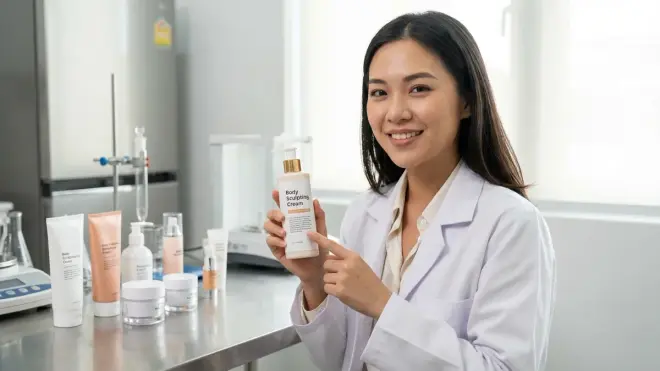
You can't compare body sculpting products without knowing their caffeine percentages—it's like comparing retinol serums without checking if one has 0.1% and the other has 1%. The concentration directly determines whether you're using a cosmetic product or a cosmetically elegant placebo.
Below 1% caffeine: Essentially a marketing ingredient. You'll smell it, maybe feel a slight tingle, but you won't see measurable firming or texture improvement. This is where most drugstore "sculpting" lotions sit—they're moisturizers with a caffeine sprinkle for label appeal.
1-2% caffeine: Threshold territory. Some people with responsive skin might notice subtle improvements in skin texture and temporary tightening, especially around areas with thinner skin or less subcutaneous fat. Not enough for dramatic before-and-after photos, but potentially enough for maintenance if you're already at your goal.
2-4% caffeine: The sweet spot where clinical studies show results. This is where you'll find legitimate body sculpting products that deliver visible improvements in skin firmness, texture smoothness, and temporary circumference reduction (usually from fluid drainage, not actual fat loss). Products like the Sol de Janeiro Brazilian Bum Bum Cream contain guarana extract (a caffeine source) in this effective range, paired with cupuaçu butter for texture.
Above 5% caffeine: Rare in consumer products because the irritation potential outweighs marginal benefit increases. Professional in-office treatments might use higher concentrations with occlusive wrapping, but that's different chemistry from what you're buying retail.
The Vibe: Higher percentages feel more "active"—more tingling, more warmth, more of that this-is-definitely-doing-something sensation. But that sensory feedback doesn't always correlate with results. I've tested 5% formulas that felt intense but performed similarly to well-formulated 3% products.
The Price: Luxury brands charge $60-120 for 6.7 oz of 3-4% caffeine formulas. Budget alternatives offer 2-3% concentrations for $15-25 per 6-7 oz, often using green coffee extract instead of pure caffeine anhydrous. If both disclose their percentages and you're in that 2-4% range, the expensive one better bring something else to the table—like clinically-studied peptides or a faster-absorbing base.
Types & Variations of Caffeine in Body Sculpting Products
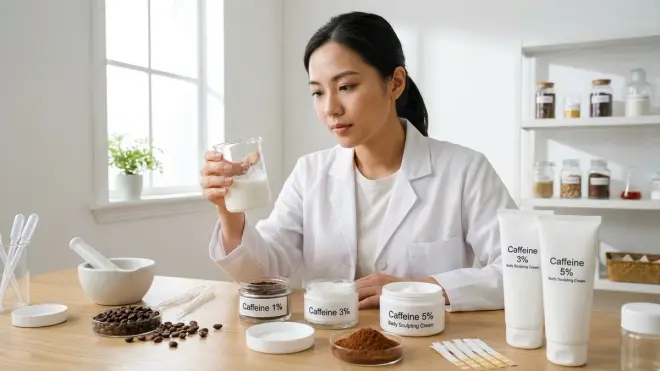
Not all caffeine ingredients are created equal, and the label won't always spell out which type you're getting. Here's what actually shows up in formulations and how they compare.
Caffeine anhydrous is pure, water-free caffeine—the most concentrated form. When products list "3% caffeine," they usually mean caffeine anhydrous. It dissolves well in both water and oil phases, making it formulator-friendly. This is your benchmark ingredient.
Green coffee extract contains 5-50% caffeine (depending on extraction method) plus chlorogenic acids and antioxidants. Products using green coffee extract need higher percentages to match pure caffeine's potency—a 10% green coffee extract might only deliver 1-2% actual caffeine. Brands love it because it sounds more "natural" and comes with bonus antioxidants, but it makes concentration comparison harder.
Guarana extract works similarly to green coffee—it's a plant source containing caffeine along with other xanthines like theobromine. Guarana naturally contains 2-4x more caffeine by weight than coffee beans, so extracts can be potent. But again, "10% guarana extract" tells you nothing about actual caffeine content without knowing the extract's caffeine concentration.
Coffee seed extract is the marketing-friendly cousin—often used in small percentages for label appeal rather than therapeutic effect. Unless the brand discloses the caffeine content, assume it's sub-1% and treat it as a bonus antioxidant rather than a primary sculpting active.
For comparison purposes, always convert to actual caffeine percentage. If a product uses "8% green coffee extract (standardized to 25% caffeine)," you're getting 2% actual caffeine (8% × 0.25 = 2%). Luxury brands usually disclose this; budget brands often don't, which makes ingredient-deck detective work necessary.
Water-free formulations (anhydrous serums, oil-based treatments) can concentrate caffeine higher without stability issues. Water-based creams max out around 3-4% before solubility becomes a problem. If you're choosing between formats and both list the same caffeine percentage, the anhydrous version likely penetrates better—but might also feel less cosmetically elegant depending on the base oils used.
Frequently Asked Questions
What is the most effective caffeine percentage for body sculpting?
The most effective caffeine percentage for visible body sculpting results ranges from 2-4%, with 3% being the clinical sweet spot shown in dermatological studies to improve skin firmness and texture when applied twice daily for 6-12 weeks. Concentrations below 2% provide minimal visible results beyond temporary tightening, while percentages above 5% increase irritation risk without proportionally better outcomes. For reference, products like targeted treatments for cellulite reduction typically formulate at 3-3.5% caffeine combined with supporting actives like retinol or niacinamide for synergistic effects.
Can caffeine percentage in body products actually reduce fat?
Caffeine percentage in body sculpting products cannot reduce actual subcutaneous or visceral fat layers that require caloric deficit to address, but 2-5% concentrations can temporarily improve the appearance of skin firmness through fluid drainage and enhanced microcirculation at superficial tissue levels. The lipolytic effects happen in the millimeter-deep range where cosmetic actives penetrate—not the deeper fat deposits you'd target through diet and exercise. Think of it as improving skin quality and temporary tightness rather than fat loss; consistent application over 8-12 weeks shows the most noticeable texture improvements in clinical settings.
How do I know the caffeine percentage if the label doesn't list it?
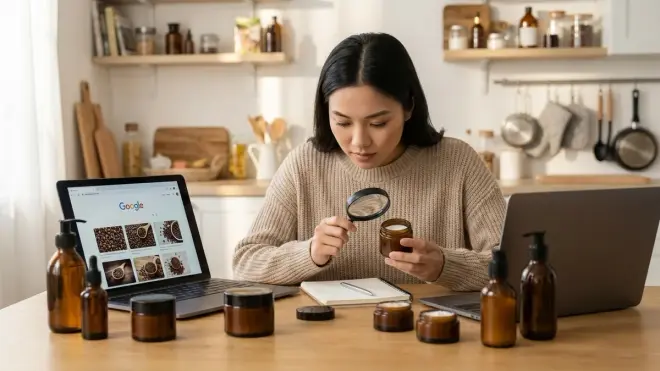
If a product doesn't disclose its caffeine percentage, check if it lists caffeine anhydrous within the first 5-7 ingredients—this suggests a concentration likely above 2%. Products listing "green coffee extract" or "guarana extract" should specify standardization (like "standardized to 25% caffeine") for you to calculate actual caffeine content. When brands don't disclose percentages and caffeine appears mid-list or lower, assume sub-1% concentration that won't deliver clinical results. For budget-conscious comparison shopping, products that transparently list percentages usually indicate better formulation quality regardless of price point—transparency correlates with efficacy.
Should I use higher caffeine percentage with other actives like retinol?
When combining caffeine with other actives like retinol or AHAs, stick to moderate caffeine percentages around 2-3% rather than maxing out at 5%, because layering multiple actives increases cumulative irritation potential. Caffeine itself is relatively gentle, but pairing high-percentage caffeine with 0.3%+ retinol or glycolic acid can compromise your skin barrier, especially on thinner-skinned areas like inner thighs or arms. For effective combination formulas, look for products that balance 2-3% caffeine with 0.1-0.3% retinol and 3-5% niacinamide—this trio appears in both luxury and budget body sculpting treatments. If you want to learn more about safely combining multiple actives, check out our guide on how to layer Korean skincare products for pH order and compatibility principles that apply to body products too.
Do expensive body sculpting creams have higher caffeine percentages?
Expensive body sculpting creams don't necessarily contain higher caffeine percentages than budget alternatives—most clinical formulations cluster around 3-4% regardless of price. What you're often paying for in luxury products is the base formulation quality (silky textures, fast absorption, elegant scent), additional supporting actives (peptides, growth factors, botanical extracts), and brand prestige rather than dramatically higher caffeine concentrations. I've tested $15 formulas with 3% caffeine that perform comparably to $90 options at the same concentration; the difference lies in sensory experience rather than active ingredient potency. For specific product comparisons, our roundup of the best body sculpting creams under $30 breaks down caffeine percentages across price points.
Summary
Caffeine percentage in body sculpting products determines whether you're using a legitimate active treatment or an overpriced moisturizer with caffeinated vibes. The effective range sits between 2-5%, with 3-4% delivering the best balance of results and tolerability when applied consistently over 8-12 weeks.
Don't let luxury pricing fool you—budget formulas at the right concentration perform comparably to prestige options. The formula base (anhydrous vs. cream), supporting actives (retinol, peptides, niacinamide), and your application consistency matter as much as the caffeine percentage itself.
When shopping, demand transparency. Brands that disclose percentages usually formulate better products than those relying on caffeine's label appeal without therapeutic concentrations. Your skin—and your budget—deserves better than caffeinated placebo cream.
For application techniques that maximize absorption and results, check out our guide on how to apply body sculpting cream and explore the science behind adipose-targeting technology that pairs with caffeine for enhanced effects.