
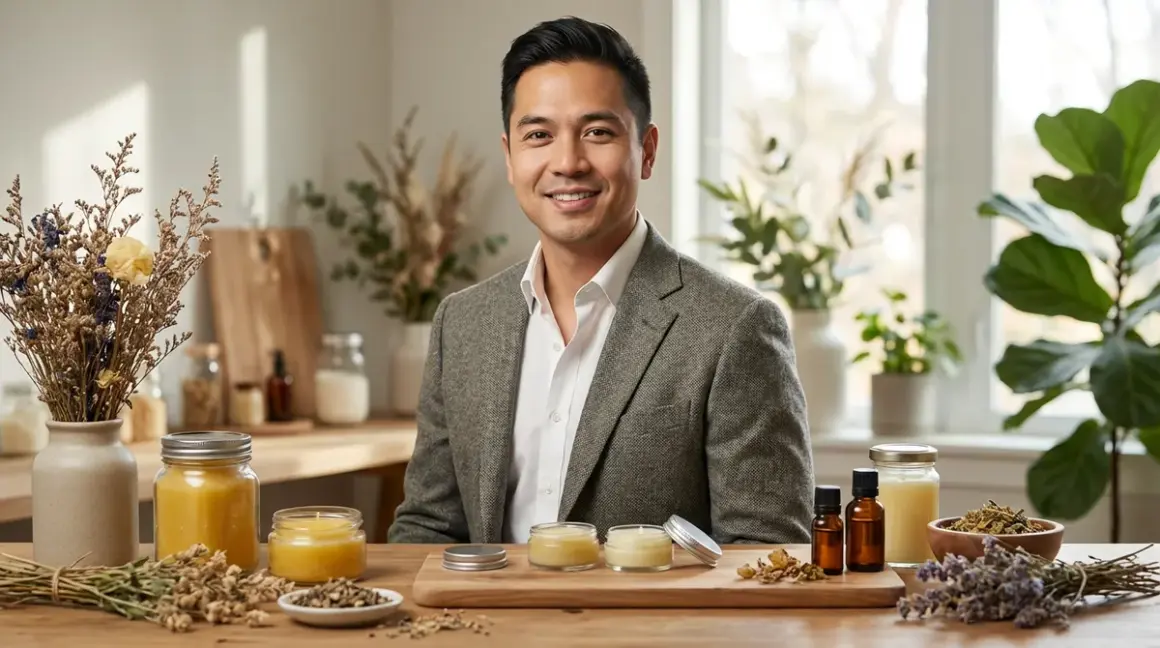

You press your fingers into the balm and feel resistance. Dense. Waxy. Almost stubborn. Then warmth from your palms transforms it—the solid melts into something tactile and pliable, releasing notes of cedarwood and sweet balsam. This is what hair balm is at its most elemental: a semi-solid emulsion of botanical waxes, carrier oils, and sometimes essential oils, engineered to provide flexible hold and nutritive conditioning without the petrochemical backbone of conventional styling products. Understanding what hair balm brings to your grooming routine means examining not just performance metrics but the underlying chemistry that separates artisanal formulations from mass-market alternatives.
What Is Hair Balm?
Hair balm is a wax-based styling product formulated with high concentrations of natural emollients—typically 30-45% beeswax, carnauba wax, or candelilla wax—blended with botanical oils (jojoba, argan, coconut fractionated) and, occasionally, butter extracts (shea, cocoa) for pliability. Unlike water-soluble gels or alcohol-heavy pomades, balms contain minimal to no aqueous phase, making them occlusive barriers that seal moisture into the hair shaft while providing light to medium hold.
The term "balm" derives from the same root as "balsam"—resinous plant extracts historically used for their healing and protective properties. In haircare, this translates to formulations that prioritize barrier function and conditioning over aggressive styling control. You'll find balms positioned between leave-in conditioners (which lack hold) and traditional pomades (which often rely on synthetic polymers or high wax loads that can feel greasy).
What distinguishes hair balm from other styling products is its anhydrous or low-water formulation. Most contain less than 5% water, with the remainder comprising waxes (for structure), oils (for glide and shine), and sometimes clay minerals or silica (for texture modification). This composition makes balms uniquely suited to dry or coarse hair types that need both styling control and ongoing nourishment. The absence of water also means no need for broad-spectrum preservatives like parabens or phenoxyethanol—a meaningful advantage for those with scalp sensitivities or eco-effective beauty priorities.
The molecular architecture of hair balm creates a film-forming layer around each strand, reducing friction and frizz while allowing natural movement. The wax esters in beeswax (C40-C52 chain lengths) create semi-crystalline structures that don't fully harden, maintaining flexibility throughout the day. Compare this to aerosol sprays that deposit rigid polymer films or water-based gels that can flake—balms offer what cosmetic chemists call "reactivatable hold," meaning you can restyle by running damp hands through your hair hours after initial application.
How It Works: The Chemistry Behind Wax-Based Styling
The performance of hair balm hinges on wax-to-oil ratios and their interaction with hair's keratin structure. Human hair has a slightly negative surface charge (zeta potential around -20 to -30 mV at neutral pH), which helps cationic conditioning agents adhere. But balms typically avoid charged ingredients, instead relying on mechanical and physical properties.
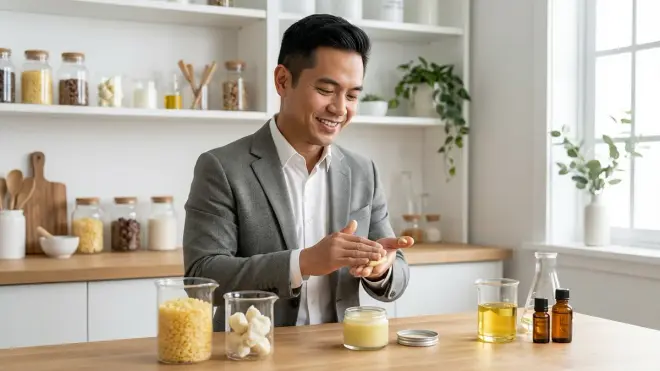
Beeswax, the cornerstone of most balm formulations, contains approximately 284 identified compounds—predominantly palmitate, palmitoleate, and oleate esters of long-chain (C24-C32) fatty alcohols. When you warm balm between your palms, you're temporarily disrupting the crystalline lattice structure of these wax esters, transitioning them from solid to semi-solid colloid. The melting point of pure beeswax ranges from 62-64°C (144-147°F), but in formulation—diluted with liquid oils—the effective melting point drops to around 35-40°C (95-104°F), just above body temperature. This explains why balm feels solid in the tin but liquefies with friction from your hands.
Once applied, the wax component rapidly re-solidifies as it cools to ambient temperature, forming a micro-thin coating around each hair shaft. Electron microscopy studies show that wax films on hair range from 50-200 nanometers thick—enough to smooth the cuticle layer (which naturally overlaps in scale-like fashion) without weighing down finer hair types. The coating reduces the coefficient of friction between adjacent hairs, which manifests as improved manageability and reduced tangling.
The oil phase in hair balm—often jojoba (technically a liquid wax ester), argan, or fractionated coconut oil—serves multiple functions. These oils have chain lengths (C16-C18 for most triglycerides) short enough to penetrate slightly into the hair cuticle's intercellular cement, where they interact with endogenous lipids (primarily 18-methyleicosanoic acid). This provides genuine conditioning beyond surface smoothing. Jojoba is particularly valued because its fatty acid profile (eicosenoic acid at ~70%) closely mimics human sebum, making it less likely to trigger scalp congestion in acne-prone individuals.
Carnauba wax, derived from Brazilian palm leaves, appears in premium balm formulations at 5-15% concentration. It has the highest melting point (82-86°C) of common natural waxes and contributes superior gloss and harder initial hold. However, pure carnauba feels brittle—hence it's always blended with softer waxes and oils. The refractive index of carnauba (1.45-1.46) is slightly higher than beeswax (1.44), which translates to more pronounced light reflection—that coveted "healthy shine" without looking wet.
For texture modification, some balms incorporate kaolin clay or bentonite at 2-8% concentration. These phyllosilicate minerals have massive surface areas (up to 800 m²/g for bentonite) that absorb excess sebum while adding grip and matte finish. The clay particles don't dissolve but remain suspended in the wax-oil matrix, creating what formulators call a "paste-balm hybrid." If you prefer volume over sleekness, clay-modified balms are worth seeking out.
The absence of synthetic polymers—like PVP (polyvinylpyrrolidone) or acrylates copolymers found in conventional gels—means balms won't flake, crack, or create crunchy texture. Those water-soluble polymers work by forming rigid networks as water evaporates; when humidity fluctuates, the network destabilizes, causing visible flaking. Wax-based styling products sidestep this entirely by never relying on evaporation for hold.
One often-overlooked aspect: balms create micro-occlusion on the scalp surface if applied too close to roots. This can be beneficial for dry, flaky scalps by preventing transepidermal water loss, similar to how barrier-repair ingredients function in facial skincare. But for those already producing excess sebum, heavy balm application near the scalp can exacerbate oiliness. The solution is strategic application: mid-shaft to ends for styling, while treating the scalp separately with targeted actives like niacinamide for sebum regulation.
Why It Matters: Performance Advantages Over Conventional Styling Products
Hair balm represents a philosophical shift from aggressive styling control to nourishing manipulation. In practical terms, this distinction matters for long-term hair health and scalp ecology.
Conventional hair products—particularly high-hold gels and alcohol-heavy sprays—achieve their effects through temporary protein crosslinking (in the case of fixative polymers) or extreme dehydration (alcohols evaporate, leaving hair temporarily stiff). The cosmetic effect is immediate but metabolically stressful for the hair fiber. Repeated use of alcohol-dominant products (anything listing SD Alcohol 40, Denatured Alcohol, or Alcohol Denat in the first five ingredients) can reduce hair's moisture content by 15-20%, increasing brittleness and breakage over time.
Balms function through mechanical film-forming rather than chemical alteration, which preserves the structural integrity of the hair shaft's disulfide bonds and hydrogen bonding networks. This is particularly relevant for chemically treated hair (bleached, permed, or permanently straightened), where the cuticle layer is already compromised. The occlusive wax layer acts as a temporary prosthetic cuticle, reducing protein loss during washing—a phenomenon measured in cosmetic science as "alkali swelling index."
From a sustainability perspective, balms align with eco-effective beauty principles more readily than water-based styling products. The absence of water eliminates the need for synthetic preservatives, emulsifiers, and stabilizers that carry environmental persistence concerns. Beeswax, when ethically sourced, is a renewable byproduct of honey production. Carnauba harvesting is non-destructive to the palm tree. Compare this to silicone-heavy serums (dimethicone, cyclopentasiloxane) that don't readily biodegrade and accumulate in aquatic sediments.
The price-per-ounce value proposition strongly favors balms over premium pomades. A typical 2-ounce tin of artisan hair balm retails for usually around $12-18, providing 60-80 applications for short to medium hair. That calculates to $0.15-0.30 per use. A comparable volume of high-end water-based pomade from prestige grooming brands costs usually around $22-35, with slightly faster depletion rates because the lighter texture encourages over-application. The denser consistency of balm enforces conservative dosing—you simply can't over-apply without obvious greasiness, which functions as built-in portion control.
For those tracking ingredients across their entire grooming routine, balms offer transparency and simplicity. An exemplary formulation might contain only six ingredients: beeswax, jojoba oil, shea butter, carnauba wax, essential oil blend, and vitamin E tocopherols (as a natural antioxidant to prevent oil rancidity). This minimal ingredient philosophy reduces the cumulative exposure to potential sensitizers—particularly relevant given the skinification trend that encourages treating the scalp with the same care as facial skin.
Types & Variations: Navigating Balm Subcategories
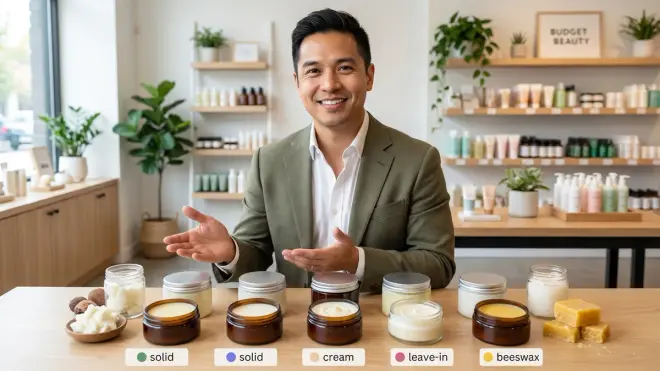
Not all balms share identical formulation architectures. Understanding the subtle gradations helps match products to specific styling needs and hair characteristics.
Traditional Beeswax Balms (40-50% beeswax content) provide the firmest hold in the category—what stylists describe as "medium hold with matte finish." These work best for short to medium-length hair (1-4 inches) and coarse textures. The higher wax load creates more pronounced definition for styles like textured crops, side parts, or modern pompadours. The trade-off: they can feel stiff in very fine hair and require more emulsification time in your palms before application. Scandinavian and Baltic brands often excel in this category, leveraging regional beekeeping traditions. Manufacturing in countries with cold-press extraction methods preserves more of beeswax's naturally occurring propolis and pollen content, which contribute antimicrobial properties beneficial for scalp health.
Butter-Enriched Balms incorporate 15-25% shea or cocoa butter, reducing beeswax to 20-30%. The butter phase provides superior slip during application and creates a softer, more pliable hold—ideal for longer hair (4+ inches) where flexibility matters more than rigidity. Shea butter's triterpene alcohols (lupeol, amyrin) have documented anti-inflammatory effects at the scalp, making these formulations appropriate for those with seborrheic dermatitis or psoriasis. The finish tends toward semi-matte with subtle sheen. Australian and Southern Hemisphere brands frequently employ this formulation approach, often adding native botanical oils like kakadu plum or macadamia.
Clay-Modified Balms blend 5-12% kaolin or bentonite clay with reduced wax content (25-35%) for a matte, textured finish with volumizing properties. The clay particles absorb sebum throughout the day, making these particularly suited to oily scalp types. They provide light to medium hold with considerable reactivatability—you can restyle multiple times without adding more product. The texture is drier, almost chalky to touch, which some find less pleasant to work with but delivers unmatched volume for fine or thinning hair. North American craft brands dominate this subcategory, often incorporating volcanic ash or Dead Sea clay for mineral content marketing, though the functional difference between clay types is minimal at these concentrations.
Oil-Forward "Balm Conditioners" flip the conventional ratio, using 50-60% botanical oils with just enough wax (15-20%) to maintain semi-solid form. These function as hybrid styling-conditioning products with minimal hold—best for waves, curls, and textured styles where definition and moisture are priorities over control. The high oil content can weigh down fine straight hair but transforms coarse, porous hair types by filling gaps in the cuticle layer. Mediterranean and Middle Eastern formulations often follow this approach, emphasizing argan, olive, and sweet almond oils. The finish is naturally glossy, sometimes reading as slightly "wet" in thick application.
Vegan Alternatives replace beeswax with plant-derived waxes: candelilla (from Mexican shrub), rice bran wax, or berry waxes. Candelilla is hardest (melting point 68-72°C), requiring more oil to achieve workable consistency—typically resulting in slightly softer hold than beeswax equivalents. Rice bran wax, extracted from the outer layer of rice grains, has an impressively similar fatty acid profile to beeswax and performs nearly identically. Japanese and Korean beauty brands leverage rice bran wax extensively, often pairing it with fermented extracts for added scalp benefits. Price points for well-formulated vegan balms are usually around $14-20 per 2 ounces—refuting the "vegan tax" myth.
Frequently Asked Questions
What is hair balm used for?
Hair balm is used for providing light to medium hold styling control while simultaneously conditioning and nourishing the hair shaft, particularly effective for taming frizz, defining texture, and adding subtle shine without the stiffness or flaking associated with water-based gels and synthetic polymers.
How is hair balm different from pomade?
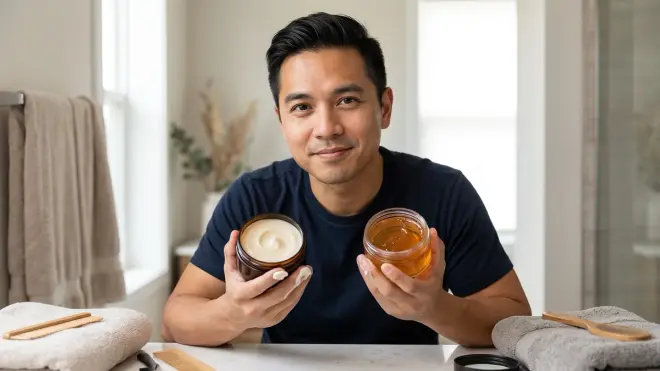
Hair balm contains higher concentrations of natural waxes and oils with minimal water content, resulting in a denser texture and matte-to-semi-matte finish, while traditional pomades are typically water-based or petroleum-based products with synthetic hold agents that provide higher shine and stronger hold but less conditioning benefit.
Can hair balm cause scalp acne or buildup?
Hair balm can potentially cause scalp congestion if applied heavily near the roots, particularly in individuals with seborrheic scalp types, because the occlusive wax layer may trap sebum and dead skin cells, but strategic application from mid-shaft to ends and proper cleansing with sulfate surfactants typically prevents accumulation issues.
What hair types work best with hair balm?
Hair balm works best for coarse, dry, or wavy-to-curly hair textures between 1-6 inches in length, where the conditioning properties address inherent dryness and the flexible hold enhances natural texture, though fine hair types should opt for butter-enriched or oil-forward formulations to avoid heaviness.
How do you properly apply hair balm?
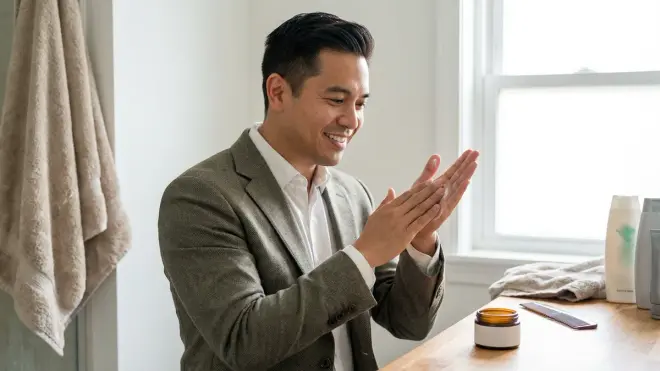
Proper hair balm application involves warming a pea-sized amount between palms for 10-15 seconds until fully liquefied, then working through towel-dried or dry hair from mid-shaft toward ends using finger-combing motions, avoiding the scalp unless specifically addressing dryness, and adding incrementally if additional hold is needed rather than overloading initially.
Summary: Wax Chemistry Meets Conscious Styling
What hair balm offers is elegance through restraint—a formulation philosophy that achieves styling results through botanical architecture rather than synthetic force. The interplay of wax crystallization, oil penetration, and mechanical film-forming creates hold that breathes and moves, that conditions while it controls. For those navigating the intersection of sustainable beauty practices and actual performance, balms deliver rare alignment.
The chemistry isn't complicated, which is precisely its sophistication. Long-chain wax esters coat and protect. Mid-chain oils nourish and soften. Optional clays add grip and volume. No preservatives, no fragrance allergens unless deliberately added, no microplastic polymers that persist in waterways long after they've washed from your hair.
You'll notice the difference most in texture—the way balm-styled hair still feels like hair rather than a sculptured construct. Run your fingers through it at midday and find pliability, not crunch. The subtle cedar-and-balsam aromatics linger faintly, if the formulator exercised restraint with essential oil dosing. This is styling that prioritizes the long game over immediate drama, recognizing that hair health and styling performance aren't opposing forces but complementary dimensions of the same practice.