


Your scalp is skin. Treat it like the skin on your face, and you'll get better results than any shampoo alone can deliver. A men's scalp moisturizer isn't a luxury—it's infrastructure maintenance for the environment where your hair grows. If you're dealing with flaking, itching, or thinning hair, the issue often starts with dehydrated scalp tissue that can't support healthy follicle function. This guide breaks down the active ingredients, pH chemistry, and formulation standards that separate performance products from marketing gimmick bottles.
What Is a Men's Scalp Moisturizer?
A men's scalp moisturizer is a leave-in topical formulated to hydrate the epidermis layer of your scalp, restore barrier function, and create optimal conditions for hair follicle health. Unlike conditioners that coat the hair shaft, scalp moisturizers penetrate the skin using humectants, emollients, and active compounds designed for dermal absorption.

The distinction matters. Hair products sit on keratin fibers. Scalp products work on living tissue—sebaceous glands, blood vessels, and follicular structures that determine whether your hair grows thick or weak. Most men use shampoo and conditioner but ignore the scalp entirely, which is like washing your face but never moisturizing it. You end up with compromised barrier function, chronic inflammation, and a microbiome environment that can't support follicle productivity.
Modern men's scalp moisturizers borrow formulation principles from facial skincare: pH-balanced bases (typically 4.5-5.5 to match scalp acidity), low-molecular-weight humectants for penetration, and anti-inflammatory actives to calm the immune response that can damage follicles. The best formulations include specific percentages of proven compounds—3-5% niacinamide, 1-2% hyaluronic acid, 0.5-1% panthenol—not vague "botanical extracts" that contribute nothing measurable.
If you're already using a complete men's grooming routine, adding a scalp moisturizer is the logical next step for scalp health. The scalp is an extension of your facial skin—it has the same collagen structure, the same moisture barrier requirements, and responds to the same active ingredients.
How It Works
Men's scalp moisturizer functions through three distinct mechanisms: barrier restoration, follicle environment optimization, and active delivery.
Barrier Restoration
Your scalp's moisture barrier is a lipid-and-protein matrix that prevents transepidermal water loss (TEWL). When this barrier degrades—from harsh surfactants, UV exposure, or chronic dryness—the scalp loses hydration faster than sebaceous glands can replace it. This triggers compensatory overproduction of sebum, leading to the paradox of an oily scalp surface with dehydrated underlying tissue.
Quality scalp moisturizers use ceramide complexes (ceramide NP, ceramide AP, ceramide EOP) in ratios that mimic natural intercellular lipids. Look for products listing 3-5% ceramide content by weight. These molecules integrate directly into the stratum corneum, physically rebuilding the barrier structure. Cholesterol and free fatty acids (palmitic, stearic) work synergistically with ceramides at a 1:1:1 ratio—the gold standard replicated from dermatological research on atopic dermatitis treatment.
Humectants like hyaluronic acid (preferably multi-molecular-weight blends: 5kDa-1.5MDa) and glycerin (3-10% concentration) pull water into the epidermis. Low-molecular-weight HA (under 50kDa) penetrates deepest, while high-molecular-weight variants form a surface film that slows evaporation. This dual-action hydration is more effective than single-weight formulas.
Follicle Environment Optimization
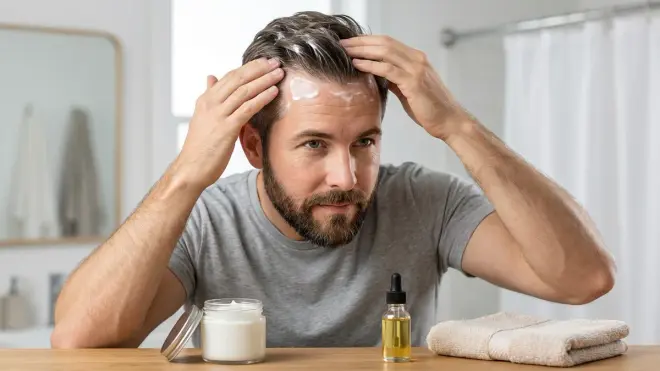
Hair follicles are miniature organs embedded in dermal tissue. They require consistent hydration, nutrient delivery via microcirculation, and low-inflammation conditions to produce strong hair shafts. A dehydrated scalp triggers inflammatory cytokine cascades that miniaturize follicles over time—the mechanism behind androgenetic alopecia acceleration.
Niacinamide (vitamin B3) at 3-5% concentration reduces inflammation, strengthens barrier function, and improves ceramide synthesis within the scalp itself. Clinical studies show niacinamide increases hair fullness by improving follicle blood flow. It's a non-negotiable active in performance-grade scalp products.
Caffeine (0.2-0.5%) acts as a vasoconstrictor at the follicle level, counteracting DHT-induced follicle miniaturization. It's not a miracle compound, but measured results show 10-15% improvement in hair density when applied consistently over 6 months. The catch: it needs 2 minutes minimum contact time to penetrate, so application technique matters.
Panthenol (provitamin B5) at 1-2% penetrates the hair shaft and follicle opening, increasing hydration and elasticity. It's a lightweight humectant that doesn't leave residue, making it ideal for scalp application where heavy oils would clog follicles.
Active Delivery and pH Balance
The scalp's natural pH sits around 4.5-5.5—slightly acidic to support beneficial bacteria and discourage pathogenic fungi. Most shampoos clock in at pH 6-8, which temporarily disrupts this balance. A properly formulated men's scalp moisturizer restores acidity quickly, bringing the microbiome back into equilibrium.
pH-adjusted delivery systems matter for active stability. Niacinamide works best at pH 5-6. Peptides degrade above pH 7. Vitamin C derivatives require pH below 4.5 for efficacy. Multi-active formulas need buffering systems—typically citric acid or lactic acid—to maintain the target range without compromising individual compound performance.
For context, the skinification of hair movement applies these same pH and active-delivery principles from facial skincare to scalp care. The chemistry doesn't change just because you're treating a different body part.
Why It Matters
Scalp hydration is upstream of hair health. You can use the most expensive shampoo on the market, but if your scalp tissue is chronically dehydrated and inflamed, your hair will grow weak from compromised follicles. Think of it like trying to grow plants in depleted soil—you might get something, but not maximum yield.
Men typically have higher sebum production than women due to androgen activity, but sebum is not the same as hydration. Oily scalp surface doesn't mean hydrated dermal layers. In fact, excess sebum often masks underlying dehydration, creating a false sense of scalp health while follicles operate in a suboptimal environment.
The performance ROI is measurable. After 4-6 weeks of consistent scalp moisturizer use, you should see reduced flaking, less itching, and noticeably improved hair texture. Hair grows approximately 0.5 inches per month—if the follicle is healthier, each new inch of growth will be thicker and stronger. This isn't about reversing baldness; it's about maximizing the genetic potential of the follicles you have.
From a cost perspective, a quality men's scalp moisturizer usually runs around $15-30 for 2-4 ounces. Applied 3-4 times per week, a 3-ounce bottle lasts roughly 2 months. That's $7.50-15 per month for measurable infrastructure improvement. Compare that to the $40+ most men spend on premium shampoos that don't address the root issue.
Types & Variations
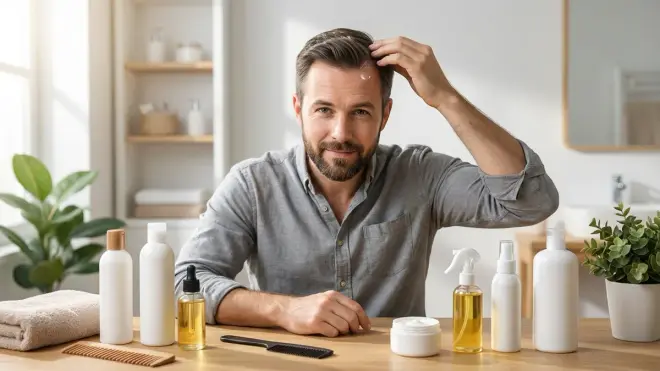
Serum-Style Formulations use lightweight, fast-absorbing bases—typically water or aloe vera gel with silicone emulsifiers. These deliver actives without residue, making them ideal for daily use on scalps prone to oiliness. Look for dimethicone or cyclomethicone at 2-5% as the emulsifier—these spread actives evenly without buildup. The The Ordinary Multi-Peptide Serum for Hair Density exemplifies this category: 60ml for around $18, delivering caffeine, EGCG, and peptides in a pH 5.5 base. Application takes 30 seconds, absorption is complete in 2 minutes, and it layers under styling products without interference.
Lotion-Based Products use emulsion chemistry—oil droplets suspended in water with emulsifying waxes. These provide more occlusive protection, making them suitable for dry scalps or winter conditions. Expect ingredients like cetearyl alcohol and glyceryl stearate as texture agents. The tradeoff: slightly longer absorption time and potential for greasy feel if overapplied. Apply these at night rather than pre-styling to avoid interference with hair products.
Treatment Oils are pure lipid formulations—jojoba, argan, or squalane infused with fat-soluble actives like rosemary oil (0.5-1%) or peppermint oil (0.2-0.5%). These work well for very dry scalps but can overwhelm fine hair. They're best used as overnight treatments, applied to the scalp directly (not the hair) and rinsed in the morning. Price per ounce is typically around $3-5/oz, but you use less per application.
Exfoliating Formulas combine hydration with chemical or physical exfoliation to remove dead skin buildup. Look for salicylic acid (0.5-2%) or lactic acid (5-10%) in a moisturizing base. These are not daily-use products—2-3 times per week maximum to avoid over-exfoliation. If you're dealing with seborrheic dermatitis or significant flaking, this category delivers faster visible results than pure moisturizers.
If you're exploring advanced scalp treatments, retinol scalp treatments represent the next step up in active potency, though they require more careful introduction to avoid irritation.
Frequently Asked Questions
What's the difference between a men's scalp moisturizer and a regular hair conditioner?
A men's scalp moisturizer is formulated to penetrate the skin of your scalp using humectants and emollients designed for dermal absorption, while conditioners coat the hair shaft with cationic surfactants and silicones to improve texture and manageability. Scalp moisturizers contain actives like niacinamide, ceramides, and hyaluronic acid at specific percentages (3-5% niacinamide, 1-2% HA) that target barrier function and follicle health. Conditioners focus on detangling agents and protein fillers for cosmetic hair improvement. You need both for complete care—conditioner for the hair fiber, moisturizer for the living tissue underneath.
How often should I apply a men's scalp moisturizer?
Apply a men's scalp moisturizer 3-4 times per week for normal-to-dry scalps, increasing to daily use if you have chronic dryness, flaking, or compromised barrier function from harsh shampoos or environmental exposure. Use it on clean, damp scalp for maximum absorption—the water content in your skin helps pull humectants deeper into tissue. If you're using exfoliating actives like salicylic acid or retinol on your scalp, limit those to 2-3 times weekly to avoid irritation, but you can use a basic hydrating formula on off days.
Can scalp moisturizer help with hair thinning or hair loss?
Scalp moisturizer improves the follicle environment by reducing inflammation, optimizing hydration, and supporting barrier function, which can help existing follicles produce thicker, healthier hair shafts—but it won't regrow hair from dormant follicles. Ingredients like 3-5% niacinamide and 0.2-0.5% caffeine show measurable improvement in hair density and fullness in clinical studies when used consistently over 6 months. If you're dealing with androgenetic alopecia, scalp moisturizer is a supportive treatment that works alongside proven interventions like minoxidil or finasteride, not a replacement. Think of it as optimizing the production capacity of the follicles you have, not creating new ones.
What pH should I look for in a men's scalp moisturizer?
Look for a men's scalp moisturizer with a pH between 4.5-5.5 to match your scalp's natural acidity, which supports beneficial bacteria and maintains optimal barrier function. Products formulated above pH 6 disrupt the acid mantle and can trigger inflammation or fungal overgrowth. Most quality scalp products list pH on the packaging or product literature—if it's not disclosed, contact the manufacturer directly or test it yourself with pH strips. Water-based serums with niacinamide, hyaluronic acid, and peptides typically sit at pH 5-6, while those containing AHA/BHA exfoliants may be slightly more acidic at pH 4-5 for active stability.
Should I apply scalp moisturizer to wet or dry hair?
Apply scalp moisturizer to damp (not soaking wet) scalp immediately after showering for maximum absorption—the water content in your skin helps pull humectants deeper into tissue through osmotic pressure. Towel-dry your hair until it's 70-80% dry, then apply product directly to the scalp using your fingertips or a dropper applicator, working in sections to ensure even coverage. If you're applying to dry scalp (for midday treatment or overnight use), mist your scalp lightly with water first to enhance penetration. Avoid applying to soaking wet hair—excess water dilutes the active concentration and reduces efficacy below the designed percentages.
Summary
A men's scalp moisturizer is functional infrastructure for hair growth—it optimizes the environment where follicles operate by restoring barrier function, delivering proven actives like 3-5% niacinamide and 1-2% hyaluronic acid, and maintaining pH balance at 4.5-5.5. This isn't cosmetic luxury; it's applied biology. Your scalp is skin with higher sebum production and embedded hair follicles. It responds to the same hydration and barrier-repair principles that work on your face, just with different application logistics.
The performance standard is simple: after 4-6 weeks of consistent use (3-4 times weekly), you should see reduced flaking, less itching, and measurably improved hair texture. If you're not seeing results, check your product's active percentages and pH balance—many products in the men's grooming aisle are underdosed or poorly formulated. Treat this like equipment selection: look at the spec sheet, verify the chemistry, and measure the results. Your hair will reflect the work you put in upstream at the scalp level.