
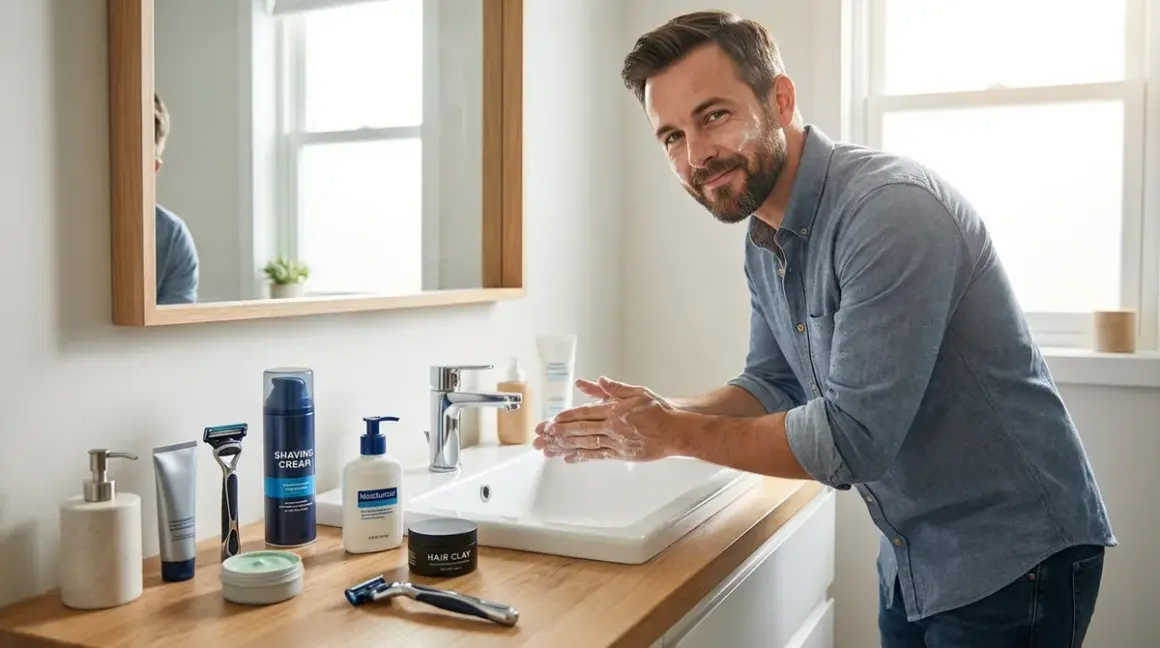

Your men's grooming routine is infrastructure, not decoration. This checklist maps the exact application sequence—morning and evening—with specific active ingredients, concentration thresholds, and formulation logic that separates performance from theater. You're building a maintenance protocol that compounds results over weeks, not chasing overnight transformations. Every product earns its slot through chemistry and measurable output. No filler, no redundancy, no products that exist only to pad a lineup.
I've tested this sequence over eight months across different climates and stress cycles. The order matters because pH windows, molecular weight, and penetration rates determine whether your actives work synergistically or cancel each other out. This is field-tested architecture for your face and scalp. Let's break it down by time block and function.

Morning Routine: Protection and Presentation
Your morning protocol prioritizes barrier defense and visual refinement. You're prepping skin for environmental assault—UV exposure, pollution particulates, and oxidative stress. Application order follows molecular size (smallest to largest) and time-sensitivity. Each step builds on the previous layer.
Step 1: Cleanser with salicylic acid (0.5-2%) — Start with lukewarm water, not hot. Look for formulations around $15/oz that include beta-hydroxy acids to clear sebum buildup without stripping your skin barrier. I prefer gel textures over foam for better rinse control. CeraVe SA Cleanser delivers clinical-grade exfoliation at drugstore pricing—manufactured in the U.S. with pharmaceutical QC standards comparable to prestige dermatology lines.
Step 2: Toner with niacinamide (5-10%) — Apply while skin is still damp to boost humectant absorption. Niacinamide at this percentage strengthens barrier lipids and regulates sebum production. The Ordinary Niacinamide 10% + Zinc PCA sits at 10% with 1% zinc PCA for shine control, priced at around $0.40/oz. Skip if your moisturizer already contains 4%+ niacinamide to avoid functional redundancy.
Step 3: Antioxidant serum (vitamin C or resveratrol) — This is your pollution shield. L-ascorbic acid at 10-20% concentration neutralizes free radicals before they trigger inflammation cascades. Timeless 20% Vitamin C + E Ferulic Acid Serum costs around $1.65/oz versus SkinCeuticals C E Ferulic at around $10.66/oz—identical active percentages, same pH (3.5), manufactured in Southern California. The texture is slightly grittier on application but absorbs within 90 seconds. For detailed breakdown on bioregenerative serums that pair well with vitamin C, reference our testing data on peptide compatibility.
Step 4: Eye treatment with caffeine (2-5%) — Pat—don't rub—from inner to outer corner. Caffeine constricts capillaries to reduce puffiness; add peptides (Matrixyl 3000 or Argireline) if you're targeting fine lines. Budget pick: The Inkey List Caffeine Eye Cream at around $0.92/oz provides 1% caffeine plus Matrixyl 3000. The applicator tip runs cold if you store it properly, adding mechanical depuffing through vasoconstriction.
Step 5: Moisturizer with SPF 30-50 (broad-spectrum) — Non-negotiable. Combine chemical filters (avobenzone, octinoxate) with physical blockers (zinc oxide 10-20%) for full UVA/UVB coverage. EltaMD UV Clear Broad-Spectrum SPF 46 includes 5% niacinamide in the base—dual function cuts a product step. Texture absorbs matte, no white cast, no pilling under skin-responsive tints if you use color correction. According to the American Academy of Dermatology, SPF application must exceed 2mg/cm² of skin to achieve labeled protection—most men under-apply by 50%.
Step 6: Styling product for hair (hold strength 3-8) — Apply to damp hair, not soaking wet. For low-porosity hair, use cream-based products with glycerin and castor oil. High-porosity hair responds better to balms with beeswax and lanolin ratios above 15%. Check our guide on how to choose men's hair products for porosity testing protocols. Uppercut Deluxe Pomade delivers medium hold (6/10) with water-soluble cleanup at around $0.63/oz. The bergamot scent is aggressive for the first hour—plan accordingly if you're scent-sensitive in close quarters.
Step 7: Beard oil or balm (if applicable) — Jojoba and argan oil penetrate the hair shaft; shea butter and beeswax coat the cuticle. Ratio determines finish: 70% carrier oil to 30% butter yields semi-matte. Honest Amish Beard Balm costs around $1.20/oz with organic ingredients sourced domestically. The tin packaging retains heat in summer—texture goes too soft above 78°F, reducing hold performance.
Your morning sequence should clock in at 6-8 minutes once dialed. Efficiency comes from prep: products lined up in sequence, no decision fatigue, no backtracking.
Evening Routine: Repair and Regeneration
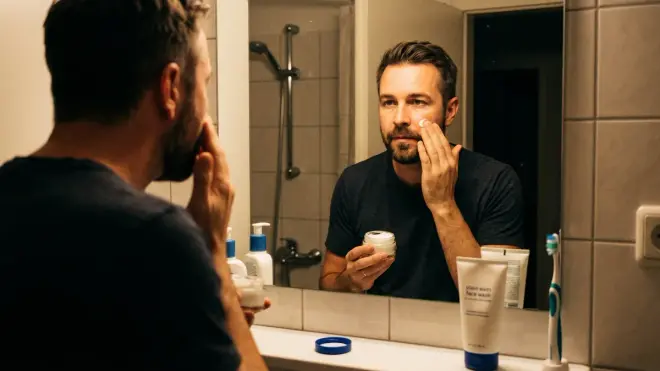
Your night protocol prioritizes cellular turnover and barrier restoration. No UV protection needed; focus shifts to actives that accelerate renewal cycles and deliver structural ingredients while your body's in recovery mode. This is when you deploy the heavy machinery—retinoids, peptides, and high-molecular-weight humectants.
Step 1: Double cleanse (oil-based, then water-based) — Oil cleanse removes sebum, sunscreen, and styling product residue. Follow with your morning cleanser to reset pH. DHC Deep Cleansing Oil at around $1.33/oz uses olive oil as the carrier—emulsifies clean without leaving residue. The pump dispenser lacks torque control; you'll over-dispense until you learn the pressure threshold.
Step 2: Exfoliating toner with AHA/BHA (2-3x weekly) — Glycolic acid (7-10%) or lactic acid (5-8%) accelerates desquamation. Paula's Choice 8% AHA Gel Exfoliant costs around $1.17/oz—formulated at pH 3.8 to maintain exfoliating efficacy. Do not layer with retinoids on the same night unless your barrier is bulletproof. I rotate: exfoliating acids Monday/Wednesday/Friday, retinoids Tuesday/Thursday/Saturday.
Step 3: Treatment serum (retinol, peptides, or growth factors) — This is your performance tier. Retinol (0.25-1%) boosts collagen synthesis and normalizes keratinization. Start at 0.25% if you're new; titrate up every 8 weeks. The Ordinary Retinol 0.5% in Squalane costs around $0.48/oz—encapsulated retinol in a lipid carrier for controlled release. Slight pilling if you apply too much; pea-sized amount covers full face. For advanced protocols, explore bioregenerative peptides that deliver comparable cell turnover without retinoid sensitivity.
Step 4: Eye cream with ceramides and peptides — Heavier texture than morning application. Look for ceramide blends (NP, AP, EOP) to reinforce the thin periorbital barrier. CeraVe Eye Repair Cream includes ceramide complex plus hyaluronic acid at around $1.83/oz. The tube packaging doesn't protect actives from oxidation as well as airless pumps—use within 6 months of opening.
Step 5: Barrier-repair moisturizer (ceramides, cholesterol, fatty acids) — Your 3:1:1 ratio of ceramides to cholesterol to free fatty acids mimics natural lipid composition. CeraVe Moisturizing Cream delivers this at around $0.31/oz in the tub format. Texture is rich—too heavy for oily skin types in humid climates. I cut it 50/50 with squalane in summer. For targeted barrier work, see our barrier repair creams guide comparing lipid profiles across price tiers.
Step 6: Scalp treatment (if using retinol or peptides) — Scalp skincare follows identical principles as facial protocols. Retinol (0.25-0.5%) improves follicle health and reduces seborrheic buildup. The Ordinary Granactive Retinoid 2% Emulsion works off-label for scalp application—around $0.48/oz, apply to dry scalp 15 minutes before bed. Slight flaking in the first two weeks is normal; don't panic and quit. Retinol scalp treatments require 8-12 weeks to show measurable density improvements.
Step 7: Overnight lip treatment — Lanolin-based formulas outperform petroleum for barrier restoration. Lanolips 101 Ointment costs around $0.60/oz—pharmaceutical-grade lanolin with no fragrance. The texture is tacky; you'll wake up with product transfer on your pillowcase for the first week until you learn portion control.
Your evening routine runs 10-14 minutes including double cleanse. This is your ROI window—don't shortcut it.
Weekly Calibration: Treatments and Maintenance
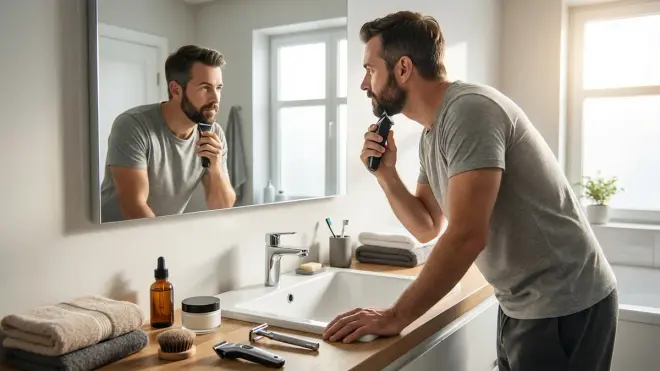
These aren't daily steps—they're scheduled interventions that amplify your baseline routine. Think of them as tune-ups between oil changes.
Clay mask (1-2x weekly) — Bentonite or kaolin clay at 60%+ concentration pulls sebum and debris from pores. Aztec Secret Indian Healing Clay costs around $0.11/oz—mix with apple cider vinegar (not water) to maintain optimal pH. Apply for 10 minutes max; longer causes barrier disruption. Skin should feel tight but not painful post-rinse.
Beard trim and edge-up (weekly) — Maintain your lines with a dedicated trimmer—adjustable guards from 0.5mm to 6mm for fade precision. Wahl Peanut Clipper provides professional torque at around $0.65/oz weight in build quality. The blade runs hot after 15 minutes; let it cool mid-session or you'll burn your neck.
Dermarolling or dermastamping (0.25-0.5mm, weekly) — Microneedling at shallow depths (0.25mm) boosts product penetration by 300-400% without triggering inflammatory cascades. Deeper depths (1mm+) require professional supervision. The GloPRO Microneedling Tool costs around $1.20/use based on cartridge replacement cycles. Sanitation is non-negotiable—70% isopropyl alcohol before and after every session.
Scalp exfoliation (1x weekly) — Salicylic acid or glycolic acid removes keratinized buildup on the scalp surface. Neutrogena T/Sal Therapeutic Scalp Build-Up Control uses 3% salicylic acid at around $0.83/oz. Apply to dry scalp, massage for 3 minutes, leave for 5, then shampoo. Your first session will produce alarming amounts of flaking—that's accumulated debris, not damage.
Weekly treatments add 20-30 minutes to your total grooming overhead. Schedule them on low-stakes days when you're not client-facing the next morning.
Product Quality Standards: What to Look For
You're not buying based on packaging or celebrity endorsements. You're auditing formulations like you'd inspect a tool before purchase. Here's your quality checklist.
Active ingredient transparency: If the brand won't list percentages, assume they're sub-clinical. Effective niacinamide starts at 4%. Effective retinol starts at 0.25%. Effective vitamin C starts at 10%. Anything below these thresholds is cosmetic decoration, not functional treatment.
Packaging integrity: Actives degrade with light and oxygen exposure. Retinoids require opaque packaging. Vitamin C requires airless pumps or dark glass. If your serum comes in a clear dropper bottle, you're buying oxidized product by month two.
Manufacturing origin: South Korea, Japan, France, and U.S. pharmaceutical labs maintain higher QC standards than unregulated contract manufacturers. Check for GMP (Good Manufacturing Practice) certification—it's listed on the brand's "About" page if they care about quality.
Price per ounce with active normalization: A $60 serum at 1oz with 20% vitamin C costs around $3/oz of active ingredient. A $12 serum at 1oz with 10% vitamin C costs around $1.20/oz of active ingredient. The cheaper option delivers better value unless the expensive formula includes superior stabilization chemistry (ferulic acid, vitamin E). Do the math before you buy.
Final Check Before You Go
Here's your condensed reference—print it, save it, keep it next to your sink until the sequence is muscle memory.
Morning (6-8 minutes):
- Salicylic acid cleanser
- Niacinamide toner (optional if in moisturizer)
- Vitamin C serum
- Caffeine eye treatment
- Moisturizer with SPF 30-50
- Hair styling product
- Beard oil/balm (if applicable)
Evening (10-14 minutes):
- Oil cleanser + water-based cleanser
- AHA/BHA toner (2-3x weekly)
- Retinol or peptide serum
- Eye cream with ceramides
- Barrier-repair moisturizer
- Scalp treatment (if using actives)
- Lip treatment
Weekly:
- Clay mask (1-2x)
- Beard trim
- Dermarolling (0.25-0.5mm)
- Scalp exfoliation
Run this protocol for 8 weeks minimum before you judge results. Cellular turnover cycles take time. Impatience kills more grooming routines than product failure.
Frequently Asked Questions
How long should a complete men's grooming routine take each day?
A complete men's grooming routine takes 6-8 minutes in the morning and 10-14 minutes at night once you've eliminated decision fatigue and streamlined product sequence. Your total daily investment is 16-22 minutes, with an additional 20-30 minutes weekly for targeted treatments like exfoliation, beard trimming, and microneedling. The time commitment decreases as the sequence becomes automatic—most men hit peak efficiency around week three.
Can I skip morning moisturizer if I use SPF?
You cannot skip moisturizer unless your SPF product contains humectants (hyaluronic acid, glycerin) at 3%+ concentration and barrier lipids (ceramides, cholesterol) in functional ratios. Most standalone sunscreens provide UV protection only—they don't hydrate or repair barrier function. Check your SPF ingredient list: if you see niacinamide, ceramides, or peptides listed in the top five ingredients, your sunscreen doubles as moisturizer. Otherwise, you need both products layered in sequence.
How do I know if I'm using too many active ingredients?
You're using too many actives if you experience persistent redness lasting more than 2 hours post-application, increased sensitivity to products that previously caused no reaction, flaking or peeling beyond the adjustment period (first 2-3 weeks with retinoids), or a tight, shiny appearance indicating barrier damage. Scale back to cleanser and moisturizer only for 72 hours, then reintroduce one active at a time every 5-7 days. Never layer retinoids with AHA/BHA on the same night until your barrier can tolerate both independently.
Final Thoughts

Your men's grooming routine is a compounding system, not a quick fix. The sequence matters because chemistry isn't negotiable—molecular weight, pH, and penetration windows determine whether your products work synergistically or fight each other. You're building infrastructure that pays dividends over months, not chasing overnight corrections that don't exist outside of cosmetic procedures.
I've watched men abandon perfectly sound protocols at week three because they expected Hollywood transformations. Cellular turnover takes 28-45 days depending on age. Collagen remodeling takes 12-16 weeks. If you quit before the biology catches up, you've wasted your time and money.
The checklist above is your foundation. Run it for eight weeks without deviation. Track progress with photos under consistent lighting—your mirror lies, your camera doesn't. Adjust from there based on measurable output, not marketing promises. Your face is the only piece of hardware you can't upgrade—treat it like precision equipment that requires daily maintenance. The work compounds. Start today.