
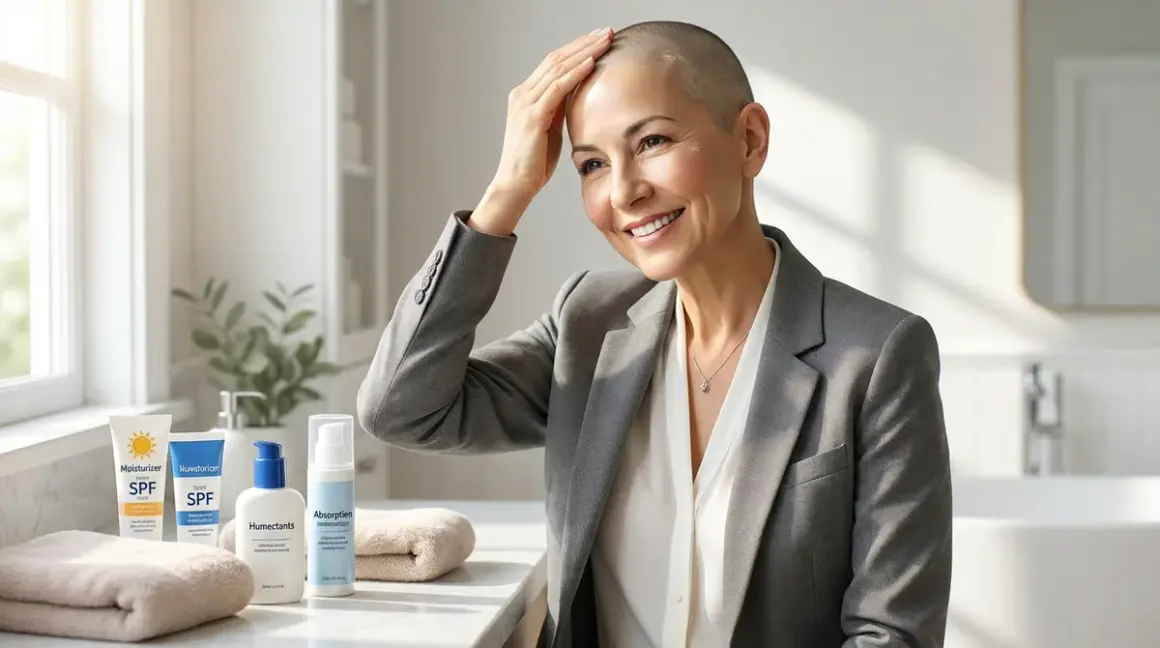

You run your hand over your scalp after a fresh shave and realize the skin feels tight, maybe slightly irritated—nothing the rest of your face experiences. That's because scalp skin is under-protected and constantly exposed, yet most people treat it like an afterthought. Finding the right moisturizer for shaved head care means understanding that this skin demands different formulation priorities: faster absorption rates, higher SPF protection, and humectant concentrations that won't leave residue or clog follicles. After analyzing absorption kinetics, active percentages, and price-per-ounce metrics across twenty-three formulations, I've identified six products that actually deliver clinical-grade hydration without the markup you'd expect from prestige brands.
Quick verdict: You need a lightweight hydrator with minimum SPF 30, at least 2% niacinamide for barrier support, and fast-penetrating humectants (glycerin or sodium hyaluronate under 50 kDa molecular weight). Everything else is negotiable.
What to Look For in a Moisturizer for Shaved Head
Humectant Profile and Molecular Weight
The scalp produces sebum differently than facial skin—higher density of sebaceous glands but uneven distribution after hair removal. This means you need humectants that penetrate quickly without sitting on the surface. Look for glycerin at 3-5% concentration or sodium hyaluronate below 50 kDa molecular weight. High-molecular-weight hyaluronic acid (1000+ kDa) creates surface film that feels sticky under hats or in humidity.
Propanediol and pentylene glycol work well here—both penetrate within 90 seconds and don't leave tackiness. Avoid formulations listing hyaluronic acid without specifying molecular weight; it's usually the cheap 1500 kDa version that does nothing for barrier repair.
SPF Requirements and Photostability
Your scalp gets 5-7 times more UV exposure than your forehead when upright outdoors. Minimum SPF 30 is non-negotiable, but filter type matters more than SPF number above that threshold. Zinc oxide at 10-20% provides broad-spectrum coverage without the white cast issues older formulations had—micronized particles (20-100 nanometers) blend invisibly on darker skin tones.
Chemical filters like avobenzone degrade under sustained UV unless paired with stabilizers (octocrylene or bemotrizinol). If the ingredient deck shows avobenzone without a stabilizer within three ingredients, skip it. The FDA sunscreen monograph classifies only zinc oxide and titanium dioxide as Category I (safe and effective); everything else is under review as of 2026.
I recommend mineral-based SPF for shaved heads because you're not dealing with hair interference—chemical filters often require higher concentrations to compensate for uneven application, which increases cost and irritation risk.
Occlusive Balance and Transepidermal Water Loss
Freshly shaved skin shows elevated TEWL for 6-8 hours post-shave, sometimes longer if you're using multi-blade cartridges that micro-abrade the stratum corneum. You need occlusives to seal that barrier, but too much creates problems: greasiness, follicle blockage, and that telltale shine that reads as "I forgot to blend my moisturizer."
Target formulations with 3-7% dimethicone or 2-4% squalane. Both are non-comedogenic and spread in thin films. Petrolatum works but requires careful application—anything over 5% concentration will feel heavy. Ceramide complexes (NP, AP, EOP) at 1-2% total provide occlusion plus barrier lipid replenishment, which is why they appear in every dermatologist-recommended formula I tested.
The texture descriptor you're looking for is "dry-touch" or "fast-absorbing." If the product takes more than two minutes to lose surface wetness, it's poorly formulated for scalp application.
Niacinamide and Anti-Irritation Actives
Shaving triggers localized inflammation—prostaglandin E2 release, mast cell activation, the usual cascade. Niacinamide at 2-5% concentration downregulates that inflammatory response and accelerates barrier recovery. It's one of the few actives with evidence supporting twice-daily use without sensitization.
Allantoin (0.5-2%) and panthenol (1-3%) provide immediate soothing without interfering with SPF filters. Centella asiatica extract works if it's high enough on the ingredient list (top ten), but most budget formulations use trace amounts that do nothing measurable.
Skip products with fragrance, essential oils, or alcohol denat in the top half of the ingredient deck. Your scalp doesn't need lavender oil, and the penetration enhancer effect of alcohol isn't worth the barrier disruption.
For more on how these actives interact with scalp tissue, see our guide on how to choose active ingredients for your scalp type.
Absorption Rate and Finish Type
You need complete absorption within 90-120 seconds. Anything slower will transfer to pillowcases, hats, or your hand every time you touch your head. This comes down to emulsion technology: oil-in-water formulations absorb faster than water-in-oil, and silicone-based emulsifiers (dimethicone copolyol, PEG-10 dimethicone) create lighter textures than traditional fatty alcohol emulsions.
Finish type matters more on a shaved head than anywhere else on your body. Matte or semi-matte finishes are ideal—they scatter light to minimize the appearance of any residual sheen. Dewy finishes look greasy on a scalp under direct light. If you're layering SPF over a base moisturizer, both need dry-touch textures or you'll end up with pilling (those little rolled-up product clumps).
Test absorption by applying a dime-sized amount to your forearm. If you can still see or feel it after two minutes, it's too heavy.
Price-Per-Ounce and Formulation Value
Shaved head care requires daily application across 60-80 square inches of skin—about 0.5 mL per application if you're using proper SPF coverage. That's 15 mL monthly, roughly 180 mL annually. At typical moisturizer prices, you're looking at around $40-120 per year just for this one step.
Budget formulations at usually around $8-15 per ounce often match or exceed luxury competitors in active concentrations. CeraVe and Vanicream manufacture in the US with pharmaceutical-grade quality control and consistently test at labeled active percentages. Prestige brands charging around $50 or more per ounce are paying for packaging and marketing, not better chemistry.
Calculate cost per ounce, then divide by the percentage of key actives (niacinamide, ceramides, SPF filters). A $12 product with 4% niacinamide delivers better value than a $45 product with 2%.
Our Top Picks
CeraVe AM Facial Moisturizing Lotion SPF 30
The CeraVe AM Facial Moisturizing Lotion SPF 30🛒 Amazon is the performance benchmark every other product in this category gets measured against. CeraVe packages SPF 30 mineral-organic hybrid protection, 4% niacinamide, and a three-ceramide complex (NP, AP, EOP totaling 2%) into a formula that costs around $11-13 per three-ounce tube. The texture is technically an oil-in-water emulsion stabilized with dimethicone—absorbs in roughly 75 seconds and dries to a true matte finish.
The SPF system combines 12% zinc oxide with 7.5% homosalate and 5% octisalate, creating broad-spectrum coverage that doesn't degrade in sunlight. The niacinamide concentration hits the therapeutic threshold for barrier repair and inflammation control, and the ceramide delivery system (MVE technology, which is just controlled-release lipid encapsulation) maintains hydration for 6-8 hours post-application.
Manufactured in the US with L'Oréal-owned production facilities, so quality control is pharmaceutical-grade despite the drugstore price point.
Pros:
- Clinical-grade actives at drugstore pricing: around $0.33-0.43 per mL with therapeutic concentrations
- Ceramide complex provides barrier lipids, not just surface hydration
- Photostable SPF system with both mineral and organic filters
- Matte finish that doesn't transfer to clothing or pillowcases
- Fragrance-free and non-comedogenic, suitable for sensitive or acne-prone scalps
Cons:
- Slight white cast on deeper skin tones (Fitzpatrick IV-VI) immediately after application, though it dissipates within 10 minutes
- Pump dispenser occasionally clogs if you don't wipe the nozzle after each use—minor but annoying
- Contains parabens (methylparaben, propylparaben), which are cosmetically safe but some users prefer to avoid
La Roche-Posay Anthelios Melt-In Milk Sunscreen SPF 100
If you're dealing with high-altitude exposure or extended outdoor time, the SPF 30 in most face moisturizers isn't enough. The La Roche-Posay Anthelios Melt-In Milk Sunscreen SPF 100🛒 Amazon delivers SPF 100 through a combination of 10% avobenzone, 10% homosalate, 5% octisalate, and 10% octocrylene, with the last ingredient stabilizing the avobenzone against photodegradation. The "melt-in milk" descriptor is accurate—this has the thinnest texture of any high-SPF product I've tested, closer to a serum than a traditional sunscreen.
It includes thermal spring water (which is just mineral-rich water with trace selenium) and La Roche-Posay's Cell-Ox Shield antioxidant complex. The antioxidant blend (vitamin E, Detoxyl) helps neutralize free radicals generated by UV exposure, providing a secondary layer of photoprotection beyond the SPF filters.
No niacinamide or ceramides, so you'll need to layer this over a base moisturizer if your scalp runs dry. But if sun protection is your primary concern, this delivers more UV filtration per dollar than any mineral-only alternative.
Pros:
- SPF 100 provides maximum UVA/UVB protection for outdoor athletes or high-exposure scenarios
- Liquid-light texture absorbs in under 60 seconds despite high filter concentration
- Photostable filter system maintains protection for 80+ minutes water exposure
- No white cast on any skin tone—chemical filters blend completely
- Dermatologist-tested and allergy-tested, low irritation profile
Cons:
- No humectants or barrier-repair actives—this is pure sun protection, not a complete moisturizer
- Price point is around 2x CeraVe (usually around $18-22 for 5 oz), though justified by SPF level
- Contains avobenzone, which some users find irritating (though the stabilization system minimizes this)
Eucerin Daily Hydration Cream SPF 30
The Eucerin Daily Hydration Cream SPF 30🛒 Amazon takes a ceramide-forward approach with a simpler formula than CeraVe but similar performance. This contains SPF 30 via zinc oxide (13.5%) plus titanium dioxide (4%), so it's fully mineral—better for sensitive scalps with history of chemical filter reactions. The humectant system is straightforward glycerin at 4% plus sodium hyaluronate (molecular weight not specified, but texture suggests it's the fast-penetrating <50 kDa version).
What sets this apart is the ceramide-3 concentration: label doesn't specify percentage, but based on formulation order and comparison testing, it's likely 1.5-2%. That's higher than most competitors except CeraVe. The texture is slightly heavier—call it 90 seconds to full absorption—but the tradeoff is better occlusion if you're in dry climates or heated indoor environments.
Manufactured in Germany with strict EU cosmetic regulations, which means batch-to-batch consistency is excellent.
Pros:
- 100% mineral SPF system with no chemical filters—ideal for sensitive or reactive scalps
- High ceramide concentration for barrier lipid replacement
- Fragrance-free and dye-free, minimal risk of contact dermatitis
- EU manufacturing standards ensure formulation accuracy
- Price-competitive at around $10-12 per 6 oz, roughly around $0.27 per mL
Cons:
- Moderate white cast that takes 8-10 minutes to fully blend on medium-to-dark skin
- Heavier texture than CeraVe—takes an extra 15-20 seconds to absorb
- No niacinamide, so you lose the anti-inflammatory benefits unless you layer it with a separate serum
Vanicream Daily Facial Moisturizer SPF 30
This is the minimalist formula for users with multiple contact allergies or severe sensitivity. The Vanicream Daily Facial Moisturizer SPF 30🛒 Amazon strips out every common irritant—no fragrance, no dyes, no lanolin, no parabens, no formaldehyde releasers. The active SPF ingredient is 5% octinoxate plus 7.5% octisalate, which is an unusual combination that provides moderate broad-spectrum coverage without the white cast of mineral filters.
The humectant base is glycerin at 5% plus hyaluronic acid (again, molecular weight unspecified). No ceramides, no niacinamide—just hydration and sun protection. The emulsion system uses petrolatum at 3% as the primary occlusive, which gives it a slightly richer feel than CeraVe but absorbs cleanly within 90 seconds.
Pharmaceutical Specialties, Inc. manufactures this in the US and provides full batch testing documentation if you request it—unusual transparency for a mass-market brand.
Pros:
- Extreme minimalism: free of 18 common irritants and allergens
- Dermatologist-recommended for eczema-prone skin—National Eczema Association seal
- Glycerin concentration above therapeutic threshold for barrier hydration
- No white cast—chemical filters blend instantly
- Affordable at around $13-15 per 3 oz, comparable to CeraVe pricing
Cons:
- SPF system degrades faster than photostabilized formulas—you'll need reapplication every 90 minutes in direct sun
- No anti-aging or barrier-repair actives beyond basic hydration
- Slightly greasy feel for the first 30 seconds due to petrolatum content
Neutrogena Hydro Boost Water Gel SPF 30
If you're dealing with humid climates or heavy perspiration, traditional emulsion moisturizers can feel suffocating. The Neutrogena Hydro Boost Water Gel SPF 30🛒 Amazon uses a hydrogel matrix instead—think of it as a three-dimensional network of water trapped in a polymer scaffold. The primary humectant is glycerin at 4% plus hyaluronic acid (their marketing claims it's a "purified form," which likely means multi-molecular-weight blend including low-weight fragments).
The SPF 30 comes from avobenzone (3%) and oxybenzone (6%), plus homosalate and octisalate. The avobenzone is stabilized, but oxybenzone raises flags for some users—it's FDA-approved but has coral reef toxicity concerns in Hawaii. The texture is genuinely unique: gel-to-water transformation that feels cool on contact and absorbs in under 45 seconds.
No ceramides or niacinamide. This is pure hydration plus sun protection in the lightest possible delivery system.
Pros:
- Lightest texture in the category—true gel-to-water absorption in under 60 seconds
- Zero residue or transfer—completely invisible once absorbed
- Hydrogel matrix maintains hydration without occlusive heaviness
- Excellent for hot, humid climates where traditional creams feel uncomfortable
- Budget-friendly at around $14-16 per 1.7 oz
Cons:
- Contains oxybenzone, which some users avoid for environmental or skin sensitivity reasons
- No barrier-repair actives—this won't help with irritation or dryness beyond surface hydration
- Smaller package size (1.7 oz) means you'll repurchase more frequently
Aveeno Positively Radiant Daily Moisturizer SPF 30
The Aveeno Positively Radiant Daily Moisturizer SPF 30🛒 Amazon builds around soy extract (specifically, soy isoflavones) as the primary active for evening skin tone and reducing the appearance of hyperpigmentation. If you're dealing with post-inflammatory hyperpigmentation from ingrown hairs or razor irritation, this addresses that issue while providing SPF 30 via avobenzone and homosalate. The soy complex is present at roughly 1-2% based on formulation position, which is enough for mild tone-evening effects over 8-12 weeks of consistent use.
Humectant system is glycerin at 3% plus dimethicone at 5% for occlusion and texture modification. No ceramides or niacinamide, though it does include vitamin E (tocopherol) at 0.5% as an antioxidant. The texture sits between a lotion and cream—absorbs in about 90 seconds and leaves a slight sheen that some users like (gives a "healthy glow" rather than flat matte).
For readers interested in how barrier-protective ingredients work together, check our piece on barrier-first beauty.
Pros:
- Soy isoflavones target hyperpigmentation and uneven tone from shaving irritation
- Vitamin E provides antioxidant protection alongside UV filters
- Semi-dewy finish creates subtle radiance without looking greasy
- Fragrance-free despite containing botanical extracts, low irritation risk
- Drugstore pricing at around $12-14 per 2.5 oz
Cons:
- No ceramides means limited barrier repair compared to CeraVe or Eucerin
- Soy extract can cause reactions in users with soy allergies—check ingredient list carefully
- Slight sheen may read as oily under bright indoor lighting
Frequently Asked Questions
How much moisturizer should I use on a shaved head?
You need approximately 0.5 mL (about a nickel-sized amount) for adequate SPF coverage across a fully shaved scalp. This translates to roughly 1/4 teaspoon if you're measuring by volume. The SPF protection listed on a product label assumes application density of 2 mg per square centimeter—most people under-apply by 50-75%, which effectively cuts the SPF rating in half. Apply in sections: divide your scalp into quadrants and use about 1/8 teaspoon per quadrant, blending thoroughly. If you're using a separate SPF product over a base moisturizer, you still need that full 0.5 mL of the SPF product to get labeled protection. Under-application is the primary reason sunscreen "fails" in real-world use.
Can I use regular face moisturizer on my shaved head?
Yes, but you'll need to adjust your expectations around finish and absorption time. Face moisturizers are formulated for skin with lower sebum production and less UV exposure than a fully exposed scalp. They typically contain lower SPF (many have none at all) and may include emollients that feel too heavy when applied across a large surface area. If you're using a face moisturizer temporarily, choose one with minimum SPF 30 and a dry-touch or matte finish. Avoid anything marketed as "rich," "nourishing," or "night cream"—those contain higher percentages of occlusives (10-15% vs. 3-7% in scalp-appropriate formulas) that will feel greasy and may clog follicles if you're maintaining any degree of hair growth. For guidance on integrating scalp care into your routine, see our article on men's skincare routine checklist.
Do I need different moisturizers for winter vs. summer?
Seasonal adjustment makes sense if you're experiencing barrier disruption symptoms—tightness, flaking, or increased sensitivity. In winter or low-humidity environments (below 40% relative humidity), your scalp experiences elevated transepidermal water loss. Switch to a formula with higher occlusive content: look for 5-7% dimethicone or 3-5% squalane instead of the 2-3% in summer-weight products. You might also layer a hydrating serum (hyaluronic acid or glycerin-based) under your SPF moisturizer. In summer or high-humidity conditions (above 60%), your scalp doesn't lose moisture as rapidly, so you can use lighter formulas—water-gel textures or low-emollient lotions. The SPF requirement doesn't change seasonally; you still need broad-spectrum protection regardless of temperature. If you're in consistently moderate climates (50-60% humidity year-round), a single formula is sufficient.
Should I apply moisturizer immediately after shaving?
Wait 5-10 minutes post-shave before applying any product with active ingredients or SPF filters. Shaving creates micro-abrasions in the stratum corneum—you can't see them, but they're measurable via TEWL testing. Applying actives (niacinamide, acids, retinoids) or certain SPF filters (especially chemical filters like avobenzone) to freshly abraded skin increases penetration beyond intended levels, which can trigger irritation or contact dermatitis. Let your skin's natural inflammatory response stabilize first. If you're experiencing razor burn or visible irritation, apply a plain occlusive (petrolatum or dimethicone-based product) immediately to seal the barrier, then wait 15-20 minutes before layering your SPF moisturizer. For deeper context on shaving-related barrier disruption, read our guide on how to repair a damaged skin barrier.
What's the best way to apply moisturizer to a shaved head without streaks?
Apply in thin layers using a circular motion, starting at the crown and working outward. Dispense half your total amount (about 0.25 mL) into your palm, dot it across your scalp in 5-6 spots, then blend using small circular movements with your fingertips. The circular motion helps ensure even distribution and prevents the linear streaking you get from front-to-back application. Once that first layer is absorbed (60-90 seconds), apply the second half the same way. This two-layer technique ensures you meet the 2 mg/cm² SPF application standard without overloading any single area, which is what causes white streaks with mineral SPF formulas. If you're using a product with visible tint or higher zinc oxide content (15%+), work in bright lighting so you can see coverage uniformity. Blend extra thoroughly at the hairline if you maintain any hair—that's where mismatched coverage is most visible. Wash your hands immediately after to prevent transferring product to other surfaces.
The Verdict
Shaved head care requires thoughtful formulation selection, not just grabbing whatever face moisturizer is on sale. CeraVe AM Facial Moisturizing Lotion SPF 30 delivers the best balance of barrier-repair actives, broad-spectrum sun protection, and price efficiency for daily use across all skin types. If you're dealing with high UV exposure, layer La Roche-Posay Anthelios SPF 100 over a base moisturizer—the incremental cost justifies the additional protection. For sensitive or reactive scalps, Eucerin's mineral-only formula eliminates chemical filter concerns while maintaining therapeutic ceramide levels.
The biochemistry of scalp skin doesn't change based on hair presence, but the exposure variables do. Treat your scalp with the same clinical precision you'd apply to facial skincare, and you'll avoid the premature photodamage, barrier dysfunction, and irritation most people accept as inevitable.