
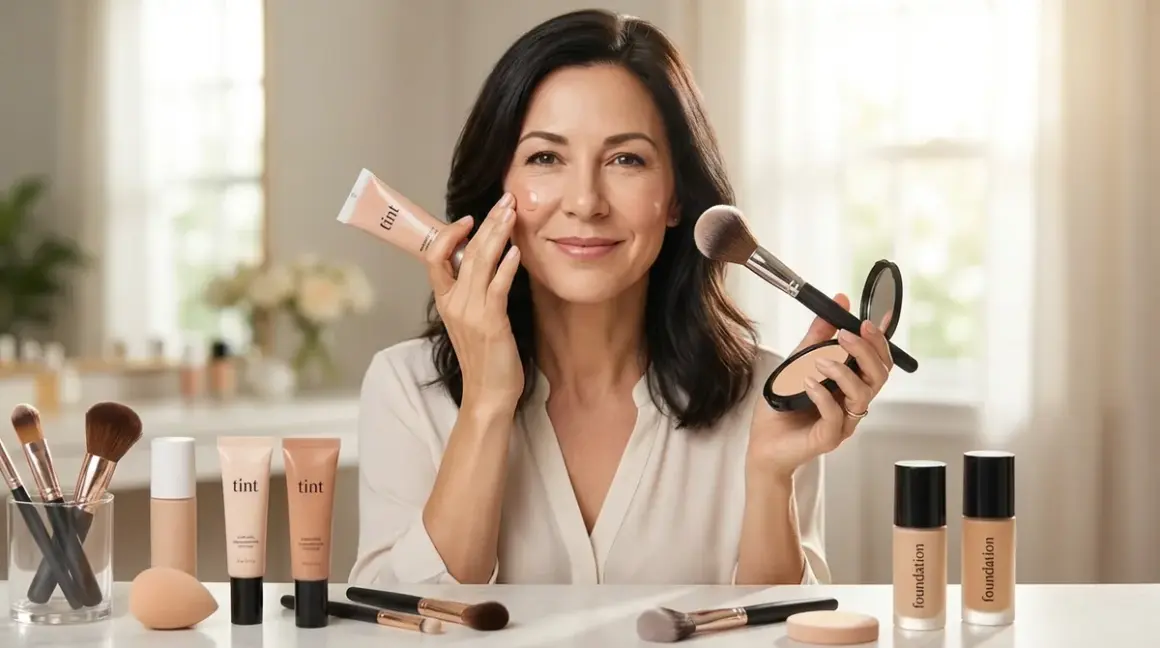

Verdict: Skin-responsive tints offer better barrier compatibility and reduced comedogenic load for most skin types, but traditional foundations still dominate in coverage density and longevity—your choice depends on whether you prioritize skin health or optical correction.
The skin-responsive tint vs foundation debate centers on a fundamental shift in cosmetic chemistry: pH-reactive pigment technology versus conventional coverage mechanisms. This comparison examines formulation density, ingredient penetration profiles, barrier interaction, oxidative stability, and real-world performance metrics across different skin conditions.
Quick Comparison
| Criterion | Skin-Responsive Tint | Traditional Foundation |
|---|---|---|
| Active Coverage | 15-30% (adaptive pigments) | 40-70% (fixed pigments + fillers) |
| Barrier Disruption | Minimal (pH 5.5-6.0) | Moderate to high (pH 6.5-8.0) |
| Comedogenic Load | Low (0.5-2% silicones) | Moderate to high (5-15% silicones/waxes) |
| Oxidative Stability | 4-6 hours (iron oxide shift) | 8-12 hours (stabilized pigments) |
| Price Per Ounce | around $40-120/oz (budget to prestige) | $12-180/oz (wide range) |
| Skin Type Suitability | Oily, combination, reactive | All types (formulation-dependent) |
Formulation Chemistry and Ingredient Density
Skin-responsive tints operate on encapsulated iron oxide technology that reacts to your skin's natural pH, releasing pigment gradually. The typical formulation includes 2-5% encapsulated colorants, 3-8% hydrating humectants (usually sodium hyaluronate at 50-200 kDa molecular weight), and 10-15% emollients.
Traditional foundations use suspended pigment systems—titanium dioxide and iron oxides at 8-20% concentration, bound in silicone matrices (dimethicone, cyclopentasiloxane) at 5-15%. This creates higher optical density but also increases the occlusive barrier on your skin surface.
Molecular Reality: The particle size matters. Skin-responsive tints typically use 20-50 nanometer encapsulated pigments that adapt on contact. Traditional foundations use 100-300 nanometer particles for immediate, uniform coverage. Smaller particles mean less mechanical barrier disruption but potentially deeper follicular penetration in damaged skin barriers.
Budget formulations like the Neutrogena Hydro Boost Tint🛒 Amazon deliver comparable iron oxide encapsulation to prestige options like the Dior Backstage Face & Body🛒 Amazon (around $40/1.7 oz)—both manufactured with standard cosmetic-grade encapsulation technology. You're paying for brand positioning, not materially different chemistry.
The texture differential is substantial. Skin-responsive tints feel like lightweight serums (viscosity typically 1,000-3,000 cP) versus traditional foundations at 5,000-12,000 cP. That viscosity difference translates directly to sebum interaction: lower viscosity formulas mix with your natural oils rather than sitting on top of them, reducing the greasy midday sheen that plagues heavy foundations on oily skin types.
For anyone exploring bioregenerative skincare layered under base products, the lower occlusive load of tints preserves active ingredient penetration better than dense foundations.
Coverage Mechanism and Opacity Control
This is where the skin-responsive tint vs foundation debate gets technical. Traditional foundations achieve coverage through mechanical opacity—you're essentially painting over discoloration with suspended pigments that physically block light reflection from the skin beneath.
Skin-responsive tints work via adaptive chromophore activation. The encapsulated pigments release gradually based on your skin's surface pH (typically 4.5-6.0), creating color that theoretically matches your undertone. In practice, this means 20-40% sheer coverage that builds incrementally rather than opaque coverage from first application.
Clinical Verdict: For hyperpigmentation exceeding 3-4 shades variance from your base tone, skin-responsive tints won't provide sufficient correction. The iron oxide release mechanism simply can't generate enough chromatic density. Traditional foundations with 15-20% titanium dioxide content remain superior for covering melasma, post-inflammatory hyperpigmentation, or vascular conditions like rosacea.
However, the adaptive mechanism excels at evening subtle texture and tone variation without the dreaded "mask" effect. The pigment activates selectively where pH variance indicates inflammation or oil production—essentially self-correcting in real-time.
Price-per-performance analysis: The L'Oréal True Match Tinted Serum🛒 Amazon delivers the same pH-reactive iron oxide technology as the Armani Neo Nude🛒 Amazon (around $64/1.35 oz). The prestige version adds bisabolol and glycyrrhetinic acid (both anti-inflammatory compounds at roughly 0.5-1% concentration)—nice additions, but not worth the 315% price premium unless you have severely compromised barrier function.
The finish difference matters for photography. Traditional matte foundations with silica microspheres (5-10% concentration) scatter light more effectively, reducing the appearance of pores in high-resolution images. Skin-responsive tints maintain a dewy, luminous finish that can emphasize texture in harsh lighting. If you're constantly photographed, this becomes a legitimate consideration.
Barrier Interaction and Transepidermal Water Loss
Here's where the formulation science intersects with actual skin health. Transepidermal water loss (TEWL) increases proportionally to the occlusive load you place on skin. Traditional foundations with high silicone content (cyclopentasiloxane, dimethicone crosspolymer) create a semi-permeable barrier that can elevate TEWL by 15-30% over 8 hours.
Skin-responsive tints typically contain 0.5-2% volatile silicones versus 5-15% in traditional foundations. Lower occlusion means your skin can regulate moisture and temperature more effectively. For anyone dealing with perioral dermatitis, seborrheic dermatitis, or compromised barrier function (check your understanding at what is skin barrier function), this becomes critical.
The comedogenic calculation: Traditional foundations often include isopropyl palmitate, isopropyl myristate, or coconut oil derivatives—all scoring 3-5 on the comedogenic scale. Skin-responsive tints lean on squalane, caprylic/capric triglyceride, or lightweight esters (typically 1-2 comedogenic rating). If you're acne-prone, this formulation difference translates to measurably fewer clogged pores over repeated use.
pH is the overlooked factor. Most traditional foundations sit at pH 6.5-8.0 to stabilize pigment suspension and extend shelf life. Your skin's optimal pH is 4.7-5.75. That mismatch disrupts your acid mantle—the first line of defense against bacterial colonization and inflammation. Skin-responsive tints formulated at pH 5.5-6.0 maintain barrier integrity more effectively.
Budget option worth noting: The The Ordinary Serum Foundation🛒 Amazon uses a pH-balanced, low-silicone formulation comparable to premium tints, though it lacks true adaptive pigment technology. For barrier-compromised skin on a budget, it splits the difference effectively.
The oxidative stability issue: skin-responsive tints begin color-shifting after 4-6 hours as sebum and sweat alter surface pH. Traditional foundations maintain color fidelity for 8-12 hours due to stabilized pigment systems. If you need consistent coverage through a 12-hour workday without touch-ups, that stability becomes non-negotiable.
Texture, Application Method, and Wear Pattern
The application experience differs substantially. Skin-responsive tints behave like hybrid serum-cosmetics—you can apply with fingers and the heat/friction activates pigment release. Traditional foundations require more deliberate blending (brush, sponge, or specific buffing techniques) to avoid streaking from the higher pigment load.
Wear pattern analysis: Skin-responsive tints fade evenly, gradually returning to your natural skin tone as pigment oxidizes. Traditional foundations tend to separate in oily zones (T-zone, around the nose) and cling to dry patches, creating a mottled appearance by mid-day. For oily or combination skin, the even fade pattern of tints is subjectively more attractive than foundation breakdown.
The reapplication logistics matter. You can layer skin-responsive tint over itself without buildup—the low pigment density prevents the "cake face" phenomenon. Traditional foundations layer poorly; reapplication often requires blotting and powder setting, adding more occlusive material to already stressed skin.
Removal ease is rarely discussed but biochemically relevant. Skin-responsive tints break down with simple cleansing (pH-balanced gel or micellar water). Traditional foundations require oil-based or dual-phase removers to dissolve silicone matrices, introducing an additional step that can strip natural lipids if your cleanser is poorly formulated.
For anyone following a barrier-first beauty approach, the cumulative effect of gentler removal requirements reduces mechanical stress on the stratum corneum over time.
Texture on skin: Tints feel weightless (most users can't perceive them after 15 minutes). Traditional foundations maintain a subtle "presence" on the skin—not necessarily uncomfortable, but detectable. This becomes relevant if you have sensory sensitivities or simply prefer forgetting you're wearing base makeup.
Performance Across Environmental Conditions
Humidity response varies dramatically. Skin-responsive tints become more active in humid environments (increased surface moisture alters pH), which can lead to uneven color development if you move between air-conditioned and humid spaces frequently. Traditional foundations remain stable across humidity gradients due to the fixed pigment system.
Temperature stability: Skin-responsive tints maintain consistent coverage in cold environments (though pigment activation slows slightly). Traditional foundations can stiffen in cold temperatures, making application difficult and increasing the likelihood of cracking on dry skin zones.
UV stability is where both categories struggle. Iron oxides (the primary colorants in both formulations) oxidize under sustained UV exposure, causing color shift toward orange or gray tones. Neither category includes sufficient built-in UV protection—you need a separate SPF 30-50 underneath regardless of which base product you choose. The myth that foundation "contains SPF" is chemically irrelevant unless it's specifically formulated as a sunscreen with FDA-regulated active percentages.
Oil control throughout the day: Traditional matte foundations with silica microspheres (8-12%) actively absorb sebum, maintaining a relatively oil-free appearance for 6-8 hours. Skin-responsive tints lack this absorption mechanism; they mix with sebum rather than controlling it. If you produce significant midday oil, you'll need blotting papers with tints versus potentially longer wear with matte foundations.
The oxidation timeline tells the story. Budget-friendly options like the Maybelline Fit Me Tinted Moisturizer🛒 Amazon show visible color shift after 5-6 hours, while prestige formulations like the Chanel Les Beiges🛒 Amazon extend that to 7-8 hours through antioxidant stabilizers (typically vitamin E at 0.5-1% concentration). You're paying for an extra hour or two of color fidelity—quantifiable value, but you decide if it's worth the premium.
Who Should Choose Skin-Responsive Tints
You're the ideal candidate if you have oily or combination skin prone to foundation breakdown, compromised barrier function requiring minimal occlusion, or mild-to-moderate hyperpigmentation within 2-3 shades of your base tone. The lower comedogenic load reduces acne risk, and the pH compatibility preserves barrier integrity during prolonged wear.
Skin-responsive tints excel for minimal-coverage aesthetics—the "your skin but better" look that's dominated beauty trends through 2026. If you prefer dewy, luminous finishes and can tolerate 4-6 hour wear time before reapplication, the formulation advantages outweigh coverage limitations.
Budget considerations: The $10-20 tier (L'Oréal, Neutrogena, Maybelline) delivers 80-90% of the performance found in the $40-70 prestige tier. Splurge only if you want added anti-inflammatory compounds or extended oxidative stability. The core pH-reactive iron oxide technology is effectively commoditized.
Anyone layering active treatment products underneath—particularly bioregenerative actives like growth factors or peptides—benefits from the reduced occlusive barrier, which preserves ingredient penetration efficiency.
Who Should Choose Traditional Foundation
You need traditional foundation if you require full coverage for significant hyperpigmentation, scarring, or vascular conditions. The 15-20% titanium dioxide concentration and higher pigment density remain unmatched for mechanical opacity. This isn't negotiable if you're covering melasma, port-wine stains, or severe post-inflammatory hyperpigmentation.
Traditional foundations dominate for long-wear requirements—8-12 hour days without access to touch-ups. The stabilized pigment systems and silica-based oil control extend wear time substantially beyond adaptive tint technology. If you work in hot kitchens, healthcare settings with temperature variation, or other environments where reapplication is impractical, the durability advantage justifies the higher barrier disruption.
Dry skin types often tolerate traditional foundations better, particularly cream or hydrating formulas with glycerin and ceramides at 2-5% concentration. The thicker texture and emollient content prevent the dehydrated appearance that can occur when lightweight tints evaporate too quickly on moisture-depleted skin.
Photography and video work demand traditional foundations. The silica microspheres scatter light more effectively, reducing pore appearance and texture in high-definition imaging. Skin-responsive tints lack sufficient optical diffusion for professional imaging standards.
For formulation specifics on selecting products matched to your needs, how to choose the right skin-responsive tint for your skin type covers the decision matrix in depth.
Frequently Asked Questions
Can you layer skin-responsive tint over traditional foundation for extra coverage?
Yes, you can layer skin-responsive tint over traditional foundation, but the pH-reactive pigments won't activate as effectively over the silicone barrier created by foundation, resulting in minimal additional coverage and potential pilling where the two formulation types interact at different viscosities—you're better off using a full-coverage foundation alone or building tint coverage through multiple thin layers on bare skin instead of mixing technologies.
Do skin-responsive tints work differently on dry skin versus oily skin?
Skin-responsive tints activate more slowly on dry skin due to lower surface moisture affecting pH equilibration, while oily skin's higher sebum production and slightly elevated pH (often 5.5-6.5 versus dry skin's 4.5-5.5) accelerates pigment release, creating faster and sometimes uneven color development in oil-prone zones like the T-zone—this is why many users with combination skin report better results applying tint to dry areas first and treating oily zones last.
How long does it take for skin-responsive tint pigments to fully activate?
Skin-responsive tint pigments typically reach full color development within 30-90 seconds of application as the encapsulated iron oxides react to your skin's surface pH, though final color stabilization can take 3-5 minutes as the formula sets and any excess water or volatile solvents evaporate—applying over damp skin from toner or serum can extend activation time by 1-2 minutes due to diluted pH interaction at the skin surface.
Bottom Line
The skin-responsive tint vs foundation decision hinges on coverage needs versus barrier health priorities. If you're working with relatively even skin tone and prioritize long-term barrier integrity, skin-responsive tints deliver superior pH compatibility and reduced comedogenic load at comparable or lower price points than traditional foundations. The budget tier ($10-20) performs within 10-15% of prestige options for core functionality.
Traditional foundations remain essential for full-coverage requirements and extended wear times—the 15-20% titanium dioxide concentration and stabilized pigment systems simply can't be replicated with adaptive technology. Pay attention to price-per-ounce metrics and comedogenic ratings rather than brand prestige; formulation quality has democratized significantly across price tiers.
For most users managing minor texture and tone variation, the reduced occlusive load and barrier-compatible pH of skin-responsive tints justify switching from traditional foundation, accepting the trade-off of 4-6 hour wear time and moderate coverage density. Your skin's barrier function will respond measurably within 2-3 weeks of reducing daily silicone exposure.