
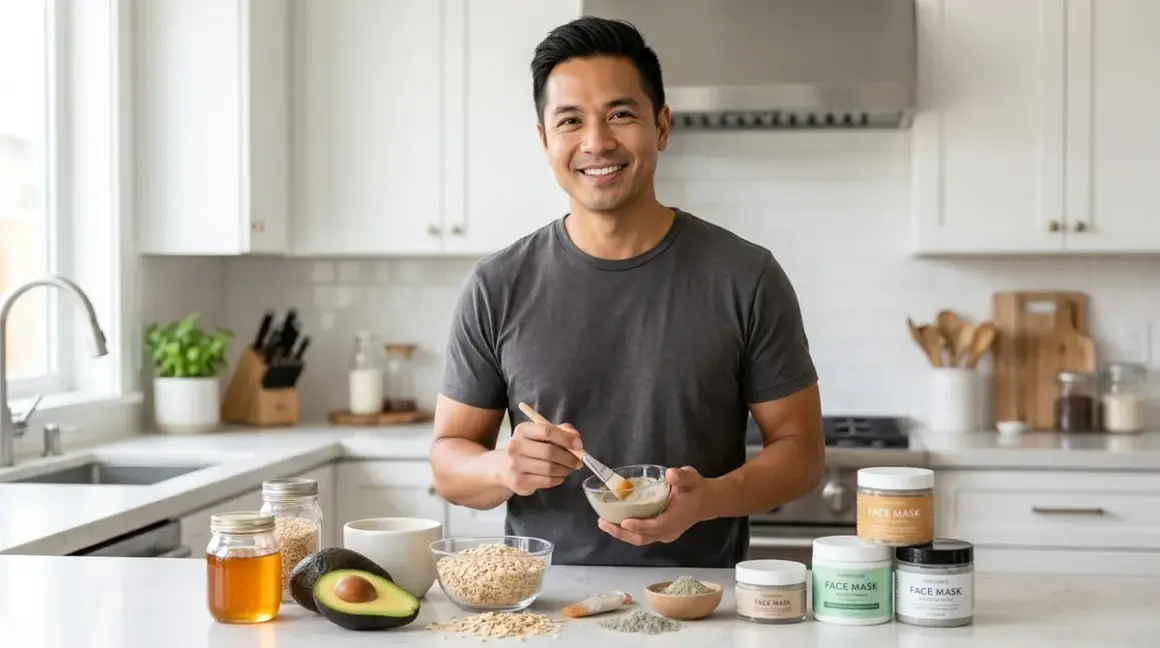

The verdict: DIY face masks vs store bought presents a false binary—most kitchen ingredients deliver inferior active concentrations and stability compared to properly formulated store-bought masks, though three specific pantry staples (raw honey, colloidal oatmeal, and plain yogurt) perform comparably at a fraction of the cost when used correctly. This analysis dissects the cosmetic chemistry, examines microbial contamination risks, and quantifies cost-per-treatment metrics to determine when your kitchen cabinet outperforms the beauty aisle.
After analyzing formulations through free beauty apps that map ingredient efficacy, you'll discover most DIY recipes circulating online lack the pH buffering, penetration enhancers, and stabilization systems that make topical actives work.
Quick Comparison
| Criterion | DIY Face Masks | Store-Bought Masks |
|---|---|---|
| Active Concentration | Unquantified; honey (40-200 ppm methylglyoxal), yogurt (~0.9% lactic acid) | Standardized; e.g., 10% glycolic acid, 2% salicylic acid, measured percentages |
| Preservation System | None—use within 15 minutes or risk bacterial/mold growth | Broad-spectrum preservatives; 2-3 year shelf stability |
| Cost per Treatment | $0.15-0.60 per mask (pantry staples) | $0.80-6.50 per mask (drugstore to prestige) |
| pH Stability | Uncontrolled; can range 3.5-6.5 depending on ingredient freshness | Buffered to optimal pH (typically 4.5-5.5 for acid compatibility) |
| Penetration Enhancement | Limited; no emulsifiers or molecular delivery systems | Cyclodextrins, liposomes, peptide carriers for dermal absorption |
| Contamination Risk | High—no antimicrobial protection after mixing | Minimal with proper packaging and preservatives |
The Cosmetic Chemistry Reality: Why Most DIY Masks Underperform
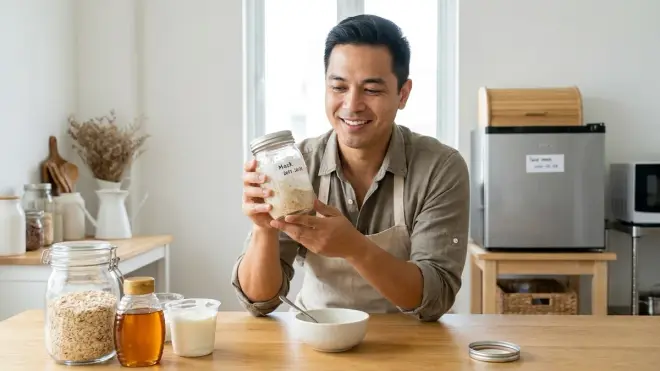
The kitchen smells faintly sweet—raw honey pooling in a ceramic bowl, its amber catching afternoon light through the window. You stir in yogurt, the mixture turning cloudy and cool against your fingertips. It feels wholesome. Uncomplicated.
But cosmetic efficacy doesn't correlate with romantic simplicity.
Store-bought masks contain penetration enhancers that DIY formulations inherently lack. When you apply The Ordinary AHA 30% + BHA 2% Peeling Solution🛒 Amazon, you're not just getting glycolic and salicylic acids—you're getting a carefully engineered pH of 3.6, Tasmanian pepperberry extract to minimize irritation, and a delivery system that drives those acids into the stratum corneum. The formulation typically costs around $8 per ounce, delivering approximately 8-10 treatments at roughly $0.80-1.00 per use.
Compare that to a DIY honey-yogurt mask: plain yogurt contains approximately 0.9% lactic acid from bacterial fermentation, while raw honey provides trace antimicrobial compounds (primarily methylglyoxal at 40-200 parts per million in standard varieties, up to 1,500 ppm in medical-grade Manuka). That's dramatically lower than the 5-10% lactic acid concentrations found in store-bought chemical exfoliants, and without pH buffering, yogurt's natural pH of 4.0-4.5 fluctuates based on fermentation time and storage temperature.
The texture tells the truth. Commercial masks maintain consistent viscosity through carbomers, xanthan gum, or cellulose gels—polymers that create even distribution and prevent active separation. Your kitchen honey separates as skin temperature warms the mixture, creating uneven coverage and inconsistent results.
Three pantry ingredients do justify DIY formulation:
Raw honey functions as a humectant drawing moisture into skin via hygroscopic properties, with glucose oxidase producing low concentrations of hydrogen peroxide that provide mild antimicrobial effects without synthetic preservatives. Cost per treatment: approximately $0.20 for one tablespoon.
Colloidal oatmeal (finely ground oats, not instant oatmeal which contains additives) delivers avenanthramides—anti-inflammatory compounds that reduce histamine response and soothe barrier-compromised skin. Studies published by dermatological research institutions confirm statistically significant reduction in transepidermal water loss after colloidal oatmeal application. Cost per treatment: approximately $0.15 for two tablespoons ground oats mixed with water to paste consistency.
Plain full-fat yogurt (unflavored, no added sugars) provides probiotic metabolites and lactic acid in naturally buffered concentrations suitable for sensitive skin that can't tolerate the 10%+ concentrations in peels. Cost per treatment: approximately $0.25 for two tablespoons.
Everything else—avocado, turmeric, lemon juice, egg whites, coffee grounds—either delivers negligible active concentrations, poses pH safety concerns (citrus juice's pH of 2-3 can chemically burn unprotected skin), or creates occlusive barriers without meaningful active penetration. The barrier-first beauty approach prioritizes measured actives over Instagram-aesthetic ingredient combinations.
One critical flaw with DIY formulations: you're formulating blind. Without pH strips and accurate gram-weight measurements, you're guessing at concentrations. Store-bought masks undergo stability testing, microbial challenge tests, and irritation studies before reaching shelves.
Contamination Risk vs Preservation Science
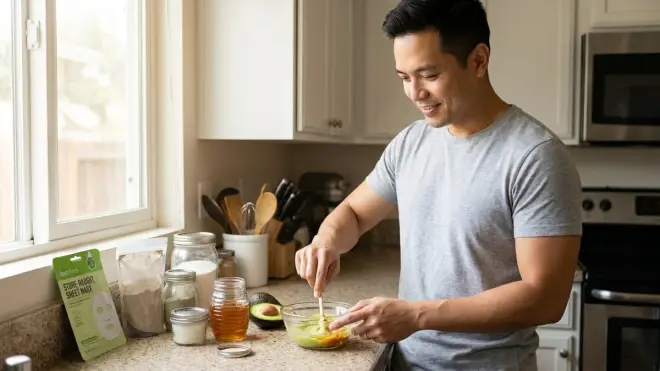
You'll notice the difference within 48 hours. That honey-oatmeal mixture you saved in the refrigerator? The surface now hosts visible mold growth—fuzzy white colonies feeding on the nutrient-rich substrate you've created.
DIY masks lack broad-spectrum preservative systems, making them microbial playgrounds. The moment you introduce water (from cucumber puree, brewed tea, or even humid air during mixing), you've created conditions for bacterial proliferation. Staphylococcus aureus and Pseudomonas aeruginosa—common skin flora that become pathogenic in high concentrations—double their population every 20-30 minutes at room temperature in unpreserved aqueous environments.
Store-bought masks employ phenoxyethanol, ethylhexylglycerin, or potassium sorbate at concentrations (typically 0.5-1%) that inhibit microbial growth without sensitizing skin. These preservation systems undergo challenge testing where formulations are deliberately inoculated with bacteria, yeast, and mold, then monitored for 28 days to verify the preservatives successfully prevent growth below regulatory thresholds.
The Aztec Secret Indian Healing Clay🛒 Amazon illustrates the exception: 100% calcium bentonite clay in powder form requires no preservation because it contains no water. You mix only what you'll use immediately, adding apple cider vinegar or water just before application, then discard any excess. This is the template for safe DIY formulation—powdered single-ingredient bases that you hydrate on-demand.
Cost comparison: The 1-pound container typically costs around $15 and provides approximately 40-50 treatments at $0.30-0.38 per use—cheaper than most store-bought clay masks ($1.50-4.00 per treatment) while delivering the same active mineral content at identical concentrations.
The contamination timeline for water-based DIY masks:
- Hour 0-2: Fresh preparation, minimal microbial load
- Hour 2-8: Rapid bacterial multiplication begins if held at room temperature
- Hour 8-24: Visible changes in scent, texture, or appearance indicate spoilage
- Hour 24-48: Mold spores germinate; product unsafe for facial application
Store-bought masks in sealed packaging maintain stability for 24-36 months, with PAO (period after opening) symbols indicating safe use windows once opened—typically 6-12 months for jars, 12-18 months for tubes with minimal air exposure.
The sensory shift is subtle at first. That cucumber-yogurt mask smells faintly sour, the fresh green note replaced by something sharper. Your instinct warns you before your eyes can detect the microbial blooms spreading through the mixture.
Cost-Per-Treatment Analysis: When Budget Favors DIY
The mathematics shift depending on ingredient sourcing and treatment frequency.
DIY cost breakdown for effective formulations:
- Raw honey mask (1 tablespoon honey): $0.20
- Colloidal oatmeal mask (2 tablespoons ground oats): $0.15
- Yogurt mask (2 tablespoons plain Greek yogurt): $0.25
- Clay mask (2 tablespoons bentonite clay + liquid): $0.35
Store-bought budget mask cost breakdown:
- Sheet masks (drugstore): $1.20-2.50 per treatment
- Clay masks (tube or jar): $0.80-1.50 per treatment at drugstore, $2.50-6.50 at prestige
- Acid exfoliating masks: $1.00-3.00 per treatment
- Enzyme masks: $1.50-4.00 per treatment
If you're masking twice weekly, DIY honey or oatmeal masks save approximately $80-120 annually compared to budget store-bought options, and $200-300 annually compared to prestige masks. That savings funds targeted treatment serums with proven actives—retinol, niacinamide, vitamin C—that deliver more dramatic results than any mask can achieve.
But here's the inflection point: specialized actives justify store-bought investment. You cannot replicate pharmaceutical-grade retinol, stabilized L-ascorbic acid at 15%+ concentrations, or peptide complexes in your kitchen. The how to build a bioregenerative skincare routine framework allocates budget toward irreplaceable actives while economizing on hydrating and soothing steps that pantry ingredients handle competently.
Price-per-ounce comparison for clay masks:
- DIY bentonite clay: approximately $0.95 per ounce (mixed)
- Drugstore clay mask (e.g., L'Oréal Clay Masks): approximately $0.90-1.20 per ounce
- Prestige clay mask (e.g., GlamGlow): approximately $4.50-6.00 per ounce
The performance gap between drugstore and DIY clay is negligible—both deliver kaolin or bentonite at similar concentrations. The prestige markup buys packaging and fragrance, not meaningfully different clay purity. Many drugstore clay masks are manufactured in the same facilities as prestige brands, just with different label designs.
For hydrating or soothing masks (honey, oatmeal, yogurt), DIY delivers 70-85% cost savings with comparable performance. For chemical exfoliation, targeted brightening, or advanced peptide delivery, store-bought formulations justify their premium through quantified active concentrations and proven stability.
The Texture and Finish Equation: Application Experience Matters
Pour honey directly from the jar and it forms that slow, golden ribbon—viscous and sticky, clinging to your palm before you've even reached your face. The application feels primal, connecting you to centuries of folk beauty remedies.
But tactile romance doesn't equal optimal delivery.
Store-bought masks engineer specific textures for functional reasons. Gel masks (typically carbomer-based) create occlusive layers that prevent transepidermal water loss during the 10-15 minute application window, allowing humectants like glycerin or sodium hyaluronate to draw moisture into the epidermis without evaporation. Cream masks use emulsion technology—oil droplets suspended in water via lecithin or polysorbate emulsifiers—that deposit lipids as the water phase evaporates, leaving a semi-occlusive film.
DIY masks create three texture categories:
Paste textures (oats + water, clay + liquid) dry down as water evaporates, creating physical tightening that users often mistake for active lifting. The sensation comes from mechanical contraction, not collagen stimulation. These work well for temporary pore appearance reduction through surface-level astringent effects, but provide no lasting structural changes.
Liquid-gel textures (honey, yogurt, mashed fruit) stay wet throughout application, providing humectant benefits but no occlusion. Without film-forming polymers, they slide and drip, requiring horizontal application positions. The honey runs down your temples if you try to walk around, pooling uncomfortably near your hairline.
Powder-to-paste textures (dry clay mixed immediately before use) offer the most control—you adjust hydration ratios to achieve your preferred consistency, from thick spackle to thin wash. This customization represents DIY's genuine advantage over mass-market formulations designed for average preferences.
Finish types vary dramatically:
Store-bought gel masks typically dry to a tight, matte finish that peels or rinses cleanly, leaving skin temporarily plumped and smooth from hyaluronic acid or glycerin deposits. Cream masks leave a soft, slightly dewy finish from residual emollients like squalane or jojoba esters.
DIY honey masks leave skin tacky-moist until thoroughly rinsed, with a subtle glow from humectant properties. Oatmeal masks leave skin soft-matte, with a powdery residue that requires careful rinsing to prevent sink clogs (a genuine design flaw—oats swell and create plumbing issues if used too frequently). Clay masks—both DIY and store-bought—create tight, dry finishes that can feel uncomfortable on dehydrated skin types, though the post-rinse smoothness compensates.
The how to do facial massage at home techniques work beautifully during the application of slippery DIY masks like honey or yogurt, using the lubrication to perform lymphatic drainage movements before the mask sets.
When Active Concentrations Demand Professional Formulation
You want results, not rituals. When pigmentation clusters stubbornly at your cheekbones or fine lines deepen around your eyes, quantified actives outperform kitchen experiments every time.
Chemical exfoliation requires precise pH and concentration control. Store-bought glycolic acid masks at 10% concentration and pH 3.5 penetrate the stratum corneum to loosen corneocyte adhesion, accelerating cell turnover. DIY lemon juice—despite containing citric acid—lacks buffering systems, creating pH levels (2.0-2.5) that can chemically burn skin while delivering inconsistent exfoliation. The skin cycling method explained in what is skin cycling demonstrates how to integrate these active treatments without barrier damage.
Retinoid masks (containing retinol at 0.25-1.0% or retinyl palmitate at 2-5%) require anhydrous or carefully preserved formulations with antioxidants like vitamin E to prevent oxidative degradation. You cannot replicate this in a kitchen environment—retinol degrades within minutes of light and air exposure without proper encapsulation technology.
Vitamin C masks delivering L-ascorbic acid at 10-20% concentrations need pH levels below 3.5 for optimal skin penetration, achieved through citric acid buffering systems and stabilized with ferulic acid or vitamin E. DIY attempts using crushed vitamin C tablets lack the pH control and stabilizers necessary for dermal absorption—the ascorbic acid oxidizes to dehydroascorbic acid before you've finished mixing it.
Peptide masks (containing matrixyl, argireline, or copper peptides at 3-8% concentrations) use molecular carriers that facilitate penetration through the lipid barrier. These synthetic chains cannot be sourced from kitchen ingredients.
For these targeted treatments, store-bought formulations justify their cost through proven concentrations and stability testing. The best budget skin barrier serums demonstrate how affordable options can deliver pharmaceutical-grade actives when you know which formulations to prioritize.
Cost reality check: A tube of 10% glycolic acid mask providing 15-20 treatments typically costs around $12-18 at the drugstore ($0.60-1.20 per treatment). No DIY alternative delivers equivalent exfoliation at that price point with comparable safety.
Who Should Choose DIY Face Masks
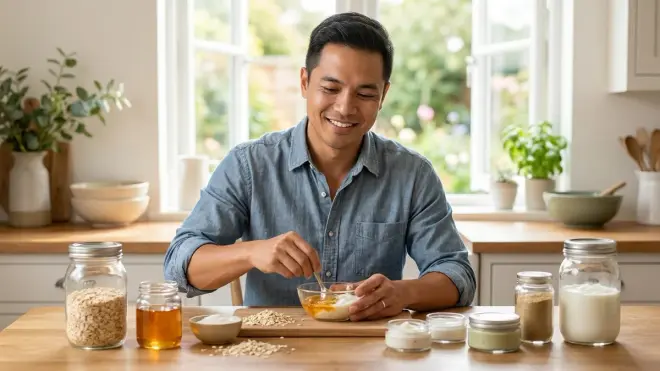
You'll thrive with DIY formulations if you're seeking gentle, hydrating, or soothing treatments without specialized active delivery requirements. The ideal DIY candidate:
Maintains consistent masking routines (2-3 times weekly) where the cumulative cost savings exceed the convenience premium of store-bought options. Your annual savings of $80-200 funds targeted serums or professional treatments that deliver more dramatic results.
Has sensitive, reactive skin that tolerates simple ingredient lists better than complex formulations with multiple penetration enhancers and preservatives. Plain oatmeal or honey provides soothing benefits without the potential sensitizers found in fragranced commercial masks.
Values immediate freshness over shelf stability—you're comfortable mixing single-use portions and understand contamination risks. You own pH strips to test acidic ingredients before facial application.
Prioritizes sustainable practices, recognizing that DIY formulations eliminate plastic packaging, shipping emissions, and industrial processing energy. Though commercial masks increasingly use recyclable packaging, bulk pantry staples create less waste per treatment.
This connects to the broader how to glow up for free philosophy: invest budget where formulation science matters most (targeted actives), economize where simple ingredients perform comparably (hydration, soothing).
Who Should Choose Store-Bought Face Masks
Store-bought masks suit you if active ingredient concentrations, stability, and convenience outweigh cost savings. Choose professional formulations when you need:
Chemical exfoliation at controlled pH levels—glycolic, lactic, or salicylic acids at concentrations (5-10%+) that actually penetrate the stratum corneum for measurable cell turnover acceleration. DIY alternatives can't replicate this safely.
Targeted anti-aging actives—retinoids, peptides, growth factors, or stabilized vitamin C at concentrations proven effective in clinical studies. These molecules require sophisticated delivery systems and preservation.
Consistent results without formulation variables. Store-bought masks deliver identical concentrations every application, while DIY formulations vary based on ingredient freshness, mixing ratios, and storage conditions.
Convenience and travel-friendliness—sealed packaging that survives gym bags, hotel rooms, and weekend trips without contamination risks. Sheet masks particularly excel here, providing single-use hydration without mixing requirements.
Extended shelf life—you mask sporadically (once every 1-2 weeks) and can't justify buying fresh ingredients that spoil before you use them again. A $12 tube lasting 6 months costs less per treatment than repeatedly buying small quantities of organic honey and yogurt.
The transition to free beauty samples worth requesting allows you to trial high-performance store-bought masks before committing to full-size purchases, identifying which active concentrations your skin tolerates and responds to best.
Frequently Asked Questions
Can DIY face masks deliver the same results as store-bought masks with active ingredients like retinol or glycolic acid?
No, DIY face masks cannot replicate the active ingredient concentrations, pH buffering, or delivery systems found in store-bought masks formulated with retinol (typically 0.25-1.0%) or glycolic acid (5-10%+), though simple DIY ingredients like raw honey, colloidal oatmeal, and plain yogurt effectively provide hydration and soothing comparable to store-bought hydrating masks at significantly lower cost per treatment.
How long can I safely store a homemade face mask before it becomes contaminated with bacteria?
Homemade face masks containing water (from fruit puree, tea, or humid air exposure) should be used immediately and any excess discarded within 15-30 minutes, as bacterial populations double every 20-30 minutes at room temperature in unpreserved aqueous environments, with visible mold growth typically appearing within 24-48 hours even when refrigerated.
Which kitchen ingredients are actually effective in DIY face masks according to dermatological research?
Raw honey (providing humectant properties and 40-200 ppm methylglyoxal antimicrobial compounds), colloidal oatmeal (delivering anti-inflammatory avenanthramides that reduce transepidermal water loss), and plain full-fat yogurt (containing approximately 0.9% naturally buffered lactic acid and probiotic metabolites) are the three kitchen ingredients with documented efficacy in dermatological research, while ingredients like lemon juice, turmeric, and avocado either pose safety concerns or deliver negligible active concentrations compared to store-bought alternatives.
Bottom Line
The DIY face masks vs store bought debate resolves through strategic categorization: kitchen ingredients excel at hydration and soothing (honey, oatmeal, yogurt) at 70-85% cost savings, while store-bought masks dominate targeted treatment through quantified actives (acids, retinoids, peptides) that cannot be safely replicated at home.
Your skin doesn't respond to ingredient origin stories—it responds to molecular structure, concentration, and delivery systems. Raw honey at $0.20 per treatment hydrates comparably to a $3 hydrating sheet mask. But no kitchen contains pharmaceutical-grade retinol at 0.5% concentration with proper stabilization.
Allocate your budget accordingly. Let pantry staples handle the gentle, supportive steps. Reserve spending for irreplaceable formulations where cosmetic chemistry transcends what mixing bowls can achieve. That's the intersection of values and vanity—knowing exactly when simplicity suffices, and when science demands its premium.