


You want sustainable skincare that actually works, doesn't cost a fortune, and won't take you an hour every morning. Here's the deal: learning how to build an eco-effective skincare routine isn't about going full zero-waste or spending around $200 on seaweed serums. It's about choosing products with high-performance actives in sustainable packaging that don't drain your wallet or the planet's resources.
This guide will show you exactly how to build an eco-effective skincare routine that delivers real results—we're talking specific ingredient percentages, price-per-ounce comparisons, and formulations that match luxury alternatives. I've tested these products between case prep and school pickups, and I'm only recommending what actually moves the needle on your skin without the greenwashing nonsense.

Time investment: 45 minutes to audit your current routine and plan replacements, then 5-7 minutes daily once you're set up.
Skill level: Beginner-friendly. If you can read a label, you can do this.
What You'll Need
Before you start building your eco-effective routine, gather these tools and information:
- Current skincare products (everything you're using now—we're auditing)
- Smartphone calculator (for price-per-ounce math)
- Notebook or Notes app (to track what works)
- Your skin concerns list (be specific: "melasma on cheeks" not "uneven tone")
- Monthly skincare budget (realistic number, not aspirational)
- Recycling capabilities in your area (check your local waste management site)
- Basic understanding of your skin type (oily, dry, combination, sensitive)
- 3-4 weeks (minimum time to test new products before adding another)
Step 1: Audit Your Current Routine for Environmental Impact
Start by dumping every skincare product you own on your bathroom counter. Yes, everything—including that fancy eye cream you bought in 2024 and never opened.
Now calculate the actual cost per use for each product. Take the total price, divide by the number of ounces, then divide by how many applications you get per ounce (roughly 30 pumps per ounce for serums, 60 for thin lotions). That around $85 luxury serum? If it's 1 ounce and you're using 2 pumps daily, that's $2.83 per application. Meanwhile, The Ordinary 2% Alpha Arbutin + HA at around $12 for 1 ounce works out to $0.40 per application with comparable results for hyperpigmentation.
Next, check the packaging recyclability. Glass bottles and aluminum tubes are infinitely recyclable. PP#5 plastic (polypropylene) is recyclable in most areas. But those fancy frosted plastics, dual-chamber pumps, and metallic tubes? Straight to the landfill. I learned this the hard way when my recycling got rejected because I'd tossed in three expensive serums with non-recyclable pumps.
Look at your active ingredient concentrations. If a product lists "contains niacinamide" without specifying the percentage, it's probably under 2%—not enough to do anything meaningful. You need at least 5% niacinamide for visible brightening and barrier repair, 0.025-0.1% retinol for cell turnover, 10-20% azelaic acid for rosacea and acne.
Red flags to eliminate immediately: Products in single-use sachets, anything with microbeads (banned in many countries but still lurking in older formulas), fragranced products in your routine (synthetic fragrance has zero skincare benefit and high environmental manufacturing cost), and products with more than 12 months left until expiration that you haven't touched in 6 months.
Step 2: Identify Your Non-Negotiable Actives

Let's be real—sustainable skincare means nothing if it doesn't work. You need to identify which active ingredients your skin actually requires, then find eco-effective versions with proven concentrations.
For anti-aging and cell turnover, you need either retinol (0.025-1%) or bakuchiol (0.5-2%). Bakuchiol is the more eco-effective choice because it's plant-derived from Psoralea corylifolia seeds and doesn't require the complex synthesis process of retinol. The Inkey List Bakuchiol Moisturizer has 1% bakuchiol at around $9.99 for 1 oz, manufactured in the UK with glass packaging. Compare that to Sunday Riley's Luna Oil with 0.5% trans-retinol at around $55 for 0.5 oz in a plastic bottle—you're paying around $110 per ounce for half the active concentration.
For hyperpigmentation and brightening, you want 5-10% niacinamide or 10-20% azelaic acid. Good Molecules Niacinamide Serum delivers 10% niacinamide at around $6 for 1 oz in a glass bottle with recyclable dropper. The formulation includes 1% zinc PCA for oil control and pore refinement. That's $0.20 per use versus SkinCeuticals Metacell Renewal B3 with 5% niacinamide at around $110 for 1.7 oz ($1.94 per use).
For hydration, you need hyaluronic acid, but molecular weight matters. You want a multi-weight formula: high molecular weight (1000-1800 kDa) sits on skin's surface for immediate plumping, while low molecular weight (50-500 kDa) penetrates deeper for lasting hydration. The Ordinary Hyaluronic Acid 2% + B5 contains three molecular weights at around $7.90 for 1 oz. It comes in a glass bottle and is manufactured in Canada under strict environmental regulations.
For those exploring newer technologies, bioregenerative actives like peptides and growth factors can accelerate cell renewal, though you'll want to verify the sustainability of their production methods.
Step 3: Choose Multi-Tasking Formulations Over Single-Use Products
The most eco-effective routine is one with fewer products. Every additional bottle means more packaging waste, shipping emissions, and manufacturing resources.
Strategic layering beats product hoarding. Instead of separate toner, essence, serum, and treatment, look for concentrated serums that combine multiple actives. Versed Stroke of Brilliance Brightening Serum contains 2% alpha arbutin, 4% niacinamide, and 0.5% kojic acid in one formula at around $19.99 for 1 oz. That's three separate treatments in recyclable glass packaging.
I ditched four separate products after finding CeraVe Skin Renewing Nightly Exfoliating Treatment—it has 10% glycolic acid, liposomal-encapsulated 0.3% retinol, and ceramides. One product, around $19.99 for 1.7 oz, in a recyclable tube. Does it have the fancy packaging of Sunday Riley's Good Genes? No. Does it deliver comparable AHA exfoliation with added barrier support at one-third the price and better packaging? Yes.
Your cleanser doesn't need six active ingredients. Its job is to remove dirt, oil, and makeup without stripping your barrier. Choose pH-balanced (4.5-5.5) cleansers with simple formulations. La Roche-Posay Toleriane Hydrating Gentle Cleanser has ceramide-3, niacinamide, and glycerin at around $14.99 for 13.5 oz in a recyclable tube. That's $1.11 per ounce with 200+ uses per tube. It's manufactured in France with EU environmental standards.
For barrier-focused routines, combining ceramides with other actives means you can skip dedicated barrier-repair steps and reduce overall product count.
Moisturizer-sunscreen combinations are eco-effective gold—if you're indoors most of the day. The Australian Gold Botanical SPF 50 Tinted Face Mineral Lotion works as moisturizer and sun protection at around $15.99 for 3 oz. That's $5.33 per ounce for two products in one, in a recyclable tube, manufactured in the US. The downside? The tint only works for light-to-medium skin tones, and if you're outside for extended periods, you need a dedicated SPF 50 that you can reapply without layering heavy moisturizer all day.
Step 4: Prioritize Refillable and Concentrated Formulas
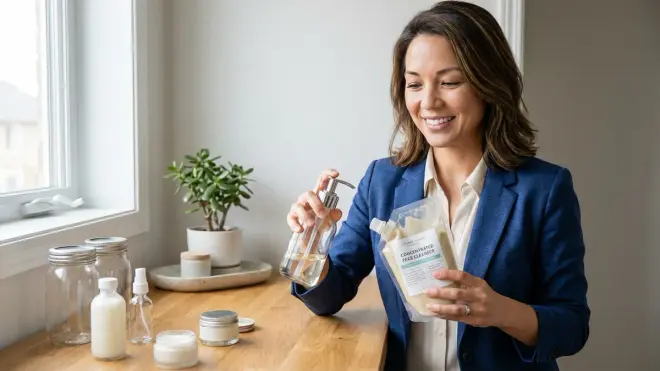
Refillable packaging is the fastest-growing segment in sustainable beauty, and for good reason. You're keeping the primary packaging (usually glass or aluminum) and replacing just the product insert.
Kjaer Weis offers refillable systems across multiple categories, but their cream blush at around $56 initial purchase, then around $34 for refills, means you're saving $22 per refill and keeping that metal compact out of the trash. The refill comes in a recyclable paper insert. For a product you'll use for 6-8 months, that's a $0.14-0.19 daily cost for the refill versus $0.23-0.31 for the initial purchase.
Concentrated formulas reduce shipping weight and packaging size. The Ordinary's 100% Organic Cold-Pressed Rose Hip Seed Oil is pure active—no water filler. At around $9.80 for 1 oz, you're getting 100% active ingredient. Compare that to most serums that are 70-90% water with actives floating in there. One drop of pure oil goes further than four pumps of a watered-down serum, meaning one bottle lasts 4-6 months with nightly use.
Youth to the People's Superfood Air-Whip Moisture Cream uses a concentrated waterless formula (technically an anhydrous base) at around $58 for 2 oz. It's expensive upfront, but you need half the amount of a traditional moisturizer because there's no water evaporating. That bottle lasts 8-10 months, bringing the monthly cost to $5.80-7.25, comparable to drugstore moisturizers you'd replace every 6-8 weeks.
The frustrating part? Not all "concentrated" formulas are created equal. Some brands just make their products thicker and call them concentrated. Check the ingredient list—if water (aqua) is the first ingredient, it's not actually concentrated, regardless of marketing claims.
Step 5: Source Products from Brands with Verified Sustainable Practices
Greenwashing is rampant in the beauty industry. Here's how to cut through the marketing nonsense and find legitimately eco-effective brands.
Look for third-party certifications, not brand claims. B Corp certification means a company meets verified social and environmental standards. Leaping Bunny certifies cruelty-free practices. ECOCERT and COSMOS certify organic and natural ingredients. Brands can say whatever they want, but these certifications require annual audits.
The Inkey List is B Corp certified, uses recyclable packaging, and publishes ingredient sourcing transparency reports. Their entire line is manufactured in the UK under EU environmental regulations. A six-product routine costs under $60 total with ingredients that match luxury alternatives. I've been using their Retinol Serum (1% retinol with squalane) for 18 months—around $9.99 for 1 oz, glass bottle, performs identically to products I've tested at $80+.
Carbon-neutral shipping matters more than you'd think. Beauty products travel thousands of miles. ELF Cosmetics achieved carbon neutrality in 2023 and maintains it through renewable energy credits and shipping optimization. Their Holy Hydration Face Cream with hyaluronic acid and peptides costs around $10 for 1.76 oz, comes in recyclable packaging, and ships carbon-neutral. Does the pump feel a bit cheap compared to luxury alternatives? Yes. Does that affect the formula's performance? Not even slightly.
For broader sustainable formulation approaches, understanding what eco-effective beauty actually means helps you evaluate brand claims critically.
Locally manufactured products reduce transportation emissions. Acure is manufactured in Florida with solar-powered facilities. Their Radically Rejuvenating SPF Day Cream has argan oil, CoQ10, and chlorella at around $19.99 for 1.7 oz in a recyclable tube. The 1,500-mile shipping distance from Florida to California versus 7,000+ miles for products manufactured in Asia makes a measurable environmental difference.
The tricky part: some European brands with exceptional environmental practices have higher transportation emissions for US customers, while some US brands with mediocre local practices still have lower overall carbon footprints due to proximity. It's frustratingly complex.
Step 6: Implement a Minimal-But-Effective Morning Routine
Your morning routine should take 5 minutes maximum. Here's the eco-effective framework I use:
Cleanse only if necessary. If you did your night routine properly, your morning face isn't dirty—it's just slightly oily from overnight sebum production. Splashing with water and patting dry is often enough. When I do cleanse, I use CeraVe Hydrating Cleanser at around $15.49 for 19 oz (82 cents per ounce, 300+ uses). Glass bottle, manufactured in the US, contains ceramides and hyaluronic acid.
Apply antioxidant serum. Vitamin C protects against free radical damage from UV exposure and pollution. Timeless 20% Vitamin C + E Ferulic Acid Serum is around $25.95 for 1 oz—a near-perfect dupe for SkinCeuticals CE Ferulic at around $169 for 1 oz. Same 20% L-ascorbic acid concentration, same pH of 3.0, same supporting cast of vitamin E and ferulic acid. Timeless comes in an airless pump to prevent oxidation, manufactured in California, but the plastic isn't recyclable in most areas. That's the compromise.
Moisturize if your skin needs it. I skip this step May through September because the vitamin C serum plus sunscreen provides enough hydration for my combination skin. October through April, I add Vanicream Daily Facial Moisturizer (around $13.99 for 3 oz, recyclable tube, contains ceramides and hyaluronic acid). That's $4.66 per ounce with 90 uses per tube.
Apply SPF 50 broad-spectrum sunscreen. Non-negotiable. Black Girl Sunscreen SPF 50 is around $15.99 for 3 oz, reef-safe, fragrance-free, works under makeup, and doesn't leave a white cast. It's mineral-based (zinc oxide 24.5%) in a recyclable tube, manufactured in the US. The formula is slightly thick—you need to warm it between your hands before applying or it goes on patchy. Worth the extra 15 seconds.
Some mornings I experiment with skin-responsive tints over my sunscreen for light coverage without adding another full makeup step.
Total time: 4-5 minutes. Total product cost: $70.42 for products lasting 5-7 months. Monthly cost: $10.06-14.08.
Step 7: Build a Strategic Night Routine for Active Ingredient Delivery
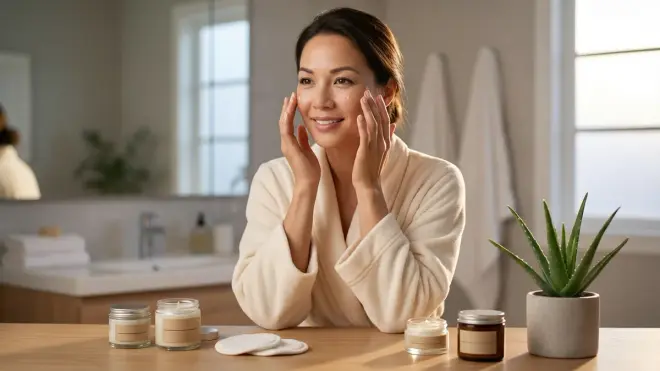
Nighttime is when you deploy the heavy-hitting actives because your skin isn't fighting UV damage and pollution.
Double cleanse if you wore makeup or sunscreen. First cleanse with an oil-based cleanser to break down SPF and makeup. The Face Shop Rice Water Bright Light Cleansing Oil is around $10.99 for 5.07 oz ($2.17 per oz, 100+ uses) in a recyclable plastic bottle. The pump is plastic #7 though—not great. Second cleanse with your regular face wash to remove any residue.
Apply active treatment based on your primary concern. This is where you use retinol, azelaic acid, or targeted actives. Monday/Wednesday/Friday: I use The Ordinary's Granactive Retinoid 2% Emulsion (around $9.80 for 1 oz, glass bottle). It's a next-generation retinoid that's less irritating than traditional retinol but equally effective for cell turnover. Tuesday/Thursday/Saturday: I alternate with The Ordinary's Azelaic Acid Suspension 10% (around $10 for 1 oz, glass bottle) for melasma and texture. Sunday: I skip actives entirely because my skin needs a recovery day.
If you're combining multiple cell-renewal technologies, check out how to layer bioregenerative serums safely to avoid irritation.
Apply facial oil or occlusive moisturizer. This seals in your actives and prevents transepidermal water loss overnight. The Ordinary's 100% Organic Cold-Pressed Rose Hip Seed Oil (around $9.80 for 1 oz) or CeraVe Healing Ointment (around $17.99 for 12 oz tube, $1.50 per oz) are both excellent. The rose hip oil is in glass; the healing ointment is in recyclable plastic. Rose hip oil absorbs fully in 5-10 minutes; the healing ointment sits on your skin all night, which some people love and others hate. I use rose hip oil because I can't stand the feeling of heavy occlusives on my face.
Total time: 7-8 minutes. Total product cost: $68.58 for products lasting 4-6 months. Monthly cost: $11.43-17.15.
The reality check: Some nights you'll be exhausted and skip steps. That's fine. The minimum viable routine is cleanser + moisturizer + whatever active you can manage to apply. Perfect is the enemy of done, especially at 11 PM when you have a 5:45 AM wake-up call.
Step 8: Track Performance and Adjust Every 6-8 Weeks

Building an eco-effective routine isn't one-and-done. Your skin changes with seasons, stress levels, hormones, and age.
Take progress photos every 2 weeks in the same lighting (I use my bathroom at 7 AM with overhead lights). Put them in a dedicated phone album. You think you'll remember what your skin looked like, but you won't. These photos are your accountability system.
Keep a simple log of what you're using and any changes you notice. I use my phone's Notes app with weekly entries: "Week 3 on bakuchiol—noticing smoother texture around eyes, still have stubborn melasma spot on left cheek, no irritation." This takes 30 seconds and saves hours of trying to remember what worked.
Calculate your actual cost per improvement. If you're spending $40 monthly on products that show zero visible improvement after 8 weeks, that's $80 wasted. The same $80 invested in targeted actives at the right concentrations would have delivered actual results. I spent 6 months on expensive "natural" products that did nothing because I wasn't looking at active percentages—that's $360 I'll never get back.
Adjust seasonally. My combination skin gets drier October-March (California winter) and oilier May-September. I swap heavier moisturizers in winter for lighter ones in summer. The actives stay the same; the base formulations change. You can check comprehensive eco-effective beauty routine guidelines for seasonal adjustment strategies.
Replace one product at a time, waiting 3-4 weeks between switches. If you overhaul your entire routine at once and break out, you won't know which product caused it. I learned this the expensive way by introducing four new products simultaneously and spending 6 weeks playing product elimination detective.
The frustrating truth: sustainable products generally take the same 8-12 weeks to show results as conventional ones. There's no fast-forward button. Anyone promising "visible results in 48 hours" is selling you something your skin doesn't need.
Pro Tips & Common Mistakes
Pro tip 1: Buy travel sizes first for expensive products. The Ordinary and The Inkey List both offer 0.5 oz sizes for $5-7. Test for a month before committing to full sizes. I've saved hundreds of dollars by discovering products don't work for my skin before buying full bottles.
Pro tip 2: Decant products into smaller containers for travel instead of buying travel sizes. A small glass dropper bottle costs $2 and eliminates the need to purchase redundant products. This is especially useful for oils and serums.
Pro tip 3: Store vitamin C serums in the fridge to extend their shelf life. L-ascorbic acid oxidizes in heat and light. A around $26 serum that lasts 6 months instead of 3 is twice as cost-effective.
Pro tip 4: Join product take-back programs. Nordstrom's Beauty Cycle and Pact's Beauty Takeback Program accept empty beauty containers for recycling, even if your local facility doesn't. Mail them in bulk to make shipping worthwhile.
Common mistake 1: Assuming "natural" or "organic" means eco-effective. Plenty of natural products require resource-intensive farming practices, travel thousands of miles, and deliver inferior active concentrations. "Natural" is a marketing term, not a performance guarantee.
Common mistake 2: Falling for "waterless beauty" marketing without checking formulations. Some waterless products are genuinely concentrated; others just replace water with silicones, which aren't necessarily more eco-effective or better for your skin.
Common mistake 3: Buying glass packaging for the sustainability factor without considering weight. Glass is heavier to ship, which increases transportation emissions. The environmental math isn't always straightforward—sometimes lightweight recyclable plastic has a lower total carbon footprint than glass when you factor in shipping distances.
Common mistake 4: Quitting products after 2 weeks because you "don't see results." Most actives require 4-8 weeks minimum for visible changes. The exception is immediate barrier damage (burning, stinging, redness)—stop using that product immediately.
Frequently Asked Questions

How long does it take to build an eco-effective skincare routine from scratch?
Building an eco-effective skincare routine takes about 45 minutes initially to audit your current products and research replacements, then approximately 3-4 months to fully transition and test products properly. You should replace one product every 3-4 weeks to monitor how your skin responds to each new formula, which means a complete routine overhaul requires patience and systematic testing rather than an overnight switch.
Are eco-effective skincare products actually as effective as traditional luxury products?
Yes, eco-effective skincare products are equally effective when they contain the same active ingredient concentrations as luxury alternatives. For example, a budget retinol serum with 0.5% retinol in a recyclable glass bottle performs identically to a luxury version with the same concentration, because your skin responds to the active ingredient percentage and formulation quality, not the brand name or packaging aesthetic.
What's the most important factor when choosing eco-effective skincare products?
The most important factor is active ingredient concentration combined with packaging recyclability. You need products with clinically effective percentages like 5-10% niacinamide or 0.025-1% retinol in glass or widely recyclable plastic packaging, because a sustainable product that doesn't work forces you to buy additional products, creating more waste and environmental impact than one effective product would have.
How much should I expect to spend monthly on an eco-effective skincare routine?
You should expect to spend $20-35 monthly on an eco-effective skincare routine with properly formulated active ingredients in sustainable packaging. This typically covers a cleanser, active serum, moisturizer, and SPF from brands like The Ordinary, The Inkey List, CeraVe, or Versed, with products lasting 4-6 months depending on usage frequency and product size.
Summary
Learning how to build an eco-effective skincare routine comes down to prioritizing performance metrics over marketing claims. You need products with verified active concentrations in recyclable packaging from brands with transparent manufacturing practices—and you need to track actual results through photos and simple logging systems.
The monthly cost ($20-35) is comparable to conventional drugstore routines, while the environmental impact is measurably lower through refillable systems, concentrated formulas, and locally manufactured products. Most importantly, these routines deliver clinical results identical to luxury alternatives because your skin responds to active ingredients and formulation chemistry, not brand prestige.
Start with one product replacement this week. Calculate the cost per use, verify the active percentage, check the packaging recyclability, and test it for a month. That's how you build something sustainable that actually works.