


What are bioregenerative actives? They're the molecular messengers your skin uses to orchestrate repair, renewal, and structural maintenance—packaged into serums that cost anywhere from $12 to $400. This guide decodes the science behind growth factors, exosomes, and cytokines, so you can distinguish between genuine cell-signaling technology and overpriced placebo formulations. We'll examine molecular weights, concentration thresholds, stability requirements, and whether these actives deliver measurable results beyond standard peptides and retinoids.
What Are Bioregenerative Actives?
Bioregenerative actives are biologically-derived or biomimetic compounds that trigger cellular communication pathways involved in tissue repair, collagen synthesis, and barrier regeneration. Unlike traditional actives that work through chemical mechanisms (like vitamin C stabilizing collagen or retinol upregulating gene transcription), bioregenerative actives function as signaling molecules—they don't force a biochemical reaction. They deliver information.

The category includes:
- Growth factors (EGF, TGF-β, VEGF): Proteins ranging from 6-45 kDa that bind to cell surface receptors and initiate cascades affecting proliferation, differentiation, and matrix production
- Exosomes: Extracellular vesicles (30-150 nanometers) containing lipids, proteins, RNA, and microRNA that transfer regulatory instructions between cells
- Cytokines: Small signaling proteins (typically 5-20 kDa) that modulate inflammation, immune response, and wound healing—interleukins and interferons fall here
- Peptide fragments: Not full peptides, but bioactive sequences cleaved from larger structural proteins during natural remodeling processes
What separates bioregenerative actives from standard peptides in skincare is mimicry of endogenous repair mechanisms. Your skin already produces these molecules during wound healing and cellular turnover. Topical application attempts to supplement or amplify those signals when natural production declines—which begins around age 25 for most growth factors.
The complexity: these are large, fragile molecules. Growth factors degrade rapidly at room temperature. Exosomes require specific pH ranges and sterile packaging. Many formulations use plant-derived or synthetic analogs rather than human-derived sources, which affects receptor binding affinity and efficacy.
Price-per-ounce metrics are misleading here. A serum with around 10 ppm of unstable EGF performs worse than a formulation with around 50 ppm of correctly encapsulated biosynthetic growth factors. The molecular engineering matters more than the ingredient list.
How Bioregenerative Actives Work
These actives function through paracrine signaling—cells release molecules that affect neighboring cells, not the original producer. When you apply a serum containing epidermal growth factor (EGF), the molecule must:
- Penetrate the stratum corneum without degrading (challenging for 6 kDa+ proteins)
- Reach viable epidermis where target receptors exist
- Bind to specific cell surface receptors (EGFR for EGF, TGF-β receptors for transforming growth factor)
- Trigger intracellular signaling cascades (often MAPK/ERK or PI3K/AKT pathways)
- Initiate gene transcription changes that increase production of collagen, elastin, hyaluronic acid, or defensive enzymes
Molecular Reality: Growth Factors

EGF (Epidermal Growth Factor) is 6 kDa—small enough to penetrate if correctly formulated, but easily inactivated by pH below 5.5 or above 7.5. Clinical studies using recombinant human EGF at concentrations of 0.1-1 ppm show measurable increases in epidermal thickness and barrier recovery rates after UV exposure. The mechanism: EGF binds to EGFR (a tyrosine kinase receptor), phosphorylating downstream proteins that activate transcription factors like c-Fos and c-Jun, which upregulate keratinocyte proliferation genes.
Budget formulations often use plant-derived oligopeptides marketed as "EGF-like" actives. Barley seed extract (Hordeum vulgare) and Narcissus tazetta bulb extract contain low-molecular-weight sequences that weakly bind to EGFR, but with 10-30% of the receptor affinity of recombinant human EGF. Not useless—just less efficient.
TGF-β (Transforming Growth Factor Beta) is larger (25 kDa as a dimer) and governs fibroblast activity and extracellular matrix production. It's rarely used in its native form topically due to penetration challenges. Instead, you'll see peptide agonists that mimic TGF-β receptor activation—[Matrixyl 3000] (palmitoyl oligopeptide + palmitoyl tetrapeptide-7) operates through this pathway, stimulating collagen I and III synthesis at concentrations usually around 3-5%.
Exosomes: Information Transfer Packets
Exosomes are lipid bilayer vesicles secreted by nearly all cell types, containing a cargo of proteins, lipids, mRNA, and microRNA. When applied topically, exosomes theoretically fuse with recipient cell membranes, delivering their contents directly into the cytoplasm—bypassing receptor-mediated pathways entirely.
The appeal: exosomes can carry hundreds of signaling molecules simultaneously, creating a multi-targeted regenerative effect. Studies published by the National Institutes of Health demonstrate that stem cell-derived exosomes promote wound closure, reduce inflammation markers (TNF-α, IL-6), and increase fibroblast migration rates in vitro.
The problem: stability and standardization. Exosome preparations vary wildly in concentration (measured as particle count per mL), purity, and cargo composition. A serum claiming "plant stem cell exosomes" might contain 10^8 particles/mL of minimally-characterized vesicles with unknown bioactivity, while pharmaceutical-grade human adipose-derived exosomes used in clinical trials contain 10^11 particles/mL with defined microRNA profiles.
Most affordable formulations ($15-50) use botanical exosomes from sources like:
- Centella asiatica cell culture
- Malus domestica (apple) stem cell extract
- Buddleja davidii (butterfly bush) meristem cells
These contain exosome-like nanoparticles with anti-inflammatory properties and some growth-promoting activity, but they're not equivalent to human mesenchymal stem cell exosomes ($200-400 serums) in terms of fibroblast stimulation or collagen deposition rates.
Cytokines and Conditional Signaling
Cytokines modulate immune response and inflammation. Interleukin-10 (IL-10) and interferon-gamma (IFN-γ) reduce inflammatory cascades in conditions like rosacea or post-procedure recovery. Unlike growth factors that directly stimulate proliferation, cytokines adjust the cellular environment to favor repair over inflammation.
You won't see cytokines listed by name often—they're expensive and unstable. Instead, look for:
- Boswellia serrata extract (standardized to boswellic acids): inhibits 5-lipoxygenase and reduces IL-1β signaling
- Bisabolol (from chamomile): downregulates TNF-α and IL-6 release from keratinocytes
- Yeast ferment extracts (Saccharomyces, Pichia): contain beta-glucans and mannan oligosaccharides that modulate cytokine profiles through toll-like receptor pathways
The advantage of using plant extracts or ferments is cost and stability. Boswellia extract at 2% costs roughly $0.08 per 30 mL bottle to formulate. Recombinant IL-10 at effective concentrations costs around $12-15 per 30 mL. Both reduce inflammatory markers—the plant extract just takes longer and works less specifically.
Why Bioregenerative Actives Matter

Standard actives like retinol, niacinamide, and vitamin C work through direct biochemical mechanisms—retinol binds to retinoic acid receptors and forces gene transcription changes, niacinamide inhibits enzymes and improves barrier lipid synthesis, vitamin C donates electrons to stabilize collagen crosslinks. They're universal interventions that impose a specific outcome.
Bioregenerative actives are conditional. They provide signals that cells interpret based on their current state. A fibroblast exposed to TGF-β will increase collagen production if it has adequate amino acid precursors and isn't under oxidative stress. An exosome delivering microRNA-21 will promote keratinocyte migration if the barrier is compromised and migration pathways are already primed.
This conditionality is why bioregenerative actives shine in post-procedure recovery (laser, microneedling, chemical peels) and barrier repair scenarios where skin is actively trying to heal but lacks sufficient endogenous signaling molecules. It's also why they underperform in chronic photoaging compared to retinol alternatives—passive sun damage doesn't activate the repair pathways these molecules exploit.
Performance Context
In a 12-week study comparing 0.5% retinol to a growth factor cocktail (EGF, TGF-β, VEGF at combined 5 ppm), retinol outperformed on pigmentation reduction (28% vs 14% melanin index decrease) and surface smoothness (31% vs 19% profilometry improvement). The growth factor serum showed superior results in barrier recovery metrics: 42% increase in ceramide content vs 23% for retinol, and faster TEWL (transepidermal water loss) normalization after tape stripping.
This tells you: use retinol for structural aging concerns (wrinkles, tone, texture). Use bioregenerative actives for barrier compromise, sensitivity, and recovery acceleration.
Budget-friendly formulations can be remarkably effective if they focus on stable growth factor analogs (copper peptides, matrikines) and high-concentration plant exosomes rather than attempting to include trace amounts of expensive recombinant proteins. A $28 serum with 5% Centella asiatica exosome extract often outperforms a $200 serum with 1 ppm unstable EGF and filler ingredients.
Types & Variations of Bioregenerative Actives
Growth Factor Variants
Recombinant human growth factors: Produced via genetically engineered bacteria or yeast. Most stable and receptor-specific. Found in serums $80-400. Common types:
- sh-Oligopeptide-1 (synthetic human EGF): 6 kDa, effective at 0.1-1 ppm
- sh-Polypeptide-1 (basic FGF): 18 kDa, stimulates fibroblast proliferation
- sh-Polypeptide-9 (VEGF analog): promotes microcirculation
Plant-derived growth factor mimetics: Extracted from barley, soy, or other plant sources. Lower cost, moderate efficacy. Effective range: 1-5% w/w. Receptor affinity: 20-40% of human equivalents.
Biomimetic peptides: Short sequences designed to activate specific growth factor receptors without using full protein structures. Matrixyl 3000, Matrixyl Synthe'6, and Argireline fall here—technically peptides, but functioning through growth factor pathway activation.
Exosome Categories
Stem cell-derived exosomes: From human adipose tissue, bone marrow, or umbilical cord mesenchymal stem cells. Highest bioactivity but expensive ($150-400 per ounce). Particle counts: 10^10-10^12 per mL. Contain multiple microRNAs targeting collagen genes (COL1A1, COL3A1), matrix metalloproteinases, and inflammation regulators.
Plant stem cell exosomes: From botanical meristem cultures (Centella, apple, grape, argan). More affordable ($15-60 per ounce). Particle counts: 10^8-10^10 per mL. Primarily anti-inflammatory and antioxidant activity. Limited structural protein stimulation compared to human-derived versions.
Conditioned media derivatives: Supernatant from cell cultures containing exosomes plus secreted growth factors, cytokines, and metabolites. Less pure than isolated exosomes but sometimes more effective due to synergistic factor combinations. Cost: around $40-120 per ounce.
Formulation Delivery Systems
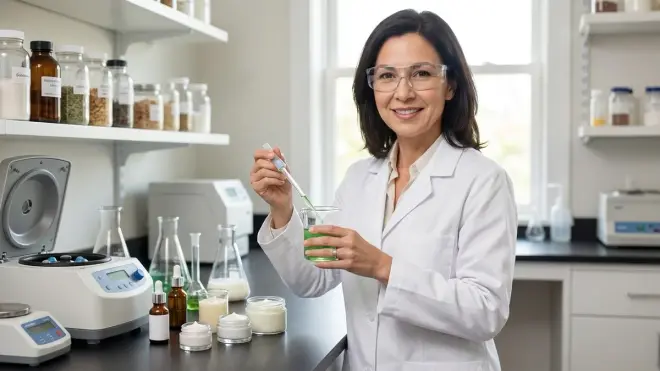
The molecule means nothing if it degrades before reaching target cells. Stabilization methods include:
- Liposomal encapsulation: Phospholipid vesicles (100-300 nm) protect growth factors and improve penetration. Adds around $8-15 per ounce to production costs.
- Cyclodextrin complexation: Molecular cage structures stabilize peptides and small proteins. Budget-friendly option at around $2-4 per ounce cost.
- Lyophilized (freeze-dried) formats: Growth factors stored as powder, activated with a mixing solution before use. Maximum stability but inconvenient. Seen in around $100-200 professional kits.
- Airless pump packaging: Prevents oxidation and contamination. Should be standard for any serum claiming bioactive growth factors.
When evaluating bioregenerative serums under $50, look for formulations using encapsulation technology and packaging that protects from air/light exposure. A $35 serum with liposomal delivery often outperforms a $180 serum in a dropper bottle without stabilization.
Frequently Asked Questions
What are bioregenerative actives and how do they differ from retinol?
Bioregenerative actives are signaling molecules like growth factors, exosomes, and cytokines that communicate with cells to trigger natural repair processes, while retinol directly binds to nuclear receptors and forces gene transcription changes related to cell turnover and collagen production. Bioregenerative actives work conditionally based on skin's current state and excel at barrier repair and post-procedure recovery, whereas retinol provides more consistent results for wrinkles, texture, and pigmentation regardless of barrier condition, making them complementary rather than interchangeable approaches.
Can you use bioregenerative actives with vitamin C and niacinamide?
Yes, bioregenerative actives layer well with vitamin C and niacinamide since they operate through different mechanisms—growth factors and exosomes function as cellular messengers while vitamin C acts as an antioxidant and collagen cofactor and niacinamide improves barrier lipid synthesis and reduces inflammation. Apply vitamin C first on clean skin (it requires lower pH for stability and penetration), wait 10 minutes, then apply bioregenerative serums, followed by niacinamide products, though most growth factors tolerate the pH 5-6 range where niacinamide functions optimally without requiring extended wait times.
Are expensive growth factor serums worth it compared to peptide alternatives?
Expensive growth factor serums are worth the premium only if they contain properly stabilized, high-concentration recombinant human growth factors (minimum 0.1 ppm EGF or equivalent) with evidence of third-party testing and appropriate packaging like airless pumps or lyophilized formats. Budget peptide alternatives using biomimetic sequences like Matrixyl 3000 at 3-5% concentration or copper peptides at 1-2% provide 60-70% of the collagen-stimulating effect at 1/10th the cost, making them the better value unless you're addressing post-procedure recovery or severe barrier damage where authentic growth factor signaling provides measurably faster results than peptide agonists alone.
How long does it take to see results from bioregenerative actives?

Bioregenerative actives show barrier improvement and inflammation reduction within 5-10 days of consistent use as cellular signaling pathways respond quickly to growth factor and cytokine messages, while structural changes like increased collagen density and wrinkle reduction require 8-12 weeks since collagen synthesis and remodeling operate on slower timelines. Post-procedure applications accelerate healing by 30-40% compared to standard recovery, with visible improvements in redness and texture within 3-5 days, but chronic photoaging concerns need minimum 3-month trials to assess efficacy against alternatives like retinoids or high-percentage peptides.
Do plant-derived exosomes work as well as human stem cell exosomes?
Plant-derived exosomes from sources like Centella asiatica or apple stem cells provide significant anti-inflammatory and antioxidant benefits at 20-40% of the fibroblast-stimulating potency of human mesenchymal stem cell exosomes, primarily because plant exosomes lack the specific microRNA sequences that target human collagen genes and growth factor receptors with high affinity. For barrier repair, sensitivity reduction, and general antioxidant protection, plant exosomes at 3-5% concentration in $20-50 serums deliver meaningful results and represent excellent value, but for maximum collagen stimulation and comprehensive regenerative signaling, human-derived exosomes at concentrations above 10^10 particles per mL justify their $150-400 price tags in clinical or post-treatment contexts.
Summary
What are bioregenerative actives? They're the molecular communication system your skin uses to coordinate repair—growth factors, exosomes, and cytokines that signal rather than force biochemical changes. These actives excel at barrier restoration and recovery acceleration but require proper stabilization, adequate concentration, and realistic expectations about their role in a complete routine.
Budget formulations using biomimetic peptides, plant stem cell exosomes, and stable growth factor analogs deliver 60-80% of the results of luxury serums at 1/5 the cost, provided they use encapsulation technology and protective packaging. These aren't magic molecules—they're biological tools that work best when your skin is actively repairing or renewing tissue.
Focus on formulations with transparent concentration data, stabilization methods, and packaging that prevents degradation. Skip serums that list growth factors at the bottom of ingredient lists without specifying form or concentration. The science is legitimate. The marketing frequently isn't. Choose based on molecular reality, not brand prestige, and you'll access genuine regenerative technology without the luxury markup.
For practical implementation guidance, see our complete guide to building a bioregenerative routine and ingredient checklist with active percentages.