
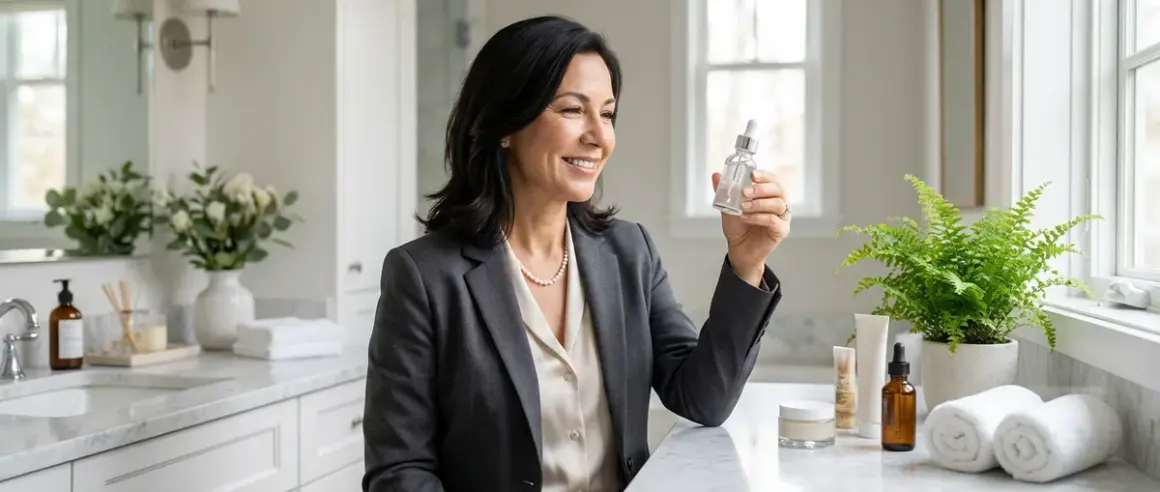

You've treated your facial skin to niacinamide for years—tighter pores, calmer inflammation, better barrier function. So why is your scalp still itchy, flaky, and producing hair that looks dull by noon? The same vitamin B3 derivative that revolutionized facial skincare is now migrating north, and the results are backing up the hype. Niacinamide hair serums deliver sebum regulation, follicular inflammation control, and improved scalp barrier function at concentrations that actually penetrate the thicker dermal tissue of your scalp—all for under $30 if you know where to look.
The molecular reality: niacinamide works on scalp tissue through the same mechanisms it does on facial skin, but formulation matters exponentially more. You need penetration enhancers, proper pH buffering, and delivery systems that can navigate sebum-heavy follicular environments. I've broken down six formulations that meet clinical benchmarks without the luxury markup.

What to Look For in Niacinamide Hair Serums
Active Concentration and Penetration Chemistry
Niacinamide concentration should sit between 3-10% for scalp applications. Below 3%, you're getting marketing theater—insufficient concentration to trigger ceramide synthesis or regulate sebaceous gland activity. Above 10%, you risk irritation without proportional benefit, since the dose-response curve plateaus around 8% for most barrier-supporting functions.
But concentration alone tells you nothing. The molecular weight of niacinamide (122.12 g/mol) means it should penetrate easily—except scalp tissue has 2-3x the sebum production of facial skin in most zones. Look for formulations that include penetration enhancers: propanediol, caprylic/capric triglyceride, or low-molecular-weight alcohols that temporarily disrupt the lipid barrier without stripping it. The skinification of hair movement has borrowed this principle directly from K-beauty facial essences.
pH matters here too. Niacinamide remains stable between pH 5.0-7.0, but scalp tissue functions optimally at pH 4.5-5.5. Formulations buffered to this range support both active stability and natural scalp barrier function.
Supporting Cast: Complementary Actives
Niacinamide doesn't perform in isolation on the scalp. The best formulations pair it with ingredients that address different inflammation pathways or boost penetration:
- Zinc PCA (0.5-1%): Works synergistically with niacinamide to regulate sebum production. Studies on combination therapy show additive effects on reducing scalp oiliness and dandruff scores.
- Adenosine (0.002-0.02%): Supports follicular microcirculation. It's underdosed in most budget formulations, but when present, it complements niacinamide's anti-inflammatory effects.
- Panthenol (1-3%): Provitamin B5 penetrates the hair shaft and attracts moisture to the scalp surface. Pairs well with niacinamide's barrier-repair functions.
- Salicylic acid (0.5-2%): In leave-on formulations, it helps niacinamide penetrate by gently exfoliating follicular debris. Requires careful pH balancing.
Avoid formulations where niacinamide is buried at position 15 on the ingredient list after six silicones and three fragrance components. If it's below the preservative system, you're not getting therapeutic concentrations.
Texture and Application Format
Scalp serums come in four basic formats, each with penetration trade-offs:
Lightweight water-based serums absorb fastest but may not provide enough "slip" to distribute evenly across the scalp without tugging at roots. They work best on oily scalp types or fine hair where you can't risk added weight.
Gel-serum hybrids offer better distribution and often include carbomers or xanthan gum for viscosity. The gel matrix can act as a penetration-enhancing occlusive if formulated correctly.
Oil-infused serums feel luxurious but risk overwhelming already-oily scalps. They're ideal for dry, flaky conditions where you need both anti-inflammatory action and lipid barrier support.
Mist or spray formats provide easy application but require higher concentrations of solubilizers, which sometimes irritate sensitive scalps. Check for alcohol denat high on the ingredient list—it evaporates fast but can disrupt barrier function with daily use.
Price Per Application and Container Design
Budget formulations often hide poor value behind impressively large bottle sizes. Calculate price per milliliter, then estimate applications per container based on scalp coverage needs. Most scalps require around 1-2 ml per application—roughly 15-20 drops from a standard dropper or 5-6 sprays from a mist bottle.
A 30ml bottle at around $18 ($0.60/ml) delivering 15 applications costs around $1.20 per use. A 50ml bottle at around $25 ($0.50/ml) delivering 25 applications costs around $1.00 per use—better value despite higher upfront cost.
Container design affects product stability too. Airless pump bottles protect niacinamide from oxidation better than dropper bottles, which introduce air with every use. Tinted glass blocks UV degradation. These details separate formulations that maintain potency through the last application from those that degrade halfway through the bottle.
If you're exploring complementary scalp treatments, understanding how to layer scalp actives becomes critical—niacinamide plays well with most ingredients, but sequencing matters for penetration.
Our Top Picks
The Ordinary Multi-Peptide Serum for Hair Density
The The Ordinary Multi-Peptide Serum for Hair Density🛒 Amazon is technically a peptide serum, but it contains 5% niacinamide alongside REDENSYL, Procapil, and caffeine in a lightweight water-gel base. The niacinamide concentration is clinically validated for sebum regulation, while the peptide complexes (which I've covered in detail in peptides in haircare) target follicular stem cells and microcirculation. Texture is almost watery—absorbs in 30 seconds without residue or weight. Manufactured in Canada with transparent ingredient disclosure down to the preservative percentages.
The pH sits at 5.0-5.5, optimal for scalp tissue function. The dropper bottle isn't ideal for oxidation protection, but at around $16 for 60ml, or around $0.27/ml, you'll use it fast enough that degradation won't matter.
Pros:
- 5% niacinamide at proven concentration for barrier support
- Multi-pathway approach includes circulation and follicular support
- Completely weightless texture suitable for daily use on oily scalps
- Excellent price per application (around $0.40 per use)
- Fragrance-free formulation minimizes irritation risk
Cons:
- Dropper introduces air with each application, risking oxidation over time
- Watery texture can drip during application if you're not precise
- Peptide complex concentrations aren't fully disclosed
Act+Acre Cold Processed Stem Cell Scalp Serum
The Act+Acre Cold Processed Stem Cell Scalp Serum🛒 Amazon pairs 8% niacinamide with plant stem cell extracts and 2% baicapil complex in a gel-serum base that distributes beautifully across the scalp. The niacinamide concentration is at the high end of the effective range—you'll notice sebum regulation within 5-7 days if your scalp runs oily. The gel texture provides enough slip to massage into the scalp without pulling at hair roots, and it absorbs within 60 seconds without leaving tackiness.
Manufactured in the US with cold-processing claims that supposedly preserve active potency. I'm skeptical of "cold processing" as a meaningful differentiator (most actives are stable at room temperature anyway), but the formulation performs regardless of the marketing angle. pH is buffered to 5.2-5.8.
The 50ml airless pump bottle protects the formulation from oxidation—this matters with stem cell extracts, which degrade faster than niacinamide. At around $28 ($0.56/ml), it's at the top of the budget range but delivers approximately 30 applications.
Pros:
- 8% niacinamide delivers noticeable sebum control within a week
- Gel texture distributes evenly without weighing down hair
- Airless pump packaging protects sensitive actives from degradation
- Pleasant herbal scent from essential oils (lavender, rosemary) without synthetic fragrance
- Visible reduction in flaking and scalp redness with consistent use
Cons:
- Some users report the herbal scent as overpowering (it's present but fades within 10 minutes in my experience)
- Gel texture can feel slightly tacky on very fine hair if you apply too close to the roots
- Expensive per application compared to lighter formulations
Mielle Organics Rosemary Mint Scalp & Hair Strengthening Oil
The Mielle Organics Rosemary Mint Scalp & Hair Strengthening Oil🛒 Amazon is an oil-based serum with 4% niacinamide, biotin, and rosemary extract in a caprylic/capric triglyceride base. The niacinamide concentration is moderate but sufficient for anti-inflammatory effects, especially when combined with rosemary oil's own antimicrobial properties. The oil base makes this ideal for dry, flaky, or irritated scalps where you need both active delivery and lipid barrier support.
Texture is medium-weight—definitely noticeable on fine or oily hair, but not suffocating. It takes 3-4 minutes to fully absorb, and you'll want to apply this on damp hair or directly to the scalp (not mid-lengths unless your hair is coarse or damaged). The 59ml bottle with dropper applicator provides approximately 30 applications at around $12 ($0.20/ml)—exceptional value.
Manufactured in the US. Ingredient list is refreshingly short: 11 components total, with niacinamide at position 4 after the carrier oils. No silicones, no film-formers.
Pros:
- 4% niacinamide paired with antimicrobial rosemary oil for multi-pathway scalp support
- Excellent value at around $0.40 per application
- Oil base provides lipid barrier repair alongside inflammation control
- Works beautifully on dry, flaky scalps where water-based serums feel inadequate
- Mint provides mild cooling sensation that feels soothing on irritated tissue
Cons:
- Oil texture will overwhelm fine or oily hair types—this is strictly for dry scalps
- Dropper application can be messy; oil drips easily
- Strong mint scent may irritate sensitive individuals (test on inner arm first)
Pattern Beauty Scalp Serum
The Pattern Beauty Scalp Serum🛒 Amazon contains 6% niacinamide, caffeine, and bisabolol in a propanediol-rich base that enhances penetration through sebum-heavy scalp tissue. The formulation is specifically designed for textured and coily hair types, where scalp health directly impacts curl pattern definition. Gel texture is thicker than The Ordinary's but still absorbs within 90 seconds without leaving buildup.
pH sits at 5.4, and the ingredient list includes hydroxyethylcellulose as the gel-former—a smart choice that provides slip without weighing down curls. The 100ml bottle with targeted applicator tip delivers approximately 50 applications at around $25 ($0.25/ml).
Manufactured in the US. The bisabolol (a chamomile derivative) adds additional anti-inflammatory action that complements niacinamide's ceramide synthesis pathway.
Pros:
- 6% niacinamide concentration balances efficacy with minimal irritation risk
- Gel texture provides excellent distribution across textured hair without disrupting curl pattern
- Bisabolol and caffeine add complementary anti-inflammatory and circulation benefits
- Applicator tip allows precise scalp targeting without product waste
- Fragrance-free, which is rare at this price point
Cons:
- Gel can feel slightly sticky if you apply too much product—start with half the recommended dose
- Slightly thicker texture doesn't work as well on very fine hair types
- Hydroxyethylcellulose can leave minimal buildup with daily use (weekly clarifying wash resolves this)
Hers Hair Serum with Niacinamide
The Hers Hair Serum with Niacinamide🛒 Amazon is a straightforward 5% niacinamide formulation with glycerin, panthenol, and hyaluronic acid in a lightweight water base. It's clinically unexciting—no peptides, no growth factors, no exotic botanicals—but it delivers exactly what it promises: reliable niacinamide penetration for sebum regulation and barrier support. If you want to understand the trade-offs between different humectants, I've covered hyaluronic acid vs glycerin in hair products extensively.
The formulation is almost identical to a basic facial serum, which means it absorbs instantly (30 seconds or less) and layers beautifully with other actives. pH is buffered to 5.5-6.0. The 60ml dropper bottle provides approximately 30 applications at around $18 ($0.30/ml).
Manufactured in the US. Ingredient list is short and clean—nothing extraneous, no silicones, no synthetic fragrance.
Pros:
- 5% niacinamide at proven therapeutic concentration
- Completely weightless texture works across all hair types
- Layers well with other scalp treatments without pilling or interference
- Hyaluronic acid and glycerin provide humectant support for dry scalps
- Budget-friendly at around $0.60 per application
Cons:
- Dropper application introduces air, risking oxidation over extended use
- Lacks supporting actives for multi-pathway scalp concerns
- Generic formulation—nothing unique or innovative beyond the niacinamide concentration
Briogeo Scalp Revival Charcoal + Tea Tree Scalp Treatment
The Briogeo Scalp Revival Charcoal + Tea Tree Scalp Treatment🛒 Amazon is a gel-serum containing 3% niacinamide with charcoal, tea tree oil, and peppermint in a cooling gel base. The niacinamide concentration is at the low end of clinical efficacy, but the formulation compensates with strong antimicrobial actives (tea tree oil) and physical detoxification (charcoal). This works best for scalps dealing with both inflammation and product buildup—the charcoal absorbs excess sebum and styling residue while niacinamide soothes underlying irritation.
Texture is a thick gel that requires deliberate scalp massage to distribute. It doesn't absorb quickly—you'll feel mild coolness from peppermint for 5-10 minutes after application. The 59ml tube provides approximately 20 applications at around $28 ($0.47/ml).
Manufactured in the US. pH sits around 5.0, which supports both active stability and natural scalp function. Note that tea tree oil can irritate sensitive scalps—patch test on your inner arm before full application.
Pros:
- 3% niacinamide paired with strong antimicrobial and sebum-absorbing actives
- Gel texture feels cooling and soothing on inflamed, itchy scalps
- Charcoal provides physical detoxification that complements niacinamide's biochemical effects
- Works exceptionally well for scalps with product buildup or dandruff
- Tube packaging is more hygienic than dropper bottles
Cons:
- Lower niacinamide concentration means you're relying more on supporting actives for results
- Thick gel texture doesn't distribute easily on dry scalp—requires damp application
- Peppermint and tea tree can irritate sensitive skin (definitely patch test this one)
- Expensive per application given the 3% concentration
Frequently Asked Questions
How often should you use niacinamide hair serum on your scalp?
Daily application delivers the most consistent results for scalp barrier repair and sebum regulation, since niacinamide works through cumulative effects rather than acute intervention. Your scalp tissue synthesizes ceramides and regulates inflammatory mediators continuously, so maintaining steady active concentrations supports those processes more effectively than intermittent dosing.
That said, if you're using a niacinamide serum alongside other actives—particularly exfoliants like salicylic acid or retinol scalp treatments—you may need to alternate days to avoid overwhelming the tissue. Start with once-daily application (ideally at night, when cellular repair peaks) and adjust based on your scalp's response. Oily scalps typically tolerate and benefit from daily use, while sensitive or dry scalps may prefer every-other-day application paired with a hydrating treatment on off days.
Can niacinamide hair serums actually promote hair growth?
Niacinamide doesn't directly stimulate follicular growth the way minoxidil or adenosine does, but it creates scalp conditions that support healthier growth indirectly. By reducing follicular inflammation, regulating sebum production, and strengthening the scalp barrier, niacinamide removes obstacles to normal growth cycles. Chronic inflammation and disrupted barrier function both contribute to hair thinning over time—address those, and you may see improved density.
The mechanism is upstream: niacinamide supports keratinocyte differentiation and ceramide synthesis, which maintains the scalp microenvironment where follicles operate. Clinical studies show improved hair count and thickness when niacinamide is combined with direct growth stimulators like caffeine or peptide complexes (the Act+Acre and The Ordinary formulations leverage this approach). If you're looking for aggressive growth stimulation, pair your niacinamide serum with proven follicular actives rather than expecting it to work alone.
Does niacinamide concentration matter more than supporting ingredients?
Both matter, but they address different scalp concerns. Niacinamide concentration determines how effectively you're supporting barrier function and regulating inflammation—below 3%, you won't trigger meaningful ceramide synthesis or sebaceous gland modulation. Above 8%, you hit diminishing returns.
Supporting ingredients expand the formulation's range of action. Zinc PCA adds sebum control through a different pathway (5-alpha reductase inhibition). Peptides target follicular stem cells and microcirculation. Caffeine improves blood flow to the dermal papilla. Salicylic acid clears follicular debris that blocks penetration.
For basic scalp barrier repair and sebum regulation, 5% niacinamide in a clean, simple base is sufficient. For complex concerns—dandruff, thinning, chronic inflammation—you want both therapeutic niacinamide concentrations and complementary actives that address multiple pathways simultaneously. Understanding how to choose scalp actives for your specific tissue type helps you evaluate whether a formulation's supporting cast actually matches your needs.
How long does it take to see results from niacinamide hair serums?
Sebum regulation typically becomes noticeable within 5-10 days of consistent application, since niacinamide affects sebaceous gland activity relatively quickly. You'll notice less scalp oiliness by mid-day and potentially less frequent washing needs.
Barrier repair and inflammation reduction take longer—expect 4-6 weeks of daily use before you see meaningful reduction in flaking, itching, or redness. This timeline aligns with epidermal turnover rates; you're waiting for newer, healthier keratinocytes to replace damaged surface layers.
Hair density improvements, if they occur, require 2-3 months minimum to observe, since hair growth cycles operate on that timescale. Any product promising visible growth in weeks is either using aggressive actives (like minoxidil) or exaggerating results. Niacinamide's contribution to density is indirect and cumulative—it's removing barriers to healthy growth, not forcing follicles into anagen phase.
Track progress with weekly scalp photos in consistent lighting rather than relying on subjective assessments. Scalp tissue changes are gradual and easily missed day-to-day.
Can you use niacinamide hair serums with other scalp treatments?
Niacinamide is one of the most compatible actives for combination therapy—it doesn't interfere with most other ingredients and often enhances their efficacy through barrier-strengthening effects. It layers well with peptides, growth factors, and most botanical extracts without pH conflicts or penetration competition.
A few considerations for specific combinations:
With retinol or retinaldehyde: Niacinamide can buffer the irritation that retinoids sometimes cause on scalp tissue. Apply niacinamide first, let it absorb fully (5-10 minutes), then apply your retinoid treatment. This sequence supports barrier function before introducing a potentially sensitizing active.
With salicylic acid or exfoliants: Both can be used in the same routine, but watch pH. Salicylic acid works best at pH 3.0-4.0; niacinamide is stable at pH 5.0-7.0. If your formulations are buffered correctly, they'll work synergistically. Apply the exfoliant first (lower pH), wait 15-20 minutes for pH normalization, then apply niacinamide.
With minoxidil: No known interactions. Some dermatologists recommend niacinamide application in the morning and minoxidil at night to maximize scalp contact time for both actives.
The National Institutes of Health dermatology database has documented niacinamide's compatibility profile extensively across dermatological applications. If you're building a comprehensive scalp routine, the general principles from skinification haircare routines apply—layer from thinnest to thickest texture, and separate pH-sensitive actives by 15-20 minutes.
The Verdict
The niacinamide hair serum category finally delivers on the promise of scalp skinification—you're getting proven facial actives reformulated for thicker dermal tissue and higher sebum environments, all at price points that make daily use sustainable. The Ordinary Multi-Peptide Serum offers the best value per application for oily scalps seeking multi-pathway support, while Act+Acre's higher concentration and airless packaging justify the premium for dry, sensitive tissue. Mielle's oil-based formulation addresses lipid barrier concerns alongside inflammation—critical for chronically flaky scalps where water-based serums fail.
Niacinamide concentration matters, but formulation context matters more. A 5% concentration in a penetration-enhancing base with complementary actives outperforms an 8% concentration in a poor delivery system every time. Calculate your price per application, evaluate supporting ingredients against your specific scalp concerns, and commit to 6-8 weeks of consistent use before judging efficacy. Your scalp is skin—treat it with the same rigor you apply to your face, and the results will follow.