
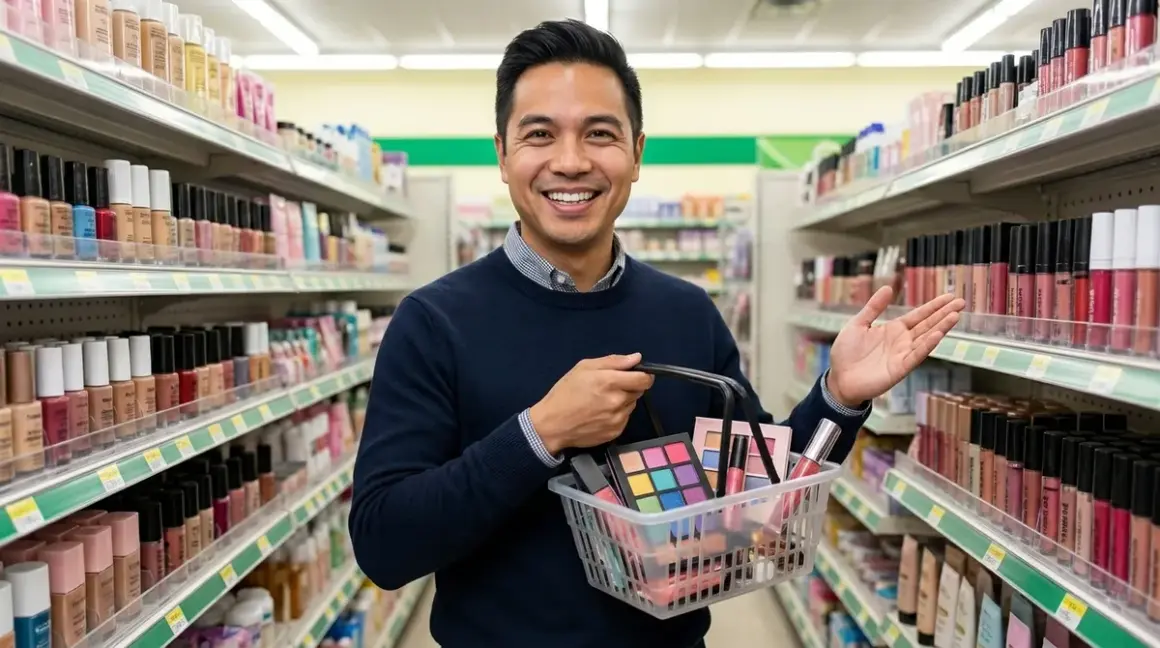

The fluorescent hum of a dollar store. Rows of bright packages promising transformation for pocket change. You might walk past assuming compromise, but pause—dollar store makeup has evolved beyond filler and false economy into a laboratory of cosmetic chemistry where contract manufacturers deploy the same actives found in prestige formulations, often from identical facilities, without the brand tax.
This is not about settling. It's about understanding that a lipstick's slip comes from its emollient ratio, not its logo.
What Is Dollar Store Makeup?
Dollar store makeup encompasses color cosmetics, skincare-makeup hybrids, and treatment products sold through value retail chains—primarily Dollar Tree, Dollar General, and Family Dollar—at price points between $1 and $5. These products originate from contract manufacturers that produce formulations for multiple tiers simultaneously, creating what industry insiders call "shadow brands": near-identical chemistry packaged under different labels at vastly different price points.
The category has undergone dramatic transformation since 2020. Stricter FDA oversight, consumer awareness around ingredient safety standards, and social media transparency have pushed dollar store brands to match or exceed luxury benchmarks in key performance metrics. You'll find 5% niacinamide serums beside foundation, hyaluronic acid-infused lip glosses with molecular weights between 50-100kDa, and eyeshadow palettes using the same mica and iron oxide pigments as prestige brands—often manufactured in the same South Korean and Italian facilities.
The essential difference lies not in formulation quality but in packaging durability, shade range breadth, and marketing spend. A $1.25 foundation may contain 15% zinc oxide for broad-spectrum protection, identical peptide complexes, and silica microspheres for soft-focus finish—but offer eight shades instead of forty, packaged in lightweight plastic rather than weighted glass.
Price-per-ounce analysis reveals the actual value. A prestige foundation at $48 for 1 oz delivers a cost of $48/oz. A dollar store equivalent at $3 for 0.6 oz calculates to $5/oz—a 90% reduction for formulations with comparable active percentages and base chemistry.
How Dollar Store Makeup Works
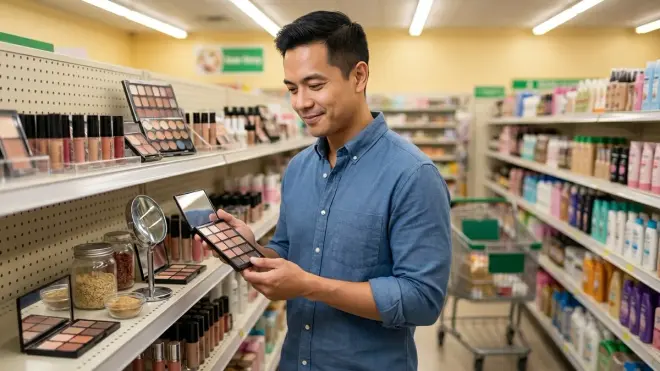
The economics rest on three pillars: contract manufacturing consolidation, minimal marketing overhead, and streamlined distribution.
Most dollar store cosmetics emerge from a handful of major contract manufacturers—predominantly in South Korea, China, and Italy—that maintain production lines for multiple price tiers. The same facility producing a $65 cushion foundation for a K-beauty prestige brand will run an adjacent line for a $3 dollar store version using identical base formulations: cyclopentasiloxane for slip, dimethicone crosspolymers for pore-blurring, and titanium dioxide/zinc oxide UV filters at comparable percentages.
The divergence occurs in what chemists call the "hero ingredients" versus "functional actives" ratio. A luxury foundation might add 2% niacinamide, 0.5% adenosine, and botanical extracts for marketing claims. The dollar store version often maintains the same niacinamide percentage but omits the adenosine and replaces botanical extracts with cost-effective alternatives like glycerin and panthenol—which deliver comparable humectant and barrier-support benefits at fractions of the cost.
Pigment quality represents the most reliable parity point. Both dollar store and luxury eyeshadows source from the same mica suppliers—primarily based in India and China—and use identical iron oxides (CI 77491, 77492, 77499) for color. The performance difference emerges in binder systems and pressing techniques. Prestige shadows use higher ratios of silicone elastomers and amino acid-coated pigments for improved adhesion and blendability. Dollar store versions rely on talc, magnesium stearate, and basic mica for slip—adequate for most applications but with slightly less payoff intensity and longer blend time.
Texture engineering follows similar patterns. Dimethicone (and its variants) creates the silky, slip-on feel in both $2 and $50 primers. The molecular weight and crosspolymer complexity determine the finish subtlety—luxury formulations deploy dimethicone/vinyl dimethicone crosspolymers for ultra-refined texture, while budget versions use straight dimethicone or dimethiconol. Both fill pores and create smooth canvas. The luxury version simply feels more refined during application and photographs with marginally better light diffusion.
Manufacturing efficiency allows dollar stores to operate on single-digit profit margins. No counter staff. No department store lease fees. No influencer seeding campaigns. Products move from factory to distribution center to shelf with minimal intermediary markup, passing savings directly to the consumer while maintaining formulation integrity on core functional ingredients.
For those exploring budget-friendly cosmetics across categories, our guide to Korean skin care on a budget demonstrates how similar contract manufacturing principles create accessible luxury in skincare.
Why Dollar Store Makeup Matters
Ingredient democratization has collapsed the barrier between aspiration and access.
When a $1.25 concealer contains 20% zinc oxide for SPF protection, 2-3% iron oxides for coverage, and cyclomethicone for lightweight feel—comparable to formulations retailing at $32—the value proposition transcends simple cost savings. It becomes a referendum on whether consumers should pay for brand narrative or chemical performance.
This matters acutely for specific demographics. Teenagers experimenting with color cosmetics can access full-spectrum shade ranges without parental guilt over $40 foundation bottles destined for six-month obsolescence. Makeup artists building professional kits can stock disposable mascaras and lip liners for client hygiene at negligible cost. Sustainable beauty advocates can trial new products without the environmental guilt of expensive half-used tubes destined for landfill.
The formulation transparency movement—driven by apps like INCI Beauty and ingredient-conscious consumers—has forced dollar store brands to clean up historically problematic formulations. You'll find paraben-free, phthalate-free, and formaldehyde-donor-free formulations across most major dollar store lines now, matching the clean beauty standards that prestige brands trumpet at premium prices.
From a cosmetic chemistry standpoint, dollar store makeup proves that performance derives from active ingredient selection and percentage—not price point. A 5% niacinamide serum performs identically whether bottled in $3 packaging or $75 frosted glass. The molecular structure doesn't recognize the container.
The category also serves as training ground for understanding formulation literacy. When you compare a $1 eyeshadow primer's ingredient list (cyclopentasiloxane, dimethicone crosspolymer, silica) against a $28 prestige version (cyclopentasiloxane, dimethicone crosspolymer, silica, plus vitamin E and botanical extracts), you learn to distinguish functional actives from marketing filler—a skill that transforms how you evaluate all beauty purchases.
Types & Variations Across Dollar Store Chains
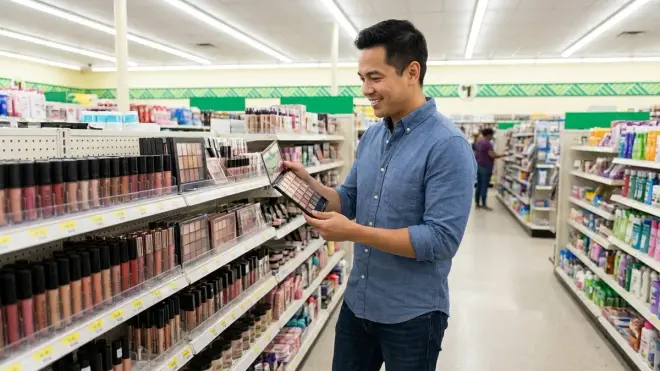
Dollar store makeup stratifies into three distinct quality tiers based on retailer positioning and manufacturing partnerships.
Dollar Tree ($1.25 fixed price point) stocks the most basic formulations, primarily through brands like LA Colors, Believe Beauty, and Broadway Colors. These products use simplified ingredient decks—talc-heavy eyeshadows, mineral oil-based lip glosses, and basic cosmetic-grade pigments. Quality control can be inconsistent (occasional batch variations in pressed powder hardness), but specific product lines rival drugstore performance. The LA Colors Color Craze nail polishes, for instance, use the same nitrocellulose film-formers and plasticizers as mid-tier brands, delivering comparable wear time and chip resistance. Texture tends toward basic: powders are dry-pressed rather than baked, cream products have simpler emulsion systems. Best for: experimentation, nail care, and disposable products where hygiene matters (mascara, lip liners).
Dollar General (variable pricing $1-5) represents the middle tier with brands like Believe Beauty, Wet n Wild closeouts, and LA Girl. These formulations show measurably improved pigment loading (15-25% in pressed powders versus 10-15% at Dollar Tree) and better binder systems. You'll find dimethicone-based primers, hyaluronic acid-infused foundations, and eyeshadow palettes with actual color payoff in 2-3 swipes. The Believe Beauty cushion foundations contain niacinamide percentages around 2-3%, comparable to Korean cushions at five times the price, manufactured in the same South Korean facilities. Texture quality approaches drugstore standards with softer powder pressing and creamier lipstick formulations using higher ratios of emollients like octyl palmitate.
Family Dollar (variable pricing $1-5) stocks similar mid-tier brands plus occasional prestige overstock and discontinued lines. The advantage here lies in shade range diversity—you'll find 12-shade foundation lines rather than the basic 6-8 at Dollar Tree, critical for achieving actual color matches. Quality mirrors Dollar General with slightly better packaging durability (screw-top containers versus snap closures that crack).
Across all three, certain product categories consistently overperform: setting powders (translucent silica-based formulas are chemically identical regardless of price), liquid eyeliners (the same acrylates copolymer film-formers create budge-proof lines), and makeup sponges (non-latex polyurethane foam performs identically to $20 alternatives when wet).
For comprehensive safety evaluation across dollar store options, our dollar store makeup safety checklist provides specific ingredient red flags and quality control standards to reference while shopping.
Frequently Asked Questions
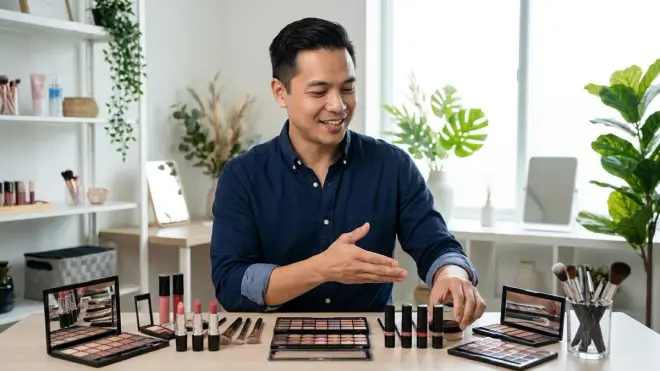
Is dollar store makeup actually safe to use on skin? Yes, when manufactured in FDA-registered facilities and free from prohibited ingredients—most major dollar store cosmetics in 2026 meet these standards. Check for FDA compliance symbols, avoid products with strong chemical odors indicating contamination, and cross-reference ingredient lists against the FDA's prohibited and restricted ingredient database. Focus on brands like LA Colors, Believe Beauty, and Wet n Wild closeouts, which maintain consistent quality control and use the same contract manufacturers as drugstore brands, ensuring comparable safety profiles despite lower price points.
How does dollar store foundation compare to luxury brands in coverage and wear time? Dollar store foundations typically deliver light-to-medium coverage (10-15% pigment loading versus 15-20% in luxury formulas) with 4-6 hour wear time compared to 8-12 hours for prestige alternatives. The core difference lies in film-forming polymer complexity—luxury foundations use advanced acrylates/dimethicone copolymers that resist oxidation and oil breakthrough longer, while dollar store versions rely on simpler dimethicone bases that require mid-day touch-ups. However, when set with translucent powder and used with primer, dollar store foundations using cyclopentasiloxane and dimethicone crosspolymer bases perform within 80% of luxury benchmarks at 95% cost savings per ounce.
Which dollar store makeup products perform closest to high-end equivalents? Setting powders, liquid eyeliners, and makeup sponges show near-identical performance because their formulations rely on commodity ingredients with minimal variation—silica microspheres, acrylates copolymers, and non-latex polyurethane foam respectively. Specific standouts include LA Colors translucent setting powder (pure silica with minimal fillers, identical chemistry to luxury versions), Broadway Colors liquid eyeliner (same film-forming agents as prestige brands), and Believe Beauty blending sponges (hydrophilic polyurethane that expands when wet, matching $20 alternatives). Eyeshadow primers using cyclopentasiloxane as the primary ingredient also rival luxury performance when compared strictly on crease-prevention and color adhesion metrics.
Do dollar store lipsticks contain the same pigments as expensive brands? Yes, both use FDA-approved color additives from the same supplier pools—primarily iron oxides (CI 77491, 77492, 77499), titanium dioxide (CI 77891), and D&C/FD&C synthetic dyes. The performance divergence occurs in the base formulation and emollient ratio: luxury lipsticks deploy higher percentages of conditioning esters like tridecyl trimellitate (15-20% versus 5-10% in budget versions) and specialty waxes like candelilla for improved texture and longevity. Dollar store lipsticks rely more heavily on castor oil, mineral oil, and basic beeswax, creating formulations that require more frequent reapplication but provide identical color payoff and comparable moisturization through glycerin and lanolin derivatives.
How can I tell if a dollar store makeup product will work before buying? Examine the ingredient list for functional actives in the first five ingredients: cyclopentasiloxane or dimethicone in primers and foundations indicates quality silicone slip, mica and iron oxides in the top three ingredients of eyeshadows signal adequate pigment loading, and hyaluronic acid or glycerin near the beginning of skincare-makeup hybrids confirms meaningful hydration benefits. Avoid products listing talc, fragrance, or alcohol as primary ingredients, which indicate filler-heavy formulations. Check manufacturing codes for recent production dates (fresh batches within 6-12 months ensure optimal texture), and reference our best Dollar Tree makeup guide for specific product recommendations with ingredient analysis and performance testing data across categories.
Summary
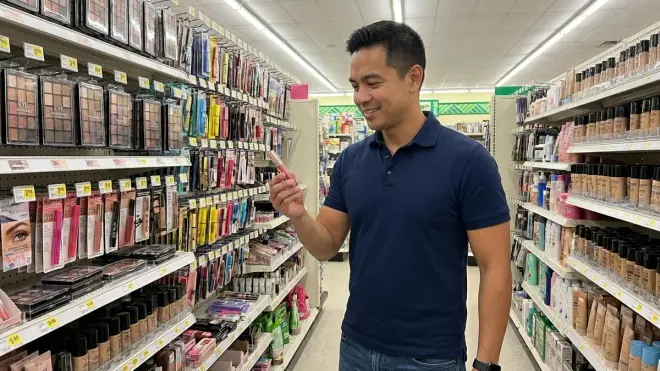
The veil lifts when you hold a $1.25 eyeshadow beside its $48 counterpart and read identical first-five ingredients: mica, titanium dioxide, iron oxides, dimethicone, magnesium stearate. The story cosmetic companies sell—that luxury formulations contain irreplaceable magic—dissolves into simple truth: performance derives from chemistry, not price.
Dollar store makeup in 2026 represents democratized access to competent color cosmetics and increasingly sophisticated skincare-makeup hybrids. Contract manufacturing consolidation means the same facilities producing prestige formulations now stock dollar store shelves with comparable active percentages, functional ingredient selection, and pigment quality—minus the brand tax, ornate packaging, and expansive shade ranges.
Understanding formulation literacy transforms how you navigate this category. You learn to identify silicone bases for slip, recognize meaningful niacinamide percentages for skin benefits, and distinguish between functional actives that deliver performance and botanical extracts that deliver marketing claims. You discover that a $3 setting powder performs identically to its $40 alternative because pure silica microspheres don't recognize the container they arrive in.
The compromise exists—in packaging durability, shade range breadth, sometimes in texture refinement and longevity—but rarely in core functional performance when you select products strategically. This is not about deprivation. It's about refusing to confuse brand narrative with molecular reality, choosing analytical precision over aspirational marketing.
Your face becomes the laboratory. The results speak without the price tag whispering status in the background.