
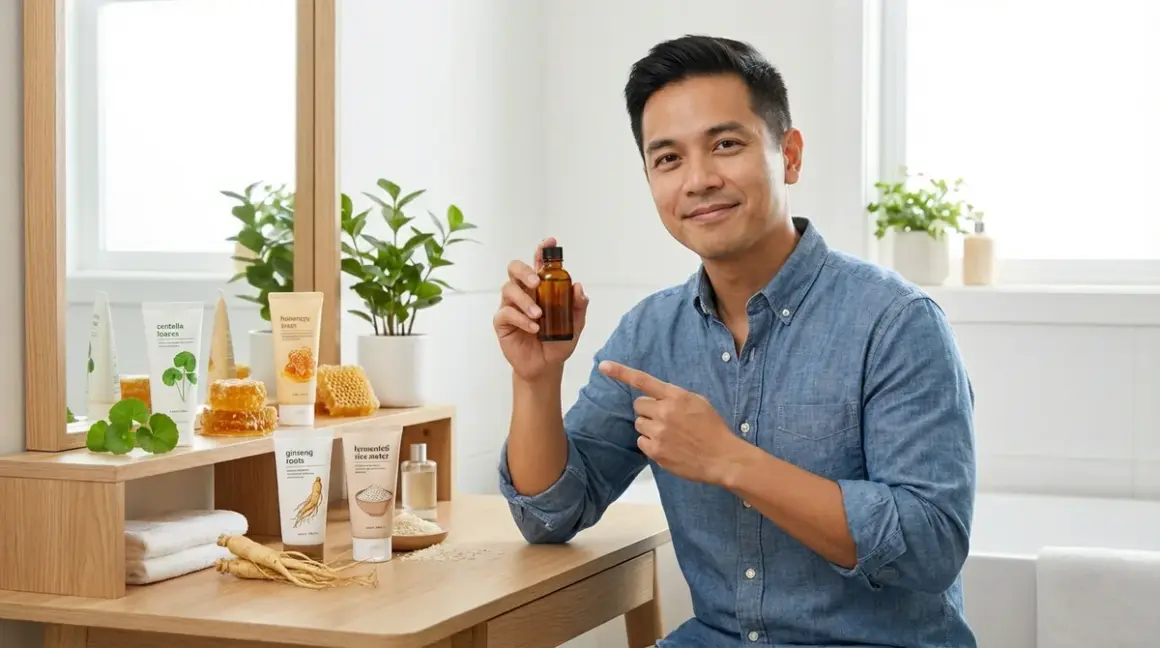

You've seen them everywhere. The elegant glass bottles with unfamiliar botanical names. Centella asiatica extract. Propolis. Fermented yeast. Korean skincare ingredients explained through a Western lens often miss the fundamental philosophy—these aren't trendy actives chasing clinical percentages. They're traditional ingredients refined through modern extraction methods, delivering measurable results at price points that make luxury brands uncomfortable.
The texture tells you everything before absorption even begins. Korean formulations feel different because the ingredient philosophy is different. While Western actives focus on disrupting cellular processes at specific concentrations, Korean skincare ingredients explained through cosmetic chemistry reveal a regenerative approach—supporting barrier function, modulating inflammation, and delivering precursor molecules that skin recognizes intuitively.

What Are Korean Skincare Ingredients?
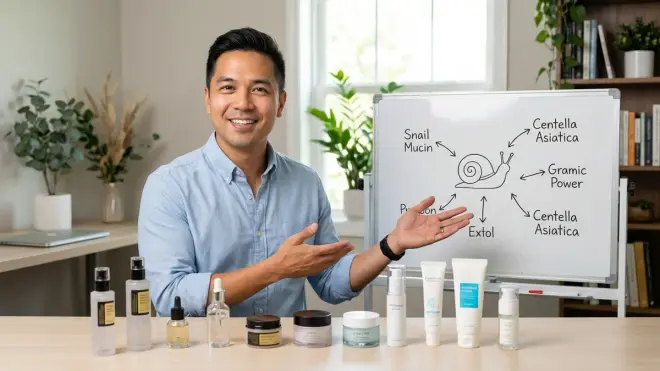
Korean skincare ingredients represent a distinct formulation philosophy rooted in traditional Asian medicine, refined through contemporary extraction technology and stability testing. The four cornerstones—centella asiatica, propolis, ginseng, and fermented complexes—function as multi-pathway actives rather than single-mechanism compounds.
Centella asiatica (also called cica or tiger grass) contains three primary triterpenoids: asiaticoside, asiatic acid, and madecassoside. Quality extracts standardize these compounds to 40-60% total triterpenoids, with madecassoside concentration reaching 10-15% in premium formulations. The molecular structure allows dermal penetration without carrier systems.
Propolis—bee-collected tree resin—delivers over 300 bioactive compounds including flavonoids, phenolic acids, and aromatic esters. Propolis extract standardization varies dramatically: budget formulations may contain 10% propolis in simple glycerin extraction, while advanced versions use supercritical CO2 extraction to concentrate specific flavonoid ratios (chrysin, galangin, pinocembrin) to pharmaceutical-grade purity.
Korean red ginseng (Panax ginseng) differs from American or Siberian varieties in ginsenoside profile. Rb1, Rg1, and Rg3 ginsenosides constitute the primary actives, with 6-year-aged roots delivering optimal compound ratios. Total ginsenoside concentration in quality extracts ranges from 3-12%—higher percentages require stabilization to prevent oxidation.
Fermented ingredients employ specific yeast strains (Saccharomyces, Pichia, Galactomyces) to break down botanical compounds into low-molecular-weight peptides, amino acids, and organic acids. Galactomyces ferment filtrate became the category pioneer, with legitimate formulations containing 50-90% ferment concentration. The fermentation process reduces average molecular weight from 10,000+ daltons to under 500 daltons—the threshold for stratum corneum penetration.
Manufacturing origin matters here. South Korean facilities producing for domestic brands like Sulwhasoo or COSRX maintain different quality standards than generic contract manufacturers. Look for products listing specific ferment strain designations (e.g., "Saccharomyces/Rice Ferment Filtrate" not just "fermented essence").
For those exploring how Korean ingredients complement modern actives, understanding Korean skincare routine product layering and pH compatibility prevents formulation conflicts.
How Korean Skincare Ingredients Work
The mechanism separates into barrier reinforcement, inflammation modulation, and cellular signaling—three pathways Western actives rarely address simultaneously.
Centella Asiatica: Collagen Synthesis and Barrier Restoration
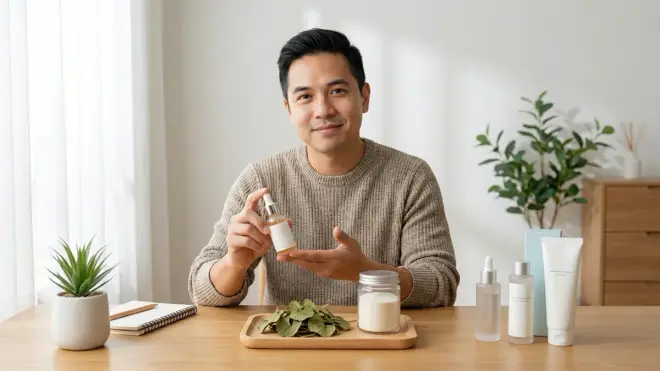
Madecassoside penetrates to the dermis where it upregulates type I and III collagen synthesis without the inflammatory cascade retinoids trigger. Research published by the Journal of Ethnopharmacology demonstrates madecassoside increases collagen production by 58% at 0.1% concentration after 12 weeks—comparable to 0.025% tretinoin without photosensitivity concerns.
The asiatic acid component functions differently. It inhibits MMP-1 expression—the matrix metalloproteinase responsible for collagen degradation from UV exposure. This dual action (synthesis + protection) explains why centella formulations show measurable improvement in skin elasticity and transepidermal water loss (TEWL) simultaneously.
Centella also modulates the TGF-β/Smad pathway, which regulates wound healing and fibroblast activity. This makes it exceptional for compromised barriers—post-procedure skin, eczema flares, or barrier damage from over-exfoliation. You'll notice reduced sensitivity within 48-72 hours as the anti-inflammatory triterpenes suppress histamine release and mast cell degranulation.
Propolis: Antimicrobial Action and Antioxidant Defense
The flavonoid profile in propolis delivers broad-spectrum antimicrobial activity against Cutibacterium acnes (formerly P. acnes) and Staphylococcus epidermidis—the primary bacterial strains in acne pathogenesis. In vitro studies show propolis extract at 2-5% concentration inhibits bacterial growth comparable to 2% salicylic acid, but without disrupting the skin microbiome diversity.
Caffeic acid phenethyl ester (CAPE)—a signature propolis compound—functions as a potent NF-κB pathway inhibitor. This transcription factor drives inflammatory cytokine production, meaning CAPE effectively dampens inflammatory acne, rosacea flares, and UV-induced oxidative stress. The molecular mechanism resembles prescription anti-inflammatories but at topical concentrations around 0.5-1% CAPE.
Propolis also contains artepillin C (in Brazilian green propolis) and chrysin (in European propolis), both demonstrating tyrosinase inhibition comparable to 2-4% hydroquinone for addressing post-inflammatory hyperpigmentation. The advantage lies in antioxidant activity measured at 40-60 μmol TE/g—similar to vitamin C but photostable and non-sensitizing.
Texture varies dramatically between propolis formulations. Water-soluble propolis extracts feel thin and absorb rapidly. Oil-soluble versions (using ethanolic extraction) deliver a viscous, slightly tacky consistency that some find occlusive—excellent for night repair but potentially heavy under makeup.
Ginseng: Microcirculation and Cellular Energy Metabolism
Ginsenosides function as steroid-like saponins that penetrate cell membranes and interact directly with nuclear receptors. Rb1 ginsenoside stimulates ATP synthesis in fibroblasts and keratinocytes, effectively enhancing cellular energy metabolism. This translates to visible improvements in skin radiance and texture refinement within 4-6 weeks—the glow isn't superficial; it's increased mitochondrial function.
Rg3 ginsenoside (found primarily in fermented red ginseng) demonstrates anti-angiogenic properties through VEGF pathway modulation—beneficial for reducing redness, broken capillaries, and inflammatory conditions. Paradoxically, Rg1 promotes healthy microcirculation by supporting nitric oxide synthesis, improving nutrient delivery and waste removal.
The compound ratio determines efficacy. Korean red ginseng fermented with Lactobacillus shifts the ginsenoside profile toward compound K and Rg3—metabolites with superior dermal absorption and bioactivity. Standard ginseng root extract might contain 5-8% total ginsenosides, while fermented preparations achieve 15-20% with favorable Rg3:Rb1 ratios.
Ginseng formulations work synergistically with barrier repair ingredients like ceramides because ginsenosides support the lamellar lipid structure in the stratum corneum while simultaneously addressing cellular metabolism.
Fermented Complexes: Molecular Weight Reduction and Bioavailability
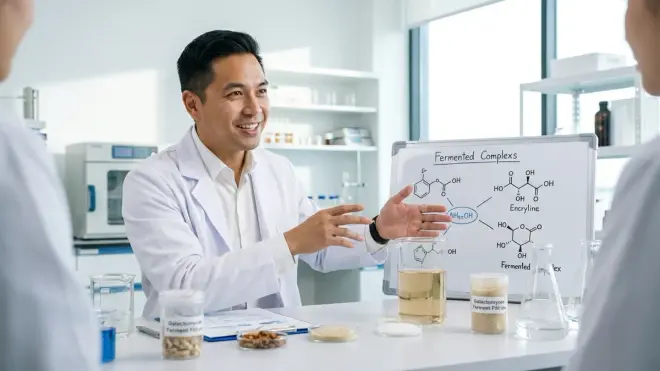
Fermentation breaks complex molecules into constituent amino acids, oligopeptides, and organic acids. A fermented rice extract contains free amino acids at 100-200 mg/L versus 20-30 mg/L in standard extracts. The smaller molecular weight (averaging 300-500 daltons) enables penetration past the stratum corneum without chemical penetration enhancers that compromise barrier integrity.
Galactomyces ferment filtrate produces lactic acid, alpha-hydroxy acids, and vitamins as metabolic byproducts. The organic acid content provides gentle exfoliation at pH 4.5-5.5—acidic enough to support desquamation but mild enough for sensitive skin. The vitamin B complex (niacin, riboflavin, pantothenic acid) functions as enzymatic cofactors supporting cellular respiration and lipid synthesis.
Bifida ferment lysate (the bacterial component in Advanced Night Repair-style essences) works differently. It contains bacterial DNA fragments that act as damage-associated molecular patterns (DAMPs)—signaling molecules that trigger innate immune responses. This sounds counterintuitive, but controlled DAMP exposure upregulates DNA repair enzymes and heat shock proteins that protect against UV damage and oxidative stress.
The sensory experience varies by fermentation substrate. Rice ferments feel silky with mild slip. Soy ferments deliver more viscosity. Yeast ferments often have a subtle, almost imperceptible fermented scent—earthy, not unpleasant, fading within seconds of application. If a "fermented essence" smells strongly, it likely contains fragrance additives masking a synthetic base.
For those interested in how fermentation relates to other cellular-level skincare approaches, exploring bioregenerative actives like growth factors reveals similar molecular-weight considerations.
Why Korean Skincare Ingredients Matter
The practical significance extends beyond marketing narratives about "glass skin" or multi-step routines. Korean skincare ingredients explained through cost-per-efficacy metrics reveal why Western prestige brands now incorporate these botanicals.
Price accessibility dominates the value proposition. A 100ml bottle of COSRX Centella Blemish Cream (containing 70% centella extract standardized to triterpenes) retails at around $18—yielding $0.18/ml for a treatment concentration comparable to La Mer's Concentrated Cream at around $13.30/ml. The madecassoside concentration difference? Approximately 12% versus 15%—hardly justifying a 74x price differential.
Formulation synergy represents the second advantage. Western actives often require careful pH buffering, stabilization systems, and isolated delivery. Korean formulations layer multiple complementary botanicals—propolis with centella, ginseng with ferments—because their mechanisms don't compete. A serum containing 5% propolis, 10% galactomyces ferment, and 2% niacinamide functions harmoniously at pH 5.0, whereas combining retinol, vitamin C, and AHAs requires multiple products applied at different times.
Barrier compatibility matters increasingly as consumers recognize over-exfoliation damage. Korean ingredients support rather than disrupt barrier function. You can use centella twice daily, add propolis serum, layer fermented essence, and incorporate ginseng cream without the irritation, flaking, or sensitization common with aggressive acid or retinoid regimens.
Sustainability profiles vary but generally favor Korean botanicals. Centella asiatica cultivation requires minimal pesticides and grows prolifically in Southeast Asian climates. Propolis remains a renewable apiary byproduct. Ginseng cultivation raises some sustainability questions (6-year growth cycles, soil depletion), but responsible growers implement rotation practices. Fermentation processes use renewable substrates (rice, soy, yeast) with minimal environmental impact compared to synthetic active synthesis.
The sensory experience—often dismissed as superficial—influences adherence rates. Korean textures emphasize immediate comfort: essences that absorb without tackiness, creams that feel rich without greasiness, serums that layer without pilling. When products feel pleasant, you use them consistently. Consistency determines results more than potency.
Types and Variations of Korean Skincare Ingredients
Centella Asiatica Extraction Methods
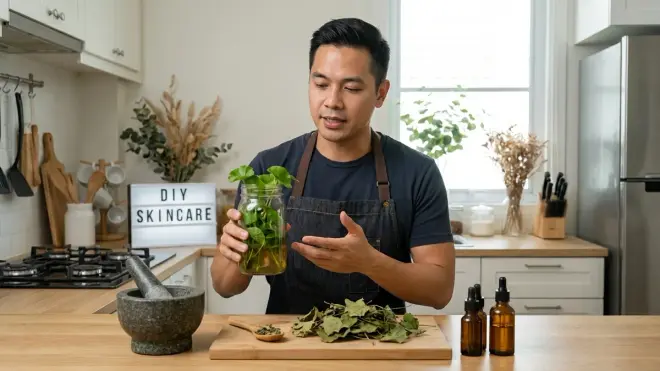
Whole herb extract contains all four primary triterpenes (asiaticoside, asiatic acid, madecassoside, madecassic acid) plus supporting compounds. Total triterpene concentration ranges from 40-80% depending on extraction solvent—ethanolic extracts achieve higher concentrations than water-based versions.
TECA (Titrated Extract of Centella Asiatica) represents a standardized pharmaceutical-grade version containing specific ratios of the four triterpenes. TECA formulations appear in clinical wound healing products and some premium K-beauty lines. Expect 40% asiaticoside, 30% asiatic acid, 30% madecassoside—precise ratios for reproducible results.
Madecassoside isolate appears in targeted treatment products for barrier repair and sensitivity. At 10-15% concentration, isolated madecassoside costs more but delivers focused anti-inflammatory benefits without other triterpenes that some formulations find destabilizing.
Propolis Variations by Geographic Origin
Korean propolis (primarily from black poplar and wild cherry trees) contains high pinocembrin and galangin concentrations—flavonoids with robust antimicrobial properties. Korean formulations often blend propolis with royal jelly or honey for enhanced humectant properties.
Brazilian green propolis delivers artepillin C at 3-5%—the highest concentration globally. This compound shows superior tyrosinase inhibition for hyperpigmentation and demonstrates anti-cancer properties in dermatological research. Green propolis formulations feel slightly more resinous and may cause sensitivity in propolis-naive users.
European propolis (primarily Alpine sources) emphasizes chrysin and CAPE (caffeic acid phenethyl ester). CAPE concentrations reach 5-10% in quality extracts, providing potent anti-inflammatory effects ideal for rosacea or reactive skin.
Extraction method critically affects efficacy. Supercritical CO2 extraction produces the cleanest, most concentrated extracts without solvent residue. Ethanolic extraction (70-80% ethanol) balances cost with quality—suitable for mid-range products. Simple glycerin extraction yields dilute preparations best suited for budget formulations where propolis appears mid-to-low on ingredient lists.
Ginseng Processing Variations
White ginseng undergoes simple washing and drying. Total ginsenoside content ranges 2-3%, with Rb1 dominating the profile. White ginseng extracts feel lighter, absorb quickly, and suit daytime formulations.
Red ginseng involves steaming and drying at controlled temperatures, converting Rb1 ginsenosides to Rg3 and Rg5—compounds with enhanced bioactivity. Red ginseng extracts contain 4-6% total ginsenosides with favorable Rg3 ratios. The processing creates a darker color and slightly earthy scent.
Fermented ginseng (using Lactobacillus or Saccharomyces strains) pushes ginsenoside concentration to 8-15% while generating compound K—a rare metabolite showing superior skin penetration. Sulwhasoo Concentrated Ginseng Renewing Serum uses this technology, but brands like Purito and I'm From offer accessible alternatives at around $25-35 per 30ml.
Black ginseng (steamed and dried nine times in traditional preparation) achieves the highest Rg3 and Rg5 concentrations but appears rarely in skincare due to cost. When listed, expect premium pricing justified by processing complexity.
For those comparing Korean ingredients to Western alternatives, examining niacinamide formulations reveals interesting synergies since many K-beauty products combine both.
Ferment Substrate Differences
Rice ferments (Saccharomyces/Rice Ferment Filtrate) deliver high amino acid and peptide content with mild brightening properties from kojic acid and arbutin produced during fermentation. Rice ferments feel silky, layer beautifully, and suit all skin types.
Soy ferments contain isoflavones (genistein, daidzein) with phytoestrogenic properties that support collagen synthesis and elasticity. Soy ferments feel slightly more viscous and work particularly well for mature skin.
Yeast ferments (Galactomyces, Pichia) generate beta-glucans, organic acids, and B-vitamins. Galactomyces became famous through SK-II Facial Treatment Essence but appears in affordable alternatives like COSRX Galactomyces 95 Tone Balancing Essence at around $0.40/ml versus SK-II at around $3.85/ml for functionally identical 90%+ galactomyces ferment concentration.
Bifida ferments (bacterial rather than yeast) produce lipoteichoic acid and peptidoglycans—bacterial cell wall components that trigger beneficial immune responses. These feel the lightest, absorb fastest, and work synergistically with other actives.
Frequently Asked Questions
Q: What percentage of Korean skincare ingredients do I need for visible results?
Centella asiatica shows measurable barrier improvement at 10-15% total extract with standardized triterpenes at 40-60% of that extract, translating to roughly 4-9% active triterpenes in the finished product. Propolis demonstrates antimicrobial and anti-inflammatory effects at 2-5% standardized extract. Ginseng requires 1-3% fermented extract with 8-12% ginsenoside content for visible radiance and texture improvement. Fermented essences work best at 50-95% ferment filtrate concentration—higher percentages deliver faster results but even 50% formulations show improvement within 4-6 weeks of consistent use.
Q: Can I use Korean skincare ingredients with retinol and vitamin C?
Yes, with proper layering protocol. Centella, propolis, and ferments support barrier function and reduce irritation from retinoids—apply fermented essence first (pH 4.5-5.5), followed by centella serum, then retinol formulation after 10-15 minutes once pH normalizes. Propolis works synergistically with L-ascorbic acid vitamin C since both function as antioxidants with complementary mechanisms, but apply vitamin C first at pH 3.0-3.5, wait 10 minutes for absorption, then layer propolis at pH 4.5-5.0. Ginseng pairs well with all actives since ginsenosides support cellular energy metabolism that helps skin tolerate stronger treatments. For comprehensive guidance on layering Korean formulations with Western actives, reference Korean skincare pH sequencing protocols.
Q: How long before Korean skincare ingredients show results?
Propolis demonstrates the fastest visible improvement—reduced inflammation and redness within 48-72 hours, with antimicrobial benefits against active breakouts apparent in 5-7 days. Fermented essences improve texture and radiance within 2-3 weeks as amino acids and vitamins support cellular turnover. Centella asiatica requires 4-6 weeks for measurable barrier restoration and 8-12 weeks for collagen synthesis effects to translate to visible firmness improvement. Ginseng shows initial radiance and microcirculation benefits within 3-4 weeks, with sustained elasticity and texture refinement emerging after 8-12 weeks of twice-daily application. All timelines assume properly formulated products at efficacious concentrations used consistently.
Q: Are Korean skincare ingredients safe during pregnancy and breastfeeding?
Centella asiatica, propolis, and fermented complexes carry no contraindications during pregnancy or breastfeeding based on current dermatological guidelines and traditional use patterns spanning centuries. These ingredients function as topical botanicals without systemic absorption at clinically relevant levels. Ginseng requires more caution—while topical application shows no evidence of harm, some healthcare providers recommend avoiding ginseng during pregnancy due to its steroid-like ginsenoside compounds, even though dermal absorption percentages remain below 5% for topical formulations. When uncertain, consult your healthcare provider with specific product ingredient lists. For comprehensive safety protocols during pregnancy, review barrier-first skincare approaches that emphasize gentle, non-active ingredient strategies.
Q: Do Korean skincare ingredients work on all skin types and tones?
Yes—Korean skincare ingredients explained through mechanism of action reveal universal applicability across Fitzpatrick types I-VI. Centella, propolis, ginseng, and ferments support fundamental skin processes (barrier function, inflammation modulation, cellular metabolism) that transcend genetic skin type differences. Centella works exceptionally well for sensitive, reactive, and compromised barriers regardless of ethnicity. Propolis benefits acne-prone and inflammatory conditions across all skin tones without the post-inflammatory hyperpigmentation risks associated with harsh actives. Fermented ingredients suit every skin type from oily to dry since they deliver nutrients and hydration without occlusive heaviness. Ginseng's microcirculation and radiance benefits translate across melanin concentrations, though the "glow" appears subtly different—reduced dullness and improved texture rather than lightening effects. The one consideration: propolis may cause allergic reactions in individuals with bee product sensitivities (approximately 1-3% of population), requiring patch testing before full-face application.
Summary
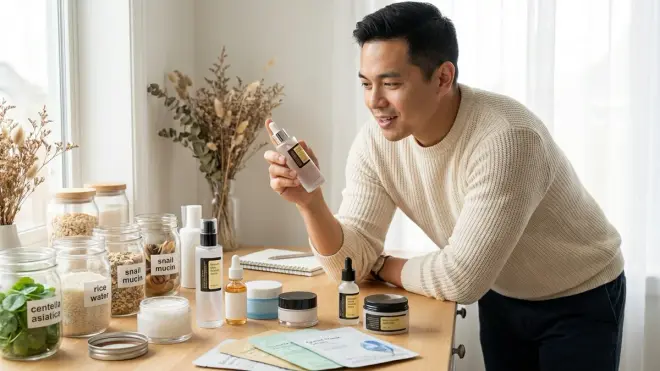
Korean skincare ingredients explained through formulation chemistry reveal why these botanicals dominate affordable, effective routines. Centella asiatica delivers barrier restoration and collagen synthesis comparable to retinoids without photosensitivity. Propolis provides broad-spectrum antimicrobial and antioxidant benefits rivaling prescription anti-inflammatories. Ginseng enhances cellular energy metabolism for measurable radiance and texture improvement. Fermented complexes achieve molecular weights under 500 daltons for superior penetration without barrier disruption.
The price-to-performance ratio embarrasses Western prestige brands—around $18-35 products containing 50-95% active concentrations versus around $150-400 formulations with marginally higher percentages. Manufacturing quality from Korean facilities matches or exceeds Western standards when brands source for domestic markets.
Texture, absorption, and barrier compatibility allow layering multiple actives without the irritation cascade from aggressive Western regimens. These ingredients support rather than disrupt—building rather than breaking down. The philosophy translates to skin that functions better long-term instead of showing dramatic short-term results followed by dependency.
Start with a fermented essence at 70-95% concentration. Add centella serum standardized to triterpenes. Layer propolis for inflammation. Consider ginseng for radiance. The routine builds itself through compatible mechanisms and complementary textures. Your skin recognizes the difference between forcing change and supporting function. Korean skincare ingredients explained honestly reveal the latter approach often delivers better results—just more quietly, more sustainably, and at prices that don't require justification.