
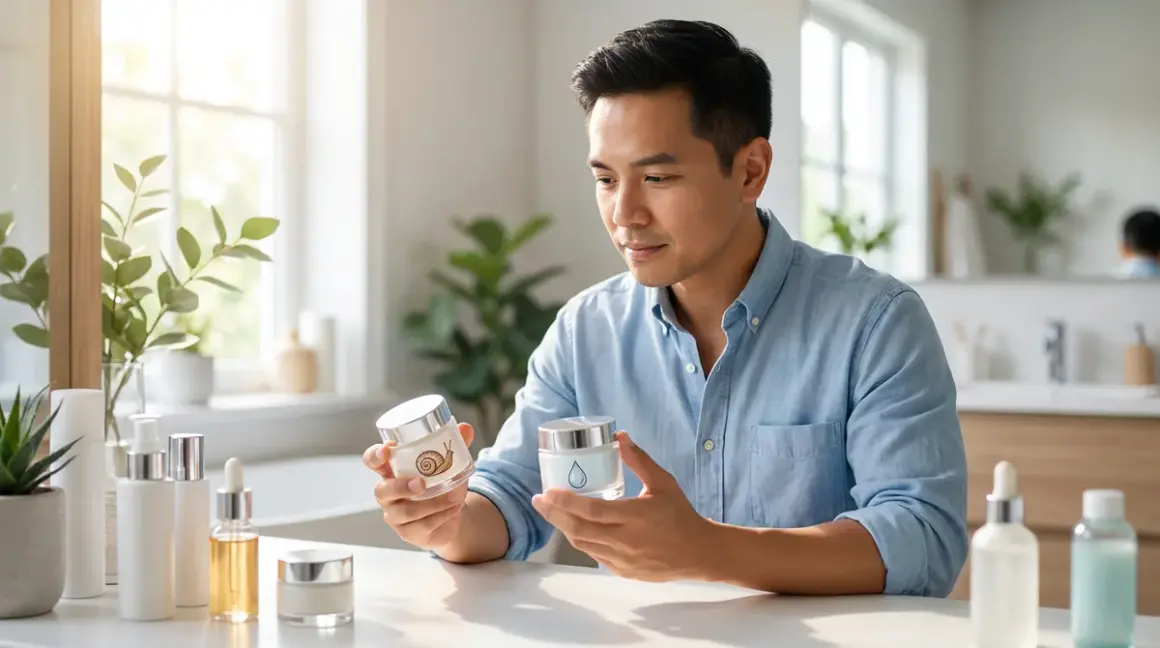

For severe dehydration and compromised barriers, snail mucin edges ahead—but the answer shifts based on your skin's damage profile and humectant sensitivity. This comparison dissects formulation chemistry, molecular behavior, and price-per-ounce economics to help you choose the hydrator that matches your skin's actual needs, not the ingredient's marketing mystique.
The texture of snail secretion filtrate feels almost sentient against parched skin. Viscous, slightly tacky, cooling without the slip of silicones. You'll notice the difference immediately if you've only ever used hyaluronic acid serums—this is denser, more occlusively nurturing. But does that sensory richness translate to superior hydration metrics? The debate between snail mucin vs hyaluronic acid centers on mechanism, molecular weight distribution, and whether your barrier needs humectancy or bioactive repair signaling.

We'll examine concentration thresholds, manufacturing origins, finish characteristics, and the practical economics of each ingredient class. You'll walk away knowing which performs better for your specific dehydration pattern.
Quick Comparison
| Criterion | Snail Mucin | Hyaluronic Acid |
|---|---|---|
| Primary Mechanism | Bioactive repair + light humectancy | Pure humectant (water binding) |
| Key Actives | Allantoin, glycoproteins, glycolic acid, elastin, antimicrobial peptides | Multiple molecular weights (5kDa–2000kDa) |
| Ideal Concentration | 90%+ filtrate in K-beauty formulas | 0.5–2% total HA across weight spectrum |
| Texture | Gel-cream, tacky-to-absorb, slight residue | Watery to gel; finish varies by molecular weight |
| Barrier Impact | Accelerates lipid synthesis and cell turnover | Surface hydration; no intrinsic repair signaling |
| Best For | Compromised barriers, acne scarring, inflammation-prone skin | Pure dehydration without barrier damage |
| Price Range (Budget) | usually around $8–18 per oz (COSRX, Mizon) | usually around $4–15 per oz (The Ordinary, The Inkey List) |
| Manufacturing Quality | South Korean filtration processes are gold standard | Molecular weight blending matters more than origin |
Mechanism: How Each Ingredient Hydrates Skin Differently
The snail mucin vs hyaluronic acid conversation begins at the cellular level. Hyaluronic Acid🛒 Amazon is a glycosaminoglycan that binds up to 1,000 times its weight in water—it's a humectant, period. Its job is to pull moisture from the environment (or deeper skin layers) and hold it in the stratum corneum. Multi-molecular-weight formulas are critical: low-weight HA (5–50kDa) penetrates to plump from within, while high-weight HA (1000kDa+) creates a breathable film that prevents transepidermal water loss.
The chemistry is elegant but inert. HA doesn't communicate with keratinocytes or fibroblasts. It doesn't signal repair cascades. It hydrates, and that's the entirety of its function.
Snail secretion filtrate—Cornu aspersum müller glycoconjugates in technical terms—is a bioactive cocktail that hydrates as a secondary benefit. The primary payload includes allantoin (stimulates keratinocyte proliferation), glycoproteins (extracellular matrix scaffolding), naturally occurring glycolic acid (gentle exfoliation and penetration enhancement), copper peptides, and antimicrobial peptides that modulate inflammation. Studies show snail mucin increases epidermal growth factor receptor expression and accelerates wound closure rates in vitro.
You'll feel this difference texturally. Hyaluronic acid serums sink in quickly or sit on the surface depending on molecular weight ratios. Snail mucin has a characteristic tackiness that dissipates slowly—that's the glycoproteins forming temporary occlusion while bioactives penetrate. The finish is more protective, almost balm-like on severely dehydrated skin.
For pure hydration without barrier compromise, hyaluronic acid is cleaner and faster. For dehydration compounded by redness, texture irregularity, or post-inflammatory hyperpigmentation, snail mucin addresses multiple pathologies simultaneously. Understanding barrier-first beauty principles helps clarify which mechanism your skin actually needs.
Concentration Standards and Formulation Quality
Most K-beauty snail mucin essences contain 90–96% snail secretion filtrate. COSRX Advanced Snail 96 Mucin Power Essence🛒 Amazon is the benchmark—96% filtrate concentration, manufactured in South Korea where Cornu aspersum farming and filtration methods are rigorously standardized. You're paying around $0.65 per milliliter. Mizon All In One Snail Repair Cream🛒 Amazon drops to 92% but includes added ceramides and peptides for barrier support, at around $0.45/mL.
The filtration process matters enormously. Korean manufacturers use low-temperature enzyme-assisted extraction to preserve glycoprotein integrity. Cheaper formulations from less regulated facilities may use heat processing that denatures bioactive proteins, leaving you with glorified glycerin and a snail-derived marketing claim.
Hyaluronic acid efficacy hinges on molecular weight distribution, not concentration. A 2% total HA serum is functionally useless if it's all high-molecular-weight polymers that sit on the surface. The Ordinary Hyaluronic Acid 2% + B5🛒 Amazon includes sodium hyaluronate (low MW), HA crosspolymer (medium MW), and sodium acetylated hyaluronate (next-gen low MW with enhanced penetration)—that's around $0.27/mL for a genuinely multi-weight formula. The Inkey List Hyaluronic Acid🛒 Amazon offers 2% HA at three molecular weights for around $0.34/mL.
Premium snail mucin products rarely justify their price premiums. Estée Lauder's snail-derived formulations cost 8–12x per ounce compared to COSRX with no meaningful concentration or purity difference. Conversely, budget hyaluronic acid from The Ordinary matches or exceeds luxury molecular weight complexity at a fraction of the cost. This is where understanding Korean skincare ingredients becomes economically empowering.
The tactile experience differs starkly. Snail mucin applies thicker, requires more patting to absorb fully, and leaves a slightly sticky protective layer for 5–10 minutes post-application. High-molecular-weight HA serums can feel similarly tacky but without the glycoprotein richness. Low-MW HA formulas absorb almost instantly with no residue—ideal for layering but offering less immediate surface protection.
Skin Type Suitability and Performance Profiles
Oily, acne-prone skin with dehydration benefits more from hyaluronic acid. The lightweight, non-occlusive hydration won't exacerbate congestion. Multi-weight formulas plump without adding richness. Snail mucin's glycoproteins can be slightly comedogenic for pore-prone individuals—not universally, but the risk exists. The allantoin content helps with post-acne marks, but if active breakouts are present, the occlusive quality may trap bacteria.
Dry, compromised, or eczema-prone skin responds dramatically to snail mucin. The bioactive repair signaling accelerates barrier restoration in ways pure humectants can't replicate. You'll see reduced flaking, faster resolution of microtears, and improved tolerance for other actives within 7–10 days. The naturally occurring glycolic acid (typically 0.1–0.3% in filtrate) provides gentle exfoliation without the irritation threshold of standalone acids.
Dehydrated oily skin exists in a strange liminal space. This is where how to repair a damaged skin barrier becomes essential reading. If your sebum production is compensatory—overproducing oil because the barrier is compromised—snail mucin addresses root pathology better than hyaluronic acid alone. If you're genuinely oily with intact barrier function and just need hydration, HA is sufficient and more elegant.
Mature skin sees compounding benefits from snail mucin beyond hydration. The copper peptides and growth factor receptor stimulation support collagen density. Small clinical trials show consistent snail mucin use (90%+ concentration) improves elasticity markers after 8–12 weeks. Hyaluronic acid plumps fine lines temporarily through hydration but offers no intrinsic anti-aging signaling. For comprehensive age-management on a budget, consider layering both—HA first for immediate plumping, then snail mucin for bioactive support. This approach is detailed in best bioregenerative serums under $50.
Sensitive skin reacts unpredictably to both. Hyaluronic acid is generally inert, but lower-quality formulations may include irritating preservatives or fragrance. Snail mucin's peptide content can occasionally trigger histamine responses in highly reactive individuals. Patch testing is non-negotiable for both ingredient classes.
Finish, Layering Compatibility, and Routine Integration
The finish difference between snail mucin vs hyaluronic acid determines morning vs. evening suitability. Hyaluronic acid serums dry down matte to semi-matte depending on molecular weight ratios, making them invisible under makeup. They layer seamlessly with vitamin C, niacinamide, peptides, and retinoids. The only real incompatibility is applying HA in extremely low-humidity environments without an occlusive layer—it can paradoxically draw water from skin rather than the atmosphere, worsening dehydration. This is basic humectant chemistry but frequently overlooked.
Snail mucin maintains a slight dewy finish even after full absorption. For dry skin seeking radiance, this is ideal. For oily skin or those layering makeup, it requires patience and possibly a mattifying step afterward. The glycoprotein residue can cause pilling if you apply too much product too quickly or layer incompatible silicone formulations on top.
Snail mucin plays well with most actives but should be applied before oils and after water-based actives. The traditional Korean skincare sequence places it after toner and essence, before emulsion and cream. Hyaluronic acid works best on damp skin—the moisture provides the water molecules for HA to bind. Mist lightly before application, then seal with an occlusive.
Both ingredients are pH-neutral and safe to combine in the same routine. A strategic pairing for severe dehydration: apply low-MW HA serum on damp skin, follow with snail mucin essence, seal with a ceramide-rich moisturizer. This triple-layer approach—humectant, bioactive, occlusive—addresses dehydration from multiple angles. The economics remain accessible: you're looking at around $20–35 for all three products from budget K-beauty or Western indie brands.
For morning routines, hyaluronic acid's invisible finish makes it more practical under SPF and makeup. Snail mucin shines at night when repair processes dominate and texture doesn't matter. Split your hydration strategy by time of day if both ingredients appeal.
Price-Per-Performance Economics and Accessibility
The most cost-effective snail mucin is COSRX Advanced Snail 96 Mucin Power Essence—100mL for around $13–15, delivering 96% filtrate concentration at around $0.13–0.15/mL. That's 3–4 months of daily use. Mizon Snail Repair Intensive Ampoule offers 80% filtrate with added peptides for around $12/30mL (around $0.40/mL)—a smaller size but enhanced bioactive profile.
For hyaluronic acid, The Ordinary's 2% + B5 formula is unbeatable value—30mL for around $8 (around $0.27/mL) with genuinely sophisticated molecular weight distribution. The Inkey List matches performance for slightly more. Neutrogena Hydro Boost Hyaluronic Acid Serum offers 1.7oz for around $18—drugstore accessibility with decent (though not disclosed) molecular weight blending, working out to around $0.36/mL.
Luxury snail mucin (Sulwhasoo, SK-II's Pitera derivatives, Estée Lauder Advanced Night Repair) rarely justifies the markup. You're paying for packaging, retail overhead, and brand equity—not superior filtration or concentration. The one exception: if a high-end formula combines snail mucin with complementary bioactives (like growth factors or exosomes) at therapeutic concentrations, the premium may be defensible. But pure snail mucin products? K-beauty budget options are chemically identical.
The best Korean moisturizers under $25 frequently incorporate both snail mucin and hyaluronic acid, offering an all-in-one approach for those unwilling to layer multiple products. This compromises concentration but improves routine simplicity.
Who Should Choose Snail Mucin
You need snail mucin if your dehydration coexists with barrier compromise, inflammation, or textural irregularity. Post-acne scarring, rosacea-prone skin, eczema flare recovery, post-procedure healing—these conditions benefit from snail mucin's bioactive repair signaling beyond simple hydration.
Choose snail mucin if you have dry to normal skin that tolerates richer textures and you want anti-aging benefits alongside hydration. The glycoproteins and peptides provide scaffolding support that pure humectants lack. You're willing to wait 5–10 minutes for full absorption and don't mind a slightly tacky intermediate stage.
Select snail mucin if you prefer nighttime-focused routines where texture and finish are irrelevant. The restorative benefits peak during sleep when cellular repair dominates. For those exploring bioregenerative skincare approaches, snail mucin serves as an accessible entry point to growth-factor-adjacent formulations without the $100+ price tag of true EGF or exosome serums.
Who Should Choose Hyaluronic Acid
Hyaluronic acid is your hydrator if you have oily or combination skin with intact barrier function. You need lightweight, layerable hydration that doesn't interfere with makeup or sunscreen. The matte-to-satin finish keeps you shine-free while plumping dehydration lines.
Choose HA if you're building a minimalist routine with few actives. It layers invisibly under retinoids, vitamin C, niacinamide, and peptides without textural conflict. You value fast absorption and no waiting time between steps.
Select hyaluronic acid if you're sensitive to proteins or have histamine reactivity. The glycosaminoglycan structure is generally inert and well-tolerated. Budget considerations also favor HA—The Ordinary's formulations deliver pharmaceutical-grade multi-weight HA for less than $10, making it the most economically accessible serious hydrator available. For broader context on layering water-binding ingredients, see how to layer Korean skincare products for pH and penetration sequencing.
Frequently Asked Questions
Can I use snail mucin and hyaluronic acid together in the same routine?
Yes, and this combination is synergistic for severe dehydration—apply hyaluronic acid on damp skin first to bind water molecules, then layer snail mucin for bioactive repair and light occlusion. The humectant function of HA complements the glycoprotein barrier support of snail mucin without interference. Use HA morning and night, reserving snail mucin for evening if the finish feels too dewy under makeup, or apply both twice daily if your skin tolerates richness well.
Does snail mucin work better than hyaluronic acid for anti-aging?
Snail mucin provides more comprehensive anti-aging benefits than hyaluronic acid because it contains growth-factor-adjacent peptides, copper compounds, and allantoin that stimulate collagen synthesis and cellular turnover, while hyaluronic acid only offers temporary plumping through hydration without intrinsic cell-signaling properties. For mature skin prioritizing firmness and elasticity alongside hydration, snail mucin delivers better long-term results, though both ingredients can coexist in an effective anti-aging regimen when properly layered.
Is snail mucin or hyaluronic acid better for acne-prone skin?
Hyaluronic acid is generally safer for active acne because it provides non-occlusive hydration that won't trap bacteria or exacerbate congestion, whereas snail mucin's glycoprotein content can be mildly comedogenic for pore-prone individuals despite its allantoin and antimicrobial peptides offering benefits for post-inflammatory hyperpigmentation. If you have dehydrated acne-prone skin with a compromised barrier from over-exfoliation or harsh treatments, snail mucin may still be appropriate in limited application, but pure hydration without barrier damage responds better to multi-weight hyaluronic acid formulations.
Bottom Line
The snail mucin vs hyaluronic acid decision ultimately maps to your skin's damage profile. Hyaluronic acid hydrates cleanly and invisibly—choose it for pure dehydration with intact barrier function, oily skin, or minimalist routines. Snail mucin repairs while hydrating—reach for it when inflammation, texture issues, or barrier compromise accompany dryness.
Neither ingredient is universally superior. Context determines winner.
For most budget-conscious routines, the sweet spot is both: The Ordinary Hyaluronic Acid 2% + B5 for morning layering under SPF (around $8), COSRX Advanced Snail 96 Mucin Power Essence for evening repair (around $13–15). That's around $21–23 for a two-pronged hydration strategy covering mechanical water-binding and bioactive restoration. You're addressing dehydration from complementary mechanisms without redundancy or wasted budget.
The texture of each becomes intuitive with use. You'll know within three days whether your skin craves the lightweight swell of hyaluronic acid or the protective embrace of snail secretion filtrate. Listen to that tactile feedback—your barrier knows what it needs better than any comparison chart ever will.