
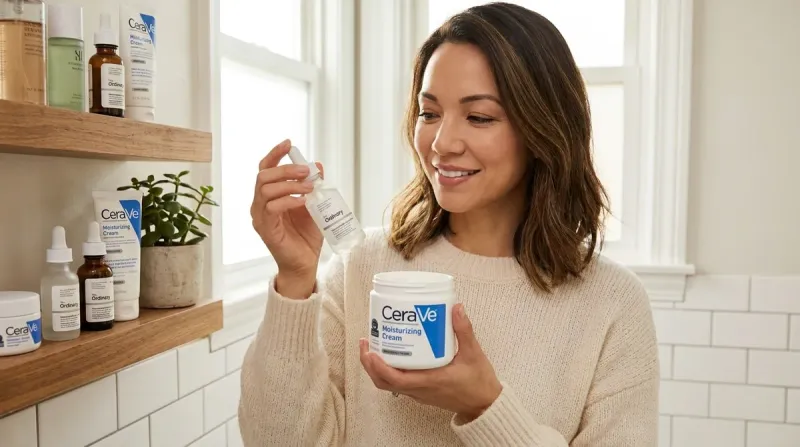

The Ordinary wins for active ingredient concentration and price-per-ounce value, but CeraVe delivers better formulations for barrier repair and saves you actual time. Here's the deal: I've tested both brands extensively while juggling court deadlines and preschool pickups, and the answer depends entirely on whether you need targeted actives or comprehensive barrier support. Let's break down the ordinary vs cerave debate with actual formulation chemistry, not marketing hype.
Quick Comparison
| Criterion | The Ordinary | CeraVe |
|---|---|---|
| Average price per ounce | $2.50–$4.00 | $1.75–$3.50 |
| Formulation complexity | Single-active focused; requires layering knowledge | Multi-active barrier formulas; beginner-friendly |
| Time investment | 3–5 products minimum; 8–12 minutes | 2–3 products; 4–6 minutes |
| Active concentrations | Clearly stated (10% niacinamide, 1% retinol, 30% AHA) | Proprietary but effective (ceramides 1, 3, 6-II; 4% niacinamide) |
| Barrier support | Minimal unless you buy multiple products | Built into every moisturizer via MVE technology |
| Best for | Skincare enthusiasts who understand pH and layering | Time-strapped professionals needing reliable basics |
Why Formulation Philosophy Matters More Than Price
Let's be real: the ordinary vs cerave comparison isn't just about which costs less. It's about formulation strategy.
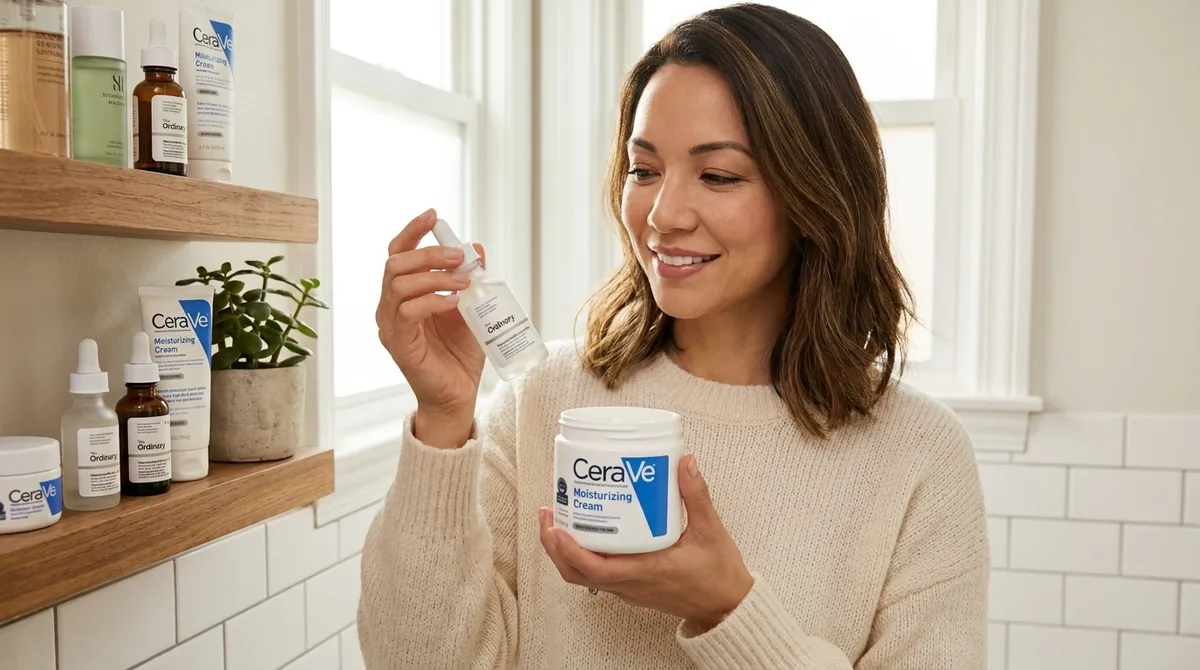
The Ordinary operates on a single-active model—you're buying The Ordinary Niacinamide 10% + Zinc 1%🛒 Amazon or their 100% Plant-Derived Squalane as isolated ingredients you layer yourself. This means you control concentrations and avoid filler ingredients, but you need to understand cosmetic chemistry. I'm talking pH conflicts (don't layer their 23% Vitamin C with retinoids unless you want irritation), penetration enhancers, and proper wait times between products.
CeraVe uses a comprehensive barrier-first approach. Their CeraVe Moisturizing Cream🛒 Amazon contains ceramides 1, 3, and 6-II at a 3:1:1 ratio (the same ratio found in healthy skin), plus cholesterol and fatty acids to support the lipid matrix. They developed MVE (MultiVesicular Emulsion) technology—basically time-released moisturization that continues working for 24 hours. One application at 6 AM still delivers hydration when you're doing bedtime stories at 8 PM.
The time difference is substantial. The Ordinary requires understanding which acids work with which peptides, whether copper peptides conflict with vitamin C (they do), and how to buffer retinol for sensitive skin. I spent three weeks figuring out the right layering order after my second pregnancy left me with melasma and a compromised barrier. CeraVe's AM Facial Moisturizing Lotion SPF 30 gave me ceramides, niacinamide, hyaluronic acid, and sun protection in one 45-second step.
Manufacturing note: The Ordinary is made in Canada with pharmaceutical-grade standards. CeraVe is manufactured in the U.S. and was developed with dermatologists (it's now owned by L'Oréal but maintains its original formulation team). Both have legitimate quality control, which is why they punch above their price point.
Active Ingredient Transparency and Concentration
Here's where The Ordinary demolishes almost every competitor, luxury or budget.
Their concentration transparency is unmatched. You know exactly what you're getting: 0.2%, 0.5%, or 1% retinol in squalane. 10% lactic acid at pH 3.8. 30% AHA + 2% BHA peeling solution (which I use every Sunday night after the kids are asleep—it's too intense for rushed mornings). When you're comparing formulations, this specificity matters. Most brands hide behind "proprietary concentrations" or bury actives so far down the ingredient list they're barely present.
CeraVe doesn't publish exact percentages for most actives, but independent testing and patent filings suggest their moisturizers contain approximately 4% niacinamide and their ceramide complex represents about 3% of the total formulation. That's clinically effective—studies show niacinamide works at 2–5% for hyperpigmentation and barrier repair. Their CeraVe Resurfacing Retinol Serum🛒 Amazon contains encapsulated retinol (estimated 0.3% based on formulation position) plus licorice root extract and niacinamide to minimize irritation.
The difference in philosophy: The Ordinary gives you maximum control with single-purpose products. Want 23% pure L-ascorbic acid? They've got it for around $6 per ounce. CeraVe gives you maximum compatibility with synergistic formulations that won't cause conflicts when you're applying them at 5:45 AM with one eye still closed.
I use both. The Ordinary's Alpha Arbutin 2% + HA for stubborn melasma spots (takes 90 seconds, three times weekly). CeraVe's Moisturizing Cream for everything else (takes 30 seconds, twice daily). The key is knowing when you need targeted intervention versus comprehensive support.
For reference on how different actives work together, check out understanding active ingredient concentrations—it'll save you from the vitamin C and retinol disaster I created during my first trimester exhaustion fog.
Barrier Repair and Long-Term Skin Health
This is where CeraVe objectively wins the ordinary vs cerave battle for most people.
Skin barrier function determines how your skin responds to everything—pollution during your commute, office air conditioning, the harsh cleanser you grabbed at Target because you ran out of your usual. A compromised barrier leads to dehydration, sensitivity, increased transepidermal water loss (TEWL), and that tight, uncomfortable feeling you get after washing your face.
CeraVe's entire product line is built around the ceramide-dominant barrier repair model. Every moisturizer contains their signature ceramide complex: ceramide 1 (provides water-holding capacity), ceramide 3 (rebuilds lipid structure), and ceramide 6-II (promotes cell turnover and exfoliation). This isn't marketing—the International Journal of Cosmetic Science has published multiple studies showing ceramide-dominant moisturizers reduce TEWL by 20–30% within two weeks.
The Ordinary has exactly two products focused on barrier repair: their Natural Moisturizing Factors + HA (a decent but basic humectant blend) and B Oil (squalane-dominant but lacking ceramides). To replicate CeraVe's barrier support with The Ordinary, you'd need to layer squalane, their amino acids + B5, and probably add a separate ceramide product from another brand. That's three products, three application steps, and around $20–25 total versus one $12 CeraVe tub.
I learned this the hard way after aggressively using The Ordinary's 30% AHA peel weekly without adequate barrier support. My skin became so reactive I couldn't wear makeup for depositions—everything stung. I rebuilt my barrier in seven days using CeraVe's Hydrating Facial Cleanser and Moisturizing Cream twice daily. The ceramide-heavy formulation worked faster than trying to self-formulate with individual actives.
For a deep dive into barrier science, read how to repair a damaged skin barrier in 7 days—it's the protocol I used and now recommend to every attorney in my firm who complains about dry, irritated skin.
Texture, Finish, and Real-World Wearability
Let's talk about how these products actually feel when you're running late for a 7:30 AM client meeting.
The Ordinary's textures are hit-or-miss. Their squalane products absorb beautifully—lightweight, non-greasy, perfect under makeup. Their Buffet peptide serum has a slightly sticky texture that requires a 60-second wait time before moisturizer (I time it while making coffee). Their high-concentration vitamin C suspensions are gritty and require manual emulsification. I'm not going to lie to you: their 100% L-Ascorbic Acid Powder requires mixing with another serum, which is an extra step I skip 80% of the time because I don't have the bandwidth.
The silicone-based formulations (like Marine Hyaluronics) create a smooth primer-like finish that works well under foundation, but they can pill if you layer too many water-based products first. You need to know your product chemistry—silicones don't play nice with certain humectants.
CeraVe's textures are optimized for speed. The Moisturizing Cream is thick but absorbs within 60 seconds—no greasy residue, no white cast, no pilling under makeup. The AM Facial Moisturizing Lotion SPF 30 has a lightweight lotion texture that works as moisturizer, primer, and sunscreen in one application. Does it have the elegant, weightless finish of a $60 Japanese sunscreen? No. Does it protect your skin while you're doing daycare drop-off in your car? Absolutely.
CeraVe's cleansers have that slightly creamy, non-foaming texture that rinses clean without stripping. The Hydrating Facial Cleanser leaves a faint humectant film—some people love it (it's extra hydration), some hate it (it feels like residue). I fall in the "love it" camp because it prevents the tight, dry feeling I used to get with foaming cleansers.
Skin type considerations: The Ordinary works for all skin types if you select correctly. Their niacinamide serum is too heavy for some oily skin types but perfect for normal-to-dry. CeraVe's Moisturizing Cream is too rich for hot, humid climates or oily skin in summer—switch to their PM Facial Moisturizing Lotion instead (same ceramides, lighter texture).
If you want more texture analysis for different skin types, check out how to choose barrier-repair ingredients for your skin type.
Cost Analysis and Value Metrics That Actually Matter
When you're billing by the hour, skincare cost-per-use matters more than shelf price.
The Ordinary's price-per-ounce breakdown:
- Niacinamide 10% + Zinc 1%: 1 oz for around $6 = $6/oz (lasts 2–3 months with daily use)
- 100% Plant-Derived Squalane: 1 oz for around $8 = $8/oz (lasts 3–4 months)
- Alpha Arbutin 2% + HA: 1 oz for around $9 = $9/oz (lasts 2 months with targeted use)
- Natural Moisturizing Factors + HA: 3.4 oz for around $8 = $2.35/oz (lasts 1.5 months)
CeraVe's price-per-ounce breakdown:
- Moisturizing Cream: 19 oz tub for around $20 = $1.05/oz (lasts 4–6 months for face/neck/hands)
- PM Facial Moisturizing Lotion: 3 oz for around $12 = $4/oz (lasts 2–3 months)
- Hydrating Facial Cleanser: 12 oz for around $15 = $1.25/oz (lasts 3 months)
CeraVe wins on pure price-per-ounce for moisturizers. The Ordinary wins for targeted treatments. But here's the real value calculation: cost per complete routine.
Minimal effective routine with The Ordinary (assuming normal-to-dry skin, basic anti-aging goals):
- Cleanser (from another brand—they don't make one): ~$10
- Niacinamide 10% + Zinc 1%: ~$6
- Buffet peptide serum: ~$17
- Natural Moisturizing Factors + HA: ~$8
- 100% Plant-Derived Squalane: ~$8
- Total: ~$49 | Time: 8–10 minutes twice daily
Minimal effective routine with CeraVe:
- Hydrating Facial Cleanser: ~$15
- PM Facial Moisturizing Lotion: ~$12
- AM Facial Moisturizing Lotion SPF 30: ~$13
- Total: ~$40 | Time: 4–6 minutes twice daily
The time savings compounds. Four minutes saved twice daily = 56 minutes weekly = 48 hours annually. That's two full days of your life back.
For budget-conscious routine building with either brand, see how to build a complete skincare routine on a budget.
Who Should Choose The Ordinary
You're the right fit for The Ordinary if you:
Want maximum customization. You understand the difference between water-soluble and oil-soluble actives. You know that direct acids (their Lactic Acid 10% + HA) should be applied to bare skin after cleansing, while buffered retinoids can go over moisturizer. You're comfortable reading cosmetic chemistry forums and adjusting your routine based on how your skin responds.
Have specific treatment goals. Stubborn hyperpigmentation that needs targeted alpha arbutin. Deep wrinkles that require 1% retinol in squalane. Texture issues that respond to 30% AHA peels. The Ordinary's single-active approach lets you address precise concerns with clinical concentrations.
Enjoy the formulation process. I'm serious—some people find it satisfying to layer multiple products and track what's working. If you're the type who keeps a skincare spreadsheet (no judgment, I did this for six months during my melasma treatment), The Ordinary gives you that granular control.
Have time for trial and error. Figuring out the right combination takes testing. I went through four different vitamin C formulations before finding one that didn't irritate my skin. Budget around $50–75 for your initial testing phase.
Who Should Choose CeraVe
You're the right fit for CeraVe if you:
Need reliable basics that just work. You don't want to research pH levels or peptide conflicts. You want to wash your face, apply moisturizer, and move on with your day. CeraVe's formulations are idiot-proof (I say this with love—I've applied their moisturizing cream while literally half-asleep at 11 PM after emergency court filings).
Have sensitive or compromised skin. Post-procedure, post-pregnancy, post-anything that left your skin angry and reactive. The ceramide-dominant formulations rebuild barrier function faster than anything I've tested under $30. I used CeraVe exclusively for three months after a botched chemical peel at a medspa (never again).
Value time over customization. Four to six minutes for your complete routine, including sunscreen. The AM Facial Moisturizing Lotion SPF 30 replaced three separate products in my morning routine. That's three fewer decisions before coffee.
Want body care included. The 19 oz Moisturizing Cream tub works for face, neck, hands, and any dry patches on your body. I keep one at my desk for hand repair after excessive washing during cold season. The Ordinary doesn't offer this kind of multipurpose value.
For more time-efficient routine strategies, see how to look put together without spending a lot.
Frequently Asked Questions
Can you use The Ordinary and CeraVe together in the same routine?
Absolutely—this is my current strategy and I recommend it to most time-strapped professionals. Use CeraVe as your baseline barrier-support system (cleanser and moisturizer), then add The Ordinary's targeted treatments for specific concerns. For example: CeraVe Hydrating Facial Cleanser, The Ordinary Alpha Arbutin 2% + HA for melasma, CeraVe PM Facial Moisturizing Lotion, and The Ordinary 100% Plant-Derived Squalane as a final occlusive layer. You get CeraVe's ceramide support plus The Ordinary's high-concentration actives without the formulation complexity of building everything from scratch.
Which brand is better for anti-aging if you're over 40?
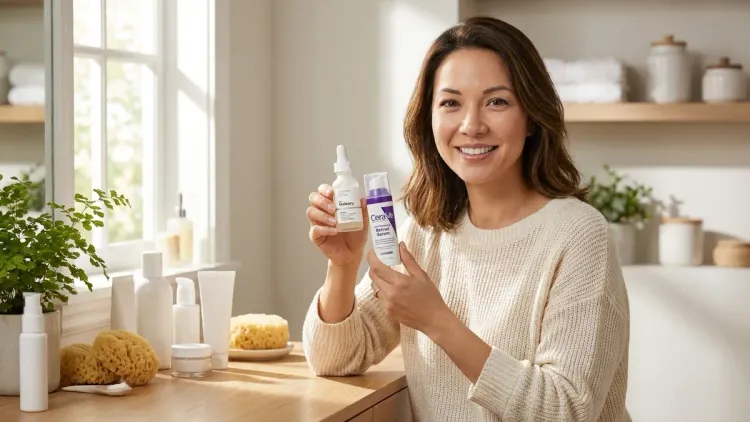
CeraVe edges out The Ordinary for most people over 40 because barrier function decline accelerates with age, and ceramide-dominant formulations address this directly. The Ordinary's retinol products (0.2%, 0.5%, 1% in squalane) deliver higher concentrations than CeraVe's Resurfacing Retinol Serum, but they lack the comprehensive barrier support that prevents the irritation and dryness many mature skin types experience with retinoids. The smartest approach: CeraVe's Skin Renewing Night Cream (contains peptides, ceramides, and encapsulated retinol) as your base, then add The Ordinary's Matrixyl 10% + HA for additional peptide support if you want extra anti-aging firepower.
Do dermatologists actually recommend these budget brands over luxury options?
Yes, extensively—CeraVe more than The Ordinary, but both have dermatologist support. CeraVe was developed with dermatologists and is recommended by the National Eczema Association for barrier-impaired skin conditions. The Ordinary has gained dermatologist recognition for transparent active concentrations, though some dermatologists caution that the single-active model requires consumer education to avoid conflicts. Here's what my dermatologist told me directly: "A $15 CeraVe moisturizer with ceramides will outperform a $200 luxury cream with 'proprietary complexes' because we know exactly what's rebuilding your barrier." The ingredient quality and concentrations matter infinitely more than the brand prestige or packaging.
Bottom Line: Choose Based on Your Bandwidth, Not Brand Loyalty
The ordinary vs cerave debate isn't really about which brand is objectively superior—it's about matching product philosophy to your actual life.
Choose The Ordinary when you need specific active concentrations, enjoy customization, and have the time to learn proper layering. It's the most cost-effective way to access clinical-strength ingredients like 1% retinol, 10% lactic acid, or 23% vitamin C. Budget around $50–75 for a complete routine and expect 8–12 minutes twice daily.
Choose CeraVe when you need comprehensive barrier support, want beginner-friendly formulations, and value time efficiency. It's the fastest path to healthy, functional skin that doesn't react to every environmental stressor. Budget around $40 for a complete routine and expect 4–6 minutes twice daily.
I keep both in my bathroom. CeraVe handles my daily barrier maintenance while I'm juggling depositions and preschool chaos. The Ordinary addresses my melasma and texture concerns when I have the mental bandwidth for targeted treatments. Neither brand requires you to choose sides or commit exclusively.
Your skin doesn't care about brand loyalty. It cares about ceramides, appropriate active concentrations, and formulations that support barrier function while addressing your specific concerns. Both brands deliver that at price points that won't require justification to your accountant during tax season.