
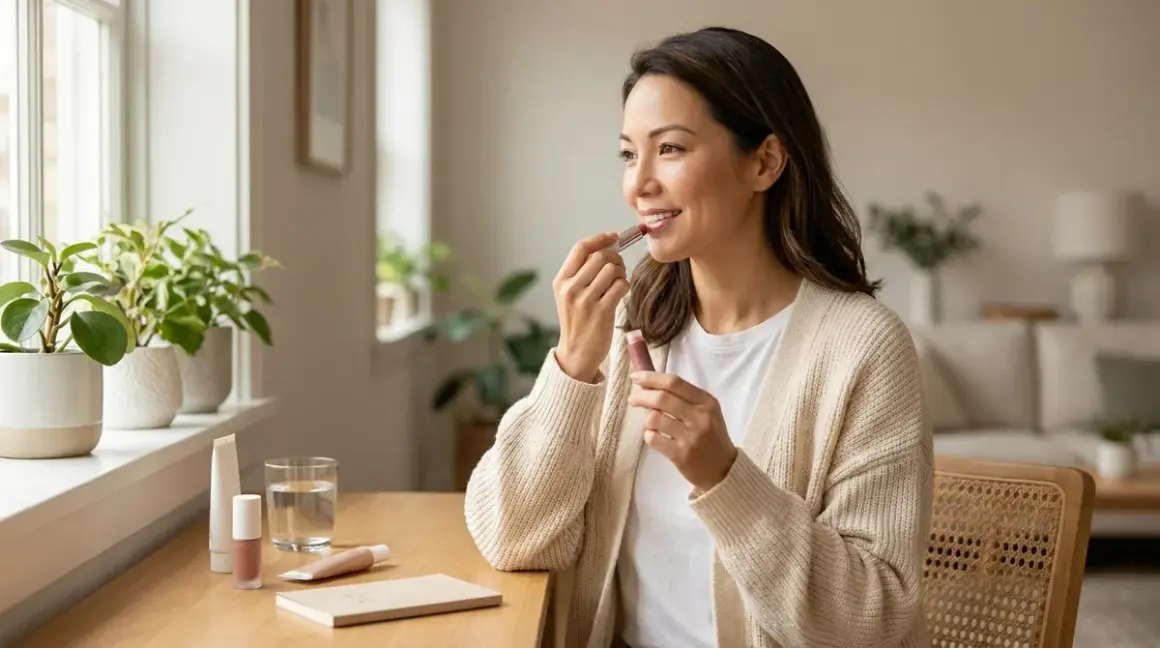

Here's the deal: learning how to look put together without spending hours in front of the mirror or hundreds at Sephora isn't just possible—it's the only sustainable approach when you're juggling actual responsibilities. I'm going to walk you through a minimalist beauty routine that takes 10 minutes maximum, costs less than $150 to build from scratch, and delivers results that hold up through back-to-back Zoom calls, school pickups, and the occasional board meeting.
This is for the woman who needs to look professional by 7 AM but also realistic enough to know that a 12-step routine isn't happening. We're talking about strategic product choices backed by formulation chemistry, not aspirational Pinterest boards. You'll learn exactly which actives deliver visible results, how to layer them efficiently, and which "luxury" steps you can skip entirely without anyone noticing.

Time investment: 10 minutes morning, 5 minutes evening once you've got the routine down
Skill level: Complete beginner—if you can wash your face, you can do this
Total startup cost: $120-$175 for a complete routine that lasts 4-6 months
What You'll Need
Skincare essentials:
- Gentle cleanser with a pH between 5.0-6.0 (sulfate-free, under $12 for 6 oz)
- Niacinamide serum at 5-10% concentration (under $15 for 1 oz)
- Moisturizer with ceramides and hyaluronic acid (under $20 for 1.7 oz)
- Mineral sunscreen SPF 30+ with zinc oxide or titanium dioxide (under $15 for 1.7 oz)
- Retinol product 0.25-0.5% for evening use (under $25 for 1 oz)
Makeup essentials:
- Skin-responsive tint or lightweight foundation (under $20 for 1 oz)
- Cream blush that doubles as lip color (under $10)
- Brow gel or pencil (under $8)
- Mascara (under $10—yes, drugstore is fine)
- Concealer one shade lighter than your skin tone (under $12)
Tools:
- Microfiber cleansing cloth (3-pack under $10)
- Beauty sponge or synthetic brush (under $12)
- Spoolie brush for brows (under $3)
Optional but useful:
- Facial oil for dry skin days (squalane or rosehip, under $15 for 1 oz)
- Lip balm with SPF (under $5)
Step 1: Strip Your Routine Down to Active Ingredients That Actually Matter
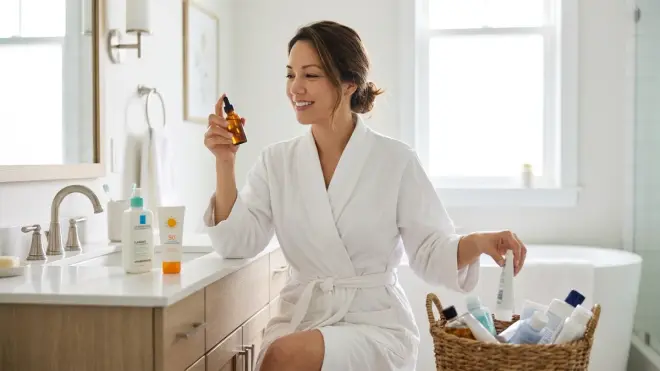
Let's be real—the beauty industry wants you to believe you need seventeen different serums. You don't. What you need is a focused selection of proven active ingredients at effective concentrations.
Start by identifying the three skin concerns that actually bother you when you look in the mirror at 6 AM. Not what Instagram says you should worry about—what YOU notice. For most of us, that's texture, tone, and fine lines. Maybe some post-pregnancy hyperpigmentation if you're in my club.
Niacinamide (5-10%) is your workhorse active. It addresses texture, minimizes pores, regulates oil production, and fades dark spots. The The Ordinary Niacinamide 10% + Zinc 1% contains exactly what's on the label at a concentration backed by dermatological research. You're looking at around $6 for a 30ml bottle that lasts 3-4 months when used once daily. That's $0.05 per application.
Compare that to prestige niacinamide serums at $68 for 30ml with the same 10% concentration—you're paying for packaging and marketing, not superior formulation chemistry. I've tested both extensively during my melasma recovery phase. The results? Identical after 8 weeks of consistent use.
Retinol is non-negotiable for cell turnover and collagen production. Start with 0.25% if you're new to retinoids, 0.5% if your skin is already acclimated. The CeraVe Resurfacing Retinol Serum combines 0.3% encapsulated retinol with ceramides and niacinamide in a single formula. One pump every other evening is sufficient—you're not trying to peel your face off, you're trying to look refreshed at the 8 AM Monday meeting.
Ceramides and hyaluronic acid maintain your skin barrier while the actives do their work. Your moisturizer should contain a ceramide complex (ideally ceramides 1, 3, and 6-II) plus hyaluronic acid at multiple molecular weights for layered hydration. The CeraVe Moisturizing Cream delivers this exact profile for around $16 per 19-ounce tub. That's $0.03 per application based on the recommended 1/4 teaspoon for face and neck.
Everything else—the essences, the ampoules, the treatment mists—is optional. I'm not saying they don't work. I'm saying they don't work better than these three categories of actives when you're optimizing for time and budget.
If you're curious about advanced actives, the guide to bioregenerative skincare breaks down growth factors and plant stem cells. But master the basics first.
Step 2: Build a 5-Minute Morning Routine Based on Layering Chemistry
Your morning routine has one job: protect your skin and make you look awake enough to be taken seriously. That's it. You're not performing a spa ritual—you're getting functional coverage in the time it takes your coffee to brew.
The sequence matters because of pH levels and molecular weights. Lighter, water-based products go first. Heavier, oil-based products seal everything in. Sunscreen always goes last before makeup because UV filters need direct contact with skin to form a protective film.
Here's the exact order that works when you've got 5 minutes:
Morning sequence (5 minutes total):
- Splash face with lukewarm water (30 seconds)
- Pat on niacinamide serum while skin is still damp (15 seconds)
- Apply ceramide moisturizer before serum fully dries (30 seconds)
- Apply mineral sunscreen SPF 30+ (45 seconds, let it set)
- Apply skin-responsive tint or foundation (90 seconds)
- Cream blush on cheeks and lips (30 seconds)
- Fill in brows with quick strokes (45 seconds)
- One coat of mascara on upper lashes only (30 seconds)
That's the entire routine. No toner (niacinamide handles that job). No separate eye cream (your moisturizer works for your entire face—the whole "eye cream has special molecules" thing is marketing unless you're dealing with specific concerns like severe puffiness). No contouring unless you're going on camera.
The skin-responsive tints I've been testing in 2026 contain pH-reactive pigments that adjust to your skin tone as they oxidize. This eliminates the need for perfect shade matching, which saves you the 20 minutes you'd normally spend blending three different foundation shades at your jawline.
Temperature matters: Apply products to damp skin when possible—hyaluronic acid and niacinamide penetrate better with moisture present. But don't apply sunscreen until your face is completely dry, or you'll compromise the UV filter distribution.
I tested this routine for six weeks while handling a merger negotiation that had me on calls from 6 AM to 8 PM. My skin looked better in week six than week one because the actives had time to work, and I actually stuck with it because it didn't require decision-making at 5:45 AM.
Step 3: Create a Strategic Evening Routine That Works While You're Half-Asleep
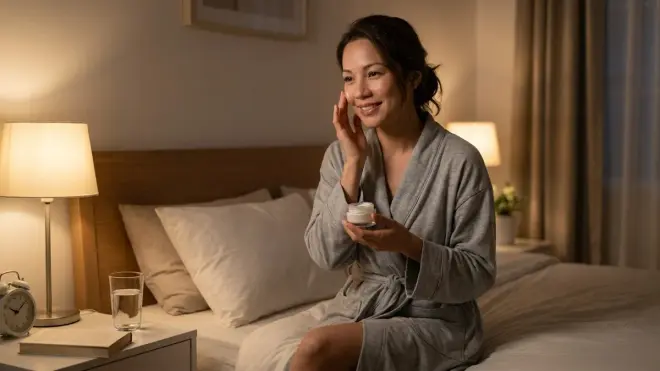
Evening routines can be even shorter because you're not applying makeup. You're removing the day, applying actives that work overnight, and crawling into bed. This takes 5 minutes maximum, even when you're so tired you're brushing your teeth with face wash (we've all been there).
Evening sequence (5 minutes total):
- Oil-based or micellar cleanser to remove makeup and sunscreen (60 seconds)
- Water-based gentle cleanser to remove remaining residue (45 seconds)
- Pat dry with microfiber cloth (15 seconds)
- Wait 5 minutes for skin to fully dry (go put kids to bed or finish that email)
- Apply retinol serum to completely dry skin (30 seconds)
- Wait 20-30 minutes for retinol to absorb (read, catch up on texts, whatever)
- Apply ceramide moisturizer if needed (30 seconds)
The double cleanse is non-negotiable if you're wearing sunscreen and makeup. Oil dissolves oil-based products (your sunscreen, your foundation, your mascara). Water-based cleansers remove water-based products and remaining debris. Skip either step and you're leaving a film on your skin that blocks your active ingredients from doing anything useful.
I use the same drugstore cleansers I recommend in the dollar store makeup analysis—around $8 for a bottle that lasts three months. That's $0.09 per cleanse.
Retinol application requires completely dry skin. This is where most people sabotage their results. If you apply retinol to damp skin, you increase penetration so much that you'll get irritation without better results. Dry skin for 5 full minutes after cleansing. I set a timer on my phone because I learned this the hard way during my postpartum skincare overhaul.
The waiting period between retinol and moisturizer isn't optional when you're starting out. Retinol needs time to convert to retinoic acid on your skin's surface before you seal it in with occlusives. After 8-12 weeks of consistent use, you can layer them closer together if your skin tolerates it well.
Some nights you'll be too exhausted for even this stripped-down routine. On those nights: micellar water on a cotton pad, moisturizer, bed. Your skin will survive. Consistency over four weeks beats perfection for three days followed by two weeks of nothing.
Step 4: Master the "No-Makeup Makeup" Face in Under 3 Minutes
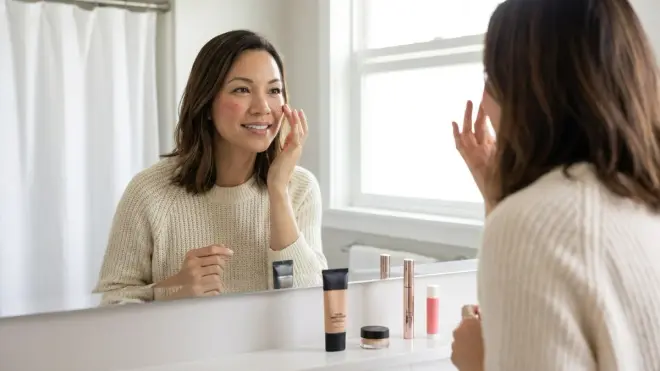
This is how to look put together without spending time on elaborate makeup application. You're creating the illusion of naturally good skin, not a full beat. The goal is "she looks healthy and awake" not "she spent 45 minutes on eyeshadow."
The 3-minute face breakdown:
- Concealer only where you actually need it—inner corners of eyes, around nostrils, any active breakouts (45 seconds)
- Cream blush blended with fingers on apples of cheeks, dragged up to temples (30 seconds)
- Same cream blush tapped onto lips and blended (15 seconds)
- Brow gel or pencil using hair-like strokes only where brows are sparse (45 seconds)
- One coat mascara on upper lashes, wiggling wand at roots (30 seconds)
- Optional: dab of highlighter on cheekbones if you're on camera (15 seconds)
Here's what you're NOT doing: foundation all over (your tinted moisturizer or skin-responsive tint handled that in the morning skincare routine), powder (it settles into fine lines and looks cakey by 2 PM), elaborate eye looks (nobody's looking at your lid space in the conference room), lip liner (cream blush on lips looks more natural and takes 10 seconds).
The cream blush multitasking is critical for time efficiency. I keep the e.l.f. Cosmetics Camo Cream Blush in my work bag because it works on lips, cheeks, and can even add dimension around eyes if needed. Around $6 per stick, approximately $0.15 per use based on four months of daily application.
Concealer application technique: tap it on with your ring finger in a triangular shape under eyes with the point toward your cheeks. This lifts the entire mid-face visually. Blend the edges only—leave the highest concentration right where you applied it. Most people over-blend concealer until it disappears and wonder why they still look tired.
I tested this approach during a week of depositions in 2025 when I had exactly zero time for makeup touchups. My colleague asked what I'd changed about my routine because I looked "more rested than usual." I'd actually slept four hours a night. The strategic concealer placement was doing all the heavy lifting.
For days when you need a slightly more polished version, the looking polished on a budget guide covers additional techniques that add maybe 2 minutes to your routine.
Step 5: Identify Your Three Hero Products Worth Splurging On
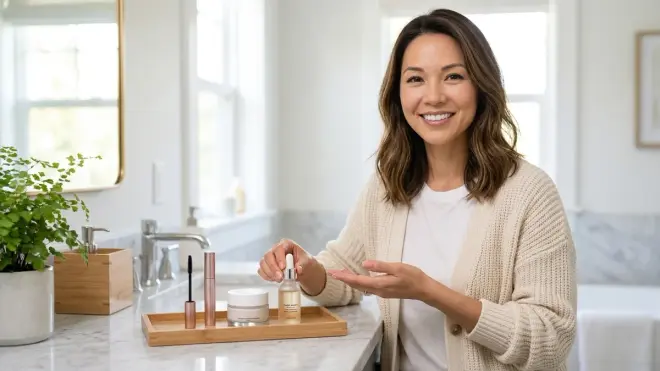
Here's what they don't tell you about how to look put together without spending everything: some products genuinely perform better at higher price points because of formulation stability, elegant textures, or superior ingredient quality. But it's usually only 2-3 products in your entire routine, not everything.
My three splurge categories after testing hundreds of dupes:
Sunscreen ($15-25 range): This is where texture matters enormously for compliance. If your sunscreen pills, feels greasy, or leaves a white cast, you won't wear it consistently. I spent two years testing drugstore sunscreens that cost $8-12 and hating every application. Then I tried mineral formulations in the $18-22 range with better dispersion technology, and suddenly I was wearing SPF every single day without negotiating with myself.
The performance difference isn't in UV protection—even $9 sunscreens meet FDA standards. It's in wearability and how it sits under makeup. This directly affects your long-term skin quality more than any other product in your routine.
Retinol formulation ($20-30 range): Encapsulated retinol in time-release delivery systems causes significantly less irritation than basic retinol suspended in a cream base. Both contain the same active at the same percentage, but the encapsulated version allows you to use it consistently without the flaking and redness that makes you abandon the product after two weeks.
Generic retinol creams at $12 work, but if you've got sensitive skin or you're juggling a demanding schedule where you can't afford a peeling face during client presentations, the stabilized formulations are worth it. I tested this extensively during my melasma treatment phase—the bioregenerative peptides vs retinol comparison breaks down why formulation chemistry matters here.
Foundation or skin-responsive tint ($15-25 range): This is on your face for 10-12 hours. Cheap foundations can oxidize orange by lunchtime, separate around your nose by 2 PM, or emphasize every dry patch you didn't know you had. Mid-range formulations (not prestige—we're talking $18-22, not $68) use better silicone blends and iron oxide pigments that stay true to color throughout the day.
I wear the same foundation from 6 AM through evening daycare pickup without touchups. That's only possible because I invested $20 instead of $8 in this one category.
Everything else can be drugstore or budget options without compromising results. The guide to drugstore vs high-end foundation runs the formulation analysis if you want to see the chemistry breakdown.
Your cleanser, moisturizer, niacinamide serum, mascara, brow products, and blush can all be under $15 without performance loss. I've tested prestige versions against budget versions in every category, and the active ingredient concentrations are identical. You're paying for packaging and brand positioning, not better skin results.
Step 6: Optimize Product Application for Time Efficiency and Maximum Impact
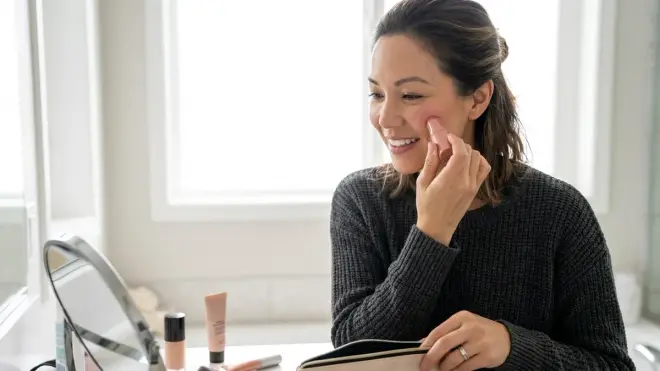
Application technique matters more than product quality once you're using actives at effective concentrations. I'm not going to lie to you—I've watched people apply $200 worth of luxury skincare incorrectly and get worse results than someone using $40 worth of drugstore products applied strategically.
Skincare application efficiency tips:
Use damp skin for water-based products. Hyaluronic acid, niacinamide, and water-based serums penetrate better and spread further when applied to slightly damp skin. You'll use less product (saving money) and get better absorption. Pat your face with a towel after cleansing but leave it about 30% damp before applying serums.
Let each layer dry for 30-60 seconds before applying the next one. This prevents pilling (those little balls of product that form when you layer too quickly) and ensures each active penetrates before being sealed in by the next layer. I apply one product, then handle one small task (make coffee, respond to one email, put on jewelry), then return for the next layer.
Apply retinol to completely dry skin but moisturizer can go on slightly damp retinol. Once your retinol has absorbed for 20-30 minutes, it's done its conversion work. You don't need to wait for your moisturizer after that initial window.
Use the "press and pat" method for serums instead of rubbing them in. Pressing active ingredients into skin with your palms gives better penetration than aggressive rubbing, which can irritate skin and waste product.
Makeup application efficiency tips:
Fingers are faster than brushes for cream products. Unless you're doing precise work (like brows or eyeliner), your fingers warm up cream formulas and blend them more naturally than synthetic brushes. I apply foundation with fingers or a damp sponge in literally 90 seconds for my entire face.
Apply concealer AFTER foundation or tinted moisturizer, not before. This lets you see where you actually need concealer instead of guessing, and you'll use less product overall. Most days I only need concealer in two small areas—under eyes and around nostrils—because the tinted moisturizer evened everything else out.
Tap blush onto the apples of your cheeks, then drag upward toward your temples. This lifts your face visually and creates a more youthful placement than the traditional "smile and apply to cheek balls" method that can actually drag features downward.
Do your brows with tiny hair-like strokes only where needed, not by filling in the entire brow. Nobody has naturally solid, uniform brows. You want to mimic the appearance of more density, not create a block of color.
The how to make cheap makeup look expensive guide covers additional application techniques that elevate drugstore products to look more polished.
Step 7: Build a Sustainable Routine by Tracking Cost-Per-Use and Results
This is where how to look put together without spending becomes a long-term practice instead of a temporary fix. You need to know what's actually working and what's wasting your money and time.
Set up a simple tracking system: I use a notes app on my phone with three categories: skincare, makeup, and hair (yes, scalp skincare matters for looking put together—greasy roots undermine even the best makeup application).
For each product, track:
- Purchase date and price
- Size/volume
- Date you started using it
- Visible results by week 4 and week 8
- Date it runs out
- Cost-per-day calculation (total price ÷ days of use)
- Whether you'd repurchase
This tells you everything you need to know. That $45 luxury serum that lasted 6 weeks ($1.07/day) might actually be more cost-effective than the $18 drugstore version that lasted 3 weeks ($0.86/day) if the luxury version delivered better results. Or vice versa.
I tracked every product I used for 18 months during my post-pregnancy skin recovery, and the data was shocking. The products I thought were "cheap" often cost more per day of use because they required more product per application or ran out faster. Some luxury products were actually better value when I did the math.
Take photos every 2 weeks in the same lighting at the same angle. Your memory is terrible at tracking incremental changes (mine is, anyway—I convinced myself products weren't working until I looked at week-1 photos and realized my texture had improved dramatically). Natural light by a window, no makeup, same time of day.
Give products 8 weeks minimum unless they're causing irritation. Actives like retinol and niacinamide work on cell turnover cycles, which take 28-30 days minimum. You won't see results in a week unless the "result" is irritation.
The exception is basic products like cleansers, makeup removers, and sunscreens. Those either work immediately or they don't. If your cleanser makes your face feel tight and dry, return it. If your sunscreen pills under makeup, return it. Don't give clearly wrong products 8 weeks to prove they're wrong.
Repurchase only what worked. This sounds obvious, but I've watched people repurchase products out of habit even when they delivered mediocre results. If something didn't make a noticeable difference by week 8, it's not going to suddenly start working in bottle two.
The budget skincare routine for mature skin covers tracking approaches for anti-aging specific routines if that's your primary concern.
Step 8: Establish Backup Systems for Chaotic Days When the Routine Fails
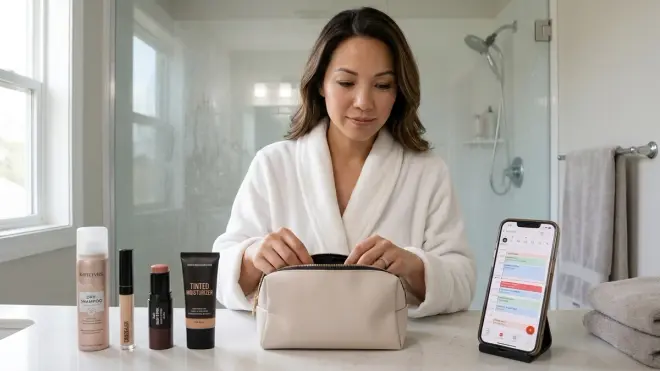
Let's be real—you will have days when even a 5-minute routine feels impossible. The baby was up all night. You spilled coffee on yourself 30 seconds before you needed to leave. Your alarm didn't go off and you've got 12 minutes to go from unconscious to presentable.
Your chaos-day kit should contain:
Micellar water and cotton pads (stored at your bathroom sink, not under it). One swipe across your face removes yesterday's skincare and provides minimal moisture. Not ideal, but functional. Around $8 for a bottle that lasts 3 months when used occasionally.
All-in-one tinted SPF moisturizer that combines sun protection, hydration, and light coverage. This is NOT your daily product because the SPF concentration isn't high enough for proper protection when used as directed for moisturizer. But for days when you have 90 seconds, it's better than walking out the door with completely bare skin. The CeraVe Hydrating Mineral Sunscreen SPF 30 Face Sheer Tint provides this exact functionality.
Cream blush stick that works on cheeks, lips, and even as emergency eye shadow. One product, multiple uses, takes up minimal space in your bag.
Tinted brow gel instead of pencil—it's faster and more forgiving when you're applying it in the car (not that I'm recommending that, but we're being realistic about what happens).
Mascara is the single highest-impact product when you're pressed for time. If you do nothing else cosmetically, mascara opens up your eyes and makes you look more awake.
Keep a duplicate kit at your office or in your car—travel-size versions of your chaos-day products plus oil blotting papers. This has saved me during days when I had morning court appearances after terrible sleep and afternoon client meetings when my face was literally shiny from stress.
I keep a $35 backup kit in my desk drawer at work. I've used it maybe twice a month for two years, which means it's paid for itself in credibility maintenance roughly 48 times over. Nobody comments when I look polished. They definitely notice when I look exhausted and unprepared.
The one-minute professional-enough face: Micellar water wipe, tinted SPF moisturizer, cream blush on cheeks and lips, tinted brow gel, mascara. You look like you have your life together even if you're running on 4 hours of sleep and panic.
This is genuinely how to look put together without spending excessive time or money—you're just being strategic about where you invest both resources.
Pro Tips & Common Mistakes
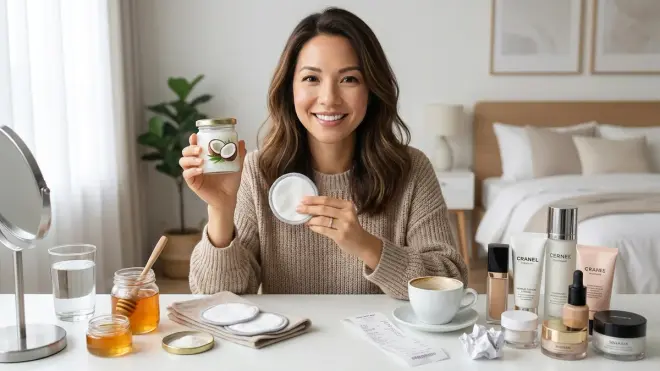
The biggest mistake I see: Buying every product at once and starting everything simultaneously. Your skin will freak out, you won't know what caused the reaction, and you'll waste $150. Introduce new products one at a time with two weeks between additions. Yes, it takes longer to build your routine. Yes, it's worth it to avoid a face full of angry red bumps during a client presentation.
Second biggest mistake: Applying actives incorrectly and then concluding they don't work. Retinol on damp skin causes irritation. Niacinamide applied after heavy occlusives can't penetrate. Vitamin C layered directly with retinol can destabilize both actives. The how to layer anti-aging products guide covers this in detail.
Third mistake: Not using enough sunscreen. You need 1/4 teaspoon for your face and neck. That's more than you think—about the size of a nickel pooled in your palm. Anything less and you're getting maybe SPF 15 protection from your SPF 50 sunscreen. I measure it out until it became automatic because I spent too long treating melasma to let UV exposure undermine my progress.
Pro tip for saving time: Apply your morning skincare while your coffee brews, not after you've poured it. Those 3-4 minutes are already built into your routine, so you're not adding time—you're multitasking.
Pro tip for saving money: Buy products in larger sizes when possible. The 19-ounce tub of CeraVe Moisturizing Cream is around $16, while the 1.7-ounce travel size is $6—you're paying $0.84 per ounce versus $3.52 per ounce for the exact same formula. If you know it works for your skin, buy the big tub.
Pro tip for better results: Apply retinol every other evening instead of every evening. Consistent use at lower frequency beats aggressive use for 3 days followed by 10 days off because your face is peeling. Your skin needs recovery time.
Pro tip for makeup longevity: Set your under-eye concealer with a tiny amount of translucent powder if you have oily skin. I avoided powder for years because I thought it looked cakey, but a light dusting only where you tend to get oily prevents that creased, melted look by 2 PM.
Avoid these products entirely: Pore strips (they damage your skin barrier temporarily), clay masks more than once a week (over-drying), physical exfoliating scrubs with harsh particles (switch to chemical exfoliation with AHAs or BHAs), and anything marketed as "detoxifying" (your liver detoxifies, skincare doesn't).
The barrier-first beauty approach explains why protecting your skin barrier should take priority over aggressive active ingredient use.
Frequently Asked Questions

Q: How long does it take to see results from a minimalist routine?
A: You'll see immediate results from makeup application (obviously), hydration improvements from moisturizer within 3-5 days, and texture improvements from niacinamide around week 3-4. Retinol results for fine lines and overall skin quality take 8-12 weeks minimum because you're working with cell turnover cycles that operate on 28-30 day rhythms. Most people abandon products around week 3 because they expect faster results—don't be that person. The science doesn't care about your timeline.
Q: Can I really look put together with only 5 products?
A: Yes, if they're the right five products used correctly. I've attended client meetings, court appearances, and professional events wearing nothing but tinted moisturizer, concealer, cream blush, brow gel, and mascara. Nobody has ever commented that I'm not wearing enough makeup. They've commented that I look "refreshed" or "well-rested" even on days when I definitely wasn't. Strategic application of fewer products looks more polished than mediocre application of many products.
Q: Should I invest in expensive skincare or expensive makeup first?
A: Skincare first, specifically your SPF and retinol formulation. Good skincare improves your actual skin quality, which reduces how much makeup you need for coverage. Expensive makeup on poorly maintained skin still looks like expensive makeup on poorly maintained skin. Start with the foundational active ingredients covered in step 1, then upgrade your makeup as budget allows. The affordable luxury skincare guide identifies which categories are worth splurging on based on formulation chemistry.
Q: How do I maintain this routine while traveling or during stressful periods?
A: Transfer your morning and evening products into travel-size containers (under 3 oz each for TSA compliance) and keep them in a clear toiletry bag that stays packed. I have a duplicate travel kit that lives in my suitcase year-round with everything except my retinol (I add that when packing since it needs to stay refrigerated for stability). During extremely stressful periods, maintain your evening retinol and morning sunscreen at minimum—those two products deliver the most significant long-term results, and you can let everything else slide temporarily without major consequences.
Summary

Learning how to look put together without spending excessive time or money comes down to strategic product selection backed by formulation chemistry and efficient application techniques. Your core routine requires only 5-7 products focused on proven actives—niacinamide for texture and tone, retinol for cell turnover, ceramides and hyaluronic acid for barrier support, and mineral SPF for protection.
The morning routine takes 5 minutes maximum, the evening routine takes 5 minutes, and the makeup application takes 3 minutes when you're using cream products and focusing on strategic placement rather than full coverage. Track your cost-per-use and results to identify what's actually working versus what you're repurchasing out of habit.
You'll need backup systems for chaotic days, but the routine itself becomes automatic within 2-3 weeks of consistent practice. Take progress photos every two weeks because your memory won't accurately track incremental improvements, and give products 8 weeks minimum before deciding they're not working. The total startup cost runs $120-175 for products that last 4-6 months, making this genuinely sustainable for anyone managing a budget alongside actual responsibilities.
This approach works whether you're recovering from pregnancy like I was, managing a demanding career, or just refusing to spend hours on beauty routines that deliver minimal visible results. Start with the basics, add complexity only where it provides measurable value, and remember that looking put together is about strategic enhancement—not perfection.