


The most effective glow up checklist doesn't demand new purchases—it demands attention. For thirty days, you'll redirect the focus you'd normally spend scrolling product reviews toward the formulations already sitting on your shelf, the rituals you've abandoned mid-bottle, the molecular potential gathering dust in your bathroom cabinet. This transformation requires inventory, not investment.
You already own actives with real dermatological backing. Retinoids that stimulate collagen synthesis. Humectants that bind water to your stratum corneum. Antioxidants that neutralize free radicals. The question isn't what you're missing—it's how systematically you're deploying what's already there.

This glow up checklist works because it strips away the mythology of transformation. No curated aesthetics. No aspirational packaging. Just the unglamorous discipline of using products correctly, consistently, and in sequences that respect their chemical mechanisms. Over the next month, you'll inventory your existing collection, optimize application timing, and build habits that outlast the initial dopamine rush of unboxing something new.
If you're ready for the broader context around how to glow up for free, that guide covers the philosophy. This is the execution.
Week One: Inventory and Baseline Documentation
Photograph your skin in natural light, same angle, morning and evening. The diffuse illumination near a north-facing window reveals texture, pigmentation irregularities, and microvascular changes invisible under bathroom LED strips—you need consistent conditions to detect molecular shifts in barrier function and cellular turnover.
List every skincare and makeup product you own with purchase dates and usage frequency. Products containing retinoids, L-ascorbic acid, or hydroxy acids degrade predictably after opening—if that tube of tretinoin has been sitting half-used for eighteen months, oxidative degradation has likely compromised the active concentration below therapeutic thresholds.
Check expiration symbols (the open jar icon with "12M" or "24M") and discard anything past its period-after-opening window. Preservative systems break down, microbial contamination accelerates, and antioxidants convert to pro-oxidants—using degraded formulations isn't just ineffective, it's potentially inflammatory.
Identify products with overlapping actives and potential interaction conflicts. Layering a 10% niacinamide serum over a 1% retinol cream might sound like maximalist efficiency, but some combinations create buffer-zone pH shifts that denature active molecules before they penetrate the lipid barrier.
Document your current routine's exact order, timing, and quantities. Most formulation failures stem from user error—applying water-based serums after occlusive oils, using too little product to achieve clinical dosing (usually 1/4 teaspoon for the face), or waiting insufficient intervals for pH-dependent actives to perform their chemistry.
Research the actual active percentages in your products by contacting manufacturers or checking independent databases. A product marketed as "vitamin C serum" might contain 0.5% ascorbic acid or 20%—the difference is the gap between marketing theater and measurable collagen synthesis, and you can't optimize what you can't quantify.
Create a simple spreadsheet tracking product names, key actives with concentrations if known, texture type (oil, serum, cream), and current application frequency. This external record transforms your routine from intuitive guesswork into a repeatable protocol you can adjust based on observed skin response.
Week Two: Strategic Sequencing and Cycling
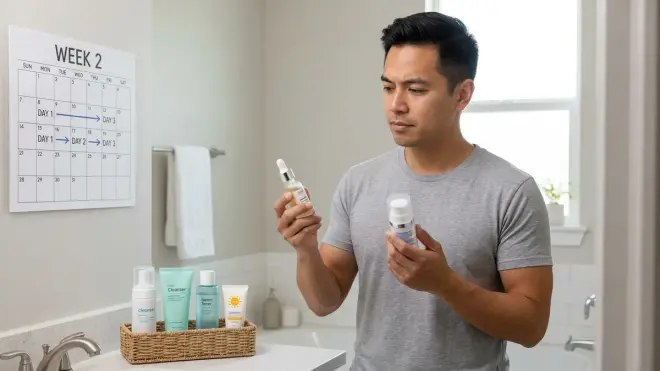
Implement proper pH sequencing: lowest pH products applied first on cleansed skin. L-ascorbic acid performs best between pH 2.5-3.5, retinoids function around pH 5.5-6, and most moisturizers sit at pH 6-7—applying them in ascending pH order prevents the higher-pH product from raising skin surface pH before the acid-dependent active can penetrate.
Adopt a modified skin cycling protocol to maximize active ingredient efficacy. The fundamentals of what is skin cycling involve rotating exfoliation nights, retinoid nights, and recovery nights to prevent barrier compromise while maintaining consistent stimulation—most people use actives too randomly to benefit or too aggressively to tolerate.
Wait 60 seconds between each product layer to allow proper penetration and prevent pilling. Silicone-based serums, film-forming polymers, and high-molecular-weight hyaluronic acid create temporary barriers—stacking products too quickly causes them to ball up on the skin surface instead of delivering actives to viable epidermis.
Use thinnest-to-thickest layering within each pH zone. Water-based essences absorb before gel serums, which precede cream formulations, which sit under oils and occlusives—violating this viscosity gradient traps lighter molecules beneath heavier ones, preventing them from reaching target cells.
Reserve occlusive products (petroleum jelly, dimethicone-heavy balms, thick face oils) for nighttime only. During daytime, semi-occlusive barriers trap sebum, cellular debris, and environmental particulates against your skin, creating ideal conditions for acne mechanica and follicular congestion.
Apply targeted treatments to damp skin when appropriate for the molecule. Low-molecular-weight hyaluronic acid (under 50 kDa) pulls ambient moisture into skin—applying it to slightly damp skin maximizes this hygroscopic effect, while applying water-free retinoids to wet skin can increase irritation through enhanced penetration.
Track your skin's response to timing adjustments in your inventory spreadsheet. Note whether morning vitamin C application causes photosensitivity, whether nighttime AHA use triggers dryness, whether splitting your moisturizer application between AM and PM improves hydration—data accumulation over thirty days reveals patterns invisible in daily observation.
Week Three: Texture Work and Mechanical Stimulation
Practice how to do facial massage at home during your evening oil cleanse or moisturizer application. Lymphatic drainage techniques reduce interstitial fluid accumulation, while deliberate upward and outward movements prevent the repetitive downward gravitational stress that etches expression lines into collagen networks over decades.
Use your fingertips for precise pressure on muscle attachment points. The masseter insertion along the jaw, the frontalis origin at the hairline, the orbicularis oculi around the orbital rim—spending fifteen seconds at each site with firm, circular pressure releases fascial tension that translates to softer expression patterns.
Incorporate ice therapy before morning product application. The ice rolling benefits include temporary vasoconstriction followed by reactive hyperemia, which flushes metabolic waste, reduces inflammatory mediators, and temporarily tightens pore appearance through dermal cooling—this costs nothing beyond freezer space and three minutes.
Gently pat products into skin rather than dragging or rubbing. Repetitive horizontal friction stretches the delicate collagen matrix around the eyes and mouth, while vertical patting respects the face's anatomical structure and drives products into micro-topography without mechanical stress.
Exfoliate strategically based on your existing products' mechanisms. Physical scrubs remove surface debris but can create micro-tears if used aggressively; chemical exfoliants (glycolic acid around 8-10%, salicylic acid around 2%, lactic acid around 5-10%) dissolve the intercellular cement between corneocytes without mechanical trauma—choose frequency based on your skin's desquamation rate and barrier resilience.
Use clean tools for every application. Reusable silicone spatulas for jars, weekly-washed brushes for powder products, sanitized metal tools for extractions—bacteria, fungi, and lipid-oxidizing enzymes transfer from fingers to formulations, degrading preservative systems and introducing inflammatory contaminants.
Week Four: Habit Solidification and Progress Assessment

Establish consistent application timing linked to existing habits. Skincare routines collapse under vague intentions—anchor your morning routine to your first cup of coffee, your evening routine to removing your watch, creating behavioral triggers that survive motivation fluctuations.
Photograph your skin under identical conditions to your baseline images. Improvements in barrier function manifest as reduced transepidermal water loss (skin looks plumper, smoother), increased cellular turnover shows as refined texture and brighter tone, inflammation reduction appears as decreased redness and fewer active breakouts.
Identify which products in your existing collection deserve repurchase and which were marketing distractions. That expensive essence with proprietary peptides might have done nothing measurable, while the drugstore niacinamide serum with 5% concentration produced visible pore refinement—performance metrics over brand prestige always.
Evaluate whether you need additional products or just better use of current ones. Most bathroom cabinets contain redundant moisturizers and underutilized actives—consolidating to one excellent retinoid used correctly outperforms three mediocre alternatives applied sporadically.
Research budget alternatives for products you'll need to replace. A 30ml luxury vitamin C serum might contain 15% L-ascorbic acid at around $100 per ounce, while formulations like Timeless 20% Vitamin C Plus E Ferulic Acid Serum deliver 20% concentration at roughly $25 per ounce—identical antioxidant mechanisms, dramatically different price-per-molecule ratios.
Consider whether free beauty apps could help track your routine consistency. Digital accountability tools monitor application frequency, send reminder notifications, and photograph progress automatically—though nothing replaces the visceral awareness that comes from physically documenting your discipline.
Prepare a pantry-based spot treatment protocol for inevitable breakouts. Understanding how to clear skin overnight using ingredients like raw honey (antimicrobial via hydrogen peroxide release and high osmolality) or crushed aspirin (acetylsalicylic acid converts to salicylic acid) adds emergency intervention capacity without new purchases.
Assess whether your moisture barrier needs repair work before introducing more actives. If your baseline photos show persistent redness, flaking, stinging upon product application, or increased reactivity, you're dealing with compromised barrier function—focus on the fundamentals of barrier-first beauty before adding more transformative but potentially irritating ingredients.
Final Check Before You Go
This condensed glow up checklist distills the month into immediate actions:
- Inventory: List all products, check expiration dates, identify active ingredients and concentrations
- Photograph: Baseline images in consistent natural lighting, morning and evening
- Sequence: Apply products from thinnest to thickest within pH zones (lowest pH first)
- Cycle: Rotate active nights to prevent barrier damage while maintaining stimulation
- Wait: 60 seconds between layers for penetration and to prevent pilling
- Massage: Incorporate lymphatic drainage during cleansing or moisturizing
- Ice: Add cryotherapy before morning products for microcirculation benefits
- Pat: Avoid dragging or rubbing, especially around delicate eye areas
- Time: Link routine to existing habits for consistency
- Document: Track changes weekly; compare against baseline after thirty days
Frequently Asked Questions

How long does a no-cost glow up checklist take to show visible results?
Cellular turnover in healthy adult skin completes approximately every 28 days, meaning the skin you see today reflects the care you provided a month ago—you'll notice improvements in barrier function (reduced dryness, better product absorption) within 7-10 days, texture refinement from increased desquamation around day 14-21, and potential pigmentation evening by day 30 if you're consistently using existing brightening actives like niacinamide or L-ascorbic acid at therapeutic concentrations.
Can I combine this glow up checklist with one new product if I really need something specific?
The framework works whether you add strategic purchases or maintain strict zero-cost discipline—if you've identified a genuine gap (you own no retinoid, you lack a broad-spectrum SPF, you have no humectant serum), adding one thoughtfully researched product won't undermine the methodology, but ensure you're not confusing marketing desire with actual formulation need, and that you understand the active mechanism well enough to integrate it into your sequencing protocol without creating conflicts.
Should I follow this glow up checklist if I have active acne, rosacea, or eczema?
Inflammatory skin conditions require modifying the protocol—if you're dealing with compromised barrier function from eczema or rosacea, eliminate or dramatically reduce chemical exfoliation frequency, focus on gentle cleansing and ceramide-rich moisturizers, and introduce actives only after establishing baseline barrier stability; for acne, the cycling methodology particularly benefits oily skin types by preventing over-exfoliation while maintaining consistent follicle-clearing ingredients, though you may need to verify that your existing products don't contain comedogenic oils or pore-clogging emulsifiers that undermine your efforts.
Final Thoughts
This glow up checklist works because it reframes transformation as optimization, not acquisition. The serums collecting dust contain molecules identical to those in freshly launched products—retinol is retinol whether it's in a minimalist tube or holographic packaging. Your skin doesn't recognize branding. It responds to consistent molecular exposure, proper pH environments, and sufficient time for cellular processes to compound.
The discipline of using what you own completely before seeking something new builds expertise faster than perpetual product rotation. You learn how your skin responds to 2% salicylic acid versus 10% glycolic acid. You discover whether your barrier tolerates daily retinoid use or requires recovery nights. You identify which textures you'll actually apply versus which sit untouched because they feel unpleasant.
Thirty days from now, you'll photograph skin that reflects systematic care rather than sporadic intervention. The glow isn't mystical—it's the visible accumulation of reduced transepidermal water loss, accelerated cellular turnover, decreased inflammatory mediators, and improved microcirculation. All achieved with resources you already possessed.
You just needed to pay attention.