
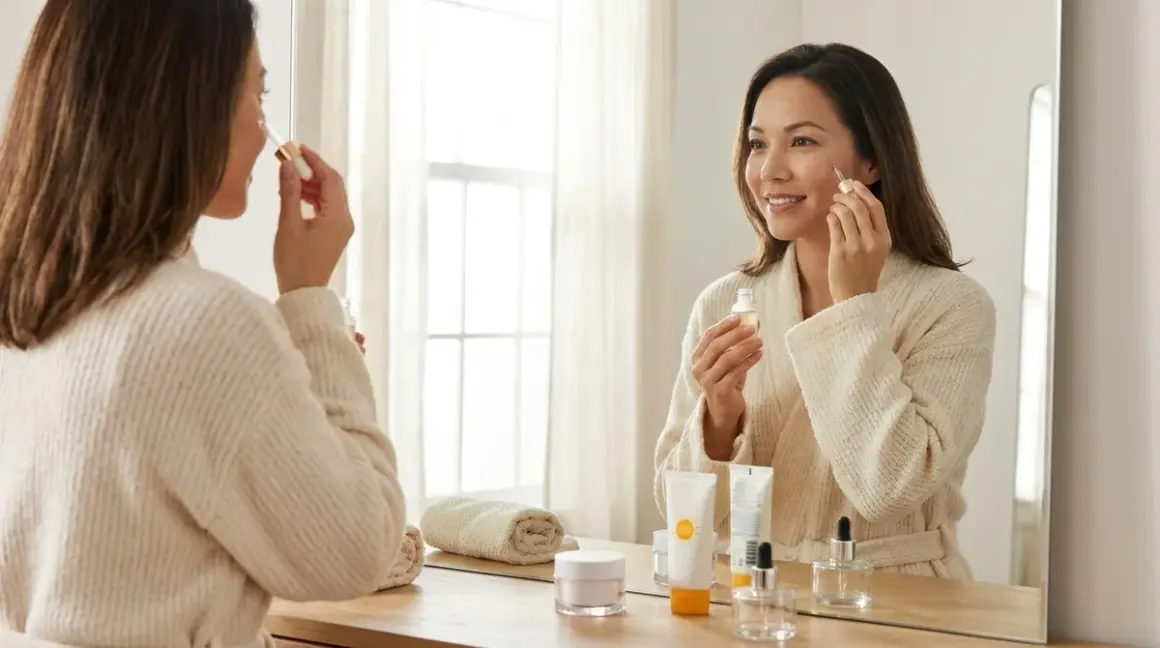

Here's the deal: your skin after 50 isn't broken—it's just operating under completely different rules than it did at 30. This anti aging skincare checklist over 50 breaks down exactly what you need, how much to use, and what each product actually costs per day. No filler, no 12-step routines you'll abandon by Wednesday.
I rebuilt my entire routine after pregnancy melasma and chronic exhaustion taught me that expensive doesn't always mean effective, and complicated definitely doesn't mean better. This checklist focuses on products that deliver measurable results without requiring you to wake up at 5 AM just to apply them all.

Morning Routine Essentials (15 Minutes Max)
Your morning anti aging skincare checklist over 50 should protect and prep—that's it. You're not fixing damage before 9 AM; you're preventing it.
Gentle pH-Balanced Cleanser
Skip anything that strips your skin squeaky-clean. After 50, your sebum production drops by roughly 60%, so that "tight" feeling? That's barrier damage, not cleanliness. Look for cleansers with a pH between 4.5-5.5 and glycerin in the top five ingredients. CeraVe Hydrating Cleanser costs around $0.30 per use and contains ceramides 1, 3, and 6-II at effective concentrations. Takes 45 seconds, works on wet skin while you're half-asleep.
Vitamin C Serum (10-20% L-Ascorbic Acid)
This is your morning workhorse for brightening and collagen synthesis. L-ascorbic acid at 15% concentration shows statistically significant improvement in photoaging after 12 weeks—but only if the pH is below 3.5 and it's packaged in opaque, airless bottles. The [Timeless 20% Vitamin C + E Ferulic Acid Serum] runs about $0.83 per application (4-5 drops) and uses the same stabilizing formula as luxury alternatives that cost $166 per ounce. Store it in your fridge; oxidized vitamin C (the yellow-orange stuff) is useless.
I keep mine next to the creamer. If I'm grabbing coffee anyway, I'm grabbing my serum.
Peptide Eye Cream
The skin around your eyes is 40% thinner than the rest of your face and loses elasticity faster. You need peptides—specifically palmitoyl tetrapeptide-7 (Matrixyl 3000) or acetyl hexapeptide-8 (Argireline) at 3-10% concentration. These signal collagen production without the irritation retinol causes in this delicate area. Budget pick: The Inkey List Caffeine Eye Cream (around $0.27 per use) combines 1% caffeine for immediate de-puffing with peptides for long-term firmness. Pat it on with your ring finger while waiting for coffee to brew. For more targeted options, check out our drugstore vs luxury eye cream comparison.
Broad-Spectrum SPF 50+ Sunscreen
Let's be real: this is the only product that actually prevents aging. Everything else is damage control. You need mineral filters (zinc oxide 15-25% or titanium dioxide 10-20%) or newer chemical filters like Tinosorb S or Uvinul A Plus that cover the full UVA spectrum. Korean formulations lead here—our Korean sunscreen guide breaks down texture and white cast by formula type. Apply 1/4 teaspoon for face (about a nickel-sized blob), reapply every 2 hours if you're outdoors. At around $0.40 per application, this is the cheapest anti-aging product you'll ever use.
I keep a tube in my car, one in my purse, one at my desk. The best sunscreen is the one you'll actually reapply.
Antioxidant Moisturizer

After 50, your skin needs humectants (glycerin, hyaluronic acid) to pull in moisture, emollients (squalane, ceramides) to seal it, and antioxidants (niacinamide, green tea extract) to neutralize free radicals. Look for 5-10% niacinamide—it reduces hyperpigmentation, strengthens barrier function, and regulates oil production. The [Olay Regenerist Micro-Sculpting Cream] contains approximately 4-5% niacinamide plus peptides at around $0.50 per use (pea-sized amount). Manufactured in the same facilities that produce prestige brands, but costs $1.67 per ounce versus $12+ for luxury alternatives.
Takes 30 seconds to absorb, plays well under makeup, won't pill.
Lip Treatment with SPF 30+
Your lips don't produce melanin—they're just perpetually sunburned by age 50 if you've skipped this step. You need occlusive protection (petrolatum, lanolin, dimethicone) plus SPF. Neutrogena Norwegian Formula Lip Moisturizer SPF 15 runs about $0.04 per application, but honestly, bump up to SPF 30+ if you're outdoors. Reapply after coffee, after lunch, and anytime you catch your reflection looking parched.
Neck and Chest Treatment
Your neck shows age faster than your face because the skin is thinner and you've probably ignored it for decades. Whatever you put on your face goes on your neck and chest—every single product. But add a dedicated treatment with 0.5-1% retinol or 2-5% glycolic acid specifically formulated for this area. Alpha Skin Care Renewal Body Lotion (12% glycolic acid, manufactured in the US) costs around $0.33 per application and covers neck-to-décolletage. Apply it at night, three times per week to start. For body-specific formulations, see our guide on how to layer peptide body lotion.
I'm not going to lie to you: I forgot about my neck until my second pregnancy, when I looked down at my daughter and saw crepe-textured skin staring back at me in the mirror.
Evening Repair Routine (20 Minutes Max)
Your nighttime anti aging skincare checklist over 50 does the heavy lifting: cell turnover, collagen synthesis, barrier repair. This is where you use actives that make skin temporarily sensitive to sun.
Oil-Based Cleanser or Micellar Water
Double cleansing removes sunscreen and makeup without stripping your barrier. Start with an oil-based cleanser (caprylic/capric triglyceride, safflower oil, jojoba oil) or micellar water if you're too exhausted for two steps. The Ordinary Squalane Cleanser costs around $0.20 per pump, emulsifies with water, and won't leave residue. Takes 60 seconds, massage it in while you decompress from the day.
Second Cleanse (Same Gentle Cleanser from Morning)
Hit it again with your pH-balanced morning cleanser to remove the oil cleanser and any remaining debris. 30 seconds, done. Your skin should feel clean but not tight—if it feels squeaky, your cleanser is too harsh.
Retinoid Treatment (0.025-0.1% Tretinoin or Retinol Alternative)
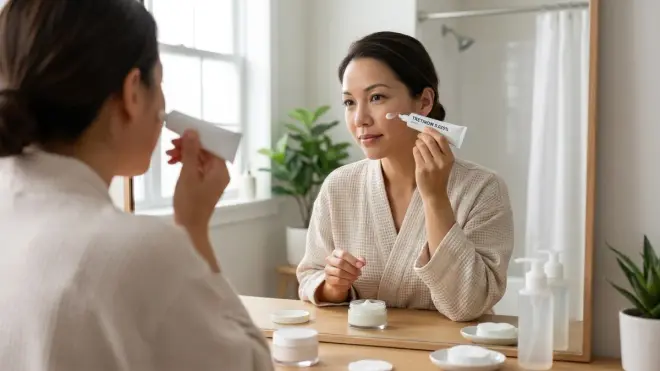
This is the gold standard—the only topical ingredient with decades of peer-reviewed research showing it increases collagen production, accelerates cell turnover, and reduces fine lines. Prescription tretinoin (Retin-A) at 0.025-0.05% is most effective, but over-the-counter retinol at 0.3-1% or retinaldehyde at 0.05-0.1% work if you can't access a dermatologist.
Start with retinol twice per week, build to nightly over 12 weeks. Apply it to completely dry skin (wait 20 minutes after cleansing), use a pea-sized amount for your entire face, and expect flaking for the first month. The [Versed Press Restart Gentle Retinol Serum] (around $0.50 per use, 0.3% encapsulated retinol) is a good entry point. For stronger concentrations, our affordable retinol guide compares formulations by strength and price per ounce.
I apply mine during the 10 PM commercial break while pretending I'm not falling asleep on the couch.
Retinol causes temporary dryness, redness, and flaking. That's normal. What's not normal: burning, persistent irritation, or breakouts that last beyond six weeks. Scale back if you hit that point.
Peptide or Growth Factor Serum
Layer this 5-10 minutes after retinol. Copper peptides (GHK-Cu), matrixyl peptides, or epidermal growth factors (EGF) at 0.1-2% concentrations signal fibroblasts to produce collagen. The Ordinary Buffet + Copper Peptides 1% costs around $0.90 per use and contains multiple peptide chains at effective molecular weights (under 500 Daltons for penetration). For deeper dives into peptide science, check our peptides in budget skincare guide.
Hyaluronic Acid Serum on Damp Skin
Apply this to damp skin—hyaluronic acid is a humectant that pulls moisture from the environment into your skin. If your skin is dry or the air is dry, it'll pull moisture out of your deeper skin layers, making dehydration worse. Look for multiple molecular weights: high molecular weight (1,000-2,000 kDa) sits on the surface for immediate plumping, while low molecular weight (5-50 kDa) penetrates deeper. The Hada Labo Gokujyun Premium Lotion (around $0.30 per use) contains five HA weights and dries down in under a minute.
Rich Night Cream or Facial Oil
Seal everything with occlusives and emollients. After 50, you need heavier textures than you did at 30—your ceramide production has declined, so you're supplementing it topically. Look for ceramide-dominant formulas (ceramides 1, 3, 6-II in a 1:1:1 ratio with cholesterol and fatty acids) or squalane-based oils. CeraVe Skin Renewing Night Cream (around $0.60 per use) contains peptides, niacinamide, and the full ceramide complex. La Roche-Posay Cicaplast Baume B5 (around $0.80 per use) adds panthenol for barrier repair and works beautifully over retinol on flaky nights.
For barrier-focused formulations, see our best barrier repair creams under $30.
Overnight Lip Mask
Your lips repair themselves overnight but need occlusion to prevent transepidermal water loss. Lanolips 101 Ointment (medical-grade lanolin) or Aquaphor Healing Ointment (petrolatum-based) run about $0.08 per application and create a physical barrier. Wake up with softer lips than you've had in years.
Hand and Cuticle Cream
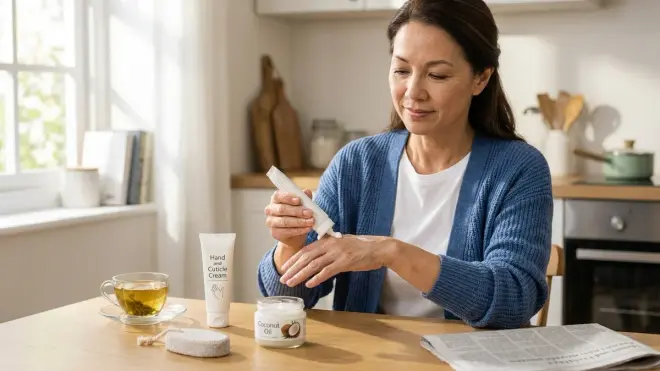
Your hands give away your age faster than anything else—they're constantly exposed, frequently washed, and rarely treated. Use the same products you'd use on your face: retinol, niacinamide, peptides, SPF during the day. At night, apply a heavy hand cream (look for urea at 10-20% for exfoliation plus intense hydration) and sleep in cotton gloves once a week. Eucerin Advanced Repair Hand Cream (around $0.15 per use, 5% urea) absorbs in under a minute and doesn't leave grease on your phone screen.
Weekly Treatment Boosters (10-20 Minutes Each)
Your core anti aging skincare checklist over 50 covers daily maintenance, but these weekly treatments accelerate results. Pick one or two—you don't need all of them.
Chemical Exfoliant (AHA/BHA Treatment)
Glycolic acid (5-10%) or lactic acid (5-12%) remove dead skin cells, brighten hyperpigmentation, and improve product penetration. Use it 2-3 times per week on non-retinol nights. The Ordinary Lactic Acid 10% + HA (around $0.30 per use) is gentle enough for sensitive skin and manufactured in Canada under the same standards as medical-grade peels. Apply it to dry skin, wait 10 minutes, then proceed with serums. For deeper exfoliation, our Korean skincare guide covers fermented acid formulations that work gently on mature skin.
Don't use chemical exfoliants and retinol on the same night unless you enjoy looking like a molting reptile.
Sheet Mask or Hydrogel Mask
These deliver concentrated actives in an occlusive environment—your skin can't evaporate the serum, so penetration increases. Look for niacinamide, peptides, ceramides, or hyaluronic acid. Korean sheet masks run $1-3 per mask; Mediheal N.M.F Intensive Hydrating Mask (around $1.50, contains sodium hyaluronate and ceramides) is my go-to during red-eye flights or post-deadline crashes. Use it after cleansing, leave on for 15-20 minutes, then massage in the remaining serum. No rinsing required.
Facial Massage (5 Minutes)
Manual lymphatic drainage reduces puffiness and may improve product absorption. Use your favorite facial oil and follow this simple protocol: light upward strokes from center of face outward, gentle pressure on lymph nodes below your ears and along your jawline. Doesn't cost anything, takes 5 minutes while listening to a podcast.
LED Light Therapy (10-20 Minutes, 3-5x Per Week)
Red light (630-660 nm) stimulates fibroblasts and increases collagen synthesis; near-infrared (810-850 nm) penetrates deeper for cellular repair. Clinical studies show improvement in fine lines and elasticity after 12 weeks of consistent use. At-home devices like CurrentBody Skin LED Mask (around $3.00 per use when you calculate the upfront cost spread over two years) deliver clinically effective wavelengths. Use it while answering emails or watching TV—it's genuinely passive.
Retinol Body Treatment
Everything aging on your face is aging on your body—you just can't see it under clothing. Apply a retinol body lotion (0.1-0.5% retinol) to arms, legs, chest, and hands once or twice per week. The Versed Press Restart Gentle Retinol Body Lotion (around $0.40 per use, manufactured in South Korea) or CeraVe Skin Renewing Retinol Body Cream (around $0.35 per use) both work. For targeted body treatments, see our best body sculpting creams guide.
I do this Sunday nights after a shower, then watch something terrible on TV while waiting for it to absorb.
Must-Have Active Ingredients (What to Actually Look For)
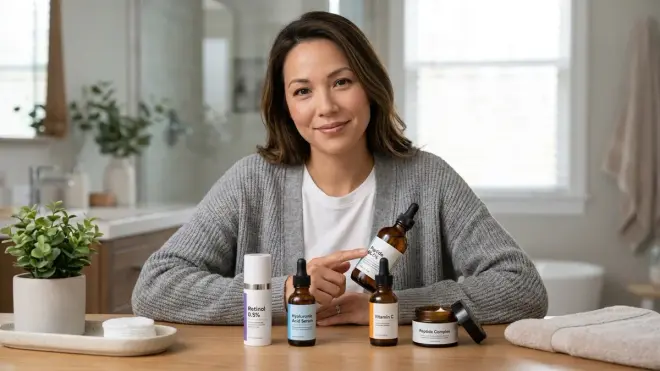
Your anti aging skincare checklist over 50 should include at least three of these five categories. More isn't better—strategic layering is.
Retinoids (Vitamin A Derivatives)
- Tretinoin (prescription): 0.025-0.1%, most effective, requires dermatologist
- Retinaldehyde (over-the-counter): 0.05-0.1%, converts to retinoic acid in one step, less irritation
- Retinol (over-the-counter): 0.3-1%, converts in two steps, widely available
- Bakuchiol (plant alternative): 0.5-2%, no photosensitivity, gentler but less research
Start low, go slow. Your skin will adjust, but it takes 12 weeks minimum to see results. For detailed product recommendations, check our best ingredients for aging skin guide.
Peptides (Collagen Signaling Molecules)
- Matrixyl 3000 (palmitoyl tetrapeptide-7 + palmitoyl oligopeptide): 3-8%, reduces fine lines
- Matrixyl Synthe'6 (palmitoyl tripeptide-38): 2%, stimulates collagen VI
- Argireline (acetyl hexapeptide-8): 5-10%, "topical Botox" for expression lines
- Copper peptides (GHK-Cu): 0.1-2%, wound healing and collagen synthesis
Molecular weight matters—peptides must be under 500 Daltons to penetrate intact. For a deep dive, see what are peptides in body lotion.
Antioxidants (Free Radical Neutralizers)
- Vitamin C (L-ascorbic acid): 10-20%, morning application, pH under 3.5
- Vitamin E (tocopherol): 1-5%, stabilizes vitamin C, lipid protection
- Ferulic acid: 0.5-1%, boosts C+E effectiveness by 8x
- Niacinamide (vitamin B3): 5-10%, brightening, barrier repair, anti-inflammatory
- Resveratrol: 1-3%, anti-inflammatory, limited penetration data
The C+E+Ferulic acid combination is backed by decades of research and is worth the investment—or DIY replication with budget serums.
Humectants (Water-Binding Molecules)
- Hyaluronic acid (sodium hyaluronate): multiple molecular weights, 1-2%
- Glycerin: 5-10%, pulls moisture from environment and deeper skin layers
- Panthenol (provitamin B5): 2-5%, hydration plus anti-inflammatory
- Beta-glucan: 0.5-2%, soothing, moisture retention
Always apply humectants to damp skin and seal with an occlusive in low-humidity environments.
Exfoliants (Cell Turnover Accelerators)
- Glycolic acid (AHA): 5-10%, smallest molecule, deepest penetration, most irritating
- Lactic acid (AHA): 5-12%, larger molecule, gentler, hydrating
- Mandelic acid (AHA): 5-10%, largest molecule, best for sensitive or darker skin tones
- Salicylic acid (BHA): 0.5-2%, oil-soluble, works in pores, anti-inflammatory
Use acids 2-3x per week on non-retinol nights. For layering protocols, see how to layer anti-aging products.
Budget Allocation Strategy (Where to Spend and Where to Save)
Let's be real: you don't have unlimited money or unlimited face space. This is how I'd allocate a monthly skincare budget at three different tiers, focusing on cost-per-use and performance metrics.
Tier 1: Essential Foundation ($50-75/Month)
- Cleanser ($10-12): Generic brand, pH-balanced, ceramides or glycerin. Target/Walmart store brands work. Lasts 3-4 months.
- Prescription tretinoin ($15-30 with insurance): This is your only non-negotiable splurge. Generic adapalene (Differin) is OTC for around $12 if you can't access a prescription.
- SPF 50+ sunscreen ($12-18): Korean or Australian formulations for better texture. Lasts 2-3 months with daily use.
- Basic moisturizer ($12-18): CeraVe, Eucerin, or Vanicream with ceramides and niacinamide. Lasts 2-3 months.
This covers the four pillars: cleanse, protect, repair (retinoid), seal. Everything else is optimization.
Tier 2: Performance Boost ($100-150/Month)
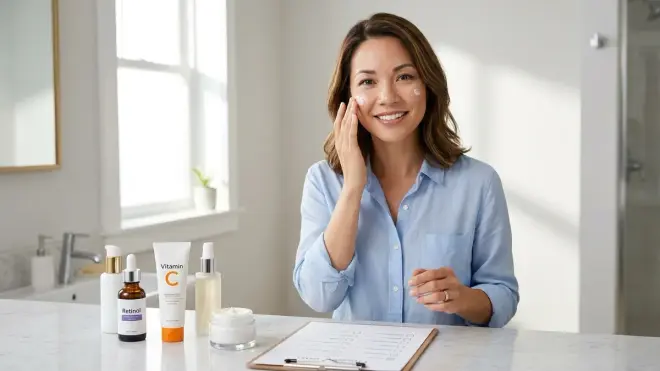
Add to Tier 1:
- Vitamin C serum ($20-30): Timeless, Mad Hippie, or The Ordinary. Lasts 2-3 months.
- Peptide serum ($15-25): The Ordinary, The Inkey List, or Good Molecules. Lasts 2-3 months.
- Eye cream ($12-20): Peptides or caffeine-based. Lasts 3-4 months.
- Chemical exfoliant ($10-15): Glycolic or lactic acid treatment. Lasts 3-4 months.
This tier accelerates visible results—brighter skin, fewer fine lines, better texture—without requiring a second mortgage.
Tier 3: Advanced Protocol ($200-250/Month)
Add to Tier 2:
- Growth factor or bioregenerative serum ($40-60): EGF, stem cell extracts, or PDRN. Lasts 2 months. For budget options, see best bioregenerative serums under $50.
- LED light therapy device ($300-400 upfront, $3/use over 2 years): CurrentBody, Dr. Dennis Gross, or omnilux.
- Professional-grade peel pads ($25-35): Pre-soaked glycolic or lactic acid. Lasts 2 months.
- Specialty treatments ($30-50): Neck cream, hand cream, overnight masks. Lasts 2-3 months.
This is where you see results that make people ask what you've "had done." It's not surgery—it's strategic, consistent actives at effective concentrations.
Final Check Before You Go
Here's your streamlined anti aging skincare checklist over 50 to screenshot and stick on your bathroom mirror:
Morning (15 minutes):
- Gentle pH-balanced cleanser (45 seconds)
- Vitamin C serum on damp skin (4-5 drops, 1 minute)
- Peptide eye cream (2 dots per eye, 30 seconds)
- Antioxidant moisturizer with niacinamide (pea-sized, 1 minute)
- SPF 50+ sunscreen, face and neck (nickel-sized blob, 1 minute)
- Lip balm with SPF 30+ (5 seconds)
Evening (20 minutes):
- Oil cleanser or micellar water (1 minute)
- Second cleanse with gentle cleanser (45 seconds)
- Wait 20 minutes for skin to dry completely
- Retinoid on dry skin, face and neck (pea-sized, 1 minute)
- Wait 5-10 minutes
- Peptide or growth factor serum (4-5 drops, 1 minute)
- Hyaluronic acid serum on damp skin (3-4 drops, 1 minute)
- Rich night cream or facial oil (dime-sized, 1 minute)
- Hand cream with retinol or urea (quarter-sized, 30 seconds)
- Overnight lip mask (1 swipe, 5 seconds)
Weekly Boosters (Pick 1-2):
- Chemical exfoliant (2-3x per week, non-retinol nights)
- Sheet mask (1-2x per week, 15-20 minutes)
- LED light therapy (3-5x per week, 10-20 minutes)
- Facial massage with oil (2-3x per week, 5 minutes)
- Retinol body treatment (1-2x per week after shower)
Non-Negotiables:
- SPF every single day, even indoors near windows
- Retinoid at least 3x per week (build to nightly)
- Products applied to neck, chest, and hands—not just face
Frequently Asked Questions
What's the minimum anti-aging skincare routine for women over 50 if I only have 5 minutes?
Cleanser, prescription tretinoin or 0.5%+ retinol, moisturizer with SPF 50 in the morning; cleanser, tretinoin/retinol, heavy moisturizer at night. That's it. Four products, 5 minutes twice a day, and you've covered the only topical ingredients with decades of clinical evidence for reversing photoaging: retinoids and sun protection. Everything else—peptides, vitamin C, acids—accelerates results but isn't essential if you're genuinely time-constrained. For time-efficient routines, check our budget skincare routine for mature skin guide.
How long before I see results from an anti-aging skincare routine over 50?
Hydration improvements (plumper, dewier skin) show up in 3-7 days from humectants like hyaluronic acid. Brightening from vitamin C or niacinamide takes 4-8 weeks. Retinoids require 12-16 weeks minimum for visible reduction in fine lines and texture improvement because you're literally increasing cell turnover and collagen synthesis—that's a slow biological process. Peptides and growth factors show measurable changes at 8-12 weeks. If you're not seeing anything by week 16, either your concentrations are too low, you're not applying products correctly, or your expectations don't match what topicals can deliver (they won't erase deep wrinkles or jowls—that's filler and thread territory).
Do I need separate day and night creams after 50, or can I use the same moisturizer?
You can absolutely use the same moisturizer morning and night if it contains SPF 30+ for day and is rich enough for overnight repair—but honestly, most SPF moisturizers aren't hydrating enough for nighttime after 50, and most night creams are too heavy under makeup. The better strategy: one hydrating moisturizer with niacinamide and ceramides (use day and night), plus a separate dedicated SPF 50+ sunscreen for morning and a separate occlusive treatment (facial oil or heavier cream) for nighttime. You'll get better performance and spend less per ounce than buying two mediocre "day/night" products that don't excel at either job.
Final Thoughts
Your anti aging skincare checklist over 50 doesn't need to be complicated or expensive—it needs to be strategic. Focus on the non-negotiables (retinoids, SPF, antioxidants), invest in active concentrations that work, and ignore anything that promises overnight miracles.
I'm not going to promise you'll look 30 again. But I will promise that consistent use of effective actives at the right concentrations will give you brighter, firmer, more even-toned skin than you've had in years. And it won't require quitting your job or refinancing your house.
Start with the essentials, add boosters as your budget and skin tolerance allow, and give it 16 weeks before you decide what's working. Your skin didn't age overnight—it won't reverse overnight either. But it will respond to science, patience, and products that actually contain what they claim on the label.
Now go screenshot that final checklist before you forget where you put your coffee.