


You run your fingers down your forearm after a shower and feel the ghost of what your skin used to be—tight, elastic, resilient. That tactile memory is what drives you to the body care aisle, squinting at tiny print on tube after tube, searching for something that delivers more than temporary slip. This checklist decodes peptide body lotion ingredients with the precision of a cosmetic chemist and the skepticism of someone who's been greenwashed before. We'll cover the active peptides that actually penetrate, the supporting cast that determines delivery, the red flags that signal formulation shortcuts, and the texture modifiers that make or break daily compliance. No filler. Just what matters.
Essential Peptide Actives to Prioritize
The peptide itself is the headline act, but not all peptides are created equal. Molecular weight determines epidermal penetration—anything above 500 Daltons struggles to breach the stratum corneum without penetration enhancers. Chain length matters. Stability in emulsion matters more.

Palmitoyl Tripeptide-1 (formerly Palmitoyl Oligopeptide): A three-amino-acid chain that signals fibroblasts to produce collagen and glycosaminoglycans. Effective at concentrations as low as 2-4%. Look for it in the first third of the ingredient list.
Palmitoyl Tetrapeptide-7 (formerly Palmitoyl Tetrapeptide-3): Reduces interleukin-6 production, the inflammatory cascade that degrades collagen over time. Often paired with Palmitoyl Tripeptide-1 in trademarked blends like Matrixyl 3000. Combined concentration should hit 4-8% in serious formulations.
Copper Peptides (GHK-Cu): Historically the gold standard for wound healing and collagen synthesis. Molecular weight around 340 Daltons makes it one of the more penetrative peptides. The challenge: copper oxidizes easily, turning formulations blue-green. If the lotion stays pale pink or white, the copper complex is either stabilized brilliantly or present at homeopathic levels.
Acetyl Hexapeptide-8 (Argireline): The topical Botox alternative that inhibits SNARE complex formation, reducing expression lines. More relevant for face serums, but increasingly included in décolletage and neck creams. Requires 5-10% concentration for measurable effect—rarely disclosed on body products.
Palmitoyl Pentapeptide-4 (Matrixyl): Stimulates collagen I, III, and IV production. The lipophilic palmitoyl tail improves penetration through the lipid barrier. Budget formulations often list this without disclosing percentage; prestige brands typically use 3-6%.
Tripeptide-1 (non-palmitoylated): Cheaper than its palmitoylated cousin but less effective at penetration. If this appears high on the list but no palmitoylated peptides follow, you're looking at a budget-friendly decoy—present but underperforming.
Understanding bioregenerative actives beyond peptides can contextualize how these molecules fit into broader cell-renewal strategies. For those exploring peptide technology in other formats, peptides in body lotions breaks down molecular weights and skin penetration mechanics in greater depth.
Hydration and Penetration Enhancers
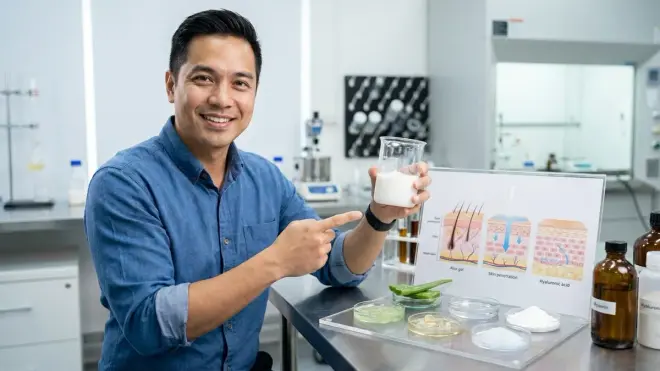
Peptides alone won't save dehydrated skin. The vehicle determines whether those expensive actives sit on the surface or actually reach the dermis. Humectants draw water into the epidermis. Occlusives seal it in. Penetration enhancers create temporary lipid pathways.
Hyaluronic Acid (multiple molecular weights): Look for formulations listing both high-molecular-weight HA (1-1.5 million Daltons) for surface hydration and low-molecular-weight HA (10,000-50,000 Daltons) for deeper penetration. The CeraVe SA Body Lotion for Rough & Bumpy Skin demonstrates this dual-weight strategy at a fraction of prestige pricing, though it lacks peptides.
Glycerin (3-10%): The unglamorous workhorse. Pulls moisture from the dermis to the epidermis and from the environment when humidity is above 65%. Concentrations below 3% are window dressing; above 10%, you'll feel tacky for hours.
Sodium PCA: A component of the skin's natural moisturizing factor. More hygroscopic than glycerin but less sticky. Often appears around 1-3% in well-formulated lotions.
Propanediol: A bio-derived glycol that enhances penetration without the sensitization risk of propylene glycol. Doubles as a humectant and solvent. If you see this in the top ten ingredients alongside peptides, the formulators are serious about delivery.
Dimethyl Isosorbide: A powerful penetration enhancer derived from corn sugar. Increases peptide bioavailability by disrupting lipid bilayers temporarily. More common in prestige formulations—its presence signals investment in active delivery.
Niacinamide (2-5%): Technically a barrier-support ingredient, but it increases ceramide synthesis by 34% according to dermatological research published by the Journal of Cosmetic Dermatology. This amplifies peptide efficacy by improving the skin matrix they're working within.
The science of layering these actives with other treatments is covered in detail in how to layer peptide body lotion with other actives, which addresses pH compatibility and wait times between applications.
Barrier-Supportive Lipids and Ceramides
Your skin barrier is a brick-and-mortar structure—corneocytes are the bricks, lipids are the mortar. Peptides stimulate collagen production beneath, but if the barrier is compromised, you'll lose water faster than you can replenish it. The most elegant peptide body lotion ingredients include a 1:1:1 ratio of ceramides, cholesterol, and free fatty acids—the exact ratio found in healthy stratum corneum.
Ceramide NP, AP, EOP (or Ceramide 1, 2, 3): These are the specific ceramide classes most abundant in skin. EOP (ceramide 1) is the rarest and most expensive to synthesize. If a formula lists all three, it's not cutting corners.
Cholesterol (non-HDL): Not the cardiovascular villain. In topical formulations, cholesterol fills lipid gaps and improves barrier cohesion. Should appear alongside ceramides, not in isolation.
Behenic Acid, Stearic Acid: Long-chain fatty acids that mimic the skin's natural lipid profile. Together with ceramides and cholesterol, they form lamellar bilayers identical to native barrier structure.
Squalane (not squalene): The hydrogenated, shelf-stable version of shark liver oil, now sustainably derived from olives or sugarcane. Biomimetic lipid with extraordinary spreadability. At 2-5%, it improves peptide absorption by softening the lipid matrix.
Shea Butter (Butyrospermum Parkii): Contains high concentrations of triterpene alcohols (lupeol, parkeol) with anti-inflammatory activity. Also provides occlusion without comedogenicity. Refined versions lose these actives; unrefined shea retains them but smells faintly nutty.
Caprylic/Capric Triglyceride: Fractionated coconut oil. Lightweight emollient that doesn't oxidize easily. Appears in nearly every peptide lotion because it dissolves lipophilic peptides (like palmitoylated chains) without heaviness.
For comprehensive barrier science beyond body care, barrier-first skincare routine checklist details how to sequence barrier-repair products with actives across your entire body.
Antioxidants and Stabilizers

Peptides are fragile. Exposure to light, air, and metal ions degrades them within months. Antioxidants protect both the peptides and your skin from oxidative stress—the free radical cascade triggered by UV, pollution, and metabolic processes. A lotion without antioxidants is a lotion with a short shelf life and diminished efficacy.
Vitamin E (Tocopherol or Tocopheryl Acetate): The industry standard antioxidant and preservative. At 0.1-1%, it extends product stability. Above 1%, it contributes measurable skin protection. Tocopheryl acetate is the stable ester form; it converts to active tocopherol on skin contact.
Vitamin C (Ascorbic Acid derivatives): Ascorbic acid itself is unstable in water-based formulations. Look for Magnesium Ascorbyl Phosphate (MAP) or Sodium Ascorbyl Phosphate (SAP)—stable, water-soluble forms that convert enzymatically. At 3-10%, they enhance collagen synthesis synergistically with peptides.
Ferulic Acid: Stabilizes vitamins C and E while providing independent antioxidant activity. Often appears at 0.5-1% in premium formulations. Scavenges hydroxyl radicals more effectively than either vitamin alone.
Green Tea Extract (Camellia Sinensis): Rich in EGCG (epigallocatechin gallate), which inhibits collagenase—the enzyme that breaks down collagen. Variable potency depending on extraction method. Polyphenol content should be disclosed but rarely is.
Resveratrol: The stilbenoid from grape skins. Activates SIRT1 genes involved in cellular longevity. Notoriously unstable; encapsulated versions (cyclodextrin complexes) are more effective but expensive.
Astaxanthin: A carotenoid 6,000 times more powerful than vitamin C in singlet oxygen quenching. Gives formulations a pale pink or coral tint. Almost exclusive to prestige formulations due to cost, but transformative at concentrations as low as 0.05%.
The interplay between antioxidants and cell-renewal actives is explored in bioregenerative peptides vs retinol, which compares oxidative stress profiles of different anti-aging pathways.
Texture Modifiers and Sensory Additives
This is where compliance lives or dies. A peptide lotion can have flawless active concentrations, but if it feels like wallpaper paste, you won't use it consistently. Texture chemistry is the unsung art of formulation—polymers, esters, and silicones that determine slip, absorption speed, finish, and residue.
Dimethicone (and Cyclomethicone): Silicones that create slip without occlusion. Cyclomethicone evaporates quickly, leaving a dry-touch finish. Dimethicone (especially higher-molecular-weight versions) provides lasting silkiness. Not inherently comedogenic despite fearmongering—molecular size prevents pore penetration.
Cetyl Alcohol and Cetearyl Alcohol: Fatty alcohols, not drying alcohols. These are emollients and emulsion stabilizers. Give body lotions that rich, creamy texture. Essential for peptide formulations to prevent separation.
Carbomer (Acrylates/C10-30 Alkyl Acrylate Crosspolymer): Synthetic polymers that create gel-cream textures. Allow for lightweight formulations with high water content. Require neutralization with triethanolamine or sodium hydroxide to activate—pH buffering is critical here.
Tapioca Starch: A natural mattifying agent that absorbs excess oils without drying. Often used in body lotions intended for combination skin or humid climates. Gives a velvety, powder-soft finish.
Allantoin: Derived from comfrey root. Technically a skin protectant, but also improves glide and reduces tackiness. At 0.1-2%, it softens the sensory profile of humectant-heavy formulations.
Comparing formulation strategies across product categories, drugstore vs luxury peptide body creams analyzes how texture chemistry differs between price tiers and whether premium sensory experiences justify cost.
Preservatives and pH Adjusters
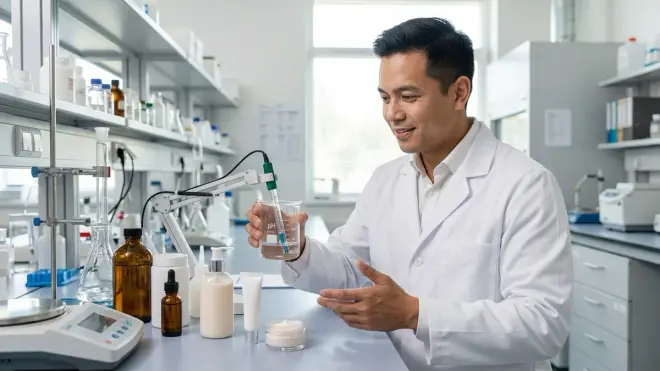
Peptides are pH-sensitive. Most function optimally between pH 4.5-6.5—close to skin's natural acidity. Preservatives keep microbial contamination at bay without destabilizing actives. Both are non-negotiable in water-based formulations, yet they're where formulators often compromise to chase "clean" labels.
Phenoxyethanol (≤1%): The workhorse preservative. Broad-spectrum efficacy against bacteria, yeast, and mold. Synthetic but well-tolerated. Often paired with ethylhexylglycerin or caprylyl glycol for synergy and reduced concentration.
Leuconostoc/Radish Root Ferment Filtrate: A fermentation-derived preservative favored in "natural" formulations. Works well against bacteria, less effective against mold. Requires secondary preservatives for full-spectrum protection. If this is the only preservative listed, scrutinize shelf life and storage instructions.
Sodium Benzoate + Potassium Sorbate: The classic acid-based preservative pair. Effective only in acidic formulations (pH <5). If you see these alongside peptides, the formula is properly pH-balanced for both preservation and active stability.
Citric Acid: A pH adjuster, not primarily a preservative. Buffers formulations to the acidic range. If listed near the end of ingredients, it's there to fine-tune pH to optimal peptide activity range.
Sodium Hydroxide: A strong base used to neutralize carbomers and adjust pH upward. Its presence doesn't mean the final product is alkaline—it's a processing agent. Final pH is what matters.
EDTA (Ethylenediaminetetraacetic Acid): A chelating agent that binds metal ions. Prevents oxidation and preservative degradation. Controversial in eco-conscious circles due to persistence in water systems, but functionally irreplaceable at concentrations of 0.01-0.1%.
Understanding the broader context of pH in skincare, understanding pH balance and barrier function (though focused on scalp care) translates directly to body formulations and the importance of maintaining acidic pH for both barrier health and active stability.
Fragrance and Sensitization Risks
Fragrance is the sensory seduction that makes you reach for the bottle. It's also the most common cause of contact dermatitis in cosmetics. Synthetic fragrance cocktails can contain hundreds of undisclosed molecules—several known sensitizers. Essential oils aren't automatically safer; many contain allergenic terpenes.
Parfum/Fragrance: The catch-all term hiding proprietary blends. If this appears high on the list (top 10 ingredients), scent is a priority over actives. Not inherently problematic if you're not sensitive, but opacity is frustrating for those tracking specific allergens.
Limonene, Linalool, Geraniol, Citronellol: Fragrance components required to be disclosed individually in the EU if present above 0.001% in leave-on products. Their presence at the end of an ingredient list signals compliance with EU cosmetic regulations—a good proxy for transparency even in non-EU markets.
Essential Oils (Lavandula Angustifolia, Citrus Aurantium Dulcis Peel Oil, etc.): Natural fragrance sources. Lavender oil contains linalool and linalyl acetate—beautifully aromatic but potential sensitizers. Citrus oils are photosensitizing. If you see multiple essential oils listed, the formula is heavily scented, and cumulative allergen load increases.
Fragrance-Free vs Unscented: Fragrance-free means no aromatic compounds added. Unscented means masking fragrance was added to cover the smell of raw ingredients. Check for "parfum" or essential oils to confirm which you're getting.
The emotional and chemical complexity of scent in beauty products is where I live—those opening notes of neroli that unfold into a base of sandalwood and skin musk, the way a formula smells different in the bottle versus on warm skin three hours later. But transparency matters more than poetry. If a brand won't disclose its fragrance allergen profile, I question what else they're obscuring.
For those building routines with minimal sensitization risk, eco-effective beauty routine checklist prioritizes ingredient transparency and environmental safety alongside performance.
Final Check Before You Go
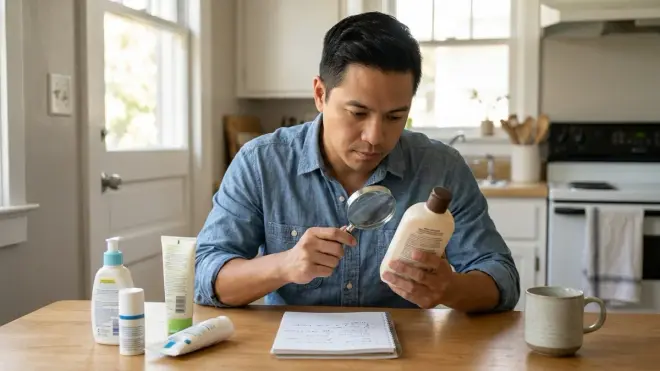
Before you commit to that tube of peptide body lotion, cross-reference this rapid-fire checklist:
- At least one palmitoylated peptide in the first half of the ingredient list
- Multi-weight hyaluronic acid or glycerin above 3% for hydration
- Ceramide complex (NP, AP, EOP) with cholesterol and fatty acids for barrier support
- At least one antioxidant (vitamin E, C derivative, ferulic acid, or plant extract)
- Preservative system appropriate for water-based emulsion (phenoxyethanol, ferment filtrates, or acid pair)
- pH-adjusting ingredients (citric acid or sodium hydroxide) suggesting proper formulation buffering
- Texture modifiers (silicones, fatty alcohols, or polymers) that match your skin preference
- Fragrance transparency: disclosed allergens or fragrance-free claim
- No peptide-disrupting ingredients: high-concentration alcohols (SD alcohol 40, denatured alcohol) in the first third of the list, which denature proteins
- Manufacturing origin disclosed (Korean, French, and Japanese factories often signal superior formulation chemistry for comparable pricing)
This checklist isn't exhaustive, but it filters out 90% of under-formulated products masquerading as active body care.
Frequently Asked Questions
What percentage of peptides should be in body lotion for it to be effective?
Most effective peptide body lotions contain between 3-8% total peptide concentration across all peptide types listed, though brands rarely disclose exact percentages on consumer packaging. Individual peptides like Palmitoyl Tripeptide-1 demonstrate efficacy at 2-4%, while combinations like Matrixyl 3000 (Palmitoyl Tripeptide-1 + Palmitoyl Tetrapeptide-7) work at 4-8% combined concentration. If peptides appear after the fifth or sixth ingredient—especially after preservatives—concentration is likely below therapeutic levels.
Can I use peptide body lotion with retinol or vitamin C products?
Yes, peptides are generally compatible with both retinol and vitamin C derivatives when applied sequentially, though pH considerations matter. Apply the most acidic product first (typically vitamin C at pH 3-4), wait 5-10 minutes for absorption, then follow with peptide lotion (pH 4.5-6.5). Retinol can be layered with peptides in the same routine since both function optimally at similar pH ranges. Avoid formulations mixing high-concentration direct acids (glycolic, lactic) with peptides in the same product, as very low pH can hydrolyze peptide bonds over time.
How long does it take to see results from peptide body lotion ingredients?

Clinical studies on topical peptides demonstrate measurable improvements in skin elasticity and hydration within 4-6 weeks of consistent daily application, with collagen density changes becoming visible around 8-12 weeks. You'll notice immediate hydration and texture improvement from supporting ingredients like hyaluronic acid and ceramides, but peptide-driven structural changes—firmer skin, reduced crepiness, improved bounce—require the time it takes for fibroblasts to synthesize new collagen and elastin. Discontinue use and those gains reverse within 4-6 weeks as natural degradation outpaces synthesis again.
Final Thoughts
Your skin is the largest organ you'll ever own, and coating it in empty promises feels like betrayal. The difference between a peptide body lotion that performs and one that merely moisturizes lives in these ingredient details—molecular weights that determine penetration, supporting lipids that build the scaffolding for peptides to work within, antioxidants that protect both actives and skin from degradation. Price doesn't always correlate with quality. I've tested drugstore formulations with superior peptide concentrations to prestige brands that rely on packaging and mystique.
Read the back of the bottle before you're seduced by the front. Look for peptide body lotion ingredients that signal investment in delivery systems, not just active name-dropping. Your skin will respond to chemistry, not marketing. And when you find that formula that makes your forearm feel like it remembers youth again—that combination of slip and absorption and gradual resilience returning over weeks—you'll know exactly why it works.