


You've seen them: those side-by-side clinical images showing plumped skin, faded scarring, refined texture. The salmon dna before after photos circulating through dermatology offices and Instagram feeds promise something botanical extracts and synthetic peptides can't quite deliver—cellular regeneration at a molecular level. But what are you actually looking at when you examine these images? What changes are cosmetic sleight-of-hand, and what represents genuine dermal remodeling?
The transparency here matters. PDRN (polydeoxyribonucleotide) therapy—the technical name for salmon DNA treatments—represents one of the most compelling bioregenerative actives in contemporary aesthetic medicine. But understanding what these treatments can and cannot do requires looking past the marketing glow.

What Is Salmon DNA Treatment?
PDRN is extracted from salmon sperm cells through enzymatic digestion and purification. The resulting molecules are short chains of nucleotides—the building blocks of DNA—with an average molecular weight between 50-1500 kilodaltons. These fragments are biocompatible with human tissue due to evolutionary similarities in purine and pyrimidine base structures.
When injected or applied topically with microneedling, PDRN activates adenosine A2A receptors in dermal fibroblasts. This isn't a surface-level plumping trick. It's a signaling cascade that upregulates VEGF (vascular endothelial growth factor) and stimulates collagen synthesis through the TGF-β pathway. Clinical concentrations typically range from 1-3% PDRN by weight in injectable formulations, while topical serums contain 0.5-1%.
The material feels slippery, almost mucin-like, with a faint marine quality that better formulations mask with hyaluronic acid or peptide complexes. Korean and Italian manufacturers dominate the clinical-grade market—countries where PDRN has regulatory approval beyond cosmetic claims. The Dr. Different Vitalift-A Serum contains 1% PDRN alongside niacinamide and adenosine, demonstrating how accessible formulations now incorporate this active.
Manufacturing origin matters here. Korean brands like Rejuran source PDRN from Norwegian salmon processed in FDA-inspected facilities. Italian pharmaceutical companies extract it under cGMP conditions. You want third-party testing for heavy metal contamination and bacterial endotoxins—salmon isn't inherently clean when you're breaking down cellular material.
The molecular weight determines penetration depth. Lower MW fragments (50-150 kDa) penetrate the epidermis more readily but offer shorter-lived effects. Higher MW chains (800-1500 kDa) require injection or aggressive microneedling but persist longer in dermal tissue. This explains why salmon dna microneedling protocols produce more dramatic results than serum application alone.
How Salmon DNA Treatment Works
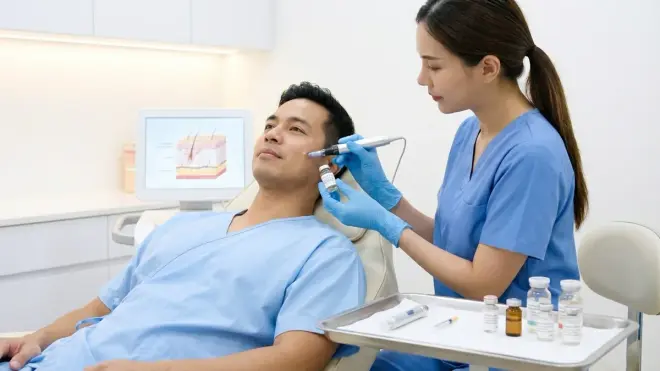
The mechanism unfolds in three distinct phases. First comes immediate hydration—PDRN molecules attract water similarly to hyaluronic acid, creating transient plumping within 24-48 hours. This is what you see in suspiciously early "after" photos taken the day following treatment. It's real, but it's temporary.
Phase two begins around day 5-7: angiogenesis and fibroblast activation. VEGF expression increases microcirculation in the treatment area. You'll notice a subtle glow—not from surface reflection but from improved blood flow beneath the epidermis. Fibroblasts begin synthesizing new collagen I and III, though this extracellular matrix remodeling won't be visibly apparent for weeks.
The third phase spans weeks 4-12: collagen maturation and tissue reorganization. This is when legitimate before-and-after comparisons should be made. Skin appears thicker on ultrasound imaging. Atrophic scarring fills from beneath. Fine lines soften not through surface smoothing but through actual dermal volume increase.
Here's the critical distinction: salmon dna before after photos taken at 48 hours show hydration and temporary swelling. Photos at 8-12 weeks show structural change. The former is marketing. The latter is medicine.
Clinical studies using 2% PDRN injections three times over six weeks show average dermal thickness increases of 12-18% on ultrasound. Skin elasticity (measured via cutometry) improves by approximately 15-20%. Transepidermal water loss decreases by 25-30%, indicating improved barrier function. These are measurable, reproducible outcomes—not subjective "glow" assessments.
The treatment doesn't work universally. Smokers show 40% reduced response due to chronic vasoconstriction and impaired adenosine receptor function. Individuals with autoimmune conditions or keloid-prone skin may experience unpredictable inflammatory responses. Age matters too—collagen synthesis capacity declines with cellular senescence, so a 55-year-old won't see the same percentage improvement as a 35-year-old.
Topical application with 1% PDRN serums produces gentler results—perhaps 30-40% of what injections achieve—but avoids needles and downtime. Budget-friendly PDRN formulations have emerged from Korean and Japanese manufacturers, bringing price-per-milliliter costs down from $200+ to around $30-50 for 30ml. The quality gap between pharmaceutical and cosmetic-grade PDRN has narrowed significantly since 2023.
Combination protocols amplify results. Pairing PDRN with 0.5% retinol or 10% niacinamide creates complementary pathways: PDRN stimulates fibroblasts while retinoids accelerate cell turnover and niacinamide reduces inflammation. Bioregenerative skincare routines typically layer these actives with 12-hour spacing to avoid receptor competition.
Why Understanding These Results Matters
The aesthetic industry profits from confusion. When you can't distinguish between 48-hour swelling and 12-week collagen remodeling, you'll attribute magic to basic hydration. You'll pay premium prices for effects that any humectant could temporarily deliver.
Financial literacy requires visual literacy. Salmon DNA injectable treatments run approximately $400-800 per session, with 3-4 sessions recommended. That's $1,200-3,200 for a treatment course. If the before-and-after images a clinic shows you were shot two days apart, you're looking at hydration effects that won't last two weeks—not the structural changes that justify that investment.
Quality salmon dna before after documentation should include:
- Consistent lighting (same angle, same time of day, identical camera settings)
- Timeline transparency (exact days/weeks between images)
- Untouched skin (no makeup, no skincare applied beforehand)
- Clinical measurements (ultrasound readings, cutometry data, not just subjective assessments)
The implications extend beyond financial waste. Misunderstanding results leads to unrealistic expectations, which drives people toward more aggressive interventions. If you expect immediate, dramatic transformation and see only subtle improvement, you might escalate to lasers or fillers when patience and continued PDRN therapy would have delivered.
From a sustainability perspective, salmon DNA extraction can be remarkably eco-effective when sourced from aquaculture byproducts. Norwegian salmon farming produces tons of milt (sperm cells) as waste during breeding operations. Extracting PDRN converts biological waste into high-value actives. Compare this to synthetic peptides requiring petrochemical feedstocks and energy-intensive synthesis.
Transparency creates informed consent. You deserve to know that topical PDRN serums—while less dramatic than injections—offer a non-invasive, gradual path to similar improvements over 6-9 months. You should understand that combining affordable barrier-repair ingredients with PDRN creates synergy that luxury mono-ingredient serums can't match.
Types of Salmon DNA Treatment Documentation

Before-and-after images fall into several categories, each revealing different aspects of treatment response.
Clinical photography uses standardized equipment—typically Canon or Nikon DSLRs with ring flash diffusers, fixed 100mm macro lenses, consistent ISO and aperture settings. The lighting eliminates shadows that could mask or exaggerate texture changes. Multiple angles (frontal, 45-degree oblique, profile) capture dimensional changes in skin volume. These images, while sterile and unflattering, provide the most honest assessment.
Dermoscopic imaging magnifies skin at 10-40x, revealing changes invisible to the naked eye. You can observe individual pore refinement, microvessel formation, and pigment distribution shifts. For salmon dna facial treatments targeting hyperpigmentation or scarring, dermoscopy shows exactly where melanin concentration decreases and where new collagen fills atrophic regions.
Ultrasound documentation measures dermal thickness in millimeters. A high-frequency probe (20-30 MHz) creates cross-sectional images showing the epidermis-dermis junction and mid-dermal density. This removes subjectivity entirely—you're seeing structural change quantified in tissue depth.
Patient-taken smartphone images dominate social media. These are simultaneously the most relatable and most misleading. Lighting, angle, focal length, and expression vary wildly. A slight tilt of the chin or change in overhead lighting can mimic years of aging or reversal. Yet these images capture something clinical photos miss: how skin looks in real life, not under medical examination lights.
Video documentation increasingly appears in clinical settings. A 60-second clip under rotating lighting reveals skin texture, light reflection patterns (a proxy for smoothness), and dynamic expression lines. You can't fake this with angle tricks. The PDRN therapy protocols used in Korean dermatology clinics often include before-and-after video as standard documentation.
Frequently Asked Questions
How long until you see real results from salmon DNA treatment?
Genuine structural improvements from PDRN become visible around week 6-8, with optimal results at 10-12 weeks post-treatment. The immediate plumping you see in salmon dna before after photos taken within 72 hours is temporary hydration, not collagen remodeling. Injectable treatments show faster visible improvement than topical applications, which require 3-6 months of consistent use to produce comparable effects.
Can you fake salmon DNA before and after results?
Yes, easily. Photographing a dehydrated, makeup-free face under harsh overhead lighting, then comparing it to a well-hydrated, subtly made-up face under soft diffused lighting creates dramatic apparent improvements with zero actual treatment. Differences in facial expression (relaxed versus tense), angle changes as small as 5 degrees, and even the time of day (morning puffiness versus evening) can simulate treatment effects. Legitimate documentation requires identical lighting, angles, camera settings, and clean skin across all photos.
Do topical salmon DNA serums work as well as injections?
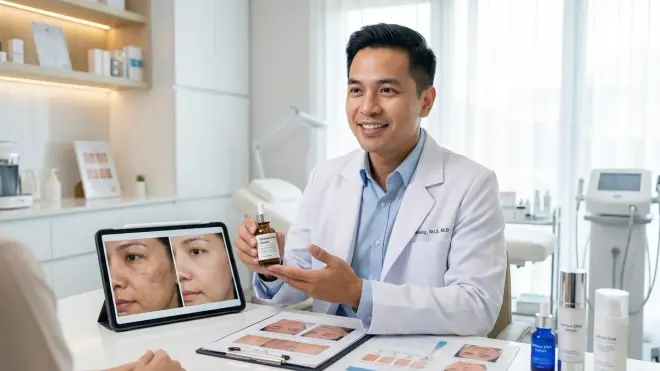
Topical PDRN formulations at 0.5-1% concentration deliver approximately 30-40% of the collagen synthesis stimulation that 2-3% injectable treatments produce, according to fibroblast culture studies. Microneedling bridges this gap—applying PDRN serum immediately after 0.5mm needling increases penetration to dermal layers where fibroblasts reside, potentially achieving 60-70% of injection efficacy without clinic visits. Budget-conscious protocols combine affordable topical PDRN with at-home dermarolling rather than expensive injectable sessions.
What changes in before and after photos indicate real PDRN results versus temporary hydration?
Real collagen remodeling shows as improved skin thickness (cheeks appear fuller without makeup contouring), reduced atrophic scar depth (depressed areas fill from below), and refined texture visible at close range (smaller pore appearance, smoother light reflection). Temporary hydration creates surface plumping that appears uniform across the face, disappears by morning if photos are evening-shot, and shows no change in actual scar depth or skin thickness on ultrasound. The timeline matters critically—legitimate salmon dna before after comparisons require 8-12 weeks minimum.
How much does properly documented salmon DNA treatment cost?
Clinical-grade injectable PDRN treatments with thorough before-and-after documentation (standardized photography plus ultrasound or dermoscopic imaging) typically cost around $500-800 per session in US dermatology clinics. Korean aesthetic clinics charge approximately $200-400 per session with identical protocols. For at-home topical protocols, a 3-month supply of quality 1% PDRN serum plus microneedling tools runs around $80-120 total, though documentation becomes your responsibility—consider taking monthly photos using a tripod and consistent bathroom lighting.
Summary
The salmon dna before after photos flooding your feed tell multiple stories simultaneously. Some document genuine dermal remodeling—the 12-week result of activated fibroblasts synthesizing new collagen, improved microcirculation supporting tissue health, and adenosine receptor pathways strengthening structural proteins. Others capture nothing more than temporary hydration or clever lighting shifts.
Your analytical eye separates science from spectacle. Look for timeline transparency, consistent documentation methodology, and clinical measurements beyond subjective assessments. Understand that injectable PDRN produces faster, more dramatic results but requires professional administration and higher investment. Topical formulations offer accessible, gradual improvement when combined with proper penetration enhancement.
The complete PDRN skincare protocol requires patience, consistency, and realistic expectations calibrated to actual cellular processes rather than marketing promises. Your skin regenerates according to biological timelines, not Instagram posting schedules.
Choose treatments based on documented mechanisms and transparent results. Your face deserves that precision.