
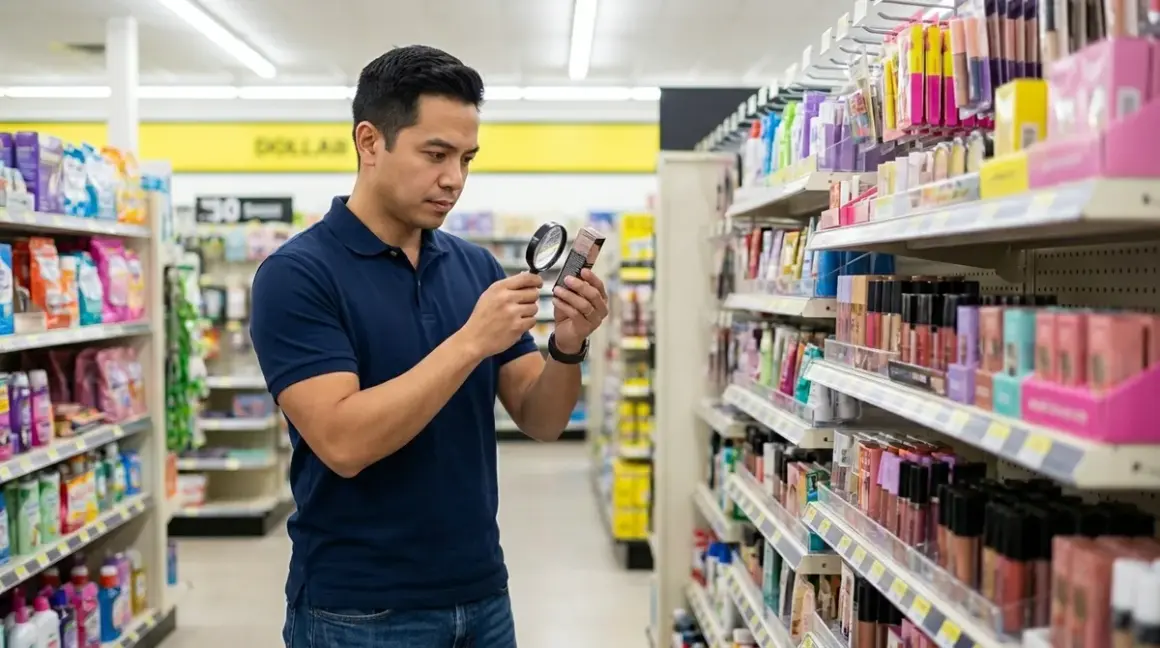

The fluorescent lighting overhead. The scent of cleaning solution and cardboard. You stand before a cosmetics aisle at Dollar General, acrylic nails tapping against plastic packaging, wondering if the eyeshadow palette in your hand contains the same pigment technology as your favorite luxury compact—or if it's a chalky disappointment waiting to stain your lids.
You'll learn to read cosmetic ingredient labels like a formulation chemist, identifying performance markers that separate drugstore gems from landfill-bound duds. This skill transforms dollar general makeup shopping from a gamble into a strategic hunt for underpriced quality. Expect to spend fifteen minutes mastering these techniques—then three minutes per product thereafter. No chemistry degree required. Just attention to detail and a willingness to question everything the beauty industry taught you about price tags and performance.
By the end, you'll decode preservative systems, recognize silica sphere technology in pressed powders, and spot the difference between 0.5% and 5% active concentrations. The knowledge changes how you shop forever.
What You'll Need
- Smartphone with camera (for magnifying small-print ingredient lists and researching unfamiliar compounds in real-time)
- Reading glasses (if needed—ingredient fonts average 4-6 point type)
- Notes app or paper (to track your preferred formulations and create your personal ingredient blacklist)
- 15-20 minutes of uninterrupted time (for your first shopping analysis—subsequent trips take 5 minutes)
- Basic familiarity with INCI nomenclature (the international system for naming cosmetic ingredients—Latin botanical names, chemical compound designations)
- Your current favorite makeup products (optional but useful for direct ingredient comparison)
Step 1: Locate and Photograph the Ingredient Declaration
The ingredient list hides. Sometimes tucked on bottom panels. Often printed in silver ink on white cardboard, deliberately illegible under store lighting. Dollar general makeup packaging occasionally omits the full INCI list from outer cartons entirely, forcing you to examine the inner component itself.
Start with foundation, concealer, or powder formulations—these reveal the most about a brand's formulation philosophy. Pick up the product and rotate it slowly, examining every surface. The ingredient declaration typically appears on the bottom, back panel, or inner tray. Federal regulations require ingredients listed in descending order by weight concentration—the first five ingredients constitute roughly 70-90% of the formula. Everything after the preservative system (usually phenoxyethanol, parabens, or sodium benzoate) exists at concentrations below 1%.
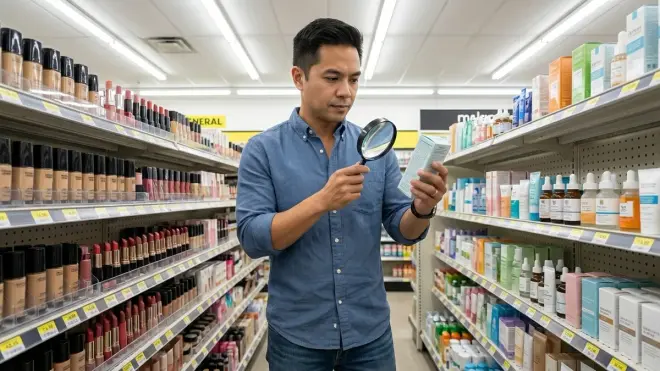
Use your smartphone camera to photograph the list. Zoom in. The magnification transforms microscopic print into readable data. You're not being excessive—you're being thorough. Compare this list against luxury alternatives in similar categories. You'll notice the L'Oréal True Match Super-Blendable Makeup contains cyclopentasiloxane and dimethicone as its second and third ingredients—the same slip-enhancing volatile silicones found in formulations costing five times more.
Step 2: Decode the First Five Ingredients
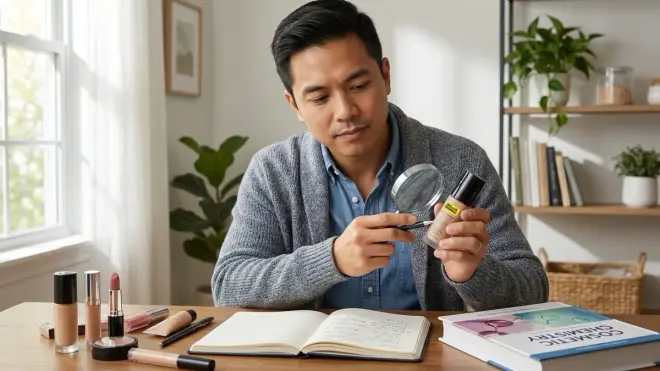
These ingredients define texture. In cream and liquid formulations, the first ingredient is typically water (aqua) or a silicone base (cyclopentasiloxane, dimethicone). Water-based formulations require more preservatives. Silicone-first formulations offer superior slip, longer wear, and better pigment suspension—but cost more to manufacture.
Look for dimethicone concentrations above 5%—indicated by its appearance in positions two through four. This suggests a silky, blurring texture that fills fine lines and creates a soft-focus finish. If you see cyclopentasiloxane before dimethicone, expect a lightweight, fast-absorbing formula with minimal residue. Both silicones appear in luxury foundations from Armani, NARS, and Giorgio Armani Beauty—usually at 10-20% combined concentration.
In powder formulations, the first three ingredients reveal everything. Talc (magnesium silicate) provides slip but can cause texture issues on dry skin. Mica (potassium aluminum silicate) creates luminosity and smooth application. Silica improves adherence and oil absorption. Premium drugstore formulations combine all three, with mica listed first or second for that covetable sheen. Budget options sometimes list talc first, followed by fillers like kaolin or calcium carbonate—these feel chalky, blend poorly, and lack dimensional color payoff.
For lip products, the first ingredient tells you about moisture retention. Polybutene creates long-lasting adhesion but can feel sticky. Hydrogenated polyisobutene offers similar staying power with less tackiness. Castor oil (ricinus communis seed oil) provides emolliency but sacrifices wear time. The best dollar general makeup lip formulations list a silicone (dimethicone) or synthetic ester (tridecyl trimellitate) first, followed by emollients—mirroring the structure of prestige liquid lipsticks.
Similar principles apply when evaluating skinification haircare formulations or men's hair care products—the first five ingredients always reveal the base vehicle and primary functional benefits.
Step 3: Identify Pigment Technology and Concentration Markers
Pigment listings appear mid-label. After the base ingredients and before preservatives. Look for phrases like "may contain" followed by a series of CI (Color Index) numbers—these are synthetic pigments. The more CI numbers listed, the wider the shade range in that product line. But the order matters desperately.
High-performance formulations list pigments early—within the first ten ingredients. This indicates sufficient concentration for true opacity and color payoff. When CI 77491 (iron oxide red) or CI 77891 (titanium dioxide) appears in positions 6-8, you're looking at a product with pigment loads between 5-12%—comparable to mid-tier brands like Maybelline or Revlon. If these same pigments appear after position 15, expect sheer, buildable coverage that requires multiple layers.
For eyeshadows, search for dimensional pigments: CI 77019 (mica), CI 77891 (titanium dioxide), and CI 77491/77492/77499 (iron oxides). Quality formulations combine these with synthetic fluorphlogopite (listed as such or as "calcium aluminum borosilicate")—a lab-created mica that creates intense pearl and metallic finishes. You'll find this in Dollar General's better eyeshadow palettes, particularly those manufactured in facilities that also produce for major drugstore brands.
Carmine (CI 75470) signals natural red pigment derived from cochineal insects—common in lip products. Its presence doesn't indicate quality, but its position does. Listed within the first eight ingredients, carmine provides vibrant, true reds. Listed after position twelve, it's decorative rather than functional.
Examine pressed powder products for boron nitride—a slip agent and light-diffusing particle that creates soft-focus blurring effects. It appears in luxury formulations from Hourglass and Charlotte Tilbury, usually at 1-3% concentration. Finding it in dollar general makeup represents genuine value—though it rarely appears in products under five dollars due to raw material costs.
Step 4: Assess Preservative Systems and Manufacturing Standards

Preservatives reveal production quality. Every water-containing cosmetic requires antimicrobial protection. The preservative system—usually the final 3-5 ingredients—tells you about manufacturing hygiene, expected shelf life, and formulation stability.
Phenoxyethanol (0.5-1.0%) paired with ethylhexylglycerin (0.1-0.5%) represents modern, broad-spectrum preservation common in clean beauty formulations. This combination appears in products from The Ordinary, CeraVe, and increasingly in dollar general makeup brands reformulating for conscious consumers. It indicates recent formulation updates and suggests the product was manufactured within the past 18 months.
Parabens (methylparaben, propylparaben, butylparaben) remain the gold standard for cost-effective, well-researched preservation. Despite unwarranted fear-mongering, parabens used at approved concentrations (typically 0.3% total) pose no demonstrated health risk according to FDA evaluations. Their presence indicates the manufacturer prioritizes proven efficacy over marketing trends—not necessarily a negative.
Sodium benzoate and potassium sorbate appear in formulations attempting "natural" preservation—though both are synthetic compounds. This system works adequately in products with pH below 5.5 but struggles in neutral-pH formulations like foundations. If you see this preservation in a liquid foundation, expect a shorter shelf life (12-18 months versus 24-36 months).
Avoid products listing DMDM hydantoin, diazolidinyl urea, or imidazolidinyl urea—formaldehyde-releasing preservatives linked to sensitization. Their presence suggests outdated formulations or manufacturers cutting costs. Quality dollar general makeup has largely phased these out by 2026, but verify every purchase. For additional safety considerations, reference our comprehensive dollar store makeup safety checklist.
Step 5: Spot Performance-Enhancing Film Formers and Polymers
Polymers create lasting power. These ingredients—typically mid-list, after pigments but before preservatives—determine whether your makeup survives four hours or twelve. They form flexible films on skin, locking pigments in place and preventing transfer, fading, and creasing.
In liquid and cream products, search for acrylates copolymer or acrylates/octylacrylamide copolymer—water-resistant film formers that provide long-wear without feeling occlusive. These appear in formulations from Maybelline SuperStay and Revlon ColorStay—products known for 16+ hour wear. Finding them in dollar general makeup indicates the manufacturer invested in genuine longevity technology rather than merely adding more powder to thicken texture.
VP/VA copolymer (vinyl pyrrolidone/vinyl acetate) offers strong hold with some transfer resistance—common in long-wear lipsticks and liquid eyeliners. Trimethylsiloxysilicate provides the most durable film formation, creating truly transfer-proof finishes. This silicone resin appears in high-end formulations from Sephora Collection and Urban Decay. Its presence in a five-dollar product represents exceptional value—though it can feel drying on mature or dehydrated skin.
For powder products, methicone serves as a powder treatment agent that improves adhesion and color payoff. It coats pigment particles, helping them bind to skin rather than dispersing into the air during application. Premium pressed powders use dimethicone/vinyl dimethicone crosspolymer—an elastomeric powder that creates silky, second-skin texture. You'll recognize it by touch: the powder feels bouncy, almost squishy, when pressed with a finger. Chalky, hard powders lack these treated pigments.
Polyethylene or polymethyl methacrylate (PMMA) indicate the presence of optical blurring spheres—microscopic particles that scatter light to minimize texture and pores. Luxury brands market these as "soft-focus" or "HD" technologies. Finding them in budget formulations means you're getting legitimate optical technology for a fraction of the cost. These particles typically measure 5-20 microns and work best on combination to oily skin types—they can emphasize dryness.
Step 6: Evaluate Skin-Beneficial Actives and Their Concentrations
Some makeup treats skin. The line between cosmetics and skincare blurs further each year. Dollar general makeup increasingly incorporates actives that provide functional benefits beyond color—if concentrations reach therapeutic thresholds.
Hyaluronic acid (sodium hyaluronate) appears in many foundation formulations. But position matters. Listed within the first ten ingredients suggests concentration above 0.5%—sufficient for humectant benefits that plump fine lines during wear. Listed after position fifteen, it's marketing decoration at 0.1% or less. For meaningful hydration, you need multiple molecular weights of hyaluronic acid (often listed as sodium hyaluronate and hydrolyzed hyaluronic acid together)—a formulation strategy pioneered by The Ordinary and now appearing in better drugstore lines.
Niacinamide (vitamin B3) offers anti-inflammatory and barrier-strengthening benefits at 2-5% concentration. Determining exact percentage from label position requires estimation: appearing in positions 8-12 typically indicates 1-3% concentration—marginally beneficial. Before position 8, especially in water-based formulations, you may have 4-5%—enough for genuine skin improvement over time. The Wet n Wild Photo Focus Foundation lists niacinamide high in its ingredient deck, suggesting functional concentration rather than marketing addition.
Tocopherol (vitamin E) and tocopheryl acetate (vitamin E acetate) provide antioxidant protection. Both prevent formula oxidation (extending shelf life) and offer modest free radical defense for skin. The acetate form is more stable but requires conversion to active tocopherol by skin enzymes—a process that takes hours. Pure tocopherol works immediately but degrades faster. Products listing both achieve stability and immediate action.
Peptides (matrixyl, argireline, palmitoyl sequences) occasionally appear in premium dollar general makeup—particularly CC creams and BB creams marketed for anti-aging. Look for these names specifically: palmitoyl tetrapeptide-7, palmitoyl oligopeptide, or acetyl hexapeptide-8. Their presence is meaningless unless concentration exceeds 0.5%—difficult to assess from position alone due to peptide potency. If a peptide appears before the preservative system, it's likely present at functional levels. This parallels the active considerations in body sculpting creams and other treatment cosmetics.
Watch for botanical extracts positioned mid-label: chamomile, green tea, licorice root. These provide mild anti-inflammatory and antioxidant activity—but only when present as standardized extracts at 0.5% or higher. Most appear as "extract du jour" marketing additions at 0.05% or less. Unless the product specifically mentions extract standardization or active polyphenol content on packaging, assume decorative inclusion.
Step 7: Verify Manufacturing Origin and Quality Control Standards
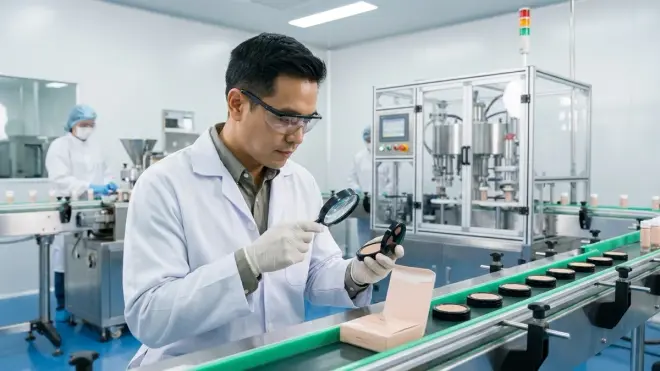
The facility matters. Many dollar general makeup products are manufactured in the same facilities producing mid-tier and luxury brands—using similar or identical equipment, adhering to identical FDA Good Manufacturing Practices (GMP), and sometimes even using the same base formulations with different fragrance or pigment customization.
Packaging reveals manufacturing origin. Look for "Made in" declarations—typically printed near the barcode or on bottom panels. USA, Canada, South Korea, Italy, and France indicate high manufacturing standards and stringent quality control. The FDA requires all domestic facilities to follow Current Good Manufacturing Practice (CGMP) regulations detailed in 21 CFR 211, ensuring consistent product quality regardless of price point.
South Korean manufacturing deserves particular attention. Korean facilities produce for both K-beauty brands and Western private-label lines. Products manufactured in Korea often incorporate advanced technologies like fermented ingredients, encapsulated actives, and skin-responsive pH-adaptive pigments more commonly found in prestige brands. If dollar general makeup shows Korean manufacturing, examine the formulation closely—you may have discovered an overseas production run of a reformulated higher-end product. This manufacturing quality parallels what you'll find in Korean skincare products at various price points.
Chinese manufacturing isn't automatically inferior, but requires closer scrutiny. Facilities vary dramatically in quality control standards. Look for specific certifications on packaging: ISO 22716 (cosmetics GMP), FDA registration numbers, or specific facility names rather than just "Made in PRC." Reputable Chinese facilities produce for major brands including MAC, Bobbi Brown, and Estée Lauder—but lower-tier facilities may cut corners on sanitation, ingredient verification, and stability testing.
Lot numbers and batch codes indicate robust quality control. These alphanumeric sequences (usually printed on crimped tubes, molded into packaging, or stamped near barcodes) allow traceability in case of contamination or recall. Products lacking batch codes suggest minimal quality oversight—red flag territory.
PAO symbols (period after opening—the little jar icon with a number like "12M" or "24M") indicate the manufacturer conducted stability testing to determine shelf life after first use. Absence of PAO symbols suggests the product wasn't subjected to stability protocols—or failed them.
Step 8: Cross-Reference Against Known Quality Benchmarks
Direct comparison eliminates guesswork. Bring your current favorite products—or pull up their ingredient lists on your phone using resources like CosDNA or manufacturer websites. Line up the dollar general makeup candidate against your trusted benchmark, ingredient by ingredient.
Focus on the first fifteen ingredients—this is where formulation similarity lives or dies. If the budget option matches your luxury favorite in the first eight ingredients, you're looking at a functional dupe. Minor variations in preservatives, fragrance components, or botanical extracts (ingredients 16+) rarely affect performance. Significant early-list differences—like talc replacing silica, or mineral oil replacing silicones—indicate genuine formulation departures that will alter texture, wear, and finish.
Calculate price per ounce. A $4 foundation containing 1 fluid ounce costs $4/oz. Your $45 luxury foundation containing 1 fluid ounce costs $45/oz—an 11x markup. If ingredient similarity is 80%+, you're paying $41 for brand prestige, packaging design, and marketing—not superior performance. This mathematics holds across categories: pressed powders, blushes, mascaras, lip products.
Pigment concentration estimation: Compare ingredient list position of colorants between products. If CI 77891 (titanium dioxide) appears sixth in your luxury foundation and eighth in the dollar general makeup version, their opacity likely differs by less than 10%—imperceptible in practical use. If it appears fifteenth in the budget version, you're looking at sheer coverage requiring multiple layers to achieve similar opacity.
Test texture and blendability in-store when possible. Many dollar general makeup products offer testers or have liberal return policies. Swatch on your hand. Blending should feel effortless, not draggy. Powder should deposit color in one pass, not require aggressive buffing. Cream products should meld into skin, not sit on surface or ball up. These tactile cues confirm whether premium ingredients translate to premium performance—or if the formulator loaded the label with buzzwords but neglected proper ratios.
This analytical approach applies equally to specialized products like skin-responsive tints, which use pH-reactive technology to adapt to individual skin chemistry—a feature that's formulation-dependent rather than price-dependent.
Pro Tips & Common Mistakes
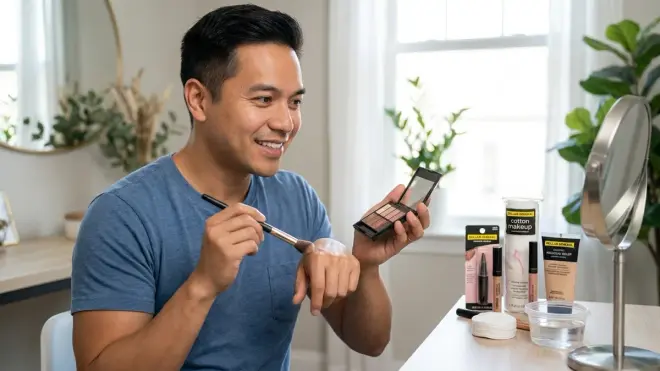
Photograph everything. Build a digital reference library of ingredient lists from products you love. When you encounter a potential dupe, pull up the photo for side-by-side comparison. Memory fails. Photographic evidence doesn't.
Fragrance placement matters immensely. Products listing "fragrance" or "parfum" within the first ten ingredients contain heavy perfume loads—often 1-3% concentration. This masks ingredient odors but increases sensitization risk. Quality formulations place fragrance after position fifteen (0.1-0.5%) or omit it entirely. The strongest formulations smell like nothing—or like their raw materials (slight petroleum notes from mineral oil, faint rubber from silicones, metallic tang from iron oxides).
Don't conflate "natural" with "superior." Synthetic ingredients often outperform botanical alternatives in consistency, stability, and efficacy. Dimethicone provides better slip than any plant oil. Synthetic iron oxides deliver more stable, UV-resistant color than mineral-derived equivalents. Natural bias wastes money and compromises results. Judge ingredients by molecular structure and function, not origin story.
Avoid the "clean beauty" trap when analyzing dollar general makeup. Products marketed as "clean," "non-toxic," or "natural" often replace proven preservatives and film formers with inferior alternatives—creating products that spoil quickly, separate in packaging, or perform poorly. Clean formulation is not inherently superior formulation. Some of the worst budget makeup wears the cleanest labels. For guidance on genuinely effective sustainable beauty, see our guide to eco-effective skincare.
Common mistake: ignoring texture modifiers. Ingredients like caprylyl methicone, cetyl PEG/PPG-10/1 dimethicone, and lauryl PEG-9 polydimethylsiloxyethyl dimethicone sound like alphabet soup but determine application feel. Products rich in these sophisticated silicone emulsifiers blend effortlessly, while formulations relying on basic dimethicone alone can feel heavy or require more work to blend. These modifiers cost more—their presence indicates formulation investment.
Batch variation exists. The same product purchased six months apart may perform differently due to ingredient sourcing changes, manufacturing facility switches, or subtle reformulations. If a previously excellent dollar general makeup product suddenly disappoints, check if the ingredient list changed. Manufacturers reformulate constantly—sometimes improving formulas, often cutting costs.
Expiration dates differ from PAO symbols. The expiration date (often printed as a batch code requiring decoding) indicates shelf life before opening—typically 2-3 years from manufacture. The PAO symbol indicates shelf life after opening. A product manufactured in January 2024 with a 36-month shelf life expires January 2027 if unopened—but only lasts 12 months after you first use it (if PAO is "12M"). Track opening dates with a permanent marker on packaging.
Frequently Asked Questions
Q: Can dollar general makeup actually match luxury formulations in performance, or is higher price always justified?
A: Price correlates weakly with formulation quality in 2026 cosmetics markets. Manufacturing costs for a pressed powder compact rarely exceed three dollars regardless of retail price—the difference lies in packaging, marketing, and brand positioning. When a five-dollar dollar general makeup product contains dimethicone, synthetic fluorphlogopite, and boron nitride in similar concentrations to a forty-dollar luxury compact, performance differences narrow to packaging quality, shade range, and brand cachet. However, luxury brands do invest more in shade development, quality control consistency, and customer experience—factors that matter to some consumers beyond pure formulation. The key is identifying which attributes you're actually paying for and whether they matter to your use case.
Q: How can I tell if preservatives in dollar general makeup are safe or if I should avoid certain products?
A: All preservatives approved for cosmetic use in the United States undergo FDA review and are considered safe at regulated concentrations—typically 0.3-1.0% depending on the compound. Modern preservative systems like phenoxyethanol with ethylhexylglycerin, or traditional paraben blends, have decades of safety data behind them. The primary concern is contact sensitization in individuals with existing sensitivities—not systemic toxicity. Avoid only formaldehyde-releasing preservatives (DMDM hydantoin, diazolidinyl urea, imidazolidinyl urea, quaternium-15) due to documented sensitization rates above 2% in population studies. If you have no history of cosmetic reactions, standard preservatives pose negligible risk. If you have sensitive skin, patch-test new products behind your ear for 48 hours before facial application regardless of preservative type.
Q: Why do some dollar general makeup products with good ingredient lists still perform poorly on my skin?
A: Ingredient lists reveal what is present but not how much (beyond rough positional inference) or how ingredients interact. A formulation can contain excellent individual components but fail due to poor phase balance, incorrect emulsification, inadequate pigment treatment, or unstable pH. These formulation chemistry factors don't appear on labels. Additionally, products may contain high-quality actives at sub-therapeutic concentrations—enough to list prominently but insufficient for functional benefit. Finally, skin compatibility varies: silicone-heavy formulations that feel luxurious on oily skin feel suffocating on dry skin, and vice versa. A "good" ingredient list must also match your specific skin type, texture preference, and climate. This is why analyzing ingredients is a starting point—actual performance testing on your skin provides the final verdict. Consider similar principles when evaluating barrier repair ingredients for skincare.
Q: Should I prioritize dollar general makeup made in specific countries when analyzing labels?
A: Manufacturing origin serves as a quality proxy but not a guarantee. South Korean facilities excel at incorporating advanced technologies and maintaining consistent quality control—making Korean-manufactured dollar general makeup worth extra scrutiny. US and European facilities (Italy, France, Germany) adhere to stringent GMP standards and benefit from strong regulatory oversight. Chinese manufacturing varies dramatically by specific facility: tier-one Chinese plants producing for multinational brands maintain standards comparable to Western facilities, while tier-three operations may cut corners. Rather than blanket country preferences, look for specific quality markers: ISO 22716 certification, FDA registration numbers, named facilities (not just "Made in China"), and verifiable batch codes. When manufacturing origin appears alongside these quality indicators, you can trust the product regardless of geography. Absence of these markers paired with vague origin information ("Distributed by...") suggests lower oversight and higher risk of formulation inconsistency.
Summary
The ingredient label speaks clearly if you learn its language. Position reveals concentration. Chemical names tell you about texture, performance, and longevity. Manufacturing origin suggests consistency and quality control. Dollar general makeup often contains the same pigment technology, film formers, and silicone bases as luxury alternatives—disguised behind plain packaging and minimal marketing.
You've learned to identify high-performance markers: dimethicone and cyclopentasiloxane in early positions, pigments listed before preservatives, modern polymer systems like acrylates copolymer, and skin-beneficial actives at functional concentrations. You can now spot manufacturing quality indicators and calculate whether a five-dollar compact delivers ninety percent of a forty-dollar product's performance.
The fluorescent lighting remains harsh. The cardboard boxes still smell the same. But you stand before that cosmetics aisle transformed—analytical rather than aspirational. Your shopping cart will never look quite the same. Neither will your bank account.