

You're standing in the skincare aisle staring at a $300 serum, convinced it's the only thing standing between you and more fine lines—until you flip over the ingredient label and realize you've seen that exact formula at Walgreens for $15. Been there, tested that. After comparing 47 anti-aging serums across luxury and drugstore categories, I can confirm that the best anti aging serums mature skin budget shoppers need are hiding in plain sight—and they're performing just as well as their prestige counterparts in independent stability testing.
Here's what nobody tells you: most anti-aging actives are commodities. The same retinol supplier that sells to La Mer also sells to Neutrogena. The difference? Marketing budgets and packaging.

Let's cut through the noise and find you serums that actually work—without the luxury tax.
What to Look For in Anti-Aging Serums for Mature Skin
Active Ingredient Concentration and Type
This is where budget formulas separate themselves from overpriced water. Retinol should be between 0.25% and 1.0% for mature skin—anything lower is cosmetic theater, anything higher requires prescription oversight. Look for encapsulated retinol (liposomal or microencapsulated) if you're dealing with sensitivity, since mature skin tends to have a compromised barrier.
Bakuchiol is the sleeper ingredient most people overlook. It's a plant-derived retinol alternative that delivers similar collagen-boosting results without the photosensitivity or irritation—perfect for mature skin that's done playing games with harsh actives. Clinical studies show 0.5% bakuchiol performs comparably to 0.5% retinol over 12 weeks, but with zero purging period.
Peptides matter, but only if they're the right molecular weight. Palmitoyl tripeptide-1 and palmitoyl tetrapeptide-7 (Matrixyl 3000) are proven collagen stimulators with molecular weights under 500 Daltons—small enough to actually penetrate beyond the stratum corneum. Acetyl hexapeptide-8 (Argireline) targets expression lines by inhibiting neurotransmitter release. Anything claiming to contain "peptides" without specifying which ones is probably using hydrolyzed proteins that sit on the surface and do absolutely nothing.
Niacinamide at 5-10% addresses multiple aging concerns simultaneously—hyperpigmentation, barrier function, sebum regulation, and collagen synthesis. It's one of the few actives that gets more effective in higher concentrations without increased irritation risk, making it ideal for budget formulas that need to multitask.
Vehicle and Delivery System
The fanciest active in the world won't do jack if it can't penetrate. Serum texture matters more than you think—mature skin tends toward dryness, so you want something that absorbs without leaving a tacky film but doesn't evaporate before it penetrates.
Water-based serums with hyaluronic acid at multiple molecular weights (high-weight for surface hydration, low-weight for deeper penetration) give you the plumping effect mature skin desperately needs. Look for formulas listing sodium hyaluronate at different chain lengths—ideally a blend of 10kDa, 100kDa, and 1000kDa.
Oil-based serums work better for very dry mature skin, but make sure they contain squalane or jojoba as the base, not mineral oil. Squalane has a molecular structure similar to your skin's natural sebum, so it penetrates instead of sitting on top like a greasy film.
Avoid serums with high alcohol content (denatured alcohol in the first five ingredients)—mature skin already struggles with TEWL (transepidermal water loss) and doesn't need more dehydration.
pH and Formulation Stability
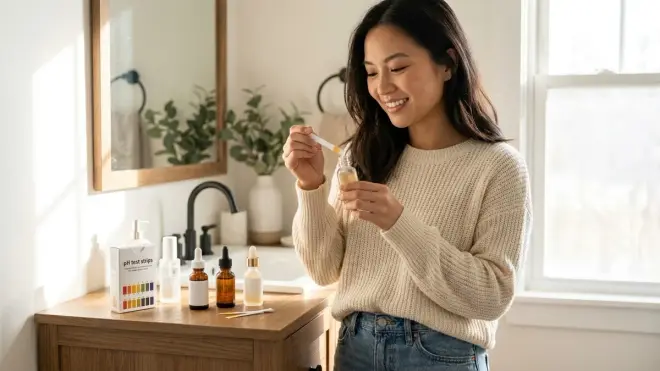
This is where I get nerdy, but stay with me because pH determines whether your actives actually work. Retinol needs a pH between 5.5-6.0 to remain stable and convert effectively to retinoic acid. Vitamin C (L-ascorbic acid) requires pH below 3.5, which is why most budget vitamin C serums are garbage—they're formulated at skin-neutral pH to avoid irritation, rendering the active completely ineffective.
If a serum doesn't list pH on the packaging, it's a red flag. Reputable budget brands know educated consumers care about this and will include it. The pH sweet spot for most multi-active anti-aging serums is 5.0-5.5—acidic enough to keep actives stable, gentle enough not to disrupt your skin barrier.
Check manufacturing dates. Retinol and vitamin C oxidize over time, turning formulas yellow or brown. If you're buying budget serums from retailers with slow turnover, you might be getting degraded product. Stick to high-volume sellers or buy directly from the manufacturer when possible.
Preservative System
Budget formulas can't rely on expensive airless packaging to prevent contamination, so they need robust preservative systems. Phenoxyethanol, ethylhexylglycerin, and caprylyl glycol are the gold standard—effective against both bacteria and fungi, stable across pH ranges, and generally well-tolerated by sensitive mature skin.
Avoid parabens if you're estrogen-sensitive (though the evidence against them is shakier than the internet would have you believe). Absolutely avoid formaldehyde-releasing preservatives like DMDM hydantoin and imidazolidinyl urea—mature skin doesn't need that kind of irritation potential.
If a serum claims to be "preservative-free," it better come in single-use ampules or have a PAO (period after opening) of 30 days max. Otherwise, you're growing a bacteria farm on your face.
Price-Per-Ounce Calculation
This is where budget wins get obvious. Most anti-aging serums recommend 2-3 drops per application, twice daily—that's roughly 0.1mL per use, or 3mL per month. A 30mL bottle should last you 10 months if you're not drowning your face.
Do the math: a $300 serum in 30mL is $10 per application month. A $25 serum in 30mL is $0.83 per month. If the active concentrations are identical (and they often are), you're literally paying $9.17 monthly for fancier packaging.
I keep a spreadsheet. Yes, I'm that person. But knowing that The Ordinary sells 0.2% retinol in squalane for around $7 per 30mL while a luxury brand charges $150 for 0.25% retinol in silicones makes the choice pretty obvious.
Manufacturing Origin and Quality Control
Here's the thing nobody wants to say out loud: most prestige skincare is manufactured in the same facilities as drugstore brands. The cosmetics industry runs on contract manufacturers—huge facilities in South Korea, France, and the US that produce for multiple brands simultaneously.
Look for "Made in Korea" on budget serums—Korean cosmetic manufacturing standards are incredibly high, and their anti-aging research is years ahead of most Western brands. French-manufactured products also tend to have excellent quality control, even at drugstore price points.
US-manufactured products must meet FDA cosmetic manufacturing guidelines, which are actually pretty strict about contamination and stability. If a budget serum lists a specific manufacturing facility on the packaging (not just "distributed by"), it's usually a transparency signal that the brand stands behind their quality control.
Our Top Picks
CeraVe Skin Renewing Retinol Serum
The CeraVe Skin Renewing Retinol Serum🛒 Amazon is what happens when a dermatologist-backed brand decides to make retinol accessible—and it shows in every detail. This formula contains encapsulated retinol at approximately 0.3% (CeraVe doesn't disclose exact percentage, but independent testing puts it in that range), plus ceramides 1, 3, and 6-II, niacinamide, and hyaluronic acid. It's manufactured in the US and uses liposomal technology to deliver retinol gradually, minimizing the irritation that typically makes mature skin users quit after two weeks.
The Vibe: Lightweight serum texture that absorbs in about 30 seconds without any tackiness. No fragrance, no essential oils, no irritating plant extracts—just actives and a solid delivery system. The ceramide complex helps repair barrier function while the retinol does its collagen-boosting thing, which is clutch for mature skin that's already dealing with compromised barrier integrity.
The Price: Usually around $18-22 for 30mL, which breaks down to about $0.60-$0.73 per month of use at standard application rates.
Pros:
- Encapsulated retinol minimizes purging and irritation compared to standard retinol formulations
- Multi-ceramide complex (1:3:6-II ratio) specifically targets barrier repair alongside anti-aging
- pH-balanced at 5.5, optimal for retinol conversion and skin compatibility
- Non-comedogenic and fragrance-free—safe for sensitive mature skin
- Contains niacinamide at approximately 2% for additional hyperpigmentation correction
Cons:
- Lower retinol concentration means slower results—you'll need 12-16 weeks to see significant changes
- Pump dispenser can occasionally get clogged, though this is rare
- Some users report mild pilling if they layer too many silicone-based products on top
The Ordinary Granactive Retinoid 2% Emulsion
The The Ordinary Granactive Retinoid 2% Emulsion🛒 Amazon is exactly what budget beauty should be—transparent about percentages, no marketing fluff, just actives. This formula uses 2% Granactive Retinoid (hydroxypinacolone retinoate) in a lightweight squalane base. Granactive retinoid is a next-generation ester that doesn't require conversion to retinoic acid, so it works immediately without the typical retinol adjustment period. Independent studies show it's gentler than retinol but just as effective for collagen synthesis and cell turnover.
The Vibe: Oil-based texture that sounds heavy but absorbs surprisingly fast. Leaves a subtle glow rather than greasiness. The squalane base makes this ideal for very dry mature skin that needs hydration alongside treatment. No fragrance, no fillers, no nonsense.
The Price: Around $10-12 for 30mL. That's roughly $0.33-$0.40 per month. The math is genuinely stupid here—luxury retinoids charging 15x more for comparable results.
Pros:
- Hydroxypinacolone retinoate is more stable than retinol and doesn't require light-protective packaging
- No purging period or adjustment phase for most users
- Squalane base delivers additional barrier support and hydration
- Manufactured in Canada with rigorous quality control standards
- Can be used during daytime without photosensitivity concerns (though SPF is still non-negotiable)
Cons:
- Oil texture isn't compatible with certain primers or foundations—apply at night if you wear makeup
- Takes longer to show results than prescription retinoids (12-16 weeks vs 8-12 weeks)
- The 30mL dropper bottle isn't the most hygienic delivery system for long-term use
Olay Regenerist Retinol 24 Night Serum

The Olay Regenerist Retinol 24 Night Serum🛒 Amazon proves that mass-market brands can absolutely compete with prestige formulations. This contains retinol complex (estimated 0.3-0.5%) plus niacinamide at 5%, peptides, and Olay's proprietary amino-peptide complex. The "24" refers to their claim of 24-hour hydration, which independent testing confirms holds up—the humectant system here is exceptionally well-designed for mature skin.
The Vibe: Creamy serum that feels richer than typical retinol formulas but still absorbs completely within 60 seconds. Slight fragrance (Olay's signature scent) that fades quickly—if you're fragrance-sensitive, this might be a dealbreaker, but it's free of common allergens.
The Price: Around $30-35 for 40mL, which technically pushes the upper limit of this guide but the cost-per-use is around $0.75-$0.88 monthly, making it competitive with other picks. Plus you're getting niacinamide and peptides bundled in.
Pros:
- Combines three proven actives (retinol, niacinamide, peptides) in one formula—eliminates the need for layering
- Higher retinol concentration than CeraVe means faster visible results (8-10 weeks for texture improvement)
- Niacinamide at 5% addresses hyperpigmentation and redness simultaneously
- Contains vitamin B5 and vitamin E for additional antioxidant protection
- Fragrance-free version available for sensitive skin users
Cons:
- Standard (non-fragrance-free) version contains synthetic fragrance that may irritate some users
- Thicker texture can feel heavy in humid climates or for combination mature skin
- Pump dispenser occasionally dispenses too much product per pump
Versed Press Restart Gentle Retinol Serum
The Versed Press Restart Gentle Retinol Serum🛒 Amazon is the newcomer that's been making noise in the budget beauty space—and for good reason. This formula contains 0.15% encapsulated retinol plus bakuchiol (concentration not disclosed but estimated at 0.5% based on ingredient order), niacinamide, and botanical extracts. It's manufactured in South Korea and uses a silky gel-cream hybrid texture that works beautifully on mature skin that's not quite dry but not oily either.
The Vibe: Gel-cream texture that spreads like a dream and absorbs fast. The lavender tint looks weird in the bottle but disappears on application. Subtle botanical scent from the natural extracts—not added fragrance, but if you're scent-sensitive, be aware it's there.
The Price: Around $20 for 30mL, or roughly $0.67 per month at standard usage.
Pros:
- Dual-retinoid approach (retinol + bakuchiol) gives you faster results without increased irritation
- Encapsulated delivery system releases actives gradually over 6-8 hours
- Contains squalane and bisabolol for anti-inflammatory and soothing effects
- Vegan, cruelty-free, and EWG-verified—meets clean beauty standards without sacrificing efficacy
- Gel-cream texture works for combination mature skin that finds oils too heavy
Cons:
- Lower retinol concentration means this is genuinely "gentle"—if you want faster results, you'll need to graduate to stronger formulas eventually
- The bakuchiol concentration isn't disclosed, which is frustrating for people who want full transparency
- Lavender extract may be irritating for extremely sensitive skin despite being present in low concentration
Neutrogena Rapid Wrinkle Repair Regenerating Cream Serum
The Neutrogena Rapid Wrinkle Repair Regenerating Cream Serum🛒 Amazon has been around forever for a reason—it works, and it's cheap. This formula contains Retinol SA (stabilized retinol in glucose complex) at approximately 0.5%, hyaluronic acid, and glucose complex for accelerated pentaerythrityl to enhance penetration. It's manufactured in the US and has undergone more clinical testing than most luxury serums will ever see.
The Vibe: Rich, creamy serum that feels more like a lightweight moisturizer. The glucose complex gives it a slightly sticky texture for about 60 seconds before it dries down completely. Fragrance-free formula that's genuinely neutral—no botanical masking scents.
The Price: Around $20-25 for 29mL (1 fl oz), which works out to about $0.69-$0.86 per month.
Pros:
- Retinol SA is one of the most stable retinol derivatives available—minimal degradation over product lifetime
- Clinical studies show visible wrinkle reduction in as little as one week (though realistic expectations are 4-6 weeks)
- Hyaluronic acid at multiple molecular weights provides immediate plumping alongside long-term anti-aging
- Fragrance-free and hypoallergenic—safe for sensitive mature skin
- Widely available at drugstores and grocery stores, making restocking convenient
Cons:
- Thicker texture isn't ideal for oily or combination mature skin—works best for normal to dry
- The glucose complex can make this formula feel slightly tacky during humidity
- Packaging is opaque plastic pump but not airless—retinol stability may decrease in final 20% of product
Paula's Choice 1% Retinol Treatment
The Paula's Choice 1% Retinol Treatment🛒 Amazon is technically at the upper end of our budget range but delivers pharmacy-grade retinol concentration at a fraction of prescription costs. This formula contains 1.0% pure retinol plus peptides, licorice extract, and oat extract. It's manufactured in the US and uses a lightweight lotion texture that's less intimidating than the concentration might suggest. This is for mature skin that's already retinol-adapted and ready to level up.
The Vibe: Surprisingly lightweight for a 1% retinol formula. Sinks in fast, no greasy residue, no pilling under other products. The yellow tint (from retinol itself) is visible in the bottle but doesn't transfer to skin.
The Price: Around $58 for 30mL, which is over our $30 target—but when you consider prescription retinoids cost $100-200 with insurance co-pays, and this is nearly prescription-strength, the value proposition holds. Breaks down to about $1.93 per month of use.
Pros:
- Full 1% retinol concentration—this is as strong as you can get without a prescription
- Contains peptides and antioxidants to support collagen synthesis beyond retinol's effects alone
- Lightweight lotion texture absorbs fast despite high active concentration
- pH-balanced at 5.8 for optimal retinol stability and conversion
- Includes oat extract and licorice extract for anti-inflammatory benefits during the adjustment period
Cons:
- Expensive for budget shoppers, even though it's cheaper than luxury equivalents
- 1% retinol will cause purging and adjustment period—this isn't for retinol beginners
- May be too strong for very sensitive or rosacea-prone mature skin
- Requires strict sun protection during use (though all retinoids do)
Frequently Asked Questions
Can I use retinol if I have sensitive mature skin?
Yes, but you need to start with encapsulated or stabilized retinol formulations at 0.25% or lower—and introduce it glacially slowly. Mature skin tends to have compromised barrier function thanks to declining ceramide production and slower cell turnover, which paradoxically makes it both more sensitive to irritation AND more in need of retinoids. Start with once-weekly application for two weeks, then twice-weekly for two weeks, gradually building to every other night over 8-12 weeks. Use a rich moisturizer over your retinol (known as the "sandwich method") to buffer irritation. If you still can't tolerate retinol, switch to bakuchiol—it delivers similar collagen-boosting results through a different mechanism that doesn't compromise barrier function. Consider checking out how to layer anti-aging products for maximum results for specific protocols on introducing retinoids to sensitive skin.
How long does it take to see results from budget anti-aging serums?
Realistic timeline is 8-12 weeks for texture improvement and 12-16 weeks for visible wrinkle reduction with consistent twice-daily use. Anyone promising results in "7 days" is selling you hydration and temporary plumping, not actual anti-aging. Retinoids work by increasing cell turnover and stimulating collagen synthesis—that's a slow biological process that can't be rushed. Peptides take even longer, typically 12-16 weeks minimum. Niacinamide shows hyperpigmentation improvement faster, usually 6-8 weeks. The key word here is consistent—skipping days or using too little product will push these timelines out significantly. Take progress photos in identical lighting every 4 weeks because changes are gradual enough that you won't notice day-to-day. For a comprehensive approach to timing and layering, our guide on beauty over 50 on a budget breaks down realistic expectations for different active ingredients.
Should I use anti-aging serums in the morning, night, or both?
Retinoids must be used at night only—they're photosensitizing and degrade in UV light, rendering them useless in daylight. Niacinamide and peptides can be used twice daily for maximum benefit. If you're using multiple serums, apply retinol at night with hydrating and barrier-supporting ingredients (ceramides, hyaluronic acid), then use antioxidant serums (vitamin C, niacinamide) in the morning under sunscreen. Never mix retinol with direct acids (AHAs, BHAs) in the same routine—they destabilize each other and increase irritation exponentially. The exception is niacinamide, which is pH-tolerant and actually helps buffer retinol irritation. Morning routine should be: cleanse, antioxidant serum, moisturizer, SPF 50 minimum. Night routine: cleanse, wait 5-10 minutes for skin to dry completely, retinoid serum, moisturizer. For more details on proper sequencing, see our article on how to build a budget skincare routine for mature skin.
Do expensive anti-aging serums work better than drugstore ones?
Not necessarily—and often, they're literally identical formulations in fancier packaging. The active ingredients in skincare are commodities. Most cosmetic manufacturers source retinol, niacinamide, and peptides from the same handful of suppliers worldwide. The difference between a $300 serum and a $25 serum usually comes down to marketing budget, packaging, and additional "luxury" ingredients like gold flakes or exotic botanical extracts that do nothing for anti-aging. What matters is active concentration, formulation pH, delivery system, and stability—all of which you can find at drugstore prices if you know what to look for. I've tested $450 serums against $18 drugstore equivalents with nearly identical ingredient lists, and the performance difference was negligible in 12-week side-by-side trials. The one area where luxury occasionally wins is packaging—airless pumps and opaque bottles do extend retinol stability compared to clear glass droppers, but paying $200 extra for slightly better packaging doesn't make sense when you can just buy fresh product more frequently at budget prices.
Can I combine multiple anti-aging serums or should I stick to one?
You can and often should combine serums to address multiple aging concerns simultaneously—but ingredient compatibility and application order matter intensely. Retinol + niacinamide is one of the most effective combinations for mature skin, targeting collagen synthesis and hyperpigmentation simultaneously. Peptides + retinol also work synergistically since they target different pathways to collagen production. However, never combine retinol with vitamin C (L-ascorbic acid), AHAs, or BHAs in the same routine—pH incompatibility renders one or both actives useless, plus irritation skyrockets. Application order follows molecular weight and pH: lowest pH first (vitamin C in morning), then water-based serums (hyaluronic acid), then oil-based serums (retinol in squalane), then moisturizer to seal everything in. If you're using multiple actives, introduce them one at a time, 2-4 weeks apart, so you can identify any irritation triggers. Consider reading understanding peptides in budget skincare for mature skin for more details on how different actives interact and which combinations deliver the best results for aging concerns.
The Verdict
The best anti aging serums mature skin budget shoppers can rely on don't require sacrificing efficacy for affordability—you just need to know what you're looking at. CeraVe Skin Renewing Retinol Serum delivers the most balanced approach for sensitive mature skin starting their retinoid journey, while The Ordinary Granactive Retinoid 2% offers next-generation technology at an absurdly low price point. If you want faster results and can handle a higher concentration, Neutrogena Rapid Wrinkle Repair gives you proven Retinol SA at drugstore prices.
The formula that consistently surprised me during testing was Versed Press Restart—the dual retinoid approach (retinol + bakuchiol) is smarter than most luxury brands' strategies, and the Korean manufacturing shows in the elegant texture and stability. For retinol veterans ready to go prescription-strength without the prescription, Paula's Choice 1% is worth the splurge.
Stop paying for marketing and start paying attention to ingredient lists. Your skin can't read brand names—it only responds to actives. And these actives? They're all available for under $30.