
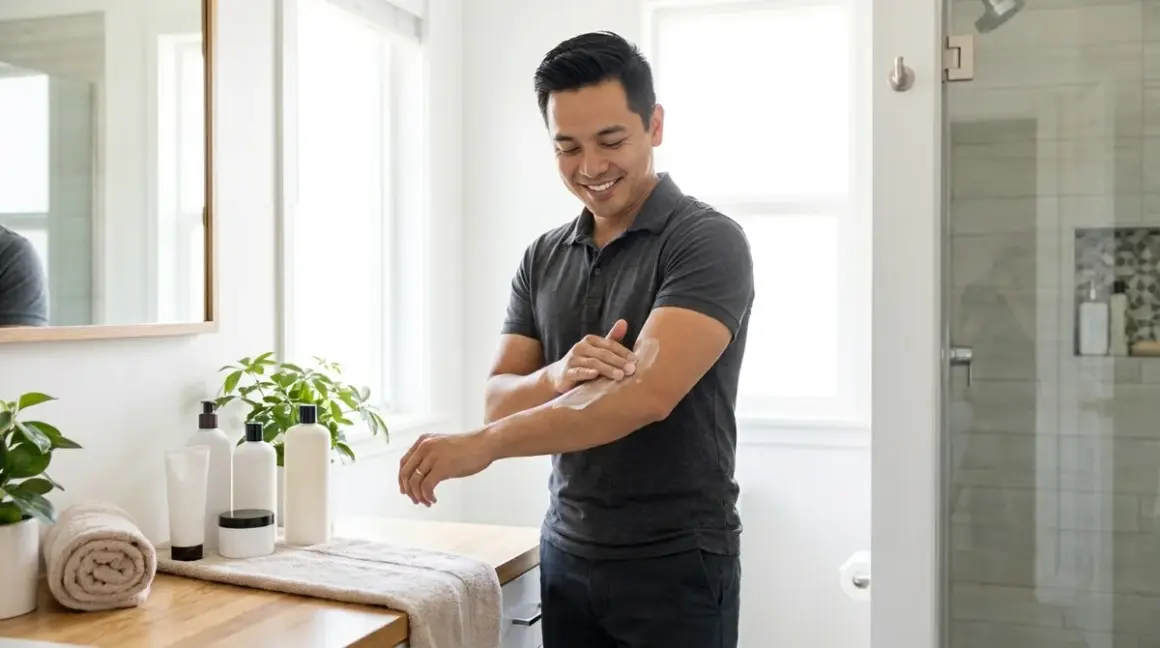

The body remembers first contact. That initial glide of peptide-enriched cream across damp skin—cooler than you expected, slipping into absorption before you've finished smoothing it from wrist to shoulder. No greasy afterthought. Just penetration. Peptide body lotions represent the skinification of bodycare: facial-grade actives deployed at scale, transforming neglected terrain into a canvas for cellular communication. You'll find concentrations that rival prestige serums, packaged in pump bottles that cost less per ounce than your morning coffee.
What Are Peptide Body Lotions?
Peptide body lotions are emulsified formulations containing short-chain amino acid sequences designed to penetrate the stratum corneum and trigger specific cellular responses across large surface areas of the body. Unlike traditional moisturizers that merely occlude water loss, these products function as signaling molecules—instructing fibroblasts to synthesize collagen, modulating inflammation pathways, or disrupting melanin formation depending on the peptide architecture employed.

The key distinction lies in molecular weight and concentration. Effective peptide body lotions maintain active peptide concentrations between 3-10% while keeping molecular weights below 500-1000 Daltons for transdermal penetration. You're looking at palmitoyl pentapeptide-4 (Matrixyl), copper tripeptide-1, acetyl hexapeptide-8 (Argireline), or palmitoyl tetrapeptide-7 as primary actives, often combined with ceramide complexes and humectant systems to support barrier function during the cellular remodeling process.
Formulation chemistry matters here. Water-in-oil emulsions provide superior occlusion for peptide stability, while silicone-based systems offer elegant sensoriality but may compromise penetration. Manufacturing standards vary wildly—Korean and Japanese peptide body lotions often employ pharmaceutical-grade peptide synthesis, while European brands focus on biomimetic peptide sequences derived from plant precursors. The price differential can reach 400%, yet active concentrations frequently cluster within a 2-3% range regardless of retail positioning.
How Peptide Body Lotions Work
Peptides function as molecular messengers. When applied topically, these short amino acid chains—typically 2-12 residues long—interact with cell surface receptors to initiate cascading biochemical responses. Matrixyl (palmitoyl pentapeptide-4) binds to TGF-β receptors on fibroblasts, upregulating types I and III collagen synthesis by approximately 35-50% in vitro studies. The result: measurable improvements in dermal density over 8-12 weeks of consistent application.
Different peptide architectures target distinct pathways. Copper peptides (GHK-Cu) chelate copper ions essential for lysyl oxidase activity—the enzyme responsible for cross-linking collagen and elastin fibers. You'll notice accelerated wound healing and improved skin remodeling at concentrations as low as 0.05%. Acetyl hexapeptide-8 mimics the N-terminal end of SNAP-25, competitively inhibiting the SNARE complex formation required for acetylcholine vesicle release. Translation: temporary neuromuscular relaxation, reducing expression lines on frequently tensed areas like the décolletage or hands.
Penetration determines efficacy. The stratum corneum presents a 10-15 μm lipid barrier designed to exclude foreign molecules. Peptides overcome this through several mechanisms: small molecular weight (sub-1000 Da), lipophilic modification (palmitic acid chains in palmitoyl peptides enhance lipid solubility), and carrier systems (liposomal encapsulation, cyclodextrin complexation, or peptide-lipid conjugates). Quality formulations employ penetration enhancers like dimethyl isosorbide or propanediol at 2-5% concentrations without compromising barrier integrity.
The delivery vehicle profoundly affects bioavailability. Creams with higher oil phases (30-40%) create a temporary occlusive layer that increases hydration gradient-driven penetration. Lotions with lighter textures (15-25% oil phase) absorb faster but may deliver lower total peptide quantities to the dermis. Time of application matters—applying to damp skin immediately post-shower maximizes transepidermal water loss as a driving force for active penetration, while nighttime application allows extended contact time during the body's peak repair cycle between 11 PM-4 AM.
Peptide stability presents formulation challenges. Most peptides degrade in the presence of strong acids (pH <4) or bases (pH >8), requiring pH buffering between 5-7. Oxidation destroys copper peptides unless formulated with chelating agents like EDTA or packaged in airless containers. Light-sensitive peptides demand opaque packaging. Budget formulations often sacrifice stability for cost reduction—jar packaging exposes actives to repeated air contact, while transparent bottles allow UV degradation. You'll extract more value from airless pump bottles manufactured with UV-protective materials, even if the initial cost runs 20% higher.
Why Peptide Body Lotions Matter

The economics are compelling. Facial peptide serums typically deliver 0.5-1 oz of product at $40-120, pricing peptide actives at approximately $80-240 per ounce. Peptide body lotions offer 8-16 oz at $15-45, reducing cost per ounce to $1-6 while maintaining comparable active concentrations. You're accessing the same cellular signaling technology scaled for whole-body application—addressing photoaging on arms, crepiness on the décolletage, and texture irregularities on legs at a fraction of facial product pricing.
The visible outcomes justify the category shift. Clinical studies on palmitoyl peptides demonstrate measurable improvements in skin elasticity (15-25% increase via cutometry) and visible reduction in surface roughness after 12 weeks of twice-daily application. Copper peptide formulations show accelerated healing of minor abrasions and improvement in hyperpigmentation through tyrosinase inhibition. Unlike retinoids, peptides generate minimal irritation and require no photosensitivity warnings—making them suitable for year-round use on sun-exposed body areas.
Beyond anti-aging, peptides support barrier function during environmental stress. Palmitoyl tetrapeptide-7 reduces IL-6 production by up to 40%, modulating inflammation that compromises barrier lipid synthesis. You'll notice faster recovery from harsh climates, aggressive body exfoliation, or the cumulative damage from chlorinated water exposure. This positions peptide body lotions as strategic interventions within barrier-first skincare approaches—not vanity products, but functional tools for maintaining skin homeostasis across the body's entire surface.
Types and Formulation Variations
Signal Peptides
Matrixyl-based formulations dominate the category, leveraging palmitoyl pentapeptide-4 or its newer iterations (Matrixyl 3000, Matrixyl Synthe'6) at 3-8% concentrations. These signal fibroblasts to increase ECM production. You'll find them paired with hyaluronic acid (0.5-2%, mixed molecular weights from 5 kDa for penetration to 1500 kDa for surface hydration) and ceramide NP (0.5-1%) to support the newly synthesized matrix with adequate hydration and lipid scaffolding.
Budget leaders: The CeraVe Skin Renewing Body Lotion contains approximately 5% peptide complex at around $13 for 8 oz—roughly $1.60 per ounce. Compare this to luxury alternatives like Perricone MD Firming Body Emulsion at approximately $95 for 6 oz ($15.80/oz) with similar 4-6% Matrixyl concentrations. The performance gap narrows significantly; the price gap does not.
Carrier Peptides
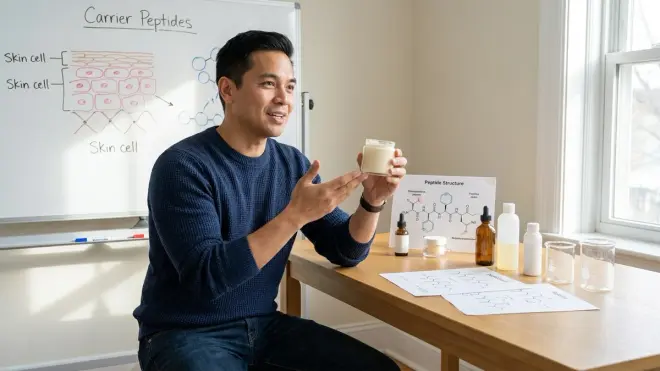
Copper peptide lotions deliver trace copper ions to enzymatic sites requiring this cofactor. GHK-Cu at 0.05-0.5% concentrations accelerates wound repair and stimulates glycosaminoglycan synthesis. Formulation complexity increases here—copper ions catalyze oxidation reactions, necessitating antioxidant systems (vitamin E, ferulic acid) and chelators to prevent metal-catalyzed degradation of other actives. Effective formulations maintain pH around 5.5-6.5 where copper peptides remain stable yet ionically available.
The Ordinary's Buffet + Copper Peptides 1% costs around $30 for 1 oz—designed for facial use but applicable to targeted body areas like hands or décolletage where precision application justifies the premium. For full-body coverage, NIOD's Copper Amino Isolate Serum 2:1 diluted into an unscented body lotion base provides budget extension without compromising efficacy.
Neurotransmitter-Inhibiting Peptides
Argireline formulations (acetyl hexapeptide-8 at 5-10%) target expression lines through temporary muscle relaxation. You'll see these marketed for décolletage treatment—addressing sleep creases and habitual compression patterns. The mechanism differs from collagen-boosting peptides; effects manifest within 2-4 weeks but require continuous application to maintain results.
Few dedicated body products exist in this subcategory. Instead, budget-conscious approaches involve decanting facial Argireline serums (The Ordinary Argireline Solution 10%, approximately $8 for 1 oz) and mixing them 1:4 with a neutral body lotion base. This extends coverage area while maintaining therapeutic concentrations above the 2% minimum effective dose.
Combination Systems
Modern peptide body lotion formulations layer multiple peptide types with complementary actives. Niacinamide (3-5%) appears frequently, offering barrier support, melanin transfer inhibition, and sebum regulation. Retinyl palmitate or bakuchiol (0.5-1%) adds retinoid pathway activation for accelerated cell turnover without the photosensitivity concerns of prescription retinoids. Alpha hydroxy acids (lactic acid or glycolic acid at 5-8%) provide chemical exfoliation to enhance peptide penetration—though formulation pH must balance AHA efficacy (pH 3.5-4) against peptide stability (pH 5-7), typically settling around 4.5-5 as a compromise.
The budget exemplar: Versed Sculpt + Glow Body Duo combines peptides, caffeine (for adipose-targeting effects), and AHAs at approximately $25 for 8 oz. The multi-active approach delivers visible improvements in texture, tone, and firmness across metrics that would require three separate products in traditional bodycare hierarchies.
Frequently Asked Questions
What peptide concentration should I look for in body lotions?
Effective peptide body lotions contain 3-10% total peptide concentration, with individual peptides like palmitoyl pentapeptide-4 (Matrixyl) ideally present at 3-5% and copper peptides at 0.05-0.5%. Lower concentrations (1-2%) may appear in budget formulations but require extended use periods (16+ weeks) to demonstrate measurable results. Higher concentrations don't necessarily improve outcomes—peptide efficacy plateaus once receptor saturation occurs, typically around 5-8% for most signal peptides. Check ingredient lists for peptide placement within the first seven ingredients, indicating concentrations above 1%, and verify pH buffering agents (citric acid, sodium citrate) that suggest formulation stability measures are in place.
Can peptide body lotions replace retinol for anti-aging on the body?
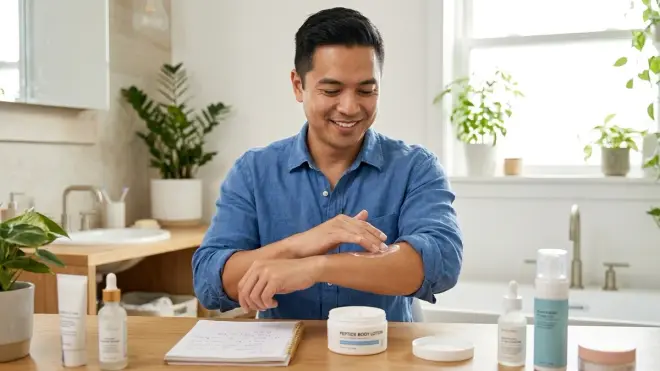
Peptide body lotions and retinoids operate through distinct mechanisms that complement rather than replace each other. Retinoids (retinol, retinaldehyde, retinoic acid) bind to nuclear receptors to directly regulate gene transcription, accelerating cell turnover and upregulating collagen synthesis through RAR/RXR pathways. Peptides function as extracellular signals, triggering receptor-mediated cascades without entering the nucleus. For photoaging, retinoids demonstrate superior clinical evidence for reversing existing damage, while peptides excel at preventive signaling and barrier support. The ideal approach layers both: apply peptide body lotion twice daily for ongoing cellular communication and barrier maintenance, then introduce retinol 2-3 nights weekly for direct transcriptional effects. This combination, detailed in guides comparing bioregenerative peptides vs retinol, delivers synergistic improvements without the irritation risk of retinoid-only protocols.
How long does it take to see results from peptide body lotions?
Visible results from peptide body lotions emerge across three phases: immediate hydration (day 1-7) from humectant and emollient systems, texture refinement (week 4-8) as accelerated cell turnover smooths surface irregularities, and structural improvements (week 8-16) when increased collagen synthesis translates to measurable firmness gains. Clinical studies using cutometry and corneometry demonstrate statistically significant improvements in skin elasticity and hydration at the 12-week mark for most peptide systems. Individual peptides vary—copper peptides may show wound-healing acceleration within 2-3 weeks, while Matrixyl-driven density improvements require the full collagen synthesis cycle of 10-12 weeks. Consistency matters more than concentration here; daily application at 2 oz coverage (equivalent to full-body treatment) outperforms sporadic use of higher-concentration products. Photographic documentation at 4-week intervals provides objective tracking, particularly for décolletage and hand applications where photoaging patterns are most evident.
Should I apply peptide body lotion to damp or dry skin?
Apply peptide body lotions to damp skin within 60 seconds of showering for maximum penetration and efficacy. The transepidermal water loss (TEWL) gradient created by residual surface water drives actives deeper into the stratum corneum through osmotic pressure differentials. Damp application also allows you to use 20-30% less product while achieving equivalent coverage, as the water content aids spreading and emulsion formation on the skin surface. Pat skin with a towel to remove standing water but maintain surface moisture—you want skin that feels cool and slightly tacky, not dripping or fully dry. For targeted treatment areas like hands or décolletage during mid-day application, mist skin lightly with thermal water or a hydrosol before applying peptide lotion to recreate this penetration advantage. Avoid applying to soaking-wet skin, which dilutes the formulation below therapeutic concentrations and disrupts the emulsion stability that protects peptides during absorption.
Can I use peptide body lotions with other body treatments like retinol or AHAs?
Peptide body lotions layer effectively with most actives when you respect pH requirements and application timing. AHAs and BHAs (glycolic, lactic, salicylic acids) function optimally at pH 3.5-4.5, while peptides require pH 5-7 for stability—apply acids first, wait 5-10 minutes for pH normalization, then apply peptide lotion. Retinol poses no compatibility issues; apply peptide lotion first for hydration and barrier support, then spot-treat with retinol on areas requiring intensive cell turnover like sun-damaged arms or chest. Vitamin C (L-ascorbic acid) may destabilize copper peptides through redox reactions—use vitamin C products in morning routines and reserve copper peptide lotions for evening, or choose magnesium ascorbyl phosphate forms stable across wider pH ranges. Niacinamide and peptides demonstrate synergistic benefits for barrier function and collagen support—formulations combining both, or layering a niacinamide serum under peptide lotion, enhance overall outcomes. For comprehensive protocols that navigate these compatibility considerations, consult guides on layering peptide body lotion with other actives and barrier-repair ingredient selection.
Summary
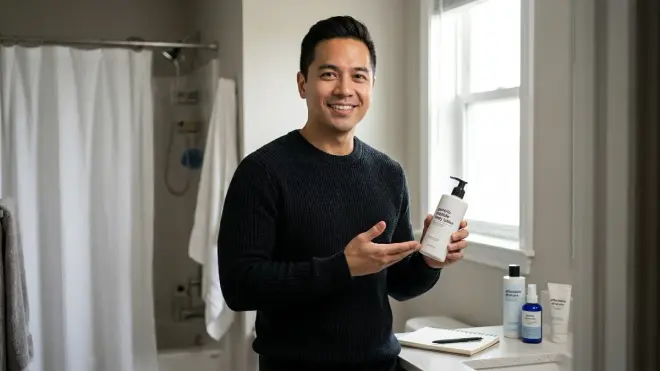
Peptide body lotions democratize cellular signaling technology, delivering facial-grade actives across the body's entire surface at price points that make daily use financially sustainable. You're accessing the same molecular architecture found in prestige serums—Matrixyl, copper peptides, Argireline—at concentrations (3-10%) that trigger measurable collagen synthesis, barrier improvement, and texture refinement. The formulation intelligence matters: pH buffering, airless packaging, penetration enhancers, and complementary active systems separate performance leaders from diluted pretenders. Budget options from CeraVe, The Ordinary, and Korean manufacturers deliver peptide concentrations comparable to luxury alternatives at $1-6 per ounce versus $15-30, with clinical outcomes that converge after the 12-week collagen synthesis cycle. This isn't indulgence. It's strategic deployment of amino acid sequences to maintain structural integrity across skin you'll inhabit for decades. The body remembers consistent care.